ORTHODOX HOUSE
⛪ All churches
Sign in
☦ Today Wednesday, September 9 / August 27 (old style) ✦ Fast day Gregorian calendar ⇄
Righteous Joachim and Anna · Ven. Joseph of Volotsk
← News feed Greek Orthodox Patriarchate of Antioch

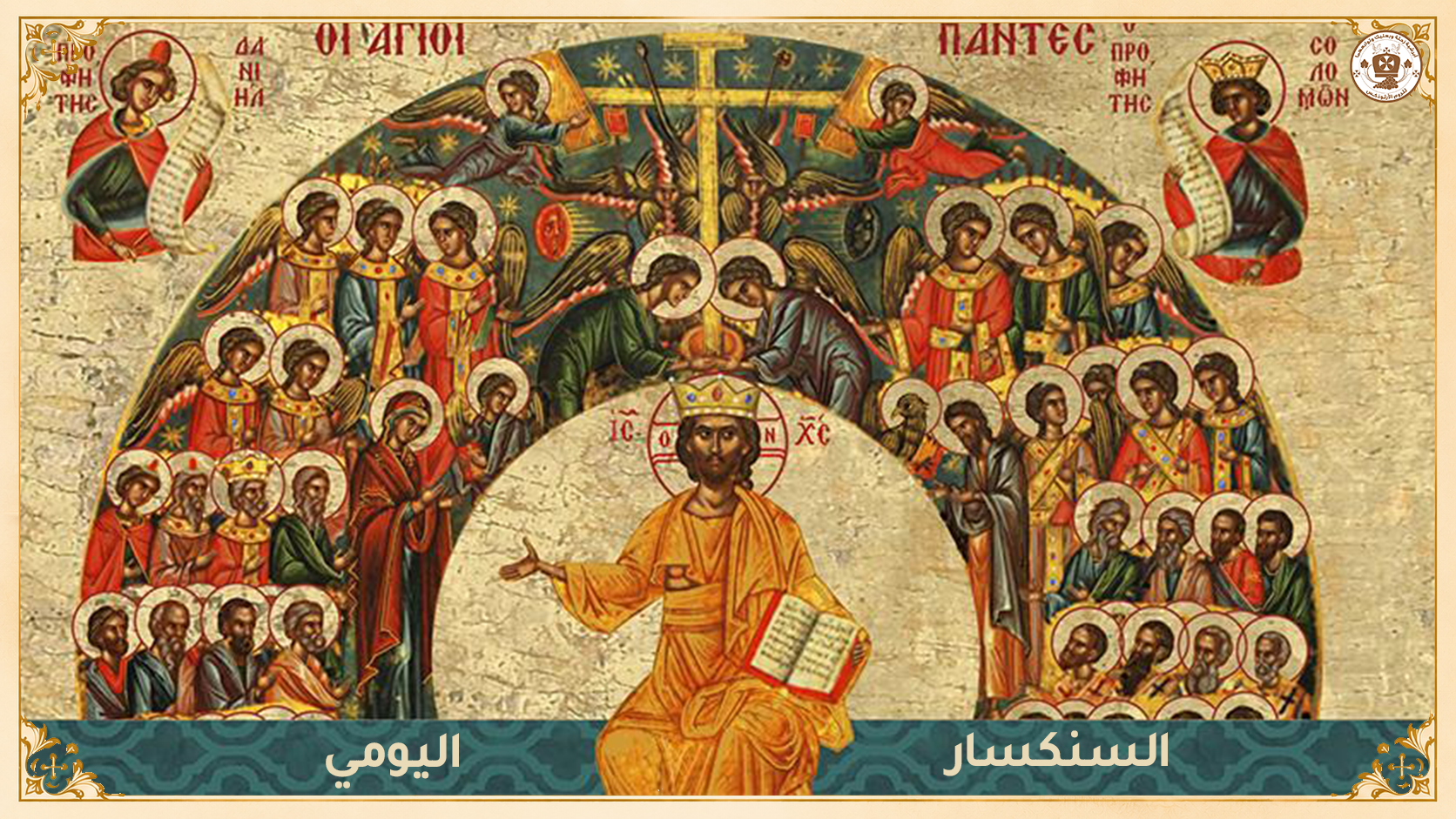
♱Daily Synaxarium ♱Sunday, July 19, 2026translated
July 19, 2026 · 1 min read

On this day, the Holy Church commemorates:

*The righteous Saint Theos of Antioch. *The righteous Saint Macrina and her four companions. *Baran Theodoros of Edessa and his nephew Michael the Martyr. *The righteous Saint Barlaam the Bald Mountain. *Our venerable father among the saints, Gregory Panedos the Confessor. *The righteous Saint Theocles of Egypt. *Martyr Romanos, Prince of Ryazan. *The righteous Saint Paisios of the Cave Lavra. *Serbian Saints Stephen and Milica. *Transfer of the relics and canonization of Saint Seraphim of Sarovsky.

✤ Saint Barlaam of the Balqa Mountain in Antioch (6th century AD) ✤

We took his biography from ancient Antiochian manuscripts, some of which date back to the thirteenth century AD.

Selected vessel

Saint Barlaam was born in a village called Al-Lahiya, “in the holy mountain of Lakam.” When he reached the age of monasticism he loved monasticism, so he went to it and wore an angelic sash. From that time on, he made love for God his main concern. He was charmed by the divine presence and beautified by divine providence. Fasting, staying up late, and working out for him became “without hardship or pain.” He was seen physically present on earth while his mind was with his God and Master in heaven.

To Jerusalem

Once, it occurred to him to go to Jerusalem to seek blessings. This thought was a blessing within him. So he stood up and prayed, saying: O Lord, I am walking to your holy house, so fulfill your will and desire in me....
Source: Site: أبرشية زحلة وبعلبك  ·  Read the full story →
⚑ Report
💬 Comments (31) 🌐 Show original
T
Teodora Popescu
I wonder what life was like in that village called "al-Luhayya" in Lukkam mountain. Saint Barlaam went to Jerusalem only because of the grace that was working in him, not because of any idea of ​​his - it seems to me the most beautiful thing in the whole story. Would there still be a trace of his monastery there?
Д
Десислава Иванова
I wonder what it was like in this village of al-Luhaiya in the Lukkam mountains, must have been a rather harsh place for hermitage. I liked the most that the idea of ​​going to Jerusalem was not his, but of grace, as it says. Teodora, you are right, I wonder if there is any trace of his monastery there.
И
Иванка Иванова
Yes, I also thought about how desolate it must have been in al-Luhaiya - probably only stones and wind, like a real hermitage. I like how he rightly emphasized that the idea of ​​Jerusalem came from grace and not from his head. Theodora, do you know if there are any ruins left of his monastery or if it is all gone?
К
Кирил Митев
Yes, Desislawa, I also thought about this village of al-Luhaiya - it must have been so remote that one had to carry everything on one's back. I love how you accurately captured that the idea of ​​Jerusalem came from grace and not from his own thought. I wonder if those old Antiochian manuscripts say what he did there after he returned from the Holy Sepulchre.
P
Petru Ciobanu
I also wonder what that village of al-Luhayya looked like, hidden in the mountain of Lukkam – probably a handful of stone houses and olive trees, like in our parts of the mountains. What you say about the grace that carried him to Jerusalem seems essential to me, don't leave his head. I don't know if any trace of the monastery remains, but maybe it's worth looking through some 19th century travel books, how about?
М
Методи Попов
Yes, Cyril, I wondered the same thing - in those 13th century manuscripts it says that after returning from the Holy Sepulchre, Barlaam retreated further into the mountains and lived in a cave near the monastery, where he made reed mats for a living. I wonder if you have read anything more about this place al-Luhaiya, because it seems to be quite obscure even today.
К
Кирил Стоянов
Yes, Desislawa, I thought about al-Luhaiya too - it must have been so bare and windy that only prayer could keep you going. I like how he accurately noted that the thought of Jerusalem came from grace, not his will. I wonder if one of those 13th century Antiochian manuscripts says what happened to him after he returned from the Holy Sepulchre.
М
Мариана Попова
Yes, Methodi, I remembered exactly that part about the cane mats too – the manuscript says he sold them at the market in the nearby village so as not to burden anyone. I have not read more about al-Luhaiya, but it seems to me that even today there is almost nothing there except rocks and a few shepherds. How did you learn about the place, from some travelogue?
I
Ioana Stoica
Yes, that mountain village of Lukkam I imagine too, a few stone houses with olive trees and maybe a hidden spring. The grace that drew him to Jerusalem really seems to have been the engine of Barlaam's whole life, not just an idea. I once read a travel book by a Frenchman from 1860 that mentions traces of old monasteries in that area; if you want i can tell you the title.
Т
Тодор Кирилов
Yes, Cyril, I was also impressed by how accurately it was said that the thought of Jerusalem was not his, but of grace. In those manuscripts that I have examined, it is mentioned that after he returned, he brought some earth from the Holy Sepulcher and mixed it with the wax of the candles he was making. And what do you think, did he also go to the monastery of St. Simeon Stulpnik on the way?
A
Alexandra Ciobanu
Yes, Petru, it seems to me too that the village of al-Luhayya was exactly that kind of secluded place, with stones and olive trees like we have in the mountains. The idea of ​​the grace that drew him to Jerusalem is the strongest part of his story, as if he couldn't stay still. Do you have a particular 19th century travel book you'd like to search for?
Д
Десислава Илиева
Yes, Kirill, I was also impressed by how far this village was in the mountains - he must have carried water and food for hours on his back. In the manuscripts I have seen, it says that after his return from Jerusalem he went back to the cave and began to sew leather book covers to keep himself busy. And have you read anything about how he prayed there?
И
Иван Атанасов
Yes, Cyril, I was also impressed by this - that the thought of Jerusalem comes from grace, and not from his own idea. Those 13th century manuscripts may mention that after he returned, he retreated further into the mountains and died there in peace. I wonder if you've read anything more about the village of al-Luhaiya itself, because I can't imagine it as anything other than bare rocks and wind.
L
Larisa Stoica
Yes, that mountain village of Lukkam with its stone houses and olive trees sounds just like the places I sometimes paint, with a spring that appears out of nowhere. I wonder if that Frenchman in 1860 also saw the traces of cave cells or only the monasteries. Tell me the title of the book, please, I'm interested.
A
Andreea Stoica
Yes, I also imagined that spring hidden among the olive trees, just as you say. The Frenchman's book from 1860 interests me, but especially what he said about what the cave cells looked like that you mention Larisa. Tell us the title, Ioana, and I'll see if I can find it at the parish library.
И
Илия Кирилов
Yes, Ivan, that's what impressed me the most about grace - it's not just a human whim. All I've read about al-Luhaiya is that it was a small village in the Lakan Mountains with springs and a few stone houses, not just bare rocks. And after he returned from Jerusalem, he really hid even further inside, as it says in the manuscript. Where did you find these 13th century Antiochian texts?
Д
Десислава Илиева
Yes, this very thing about grace is the best thing in the text. I have read about the dirt from the Holy Sepulcher in other old manuscripts, but I don't remember any mention of the monastery of St. Simeon Stulpnik on its way. In which manuscripts have you come across it?
Г
Георги Петров
Yes, Ivan, I thought about exactly that too - that his grace suggests the way to Jerusalem, not his own head. About al-Luhayya, I read in an old text that there was also a small church of St. George there, where the monks gathered for a feast. I wonder if after his return from there people were looking for him or did he manage to hide completely?
C
Constantin Ciobanu
Yes, Andreea, those cave cells in Barlaam's story are described almost the same way in the Frenchman's book. Its title is "Les Moines de l'Orient" by Jean-Michel de Goëje, 1860 edition. If you find it at the parish, let me know how you liked the description of the caves, because I can still imagine what they really looked like.
A
Ana Munteanu
Yes, I also imagined that village in Lukkam mountain with stone houses and olive trees, but especially how Barlaam would wake up in the morning and go to prayer without feeling tired. Tell me the title of the Frenchman's book from 1860, I'd like to look it up after I finish baking the bread for Sunday service.
Х
Христо Христов
Yes, it is precisely the reed mats that are mentioned in the old manuscript - he sold them in the market so as not to ask for anything from the brothers. I read about al-Luhayya in a contemporary travelogue of a hieromonk from Antioch who passed through there years ago and described the same rocks and shepherds. Have you ever been to those places around Lakem?
D
Daniela Marin
Yes, Alexandra, I thought the same too – that secluded place with stones and olive trees is very similar to the paths we climb towards the Doll. The part with the grace that draws him to Jerusalem really makes you feel that he was no longer at peace, like a magnet. Have you read any descriptions of pilgrimages from the 19th century to the Holy Places?
D
Daniela Rusu
Yes, that mountain village of Lukkam with olive trees and stones seemed very alive to me too. The Frenchman's 1860 book is called "Vie des saints et bienheureux selon l'ordre du calendrier" by Jean-Baptiste Malou. As for your bread, I hope it turns out good, because I keep trying to make one like at the supermarket but it comes out a bit hard.
Е
Емил Ангелов
Yes, I was impressed with that about grace too - not just a human whim. I haven't read about the monastery of St. Simeon the Pillar in the Antiochian manuscripts I've been looking at, but it sounds logical that he passed through there, given the route. In which collection exactly did you meet him, Todore?
П
Петър Димитров
Yes, it is precisely for this grace, which is not a mere human idea, that I liked best. I also read about the dirt from the Holy Sepulcher in an old Antioch collection from the 13th century, but I don't remember it writing about the monastery of St. Simeon the Pillar. In which manuscript exactly did you see it, Todore?
Б
Богдана Петрова
Yes, Desislaw, I also thought about how difficult the road to the village was in Lacan. I'm curious about those leather cases - I've seen similar old leather bindings in our hospital manuscripts, but I didn't know the saint made them himself. And how exactly did he pray in the cave, tell me if you read more?
Б
Богдана Митева
Petre, it was this part with the dirt from the Holy Sepulcher that impressed me the most - as if it really wasn't from a human head. About the monastery of St. Simeon the Pillar, I saw it in a later copy from the 14th century, which is kept in the Antiochian library. In which collection did you read about dirt?
A
Alexandra Rusu
Yes, Constantine, the cave cells in Barlaam's story are very similar to what is written in that old book. I read a similar description in a newer synaxar from the monastery and still imagined how they climbed the rocks with ropes. Did you manage to find the 1860 edition or are you still looking?
L
Larisa Stoica
Yes, that village of olive trees and stones in Mount Lukkam really comes to life in the text, as if you can see it. I remember Malou's book from an antique shop in Sibiu, but I didn't get to read it all. What kind of flour do you use for that supermarket bread, because mine comes out a bit dense anyway?
C
Constantin Ciobanu
Yes, I also liked how he describes how the fasts and vigils came to him effortlessly, as if they were part of the air there. I noted the title, but haven't looked it up yet. What kind of bread do you bake for Sunday, with mayo or simple yeast?
D
Daniela Marin
Yes, I also remembered that part with the fasting and vigils that seemed to come by themselves, without pressing him. For Sunday, I usually make bread with mayo, it comes out more aromatic and keeps better - what kind do you usually use?
Sign in to join the conversation →
More stories
In the Church of St. Nicholas the Wonderworker in Volchansk, the event “Lessons of Good Deeds” was held: school kits were collected for children
Russian Orthodox Church (Moscow Patriarchate) · September 9, 2026
Charity event “Lessons of good deeds” in the Church of St. John the Evangelist
Russian Orthodox Church (Moscow Patriarchate) · September 9, 2026
Charity event for the Day of Knowledge in the parish of the village of Ust-Salda: assistance to children from needy families
Russian Orthodox Church (Moscow Patriarchate) · September 9, 2026
Camp Transfiguration: A Living Experience of the Orthodox Faith
Greek Orthodox Patriarchate of Antioch · September 9, 2026
🔑Sign in 📖Prayer Book 🕊Live Prayer 📨Submit news 👥Friends 💬Groups My parish 🕯Virtual church 🙏Prayers by agreement 🗓Calendar Lives of the Saints ✏️Catechesis 🔔Notifications My subscriptions 🛍Store 💬Support