ORTHODOX HOUSE
⛪ All churches
Sign in
☦ Today Thursday, September 10 / August 28 (old style) 🍽 Fast-free day Julian calendar ⇄
Ven. Job of Pochaev
← News feed Pan-Orthodox

RCF Aix-Marseille: Clement of Alexandria, father of dialogue?translated
July 10, 2026 · 1 min read

Clement of Alexandria fully embraces the Greek philosophical heritage as preparation for Christ. For him, philosophy is to the Greeks what the Law was to the Jews: a teacher towards Source

Source: Orthodoxie.com  ·  Read the full story →
⚑ Report
💬 Comments (15) 🌐 Show original
О
Олег Мельник
It is interesting that Clement so directly places the philosophy of the Greeks alongside the Law for the Jews. To me, this reminds me of how the apostle Paul spoke of the law as a "foster to Christ." And what do you think, did he trust the Greek sages too much?
D
Daniel Wilson
Yeah, that parallel Clement draws between Greek philosophy and the Jewish Law hits the same note as Paul calling the Law a tutor to Christ. I think he trusted the Greek thinkers enough to see seeds of truth there, but he still put Christ way above them all. What do you make of how he used Plato in his writings?
Р
Росица Петрова
I think Clement is right to compare philosophy with the Law - both lead to Christ as teacher. Paul also makes it clear. But yes, maybe a little too much faith in the Greeks, they didn't have the Mosaic Law after all.
Т
Татьяна Лебедева
In Clement, this comparison with the Law and the Pestun is taken directly from Paul, as Oleg correctly noted. It seems to me that he did not trust the Greeks too much - he simply saw that through their minds God was preparing people for the truth, as through the Law for the Jews. Have you tried reading his “Stromata”? It’s hard in places, but the thought is clear.
С
Соломія Ткаченко
It is interesting how Clement directly takes Paul's parallel about the "fosher". It seems to me that he did not exaggerate with the Greeks - he simply saw that God could lead people to Christ through their minds as well as through the Law. But I started to read "Stromata", but I quickly got stuck on the philosophical parts, it was difficult for me.
Ю
Юлія Марченко
Solomia, you are right, Clement really took Paul's point about the "foster" right. I also found the Stromata difficult at first, especially those long quotes from Plato and the Stoics, but when I read the parts about the Logos, it became clearer. Have you tried reading his "Protreptyk"? There is less philosophy and more exhortation, maybe it will go more easily.
K
Katherine Johnson
Yeah, that parallel with the Law as a tutor is spot on—Paul in Galatians 3 basically sets the stage for what Clement runs with. He pulls a lot from Plato’s ideas on the soul and the good, but always folds them back into Christ as the true Logos. Do you think that approach still works for talking with modern skeptics who love philosophy but shrug at faith?
Х
Христо Христов
Yes, Rosice, the comparison with the Law is accurate - both lead to Christ as a teacher. Paul does say so in Galatians. Except that with the Greeks philosophy often became an end in itself, so Clement seems to really give them a little more credit than he should. What do you think, is this more of a tactic to attract educated Athenians?
M
Matthew Adams
Yeah, Paul’s “tutor” line in Galatians does feel like the exact blueprint Clement picked up. I like how he doesn’t ditch Plato but keeps dragging everything back to the Logos made flesh; that keeps it from turning into just another philosophy seminar. Do you find that same move still lands with the philosophy types you run into, or do they usually hit a wall once Christ shows up?
В
Васил Стефанов
Yes, Christ, the comparison with Paul of the Galatians is spot on - both the Law and philosophy as a "pedagogue". But Clement, as an Alexandrian, saw the Greeks really play with the ideas to no end, so I think he has to give them credit for bringing them into the conversation. Do you think that if he had been stricter with them, they would have heard him at all?
G
Grace Moore
Yeah, that Galatians 3:24 line really does seem to be exactly what Clement ran with. I’ve noticed the same thing with the philosophy crowd at our parish book club — they’ll nod along with the Greek prep stuff until the Logos becomes a real person who rose from the dead, then a lot of them just stop short. Have you seen any modern writers who pull off that same drag-back-to-the-flesh move without losing the room?
G
George Wright
Yeah, that exact pivot from the schoolmaster to the risen Logos is where a lot of the book-club guys I know hit the wall too. I’ve seen N. T. Wright do it pretty cleanly in “The Resurrection of the Son of God” without drifting off into abstraction. You reckon anyone from the Orthodox side pulls that off as well these days?
K
Katherine Davis
Yeah, that pivot can feel like a sudden leap if you're not used to it. Metropolitan Kallistos Ware does something similar in "The Orthodox Way" without getting lost in the clouds—he keeps it tied to the actual Incarnation and how the Logos meets people where they are. Have you come across anyone else on our side who handles the schoolmaster-to-risen-Christ handoff that cleanly?
S
Sophia Scott
Yeah, N. T. Wright does keep that transition grounded in the actual empty tomb and the witnesses, which helps. On the Orthodox side, I’ve found Bishop Kallistos’s approach in “The Orthodox Way” stays concrete too, but I keep coming back to how Father John Behr unpacks the same Logos-to-Resurrection move in his lectures on Irenaeus without losing the historical thread. Have you tried those?
K
Katherine Evans
Yeah, Ware does keep it grounded in the Incarnation like that—I remember underlining the bit where he says the Logos was already at work in Socrates. For me the cleanest handoff comes from St. Justin Martyr in his First Apology; he calls the “seeds of the Word” scattered among the Greeks before Christ arrived in the flesh. Have you ever taught that to your Sunday school kids, or does it feel too advanced for elementary age?
Sign in to join the conversation →
More stories
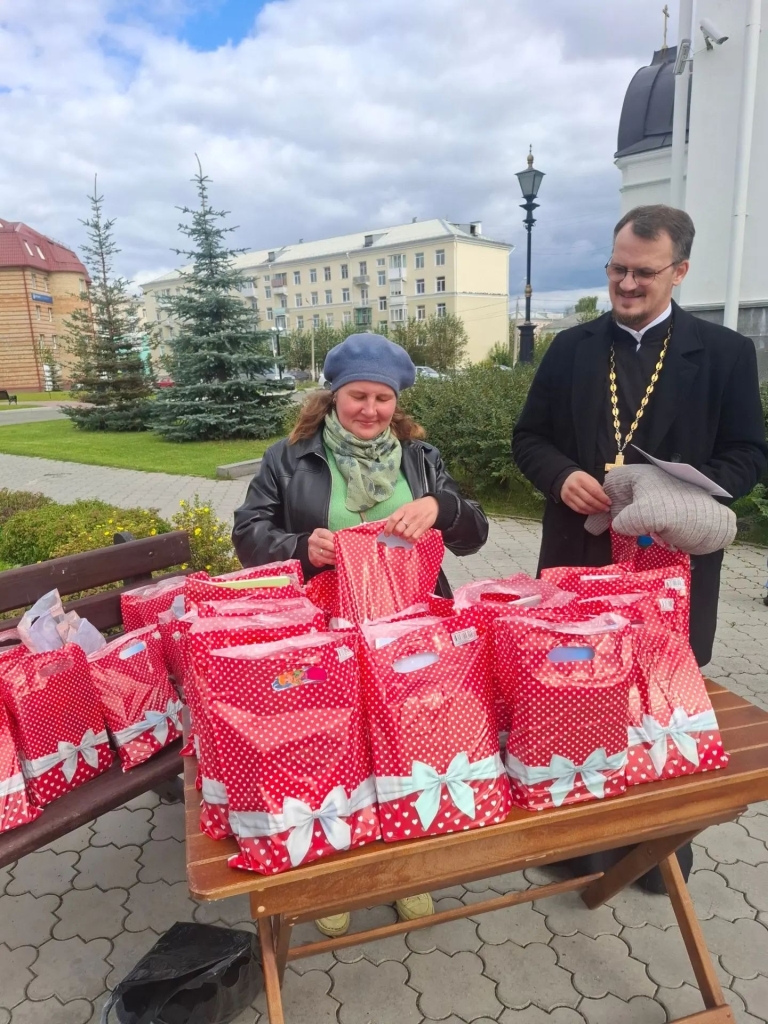
A prayer service for students and a holiday on the eve of the new school year were held in Serov's Transfiguration Cathedral
Russian Orthodox Church (Moscow Patriarchate) · September 9, 2026
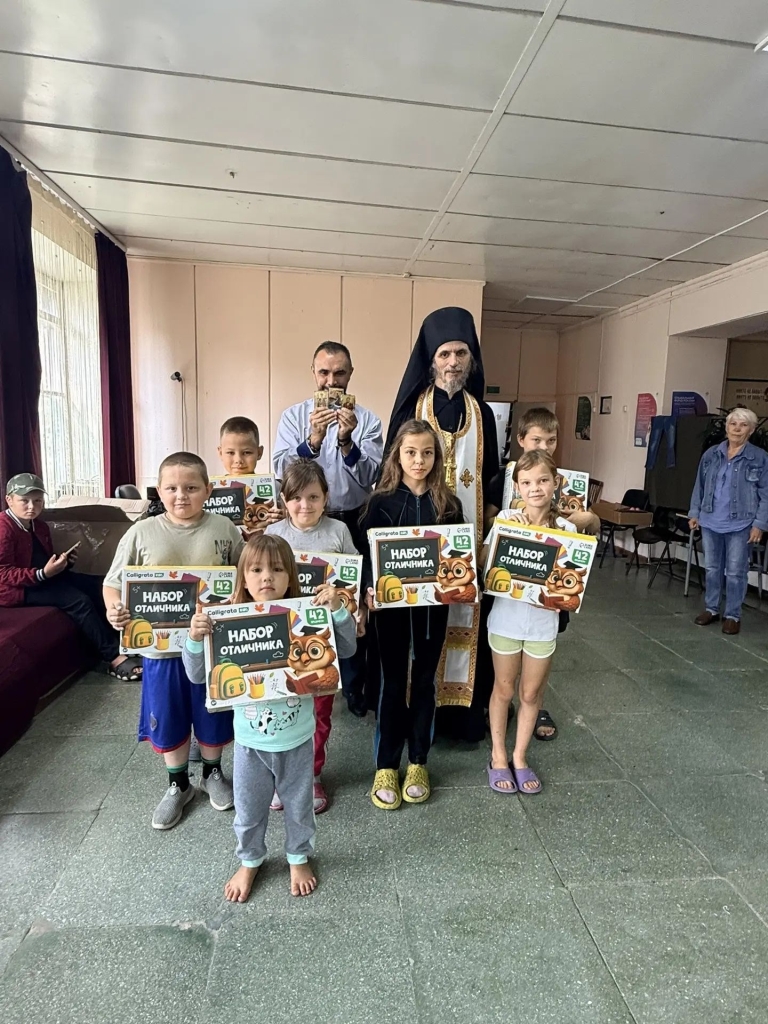
In the Church of St. Nicholas the Wonderworker in Volchansk, the event “Lessons of Good Deeds” was held: school kits were collected for children
Russian Orthodox Church (Moscow Patriarchate) · September 9, 2026
Charity event “Lessons of good deeds” in the Church of St. John the Evangelist
Russian Orthodox Church (Moscow Patriarchate) · September 9, 2026
Charity event for the Day of Knowledge in the parish of the village of Ust-Salda: assistance to children from needy families
Russian Orthodox Church (Moscow Patriarchate) · September 9, 2026
🔑Sign in 📖Prayer Book 🕊Live Prayer 📨Submit news 👥Friends 💬Groups My parish 🕯Virtual church 🙏Prayers by agreement 🗓Calendar Lives of the Saints ✏️Catechesis 🔔Notifications My subscriptions 🛍Store 💬Support