ORTHODOX HOUSE
⛪ All churches
Sign in
☦ Today Wednesday, September 9 / August 27 (old style) ✦ Fast day Gregorian calendar ⇄
Righteous Joachim and Anna · Ven. Joseph of Volotsk
← News feed Romanian Orthodox Church

Commemorations in Rep. Moldova: The victims of the communist deportations of 1949 were commemorated 77 years after the tragedytranslated
July 7, 2026 · 1 min read

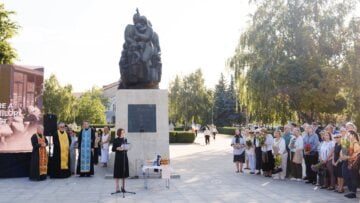
The victims of the communist deportations from 1949 were commemorated on Monday in the Republic of Moldova, 77 years after the tragedy.

Several commemorative events were organized in several parishes within the Metropolis of Bessarabia.

Clergy, authorities and believers paid tribute to those who suffered during the Stalinist repressions and reaffirmed the importance of preserving the memory of these events.

Parastas in Balti IPS Antonie, elected Metropolitan of Bessarabia, officiated on the night of Sunday to Monday, the memorial service for the victims of communist deportations. Photo credit: Facebook / Diocese of Balti On the night of Sunday to Monday, His Holiness Father Antonie, elected Metropolitan of Bessarabia, officiated the memorial service in front of the railway station in Bălți, a symbolic place of the deportations.

"Tens of thousands of people, without having any fault, were barbarically lifted from their homes and taken, in inhumane conditions, to remote places, from where many, due to the cold, hunger, diseases and hard living conditions, never returned," the representatives of the Diocese of Balti said.

Alexandru Postică spoke at the event,...

Source: Агентство Basilica (română)  ·  Read the full story →
⚑ Report
💬 Comments (28) 🌐 Show original
J
Juraj Horváth
I was like when I read that the parastas was right in front of the railway station in Bălți - that place must have been really difficult. People there at night remembered those who drove them out of their homes without fault, and many did not return because of hunger and cold. It's good that it is still being reminded so that it is not forgotten.
Д
Десислава Костова
I am very sad when I read about this parastas right in front of the train station in Baltz. There they were loaded like cattle, without fault, and then cold, hungry, and so few returned. It is good that Bishop Antony served in this very place, so that he would not be forgotten.
M
Michał Kaczmarek
Yes, that station in Bălți must have been a terrible place - people were loaded there like cattle and taken away to the unknown. It's good that Lord Antoni celebrated parastas there at night, and not only in the church. The memory of this must remain, because these are not empty numbers, but specific families who lost everything.
С
Софья Беляева
In Nizhny, we also remember those who were expelled from Moldova in 1949; many families are still looking for graves in Siberia. It’s good that Bishop Anthony served as parastas at the station in Balti, and not just in the church - that’s where it all began. The memory should remain, although it is difficult to read.
J
Joanna Zielińska
I agree, Michał, that station in Bălți was a real nightmare. I remember my grandmother saying that her neighbors were taken from there in cattle wagons in '49 and never came back. It's good that Lord Antoni celebrated parastas there, and not just behind the walls of the church.
Р
Румяна Петрова
It's really hard, Desislava, when one imagines how they were loaded like animals at this very station in Baltz. And I think that Bishop Antony has chosen the right place - so the young people who pass by there every day may think about why it is important not to be forgotten. Have you heard such stories from anyone's relatives?
T
Tomasz Nowak
I agree, this station in Bălți really was a place of great pain. My aunt on my husband's side lost two brothers there in 1949, they were deported in cattle wagons straight to Siberia. It's good that Lord Antonie celebrated parastas there - such a memory is more true than only within the walls of the church.
P
Piotr Wiśniewski
Yes, that station in Bălți must have been terrible, my neighbor's grandmother from the parish also remembered those wagons and the crying of children. It's good that the hierarch went there with a parastasus, because it's easier to forget about the details in the church. Did your grandmother tell you more about what it looked like up close?
M
Maria Zielińska
My mother also remembered those carriages from Bălți, because her uncle was taken from the platform and died of hunger on the way. It's good that the parastas was there, by the tracks, and not just in the church - such a place immediately reminds us what it really looked like. Did your grandmother say what the neighbors took with them in those bundles?
D
Dorota Wiśniewska
I agree, Tomasz, this station in Bălți is a really strong place. My maternal grandmother told me how in 1949 they took their neighbors from the entire village near Lublin and never came back. It's good that the parastas was there, and not only in the church - you feel it differently.
T
Tomasz Nowak
Yes, that station in Bălți was a terrible place, my grandmother on my husband's side also talked about those cattle wagons and how people had to leave everything in a few minutes. It's good that Metropolitan Antonie went there with a parastas, because the memory of hunger and frost should not remain only in books. What exactly did your neighbor's grandmother say about the children in those wagons?
B
Barbara Wiśniewska
My grandmother said that the neighbors packed mainly biscuits, salt and a change of clothes, because no one believed that it would last forever. This parastasa by the tracks really hits the nail on the head, because in a church it is easy to become detached from reality. And your uncle died on the way - it's scary how many such stories are not told out loud.
M
Mateusz Nowak
My mother also recalled that my grandmother from Hajnówka packed only bread and salt, because she thought it would last for a week. This parastasa by the tracks in Bălți makes sense because it reminds us that all this happened right next to home. And how many such families in our area remain silent about it to this day?
P
Paweł Nowak
My aunt from near Bielsk Podlaski recalled exactly the same thing - crackers and salt, because "we'll be back in a month." This parastas at the station in Bălți really brings it back to reality, you can't stand there indifferently. Did your grandmother tell you anything about what the return of the survivors was like?
K
Karolina Nowak
My grandmother from Podlasie said that those who came back after many years looked like shadows - thin, silent, and someone else was already living in the cottages. This parastasa at the station in Bălți actually sticks to the ground when you stand and look at the tracks. Did your aunt mention whether anyone in your family came back at all?
A
Anna Nowak
My grandmother from Podlasie said that when someone came back, they slept for several days in a row, and then they didn't even want to look at the trains. This parastasa at Bălți station must be strong, especially at night. Did your aunt mention what happened to their house after the deportation?
N
Natalia Wiśniewska
My grandmother from near Białystok told exactly the same thing - bread, salt and hope that it would only last for a few days. This parastasa by the tracks in Bălți is a good reminder that these wagons also left our stations. And in your town in Hajnówka, does anyone else talk about it loudly in the parish, or do they rather keep quiet?
A
Agnieszka Kaczmarek
My grandmother from Hajnówka also remembered those wagons at the station - she said that people packed bread and salt and then disappeared to Siberia forever. We talk about it in our parish, especially during services for the dead in November, although not everyone wants to say it out loud. Does anyone in Białystok still remember these stories first-hand?
N
Natalia Wiśniewska
My aunt from Białystok told a similar story - the one who returned from Kazakhstan in 1956 weighed maybe 40 kilos and was afraid to speak loudly. There were also new tenants in our cottage. Did anyone in your family survive and come back, or were those just your grandmother's stories left?
A
Anna Nowak
In my family, my grandfather on my mother's side also went to Siberia in 1940, returned in 1946 and never told any details, only sometimes mentioning that half as many of them got off the wagon. Grandma said that when he came back, he was even afraid to turn the radio on louder. Did your aunt from Białystok have contact with those who later returned from Kazakhstan?
Ł
Łukasz Kowalski
My grandmother from near Hajnówka also told about these wagons, but in Białystok almost no one remembers them firsthand - the last witnesses passed away a few years ago. In our parish, we remember it when praying for the dead, although less frequently than in November. What exactly did your grandmother say about that bread and salt they packed?
K
Katarzyna Zielińska
My grandmother from Hajnówka said that they packed the bread and salt in a hurry, because the soldiers didn't even give them an hour to pack it, and the salt scattered on the floor of the wagon and then they licked it off the boards. Here in Warsaw, hardly anyone remembers it first-hand, but I try to remember it when praying for the dead in November, just like you. And how often do you celebrate such services in Białystok outside of November?
A
Agnieszka Kaczmarek
Yes, many families in Hajnówka also have such stories - my father-in-law recalled that his uncle from the Białowieża Forest returned from Kazakhstan in 1956 and for the first months he only slept on the floor because the bed seemed too soft to him. And your grandmother from Białystok, did she know these later repatriates personally or only by hearsay?
A
Aleksandra Kaczmarek
My grandmother from Białystok knew them personally - she helped these repatriates from Kazakhstan in the first years, brought them food and medicine, because many could barely stand. This detail about the floor at your father-in-law's is very similar to what she said. How many people from Hajnówka still remember such returns?
P
Paweł Nowak
My family from Białystok was also deported in 1941, my mother's uncle went to Kazakhstan and returned only in 1957. He never wanted to talk about it, only once said that the worst thing there was not the cold, but the fact that there was no church. And your grandmother from Białystok, did she remember these returns from the 1950s?
M
Michał Kaczmarek
Yes, our family from the Białystok area also mentioned that the lack of an Orthodox church was worse than frost for many people. My grandmother from Białystok remembered these returns in the 1950s, especially when they returned emaciated and silent. And your uncle never talked more about Kazakhstan?
A
Aleksandra Kaczmarek
Yes, in our family they also said that when they returned from Kazakhstan, what hurt them the most was that there was nowhere to pray after their return. My uncle only mentioned the hunger once and how they had to eat dried roots, but he was silent about the rest. Did your grandmother from Białystok tell you more about these returns?
T
Tomasz Nowak
In my family from Podlasie, we also remember these returns in the 1950s, my grandfather said that people came back as if they were shadows, and they baked bread from what grew on the steppe. Your uncle was right about that church, without it a man would run out of air. What do young people in Białystok know about it now, or do they only learn from books?
Sign in to join the conversation →
More stories
A prayer service for students and a holiday on the eve of the new school year were held in Serov's Transfiguration Cathedral
Russian Orthodox Church (Moscow Patriarchate) · September 9, 2026
In the Church of St. Nicholas the Wonderworker in Volchansk, the event “Lessons of Good Deeds” was held: school kits were collected for children
Russian Orthodox Church (Moscow Patriarchate) · September 9, 2026
Charity event “Lessons of good deeds” in the Church of St. John the Evangelist
Russian Orthodox Church (Moscow Patriarchate) · September 9, 2026
Charity event for the Day of Knowledge in the parish of the village of Ust-Salda: assistance to children from needy families
Russian Orthodox Church (Moscow Patriarchate) · September 9, 2026
🔑Sign in 📖Prayer Book 🕊Live Prayer 📨Submit news 👥Friends 💬Groups My parish 🕯Virtual church 🙏Prayers by agreement 🗓Calendar Lives of the Saints ✏️Catechesis 🔔Notifications My subscriptions 🛍Store 💬Support