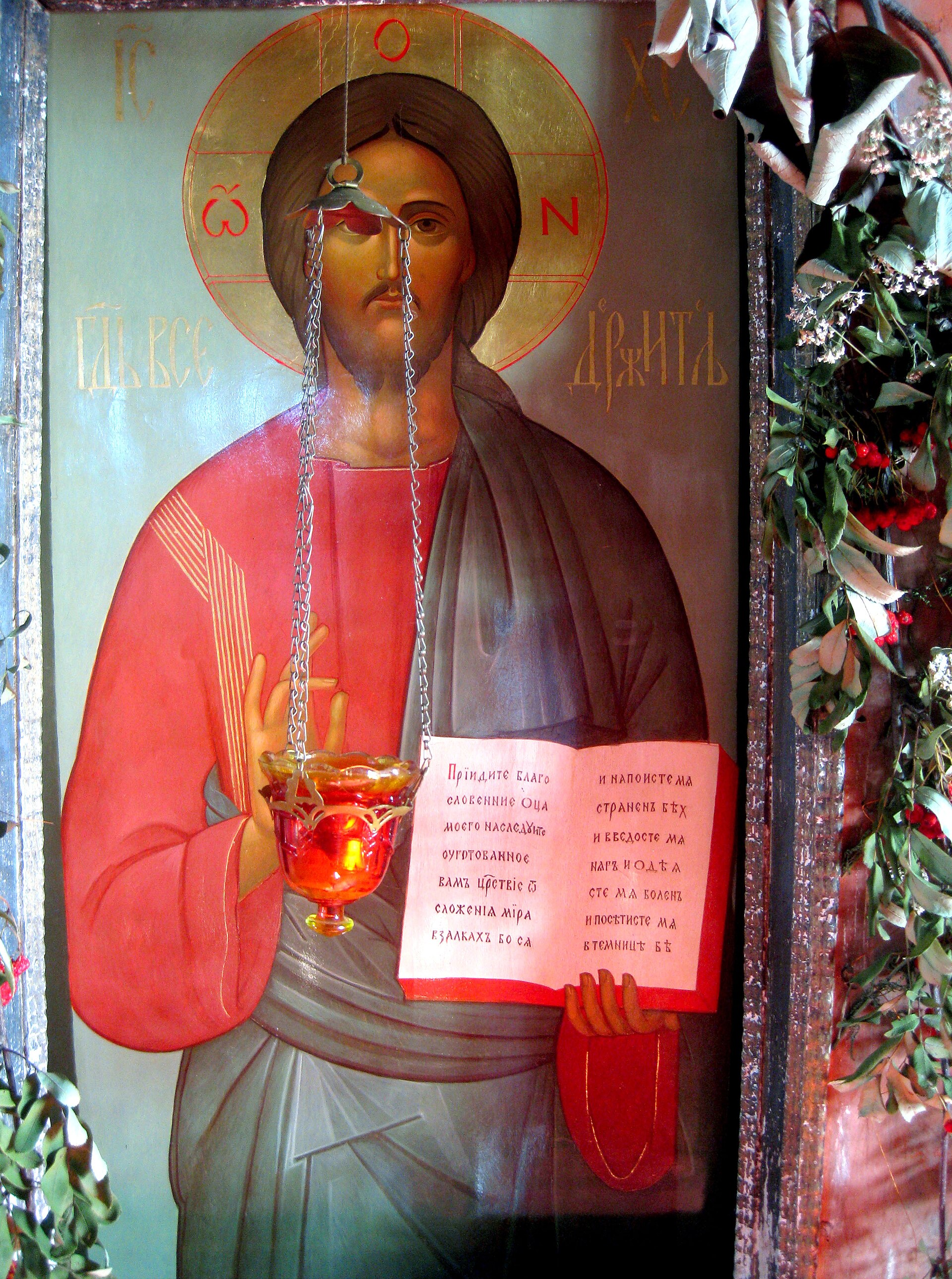
My son at school has an annual calendar of saints, where the names are separated by country (Greek, Slavic). I wonder if the Ukrainian church uses a similar calendar to mark saints.
I saw that Greek calendar your son has — ours at home just lists the saints by date without splitting them by country. Wonder if the Ukrainian Church is really making a new calendar like that or if they're just quietly dropping a few specific Russian names from the services.
Our parish calendar doesn't split saints by nationality either, just goes by the date like you said. From what I've read, the Ukrainian Church isn't creating a whole new calendar, they're mainly removing a handful of Moscow-linked figures from the litanies and local veneration while keeping the shared Orthodox menologion. Have you noticed any particular saint's name that's been dropped in the services your son attends?
Our old wall calendar from the OCA does the same, just dates and a short life snippet. I asked Father last week and he said they're not rewriting the whole calendar either, just adjusting a few local commemorations here in the diaspora parishes that got tangled up with 19th-century Russian politics. Have you noticed any names quietly disappear from your own prayer book?
In our Samara church, the calendar is also simply based on dates, without any “Russian” or “Ukrainian” columns. I wonder what they do with common saints like Sergius of Radonezh or Seraphim of Sarov - are they also deleted from the litanies?
The article says they're removing specific Russian-linked saints from the Ukrainian Church's menologion and adjusting some feast dates, not just dropping names from litanies. Our parish still uses the old Julian calendar with all the saints listed by date, no country tags, but I wonder if the Greeks have quietly done something similar with their own post-1453 figures. Have you seen any changes in the Greek synaxarion your son uses?
Our parish still keeps the old calendar too, and I've noticed they quietly dropped names like Alexander Nevsky from the litanies here in Pittsburgh. My son mentioned the same thing at his parish — they just skip those few tied to Moscow politics and stick with the shared saints on their dates. Have you seen any changes at your place lately?
In Novosibirsk we also have a regular calendar, without these divisions. And, in my opinion, they simply leave common saints, like Sergius of Radonezh, but sometimes rewrite the lives to suit their own history. I wonder what they do with the relics in such cases?
In Zahle, in the restaurant where I work, the walls are full of old pictures of common saints, and there is no division by country. I am amazed at the idea of removing certain names from the liturgy, especially like Sergius of Radonezhsky or Seraphim Sarovsky they mentioned. What would they do with their leftovers if they had them?
Our OCA calendar still has plenty of the old Russian saints on it, and I haven't seen any names scrubbed from my prayer book. Father mentioned the same thing about just tweaking a few local diaspora dates that got mixed up with imperial politics back then. Have you come across any particular saint whose commemoration got quietly dropped in your parish?
Your son is right that they separate them like that at school, it's clearer. The Ukrainian Church does not use such a calendar division, it simply excludes from the cult those saints who are directly connected with Russian politics or the imperial idea. What do you think, would something like this help our own parishes?
In our church in Novosibirsk we also have a calendar simply based on dates, without any notes. And with Sergius of Radonezh or Seraphim of Sarov, they probably leave it as is, because otherwise half of the service will fall apart. Do you often hear such conversations among parishioners in Samara?
In Yaroslavl, too, there are simply dates on the calendar, without unnecessary notes. The parishioners hardly talk about Sergius and Seraphim, they mostly talk about how the priest caught a fish on a parish fishing trip last year. In Samara, which church do you visit most often?
In Nizhny we also have a regular calendar, without these divisions. Sergius of Radonezh is revered here as is; his life is not rewritten. But with the relics, it would be interesting to find out whether they really change something or just leave it as is.
In Yekaterinburg, we also have just dates on the calendar, without any special notes. But people sometimes remember Sergius of Radonezh in the parish, especially when they talk about the Trinity. Which church in Samara do you visit most often, Konstantin?
In Samara, I most often go to the church in honor of the icon of the Mother of God “Quiet My Sorrows” on Bezymyanka - there are services at convenient times, and there is a garden nearby, where you can take a walk after the liturgy. In Yekaterinburg, is St. Sergius of Radonezh only remembered on Trinity Sunday or on other days?
Here in St. Petersburg, too, most often there are just dates on the calendar, without any special notes. And Sergius of Radonezh is remembered mainly on Trinity and on the day of his memory on July 18, especially if there is a church named after him nearby. And in your parish in Yekaterinburg, do they honor him in a special way or do they just mention him in the sermon?
In Yekaterinburg, Sergius of Radonezh is remembered not only on Trinity, but also on the day of his repose on September 25, and on the feast of the discovery of his relics. And in Samara, in that church “Quench My Sorrows” it is really cozy, I was there a couple of times when my son was still studying. The garden after the service is a good tradition; we don’t have one near our favorite church.
In Nizhny, too, Sergius is mostly remembered on Trinity Sunday and on July 18, if the priest mentions it in his sermon. And in your St. Petersburg parish, after the service, do people often come up to his icon or do they just light a candle and leave?
Thank you, Natalya, for the details about Yekaterinburg. In Samara, in “Quiet My Sorrows”, after the liturgy they really often go out into the garden, especially in the summer, and it’s quiet there, you can just sit. And Sergius of Radonezh is commemorated three times a year - interesting, I didn’t know it was so often.
Thank you, Lyubov, for the story about Samara. In our church in Voronezh, too, after services in the summer, people often stay in the church courtyard, especially when it’s hot - children run around, and adults sit on a bench with water. But I also didn’t notice about the three commemorations of St. Sergius of Radonezh a year until I looked at the calendar. In “Quench My Sorrows,” after the liturgy, what do they usually sing or read before going out into the garden?
In Rostov, too, after services in good weather, people linger in the church garden, especially on Trinity Sunday, when the linden trees bloom—the smell fills the entire yard. And I only recently heard from my father about Sergius of Radonezh’s three commemorations a year; I hadn’t paid any attention to it myself before. I wonder, in Samara in “Quench My Sorrows” what type of apple trees were planted in the garden, are they already bearing fruit?
Thank you, Vladimir, for your response from Voronezh. At Soothe My Sorrows, after the liturgy, we usually read prayers of thanks and sometimes a troparion to the icon, and then the people disperse around the garden. Do you have any special custom in your church in Voronezh after services in the summer, besides benches and water?
In Yaroslavl, after the liturgy in the Assumption Cathedral, we also often read the troparion and prayers of thanks, and then people go out into the garden. In the summer, our main “custom” is to prevent mosquitoes from eating us, so many people rush home straight away. And in Voronezh, after the service, do they stay right in the garden for a long time?
In Yaroslavl, after the liturgy in the church, we also often sing a troparion to the icon, and then everyone leaves. And in Voronezh, in “Quench My Sorrows,” is the troparion read to this particular icon every time or only on holidays? I'm curious how things turned out for you.
In “Assuage My Sorrows,” we sing the troparion to this icon every time after the liturgy, not only on holidays. And in Yaroslavl, what kind of troparion are you singing - the one that “Assuage my sorrows” or another? It's interesting to compare.