ORTHODOX HOUSE
⛪ All churches
Sign in
☦ Today Thursday, August 6 / July 24 (old style) 🐟 Fish allowed Gregorian calendar ⇄
Transfiguration of Our Lord
← News feed Pan-Orthodox

The financial dilemma that wound up helping US churches thrive
August 5, 2026 · 1 min read

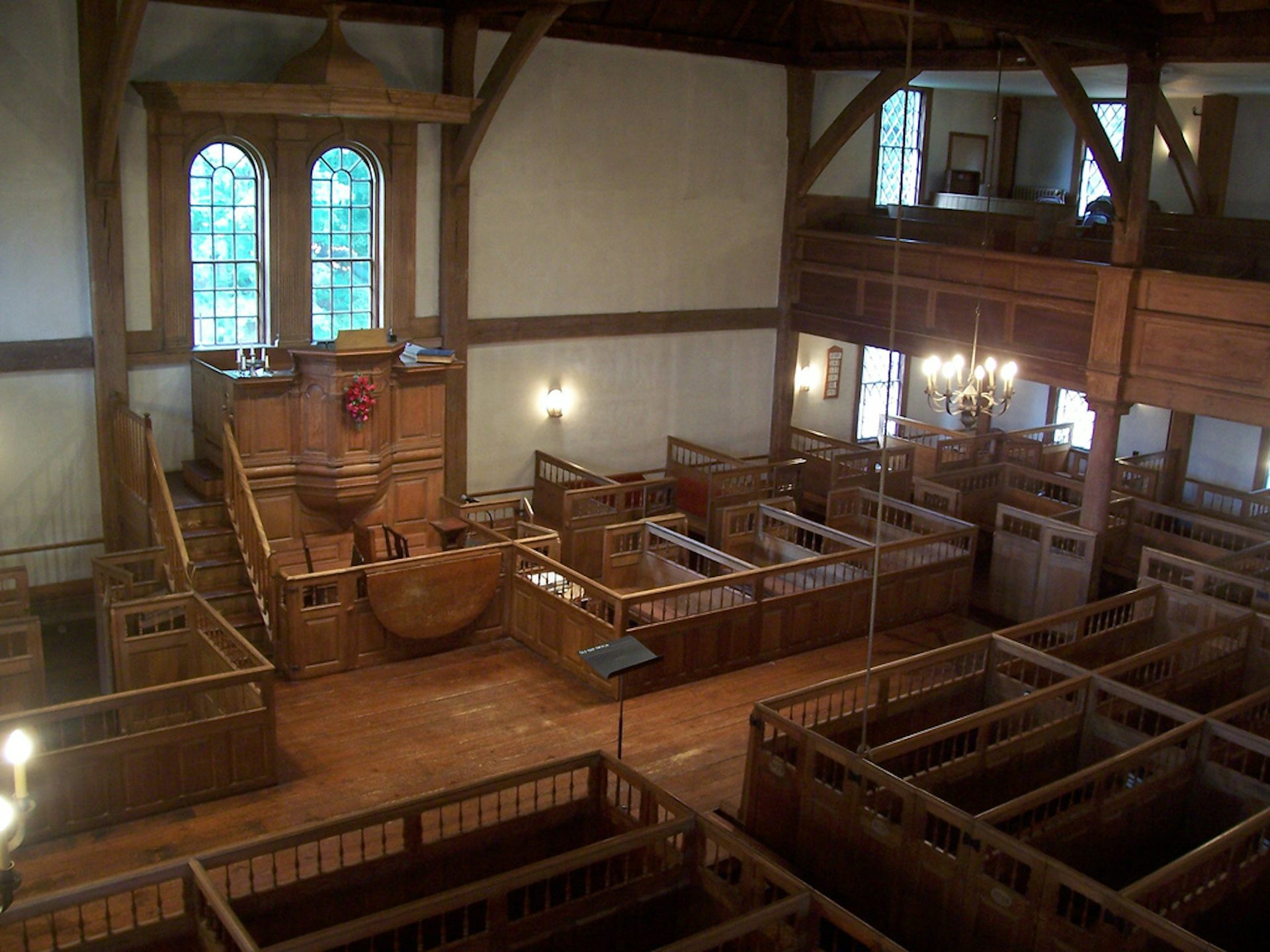
(The Conversation) — By many measures, Americans are growing less religious : Since 2007, for example, the percentage of people who pray daily has dropped, while the “unaffiliated” have grown to 29%. But those numbers can distract from just how much faith still matters in American public life – much more so than in Western Europe, despite its similar religious roots.

About two-thirds of Americans consider religion “somewhat” or “very” important , compared with 56% in Italy, 40% in Spain and 36% in Germany. While about two-thirds of American Christians pray every day , only 18% of European Christians do so.

Why such a stark divide? One reason , some scholars have argued, is the United States’ tradition of separating church and state , also called “disestablishment.” In other words, Americans’ freedom of religion helped faith to thrive in ways that the state-sponsored churches did not.

As my research into the history of philanthropy shows, disestablishment was not just a cornerstone of American democracy. It was also an engine for the extraordinary growth of philanthropy, which played an important role in fueling American churches’ growth and innovation.

Money from members…
Source: Religion News Service  ·  Read the full story →
⚑ Report
💬 Comments (7) 🌐 Show original
И
Ирина Голубева
It is interesting that the author connects the separation of church and state precisely with the increase in donations. In Russia, our churches are also mainly supported by donations from parishioners, especially after the 90s, when there was no government support. Do you think that if some funding from the state were returned to America, people would give less themselves?
T
Thomas Johnson
Interesting point about disestablishment pushing churches to rely on member donations. Here in our London parish we’ve always run on what people put in the plate each Sunday – roof repairs, choir music, the lot – and it does keep everyone more involved. I wonder if the American system also made the churches compete a bit more, like businesses, which might explain some of the innovation the article mentions.
Η
Ηλίας Παναγιωτόπουλος
I agree with Irina, and here in Greece most of our churches rely on candles and contributions from the faithful, not on government subsidies. The article says that disconnection from the state has made American churches more innovative—maybe he's right, because when you have to get people to put their hand in their pocket, you find ways to keep them around. But is it ultimately the faith of the individual that is most important, not the funding model?
T
Thomas Hall
Yeah, that reliance on the collection plate does pull people in more. When I drove the school bus here in Pittsburgh, our parish used those donations for everything from fixing the old boiler to the food bank runs, and you could see folks stepping up because it was their own money on the line. Did your London church ever have to get creative with fundraising the way some American ones did after disestablishment?
И
Иван Орлов
In Samara, after the 90s, everything was also supported by donations - the church was restored and the roof was patched. It is interesting that the author writes about “innovation” from this independence. But here, in my opinion, we simply survived as best we could, without any innovations.
E
Elizabeth Hall
Yes, that competition angle rings true – our little London parish had to get creative with fundraising jumble sales when the roof needed patching back in 2018. It does make you feel more tied to the place than if the state just handed over the cash. Did your collection plate ever lead to any funny disputes over what the money should go toward?
ნანა ბერიძე
In my opinion, it was this "competition" that forced Americans to think how to attract people, and not just sit and wait for the state. Even in our Kutaisi churches, everything comes from believers' cash and Sunday donations, especially in the 90s, when there was neither the state nor sponsors. That is why, for example, the garden of our neighboring church was arranged by the believers themselves, so that people came more.
Sign in to join the conversation →
More stories
Upcoming Events
Ecumenical Patriarchate of Constantinople · August 8, 2026
BISHOP PORFIRY PERFORMED THE DIVINE LITURGY IN THE CHURCH OF THE CROSS IN THE VILLAGE OF BOBRY
Russian Orthodox Church (Moscow Patriarchate) · August 7, 2026
July 25 (old calendar) / August 7 (new)
Pan-Orthodox · August 6, 2026
August 7
Pan-Orthodox · August 6, 2026
🔑Sign in 📖Prayer Book 🕊Live Prayer 📨Submit news 👥Friends 💬Groups My parish 🕯Virtual church 🙏Prayers by agreement 🗓Calendar ✏️Catechesis 🔔Notifications My subscriptions 🛍Store 💬Support