Patronal feast of the Pochaev monastery in Florida: Metropolitan Nicholas led the Liturgy, the brethren are building a churchtranslated
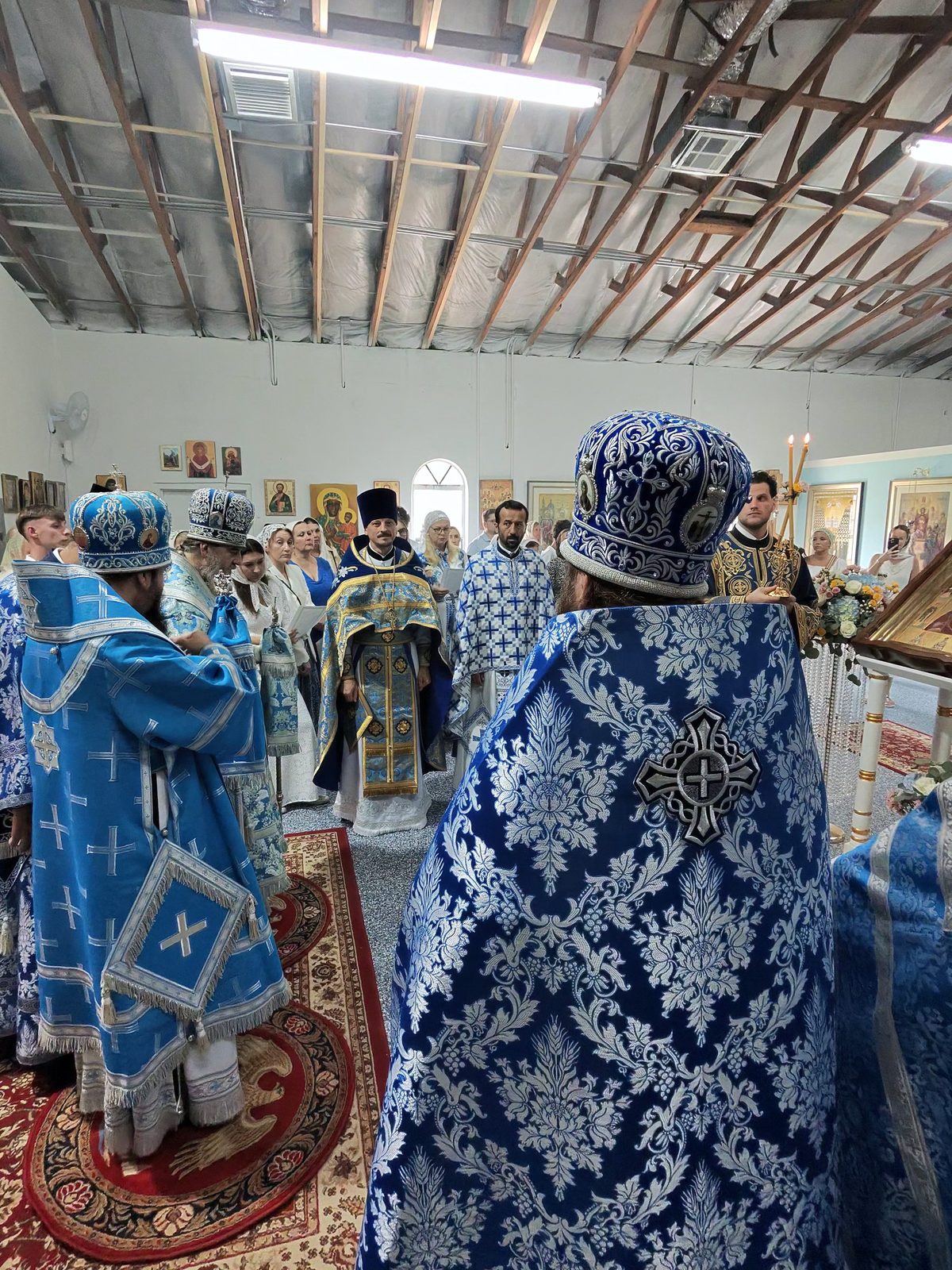
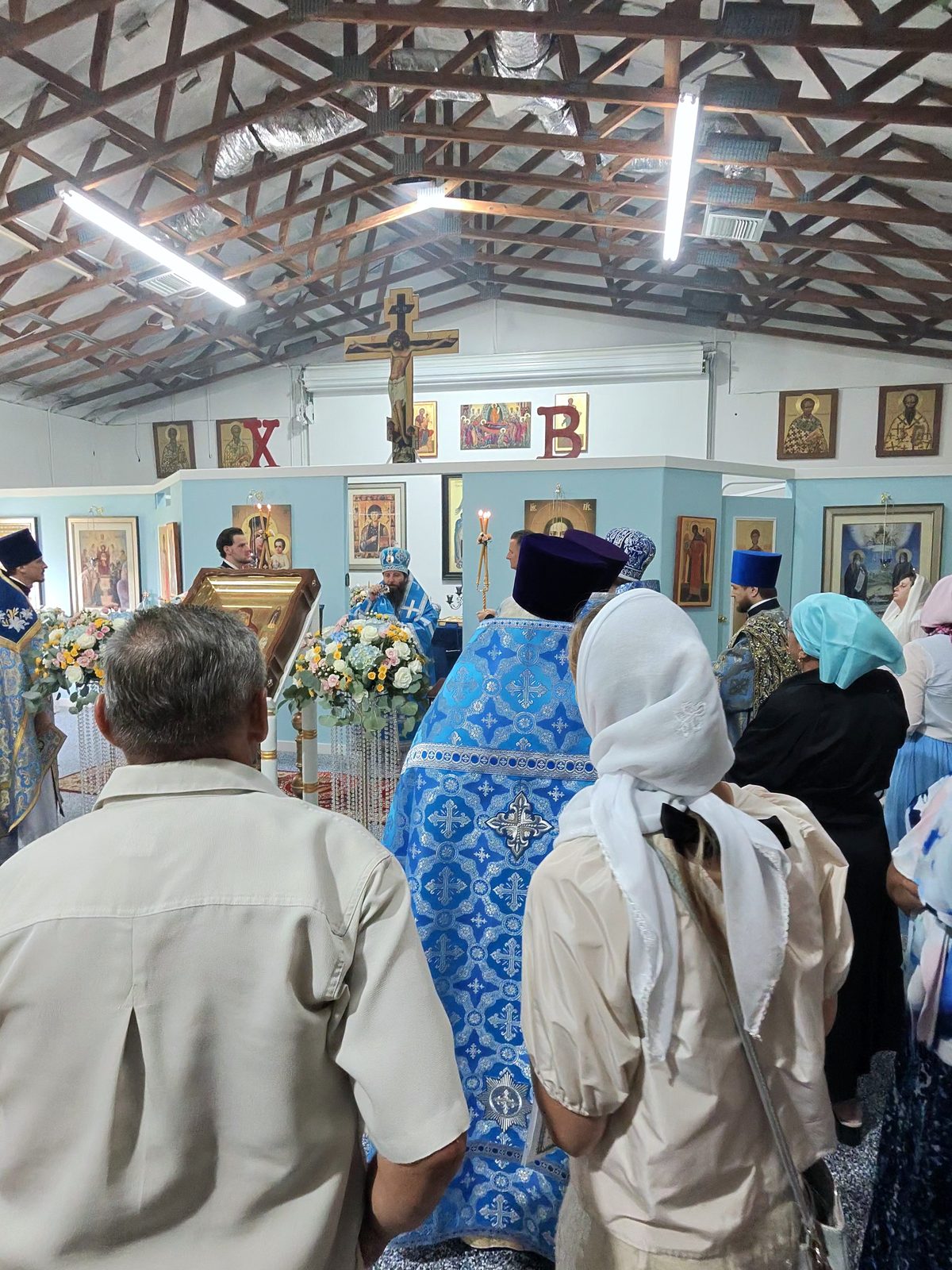
On August 5, the day of the celebration of the Pochaev Icon of the Mother of God, the monastery in honor of this image in the city of North Port in Florida celebrated its patronal feast day. The Divine Liturgy was led by the First Hierarch of the Russian Orthodox Church Outside of Russia, Metropolitan Nicholas of Eastern America and New York, co-served by bishops and clergy.
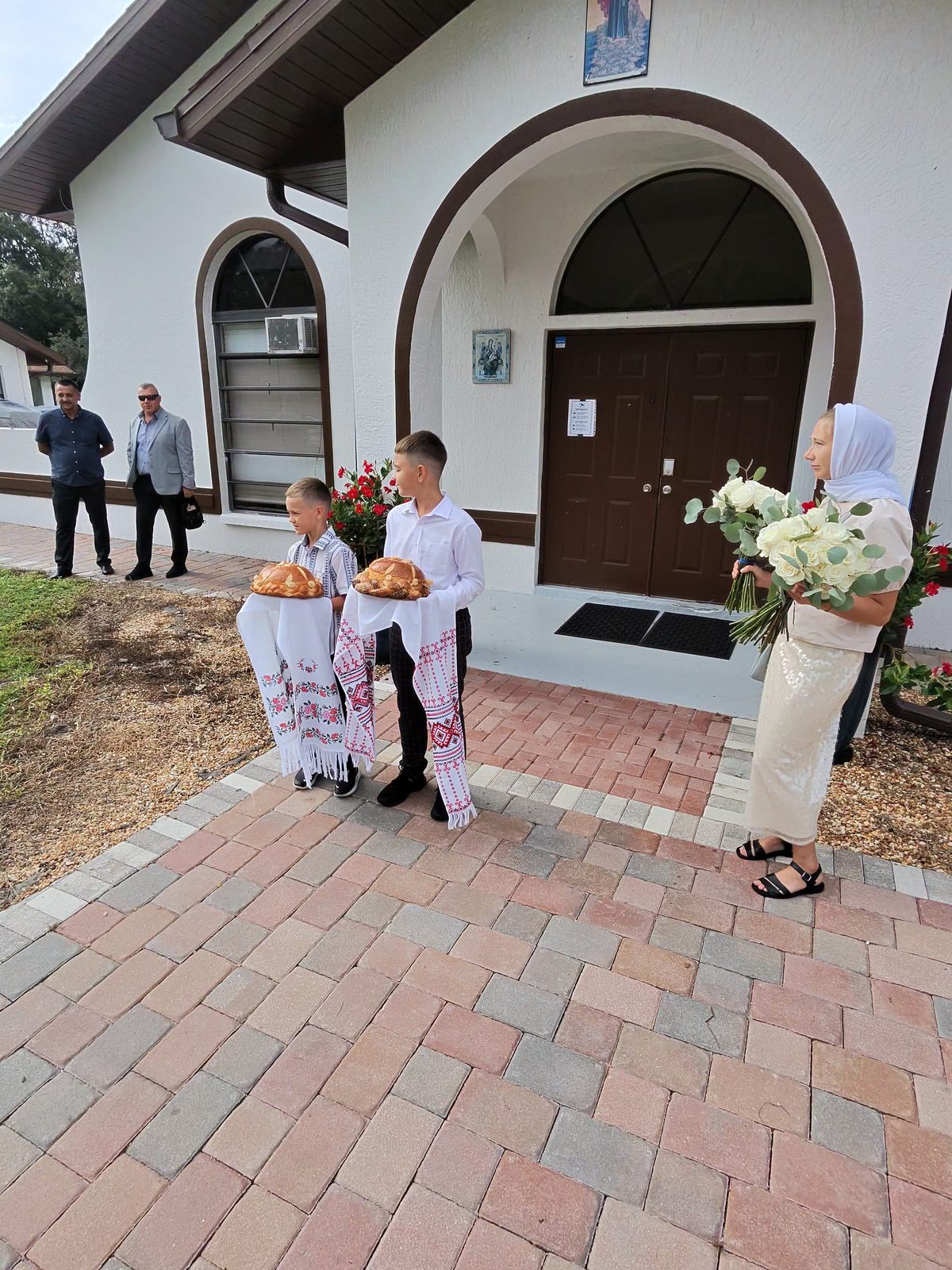
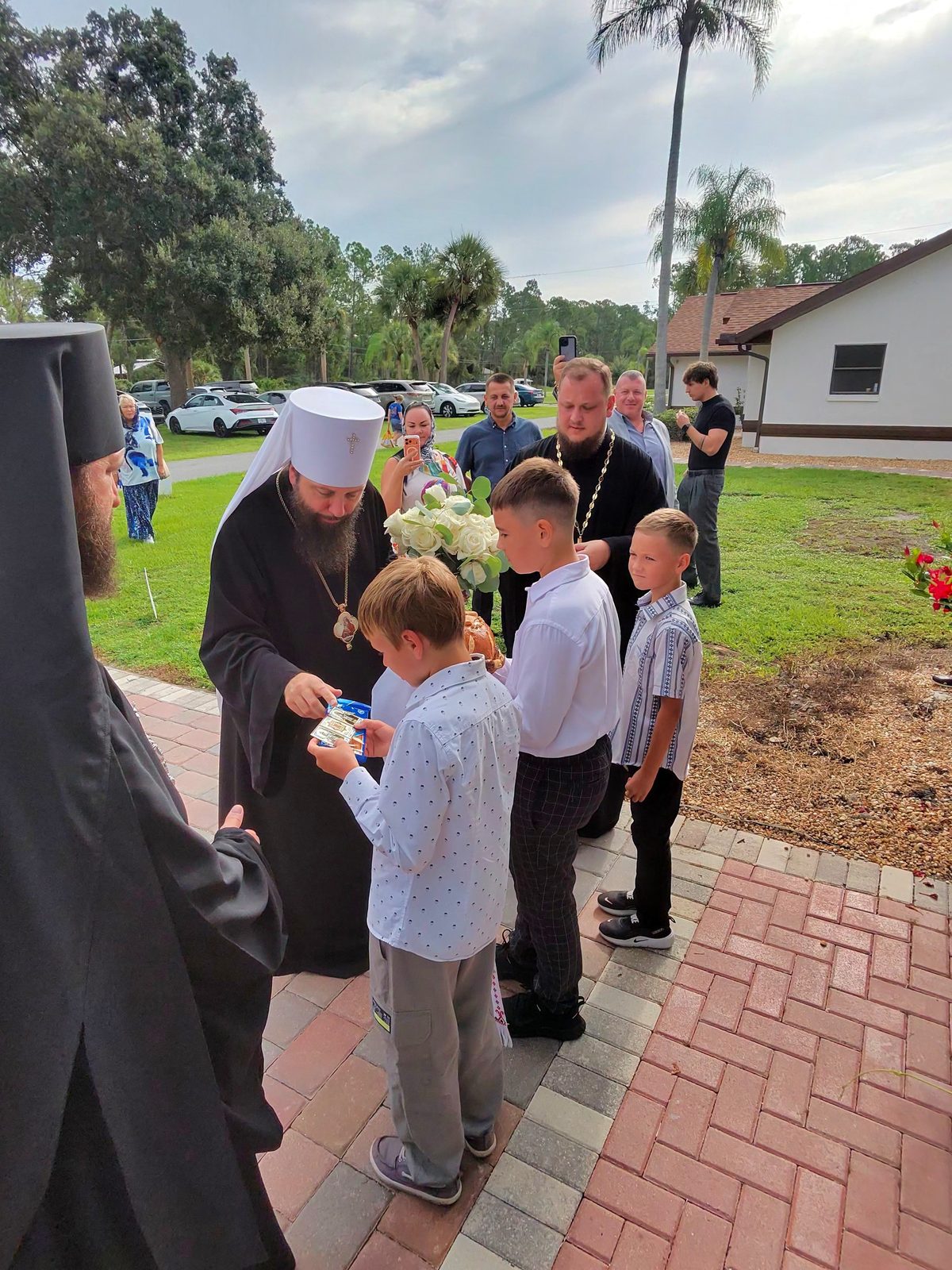
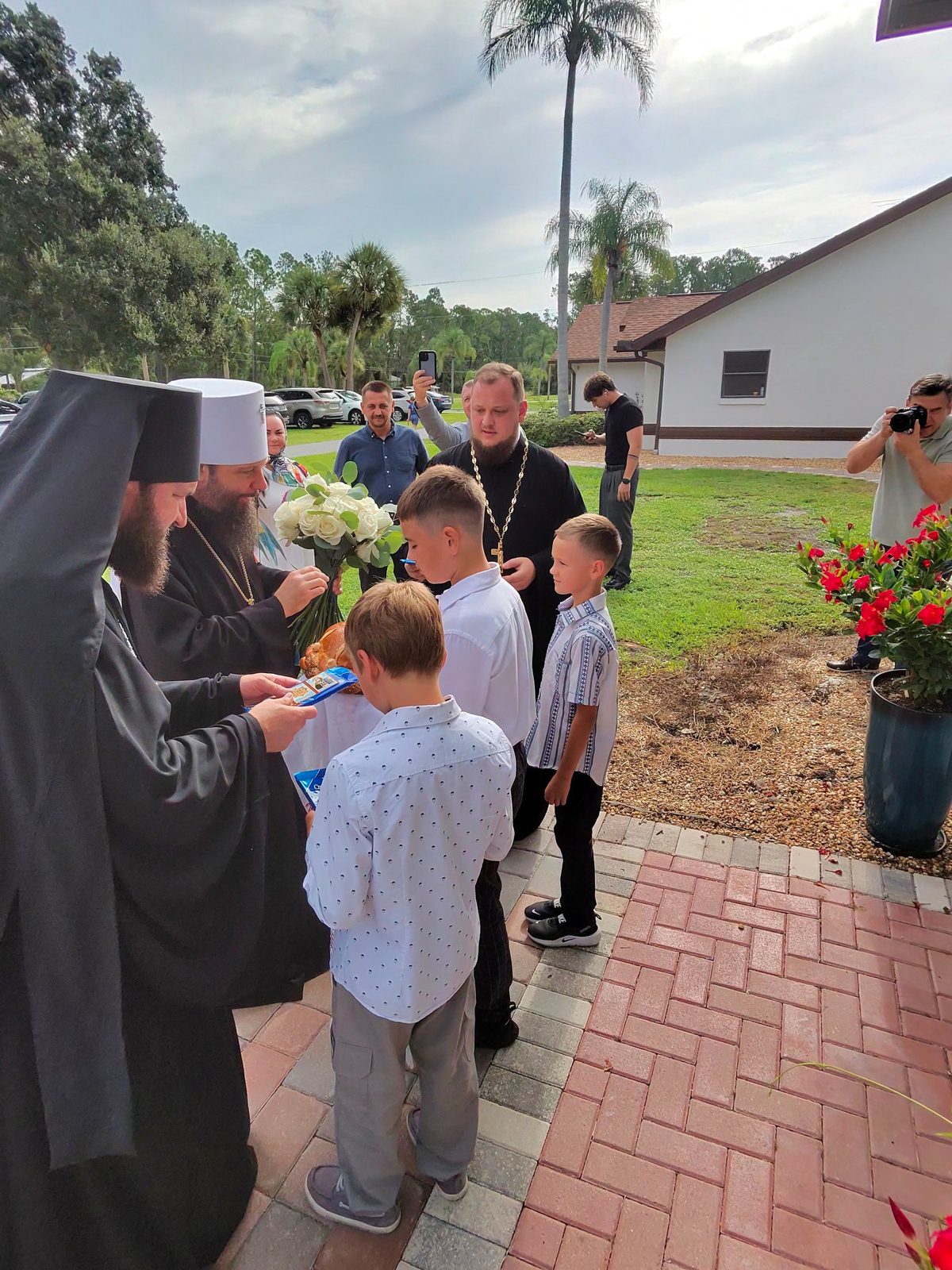
At the entrance, the Bishop was met by children - two boys in embroidered shirts holding bread and salt on embroidered towels. The Metropolitan blessed those meeting and distributed icons and chocolate to the children. Thus began the day for which this parish lives all year.
The monastery that is under construction
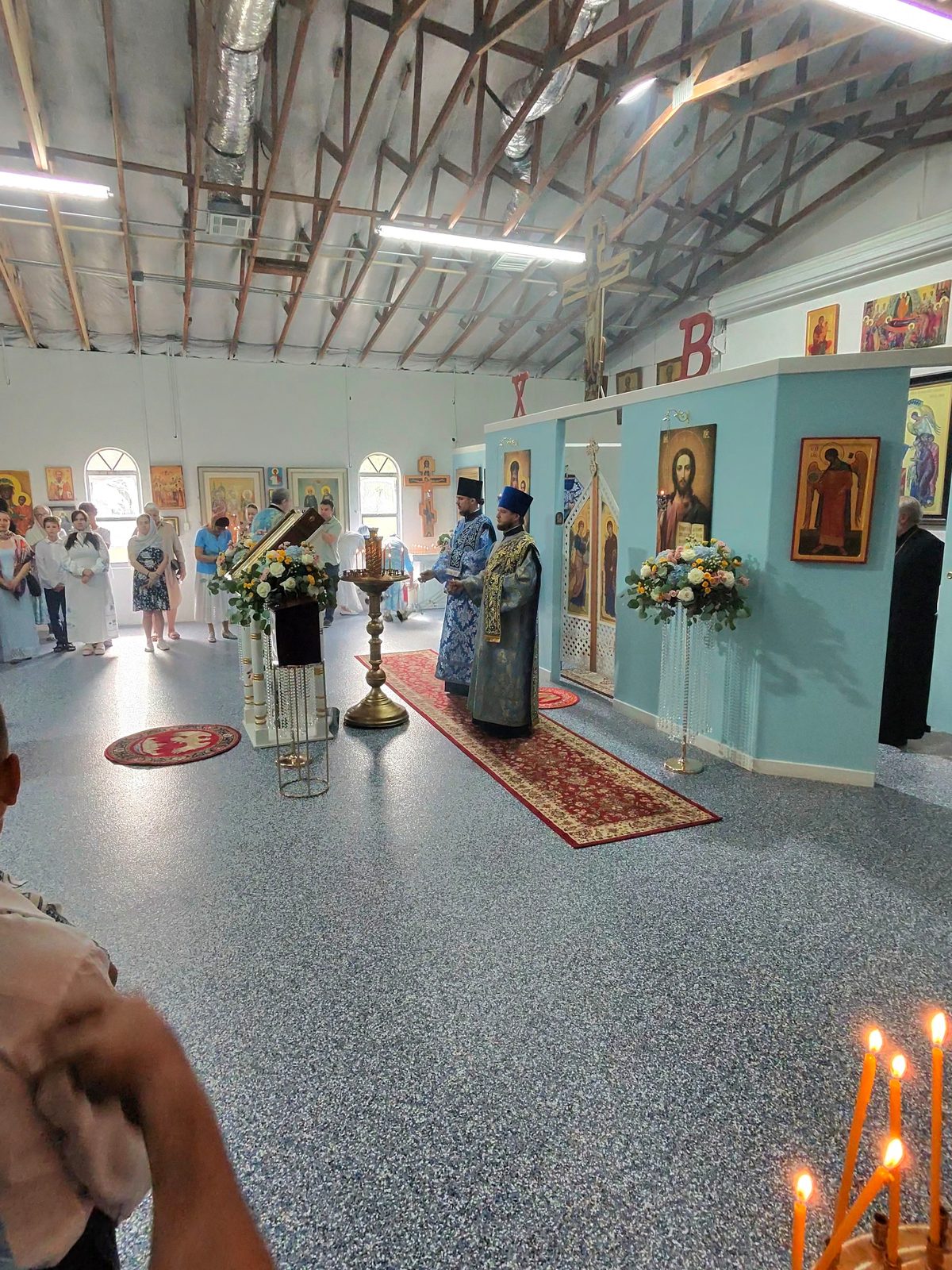
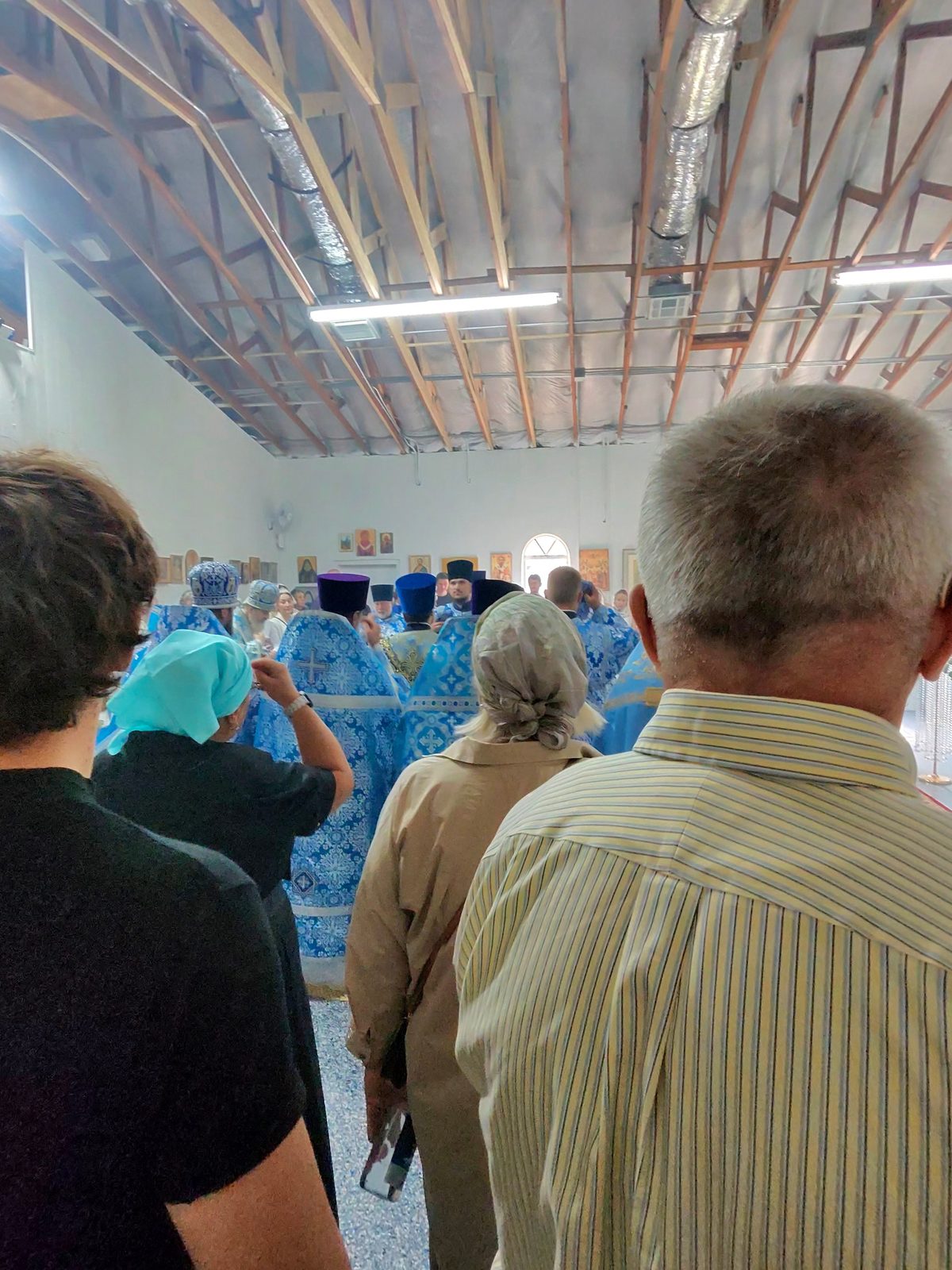
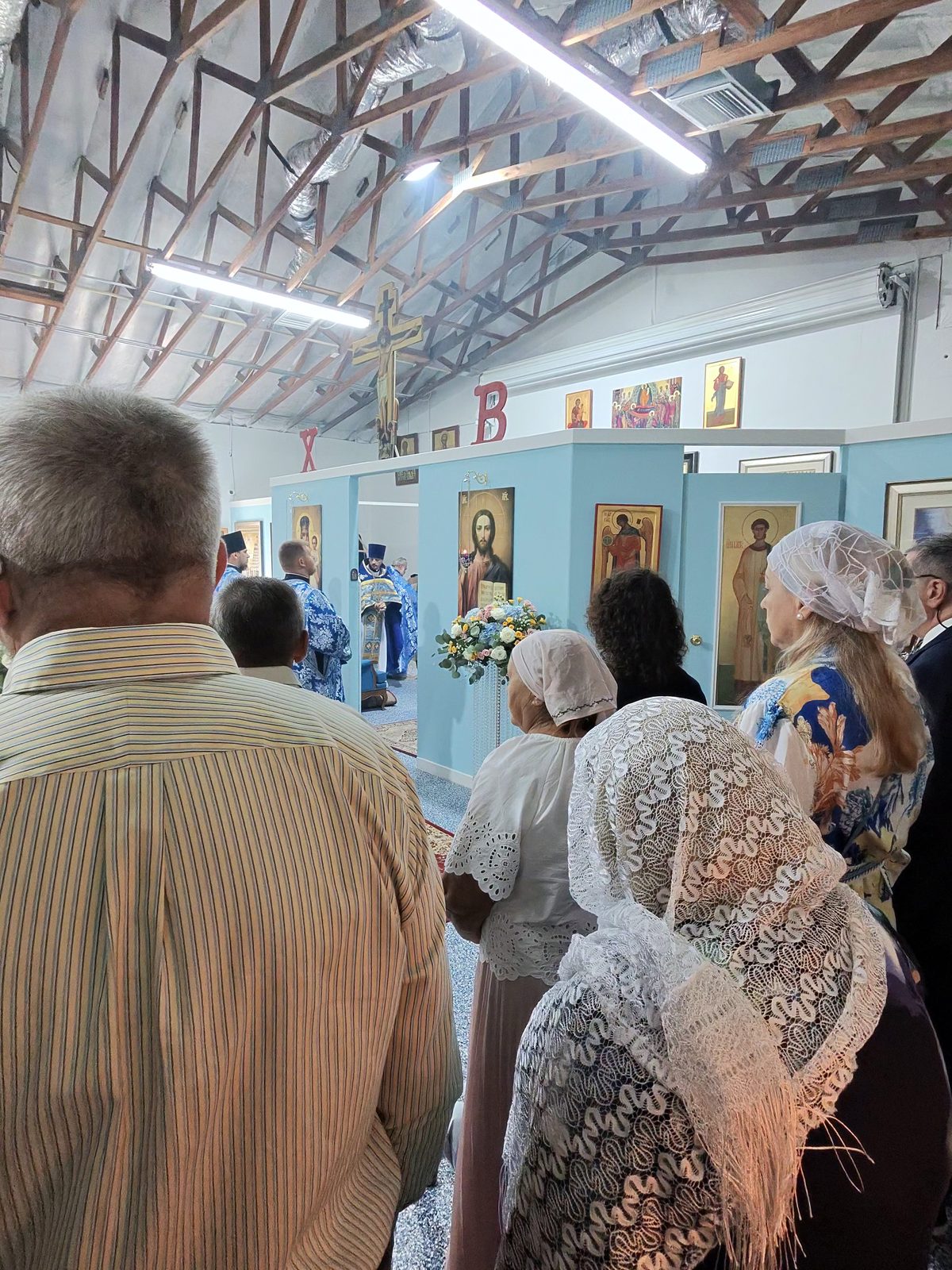
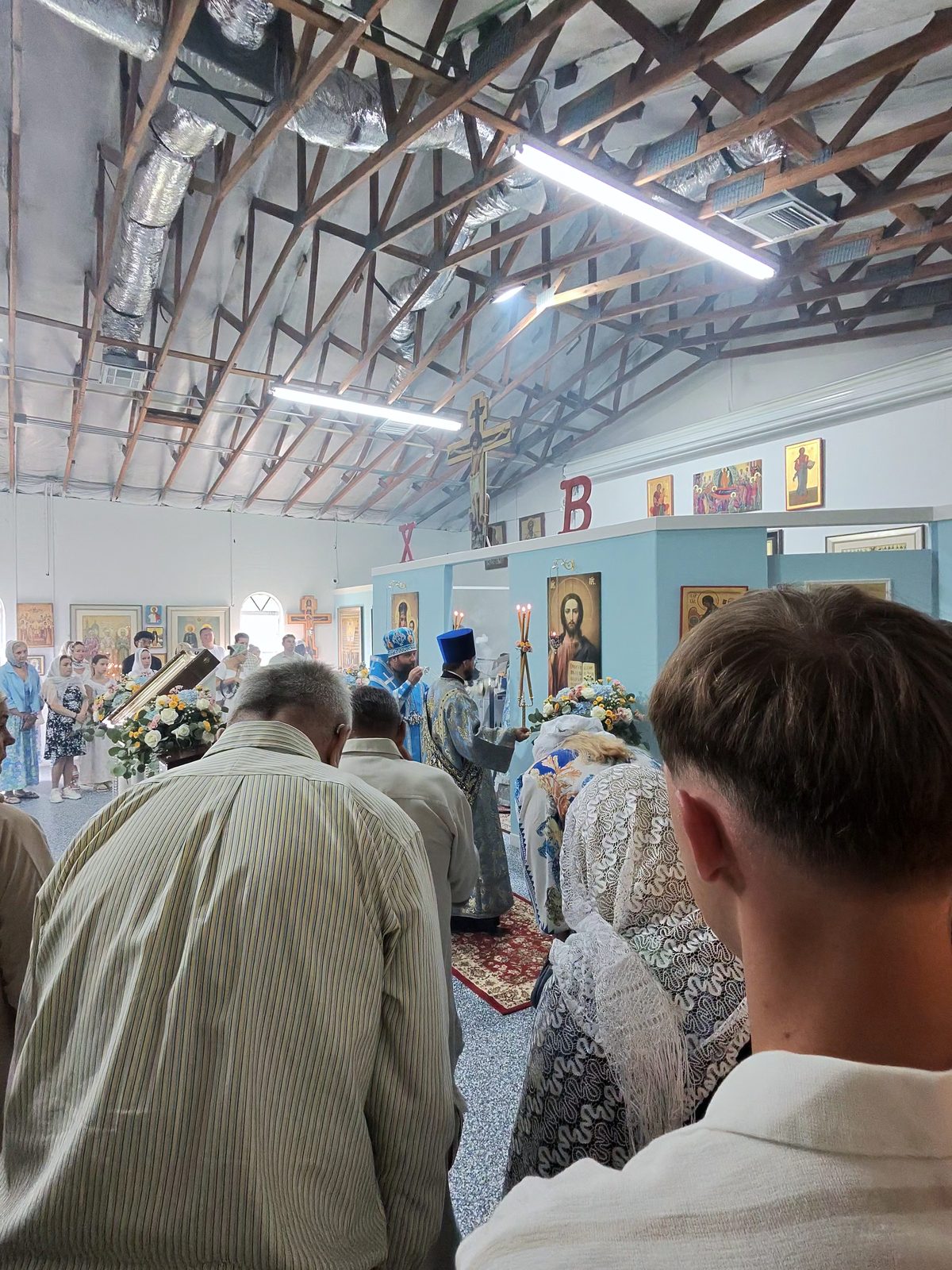
Anyone who enters here for the first time sees the church in work. Overhead there are open rafters, a ceiling that has not yet been sewn up, and communications laid. But the construction is in full swing, and it is clear that it is being done by the hands of the brethren and parishioners themselves.
Recently the monastery acquired domes and a new iconostasis. Now funds are being collected for their installation and for completing the work on the church. This is the case when a monastery is built not by contract, but by the labor of those who pray in it.
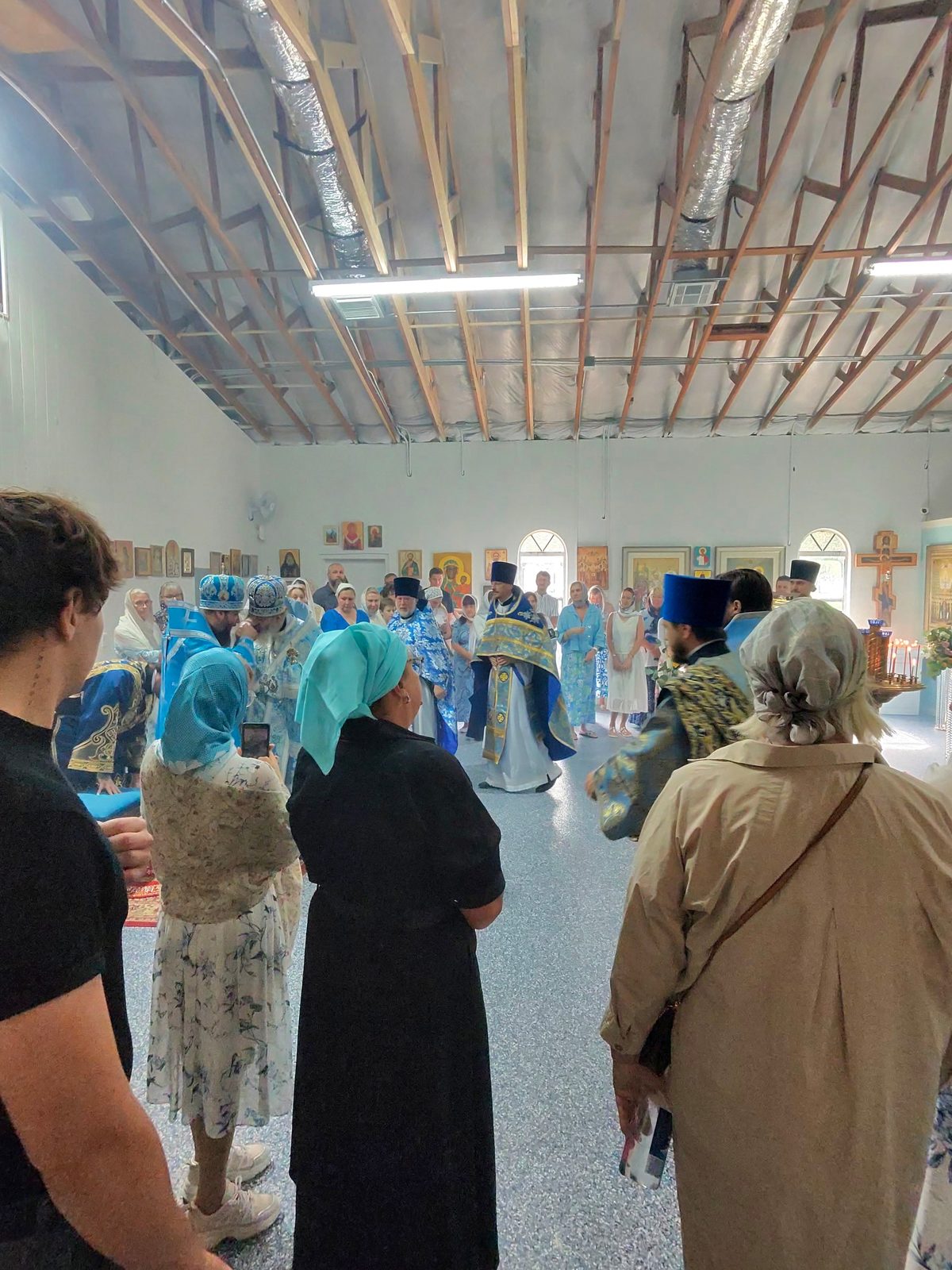
During the liturgy the church was full. Blue vestments of the feast of the Mother of God, a full altar of clergy, women in white lace scarves, children in front - and that special close standing shoulder to shoulder, which happens only on the patronal feast day and Easter.
Glorification according to the prayer behind the pulpit
At the end of the Liturgy, following the prayer behind the pulpit, glorification of the holiday was performed. They sang the troparion and kontakion to the Pochaev Icon, and then the magnification:
We magnify You, Most Holy Virgin, God’s chosen Youth, and honor Your holy image, which brings healing to all who come with faith.
The day before, at the all-night vigil, there was a polyeleos - and on the very day of the holiday, the magnification was sung just like that, at the glorification after the Liturgy, when the entire church stands in front of the festive icon.
The brethren perform morning and evening services without abbreviations and try to preserve Volyn melodies. “These are beautiful chants, they are dear to me and are the connection between my current monastery and my home,” says the abbot of the monastery, Archimandrite Stefan (Khilchuk). They serve only in Church Slavonic: “This language is unifying for Ukrainians, Russians, Belarusians, Moldovans, Serbs, and Bulgarians. Thanks to language, parishioners understand and participate in worship.”
Word of the Metropolitan
In his sermon, Metropolitan Nicholas said that prayer does not remain unanswered, but requires work.
“There must be a feat, and efforts, and understanding, and repentance, and petition,” he said. And about that quiet feeling that is given on such days: “Such a blessed, quiet feeling. Indeed, we calmed down... realizing that there was something holy here, something churchly, something right, something saving. The Mother of God is here.”
The Bishop recalled the event for which the celebration was established - the deliverance of the Pochaev monastery in 1675, when, through the prayer of the brethren and pilgrims, the Mother of God showed Her help. “The people prayed and asked, and the Mother of God heard and came to the rescue,” the metropolitan said.
He also spoke about those who stand in this church far from their native places: “We are not in Pochaev, we are not in the Motherland, we are not in the holy land” - and that they are gathered here by common faith and common prayer. And he concluded with a word about the present day: the miracle happened almost four hundred years ago, but even now they are attacking faith, “they simply want to destroy our church life, our churchliness, our faith of each of us” - and therefore one must turn to the Mother of God “from a pure heart, from a good mind, from a Christian soul,” and then “The Lord, the Mother of God never leaves us.”
How the monastery got its name
The monastery appeared not by design, but by a series of circumstances, which the inhabitants themselves call Providence.
Archimandrite Stefan, originally from Volyn, first flew to America on March 8, 2017 - the day of the discovery of the relics of the blessed Matrona of Moscow. He flew, according to his confession, with despondency and fear, praying: “Lord, Thy will be done.” When the plane was landing, he saw palm trees near the Miami airport - and remembered the Holy Land, Ben-Gurion Airport, where he flew to Jerusalem. The mere thought that this place was somehow reminiscent of the Holy Land calmed him.
He served at St. Nicholas Monastery in Fort Myers. In the fall of 2019, the abbot of that monastery transferred to the Patriarchate of Constantinople; Father Stefan and his brother remained in the Church Abroad - and on Intercession they found themselves outside the monastery. We went to New York to visit the then First Hierarch, Metropolitan Hilarion (Corporal). The Bishop blessed them to return to Florida and gather the faithful and gave them an antimension.
They wanted to call the community Pokrovskaya - they had to leave the former monastery right on Pokrov. But Metropolitan Hilarion said differently:
“I prayed and thought that there are many Churches of the Intercession in the Church Abroad, and I would like you to name your future monastery in honor of the Pochaev Icon of the Mother of God.”
The Bishop wrote the name of the church by hand and handed it to him. “The Bishop’s decision fell warmly on my heart,” recalls Hieromonk Arkady (Polishchuk).
Fifty thousand and three hundred fifty
The first years were poor. The official opening of the community took place “on St. Nicholas” in December 2019. They served in rented premises; there was only enough money for rent; behind the altar there was a small room, which became the monks’ first home. The Chicago Diocese helped by sending about ten thousand dollars.
Easter 2021 was celebrated in the midst of Covid. In Florida they did not prohibit serving, but the brethren still covered the windows with paper so that the light could not be seen, and the parishioners parked their cars away from the church. “The atmosphere in the church was like in ancient Christian times,” recalls the abbot.
When the collection was announced for the purchase of the present building, the first to make a donation was a Baptist.
“The time has come, and we ourselves became realtors,” says Father Stefan. “We’ll serve the Liturgy, and then we’ll start monitoring suitable real estate and go look. The whole of North Port and other nearby towns, including the police, already knew us.”
What happened next was what people in the monastery talk about as a miracle. A fifty thousand dollar deposit was required to take out a bank loan. This was announced in the church - and a woman came with a check for exactly fifty thousand. Then one benefactor reported that his confessor blessed him to pay the entire missing amount. The brethren counted: three hundred and fifty thousand were missing. The benefactor sent just enough to get by without a loan at all.
On the same day, the abbot signed the agreements, and they immediately served a thanksgiving prayer service and sprinkled holy water on the ground around the house and on the street. On February 18, 2025, the brethren moved to a new building. The icons were transported by the monastery assistant, truck driver Sergei from Canada; While they were unloading, the women cooked the first lunch in the new church. A week later, “for forty martyrs,” the first service was held here.
And on the first Easter, so many people came to the new church that the brethren were only surprised: the announcement of the move was only on the old building; there was no search for a monastery yet. “Father Alexander shouted “Christ is Risen!” so loudly that the roar of the response “Truly is Risen!” stood all over the street."
Inhabitants
Now there are four inhabitants in the monastery: two priests and two deacons.
Hieromonk Arkady (Polishchuk) - from Kovel. Before America, he spent a year serving as a cook at the Kyiv Theological Seminary. In December 2019, Metropolitan Hilarion tonsured him as a monk and ordained him a deacon and then a priest. “I was ordained by two first hierarchs - the then and the future,” he recalls: at his diaconal ordination in the choir, the then Bishop Nikolai (Olkhovsky), the current First Hierarch, who led this patronal feast, sang.
Deacon Alexander Khartonyuk is from the village of Zhirichi in Volyn, where as a boy he sang in the parish choir and served at the altar. He entered the seminary with an unusual blessing: the revered confessor Archpriest John Khilchuk - as it turned out, a relative of the abbot - died before the young man had time to talk to him, and appeared to him that same night: “Do you want to enter the seminary? Go ahead. I bless." He arrived in Florida on August 1, 2023. “When the airport door opened, I felt heat and humidity that I had never known before.”
Hierodeacon Paisiy (Alekseevets) - from the village of Zaluzhye in the Rivne region. When asked when he started going to church, he answers: “I didn’t start going, but they started carrying me.” Four priests, three deacons, three monks and two nuns came out from his village: “If we all gather together for the patronal feast, then there will be a full altar and a choir. And all of them!”
The monastery is like a family
When asked about the future of the monastery, the abbot answers with the words of Archimandrite John (Krestyankin): “The era of large monasteries is already in the past.” Moreover, far from the homeland, Father Stefan believes, monasteries that are more reminiscent of families are important. “The core of the monastery is the liturgy.”
He also talks about what he is afraid of: “Now, unfortunately, there is a fashion to make “Disneylands” out of monasteries - abodes that are beautiful in appearance.” And he recalls the abbess of holy life, who, to the sisters’ proposal to arrange front gardens, replied: “No need, sisters, the main thing in a monastery is the service, the main thing is prayer,” and added: “There will be times when there will be front gardens and flowers, but there will be few nuns at the service.”
He speaks about the inner life of the brethren without embellishment: “No one can humble a monk like another monk, and no one can humble an abbot like his brethren. Our salvation lies in patience and humility.”
And for those who come to the monastery, and for those who are far away and cannot come, the abbot wishes one thing:
“For myself and others, I wish that we learn to listen to God, to understand the will of God. At the seminary, Father Rector taught us: learn to listen and hear... If we learn to listen to each other, we will learn to hear both the voice of God and the will of God.”
The parish that became home
Many people are remembered here during the liturgy. “At the liturgy, I remember both the American country and the long-suffering country of Ukrainian, Russian, Moldavian, Serbian, Bulgarian - all the countries from which people pray in our monastery,” says the abbot.
Refugees from Ukraine have been coming here for several years now. “If someone in his homeland was not a church member, then, having arrived in a foreign country, he finds both faith and a circle of friends. It is the Orthodox Church that becomes unifying for them outside the homeland.”
There is also an Easter tradition here: on the third day of Easter, the brethren invite clergy from nearby churches - foreign, American, Serbian - to the monastery.
Remembering his grandmothers, Father Stefan quotes the words of Metropolitan Pitirim (Nechaev) of Volokolamsk. Correspondents once asked the Bishop with a grin: in Orthodox churches, it is mainly “white handkerchiefs” - grandmothers - who pray; what happens when grandmothers die? The Bishop replied: “Our grandmothers are immortal.”
The monastery in honor of the Pochaev Icon of the Mother of God is located at 3393 Ulman Avenue, North Port, Florida, and is part of the Florida deanery of the Eastern American Diocese of the Russian Orthodox Church Outside of Russia. The rector is Archimandrite Stefan (Khilchuk).
Biographical information and direct speech of the monks are given from an interview with Archimandrite Stefan (Khilchuk), interviewed by Tatyana Veselkina; published on the official website of the Eastern American Diocese of the ROCOR on July 27, 2026 and on the Pravoslavie.Ru portal on July 15, 2026. The words of Metropolitan Nicholas are quoted from a recording of a sermon delivered in the church on August 5, 2026.