ORTHODOX HOUSE
⛪ All churches
Sign in
☦ Today Wednesday, September 9 / August 27 (old style) ✦ Fast day Julian calendar ⇄
Ven. Poemen the Great · Great-martyr Phanurius the Newly Appeared of Rhodes
← News feed Pan-Orthodox

Where Do Mission Hospitals Fit in the 21st Century?
July 22, 2026 · 1 min read

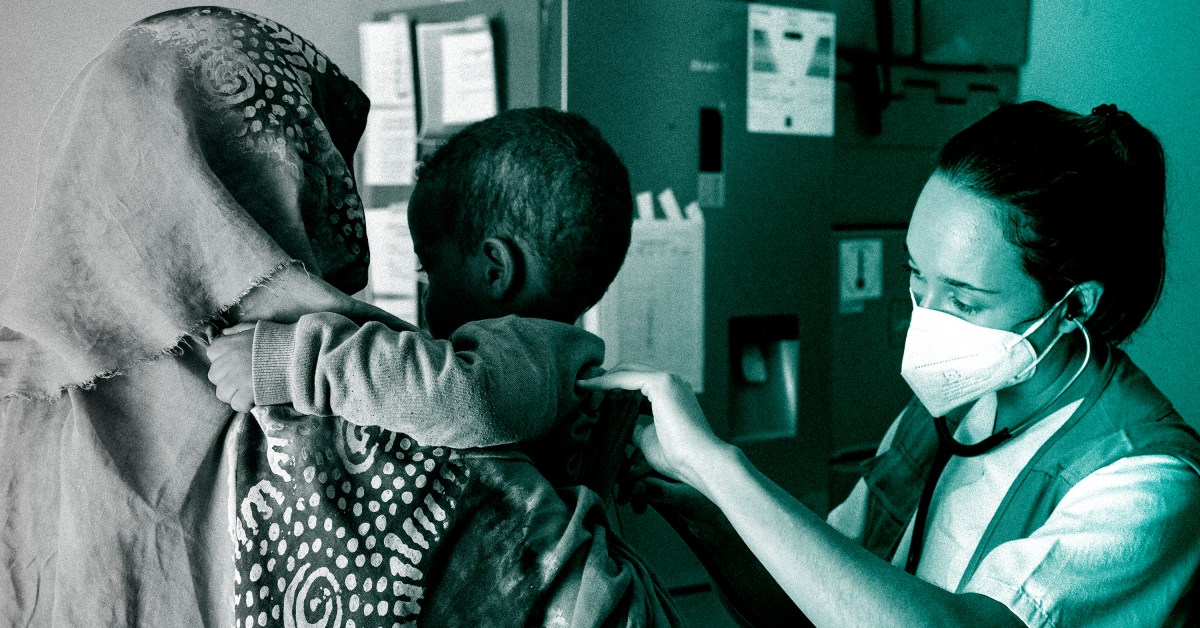
Mission hospitals were a remarkably successful strategy in 20th-century mission work, especially in Africa. A century ago, the average mission organization would find the highest-elevation spot it could in a region (to reduce the risk of malaria) and build a hospital, a school, and a church on that site. Over time, those places became thriving Read more...

The post Where Do Mission Hospitals Fit in the 21st Century? appeared first on Christianity Today .

Source: Christianity Today  ·  Read the full story →
⚑ Report
💬 Comments (17) 🌐 Show original
Ю
Юлія Шевченко
It is interesting that a hundred years ago, they simply chose the highest place so that there would be less malaria, and built everything together - a hospital, a school and a church. We also had such an old hospital at the monastery in Poltava, people still remember how they used to go there. And now, apparently, it is already difficult to keep large hospitals, it is interesting what exactly is changing in Africa.
G
Gregory Mitchell
Yeah, that bit about picking the highest spot to dodge malaria makes sense — practical move back then. Our old monastery hospital in Poltava sounds a lot like those early setups too. Wonder if today it’s smarter to run smaller clinics that partner with the local government instead of trying to keep big standalone hospitals going.
Л
Людмила Шевчук
Yes, Yulia, in Poltava that old hospital attached to the monastery is still remembered by older people. We had something similar in Lviv with the hospital of the Basilian Sisters - even my grandmother went there to give birth. And in Africa, as I read, there is now more emphasis on outpatient clinics and prevention, because it is expensive to maintain large hospitals and the state is already building its own.
П
Полина Соловьёва
Here in St. Petersburg, I also remember how in Soviet times there was a small outpatient clinic at the Trinity Cathedral, where grandmothers from the parish went for dressings. Now, it’s probably really more profitable not to drag out a large hospital, but to do as they write in Africa - outpatient clinics and vaccinations, so that people don’t wait until they get completely sick. Otherwise, we have queues at our clinics that last for months.
С
Світлана Мороз
Yes, Yulia, that Poltava monastery hospital was indeed on a hill near the river, where the wind blew well. Now in Africa, it seems, they are switching more to small clinics and local training, so as not to drag huge buildings. And what do you think, should we still support such large hospitals, or is it better to invest in prevention?
Н
Надежда Семёнова
In Nizhny in the 90s, at one church we also had such a room with a sister of mercy, grandmothers ran there for injections. I completely agree that outpatient clinics and vaccinations are now much more practical than a huge hospital, which will not be possible later. Did your St. Petersburg outpatient clinic at the cathedral also help with medications or just bandages?
Л
Леся Шевченко
Yes, Svitlana, the Poltava hospital really stood in a good place, and the wind saved there. I also see that in Africa now more often they do small clinics and train locals. But in our country, maybe it is worth supporting at least one large hospital per region, because prevention is good, but when a person is already sick, where to take him?
M
Mark Wilson
Yeah, that old trick of building on the highest spot to cut down malaria risk was smart back then. Our parish in Denver helped support a small clinic in Kenya a few years ago that focused on outpatient stuff and teaching locals basic health stuff instead of trying to run a full hospital. Sounds like that's the way to go now so it doesn't fall apart when the mission money dries up.
П
Пётр Киселёв
In Voronezh in the 90s, we also had a similar room at the church, only the injections were given mainly to the elderly from the hostel nearby. I completely agree with you that an outpatient clinic with vaccinations and simple medications is cheaper and more necessary than a large hospital. Is this little room still open in Nizhny or has it closed?
Б
Богдан Коваленко
Yes, Yulia, that Poltava monastery hospital was really up to the mark, so that mosquitoes wouldn't bother you so much. In Odessa, we also remember how at the church of St. Ilya once kept a small shelter for the sick. And in Africa, perhaps the most important thing now is to train local doctors and give medicine, because large hospitals are expensive. Do you think it is worth building new ones?
С
Соломія Ткаченко
Yes, Lesya, in Poltava they really chose a hill, the wind always helped there. In Kharkiv Oblast, one large inpatient facility per region would not be a problem, because there is often nowhere to transfer people after operations. And what do you think, who should maintain it - the church or, after all, the state?
М
Микола Ткаченко
Yes, Bohdan, the mention of the Poltava monastery hospital is exactly to the point - the altitude really saved from malaria. In our parish, they also said that now it is better to invest in the training of local paramedics and pharmacies than in large buildings. And you yourself, what do you think, will only medicine be enough without the presence of the church nearby?
Ю
Юрій Мороз
Yes, Lesya, in Poltava, that hill really saved well from malaria, just like in Africa once upon a time. It seems to me that one large hospital per region is now needed precisely for severe cases, because prevention is not always in time. Have you seen how patients are treated after surgery in such hospitals?
Л
Леся Шевченко
Yes, Bohdan, the Poltava monastery hospital was indeed successfully placed at a height. In our parish, we also saw how after courses for local nurses, people began to treat simple things themselves at home, without large hospitals. And have you heard whether in Odessa now under St. Did Elijah restore something like that?
П
Петро Гончар
Yes, Yuriy, that Poltava hill really once coped well with malaria, just like in Africa. One large hospital per region for severe cases is appropriate, because care and rehabilitation are often lacking after operations. And what do you think, should churches still participate in the financing of such hospitals, or is it better to focus on prevention?
М
Максим Мельник
Yes, Peter, you correctly noticed about the rehabilitation after operations - here in Kharkiv, after discharge, we often have to look for someone to help us at home. I think it is better for churches to support prevention and care at parishes, and not to pull entire hospitals. Have you seen how it works in some of our dioceses?
Ю
Юрій Руденко
Yes, Solomy, in Poltava they really chose a hill, the wind always saves there. In Lviv Oblast, there is often no place to transfer a person after operations, so an additional hospital would be in order. And who, in your opinion, should be the first to take action - local parishes or regional authorities?
Sign in to join the conversation →
More stories
September 10
Pan-Orthodox · September 9, 2026
August 28 (old calendar) / September 10 (new)
Pan-Orthodox · September 9, 2026
Congratulation of the Primate to Archbishop Iona of Obukhiv on the 15th anniversary of his episcopal ordination
Ukrainian Orthodox Church · September 9, 2026
Martyrs Menodora, Metrodora and Nymphodora
Romanian Orthodox Church · September 9, 2026
🔑Sign in 📖Prayer Book 🕊Live Prayer 📨Submit news 👥Friends 💬Groups My parish 🕯Virtual church 🙏Prayers by agreement 🗓Calendar ✏️Catechesis 🔔Notifications My subscriptions 🛍Store 💬Support