Desert without sand: where Pskov monks hid from the worldtranslated
The word desert evokes the corresponding associative series: sand, scorching sun and endless deserted space. But in the ancient Russian monastic tradition, a wilderness, a wetland, or a monastery remote from human habitation could be called a desert. In the 15th–16th centuries, the Pskov land was literally dotted with such deserts. The monks left existing monasteries for the forests, settled near rivers and lakes, built small cells among the swamps and lived there in prayer and silence. This phenomenon is called Pskov desert dwelling. On the day of remembrance of one of the most famous hermits of the 16th century, St. Nikander of Pskov, we will tell you more about him.
Desert in the forest and swamp
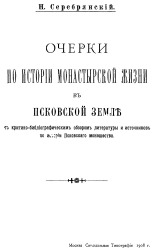
Cover of the 1908 edition
The origins of desert living go back to the first centuries of Christianity. In the 4th century it became widespread, primarily in Egypt and Palestine. People left cities for deserts, where they spent their lives in prayer, asceticism and solitude. These hermits laid the foundation for Christian monasticism. There were no deserts as such in Rus'. But they could be a forest, an island, a river bank, a small expanse of land among swamps. In the 15th century, the departure of monks from old monasteries to forest deserts began...