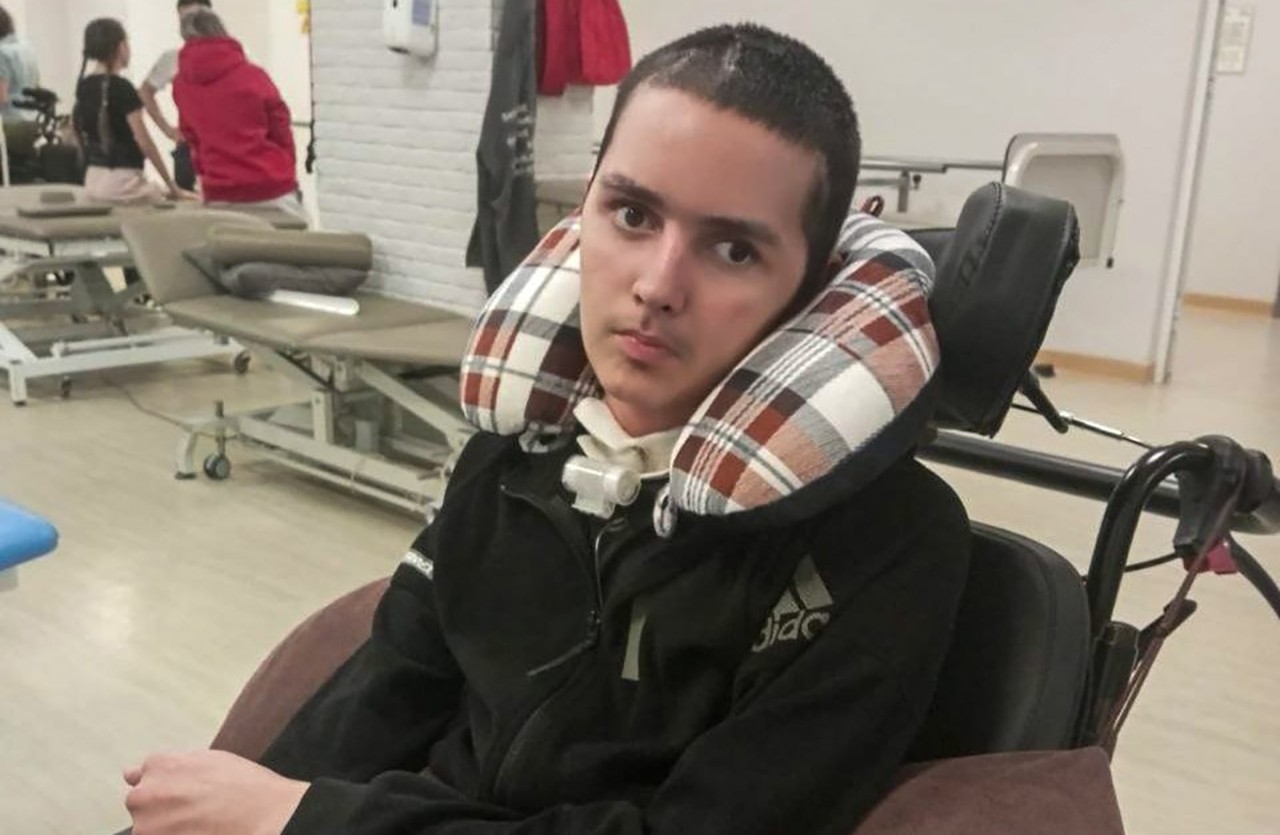
After the operation, the doctor said: “If he fights, he will live.” How many such words are there in prayers? Doctors often know that we believers should not forget.
I agree, but in prayers it’s not about “fighting,” but about “praying and trusting.” As in the Nizhny Novgorod Dormition Monastery, the brethren always say: “Don’t fight yourself, but trust in the Lord, and He will give you strength.”
I agree with the brethren of the Assumption - in our Tula church, at the icon of the Quick Hearer, they also say: “Don’t fight, but trust.” How do you pray for the sick - in your own words or ask for holy prayer?
I agree, as in our Voronezh Spaso-Preobrazhensky Monastery, on the wall behind the cell door there is the following inscription: “Don’t fight, but trust.” Yesterday I just saw a nun, conveying a prayer for a sick person, and said: “Don’t scream, but breathe into prayer.”
In our Yekaterinburg church we also honor the icon of the Quick Hearer, but when Ivan Petrovich was in the hospital, his wife brought the icon from home to place it in front of the altar. Do you also use it in your Assumption Church during the service before an operation?
Thank you, Sophia, in one of our churches in Moscow there was also a similar inscription on the wall near the candle box: “Don’t fuss, pray.” After the doctor’s words about “if he fights, he will live,” it just occurred to me that sometimes there is a struggle—it’s when you just breathe and don’t let go of your prayer. And in what exact place of the monastery does this inscription hang, behind which cell?
In Uspensky, we also bring home icons, but the Quick Hearer is usually placed not in front of the altar, but on the lectern to the left of the Royal Doors during the prayer service. Before the operation, the priest always serves her. Did Ivan Petrovich get better later?
Thank you, Tamara. Our inscription hangs right at the entrance to the refectory, right behind the cell of the Father Superior, on a wooden board. Was it also written by hand in your Moscow church or on a sign?
In Uspensky, we also often bring home icons, but we usually place the Quick Hearer on a lectern near the iconostasis, and not right in front of the altar. Before the operation, the priest always serves her a prayer service. Did Ivan Petrovich completely recover after that incident?
We also have the icon of the Quick Hearer on the lectern on the left, I remember. And Ivan Petrovich, thank God, pulled through, although the doctors did not promise the first days. Do you often have such prayer services before operations in Uspensky?
Yes, in Uspensky, before almost every major operation, we serve a prayer service to the Quick Hearer, especially if a person asks. Ivan Petrovich did well for making it through, thank God. In your church, do they always bring out the icon on the left, or do they take turns somehow?
In Uspensky, in fact, they almost always carry it out to the left, especially at prayer services before operations. What church do you serve in, if it’s not a secret? Ivan Petrovich, thank God he pulled through, the doctors weren’t at all encouraging at first.
In our country, the icon of the Quick Hearer is usually taken out to the left of the Royal Doors, unless the service is festive. Do they always serve at Uspensky just before operations or for other reasons too? Ivan Petrovich really did a great job, the doctor said that his lungs could barely breathe, but he still pulled through.
In our country, the icon of the Quick Hearer is most often carried out on the left, especially when a lot of people ask. And prayer services before operations have probably already become a tradition in Uspensky? After that operation, Ivan Petrovich spent another two weeks in intensive care, but still returned home.
Yes, in our country the Quick Hearer is actually more often taken out from the left when the line is long. And prayers before operations in Uspensky have been constant for five years now, almost every Tuesday. Ivan Petrovich did well for surviving these two weeks, thank God he returned home.