What transpires in the altar?translated
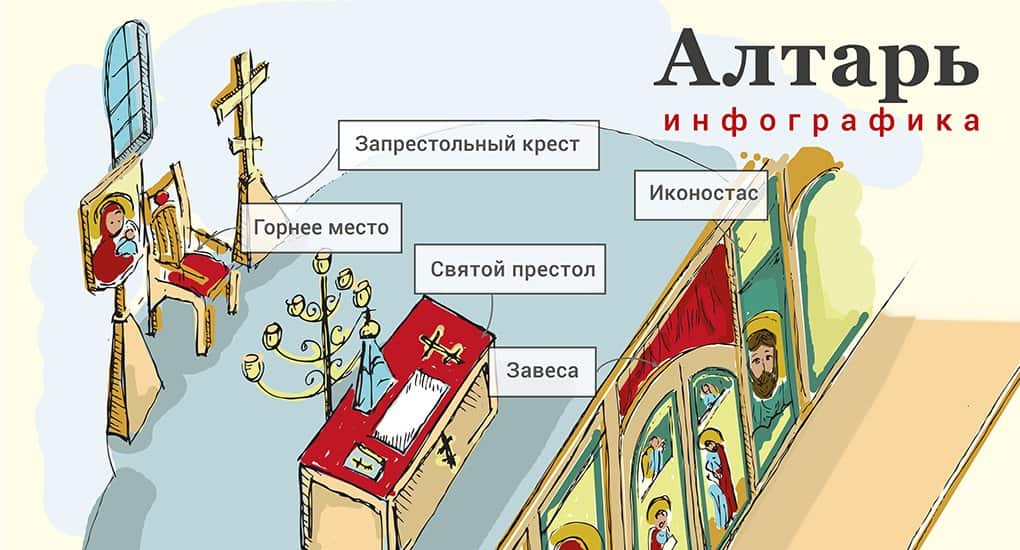
The altar is a special part of the Orthodox church, where the throne and the Mystery of the Eucharist are located, occupying a central place in the life of the Church. Much of what happens here remains hidden from the eyes of the congregation behind the iconostasis. What lies beyond it, and what does the priest do in the altar during the liturgy?
How is the altar structured?
The word "altar" comes from the Latin altare — a sacrificial altar. In an Orthodox church, this term refers to the eastern part of the church, separated from the rest by the iconostasis. At the center of the altar stands the throne — a square table on which the Mystery of the Eucharist is performed, when bread and wine are transubstantiated into the Body and Blood of Christ.
According to ancient tradition, the altar is usually oriented towards the east — the direction of the rising sun, which in Christian symbolism is associated with the Resurrection and Christ, the Sun of Righteousness.
To the left of the throne stands a small table where before the liturgy begins, the bread and wine are prepared for the Eucharist. In modern terminology, this table is called the altar proper. Here also are placed the sacred vessels necessary for the divine service.
Read more:
Altar. Infographic
The main part of the church is separated from the altar by the iconostasis. Its structure may vary: in a small…