A traditional Chinese coffin maker in Malaysia preserves a fading family craft
Get RNS’ thoughtful, essential religion reporting every morning. Sign up for free!
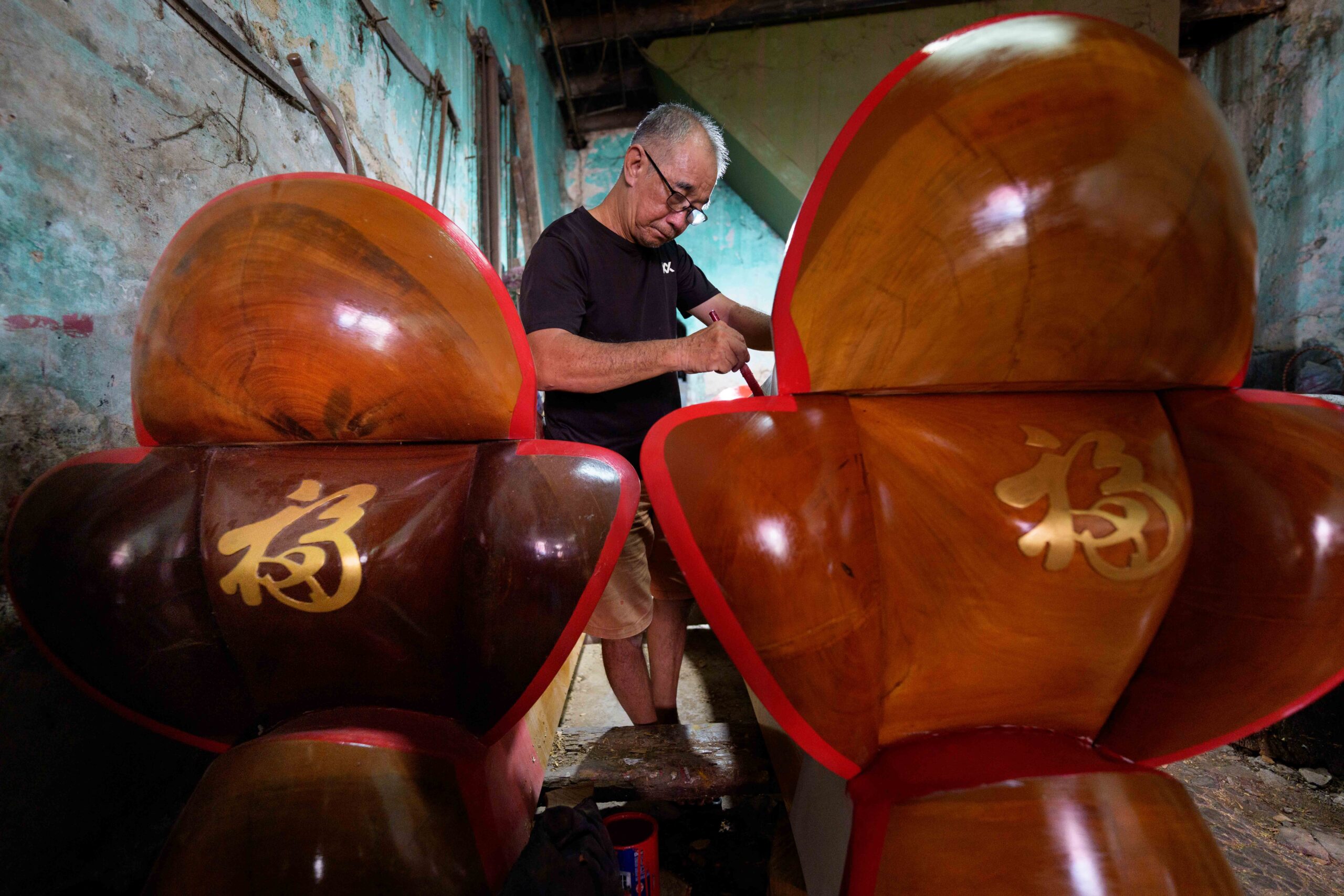
MUAR, Malaysia (AP) — It’s been 52 years since Goh Khuay Par carved his first Mei Hua coffin.
The traditional Chinese design takes its name from the plum blossom, or “mei hua” in Mandarin , and has been part of his family’s trade in Malaysia for three generations.
“My father was my master,” said Goh, now 69, at the modest workshop he runs with his brother in the town of Muar, about 175 kilometers (110 miles) southeast of Kuala Lumpur. “He taught me for two and a half years.”
Goh no longer recalls details of his first coffin. It was most likely a small, thin piece, like the ones his father had him make when he was just starting out. His products became thicker over time for a more striking appearance.
Each coffin is made by hand and requires extensive work. Years ago, when the workshop had more craftsmen and more orders, they could turn out up to five a month. These days Goh and his brother make about two every six to seven weeks.
“In the past there weren’t newer styles, so people used this kind,” Goh said. “Now there are many different kinds to choose from.”
His workshop has long…