The medieval world had its own ‘deepfakes’ – church officials cited a fake imperial decree for centuries
Get RNS’ thoughtful, essential religion reporting every morning. Sign up for free!
(The Conversation) — With deepfakes on the rise, forgery and deception are often viewed as distinctly modern problems – a new era of misinformation made possible by artificial intelligence. One of the first alarming cases occurred at the start of the war in Ukraine when a doctored video appeared to show President Volodymyr Zelenskyy telling his soldiers to lay down their weapons .
Yet the impulse to deceive people by fabricating evidence far predates the digital age. And in some cases, the consequences of these deceptions set off enormous ramifications for centuries thereafter.
As a scholar of medieval history , I’m interested in how the forerunners of today’s deepfakes perplexed and captivated scholars in early modern Europe and how they were debunked. Searching for truth amid falsified documents is not limited to our current era; a skeptical eye about sources’ authenticity was just as important in the 15th century as it is today.
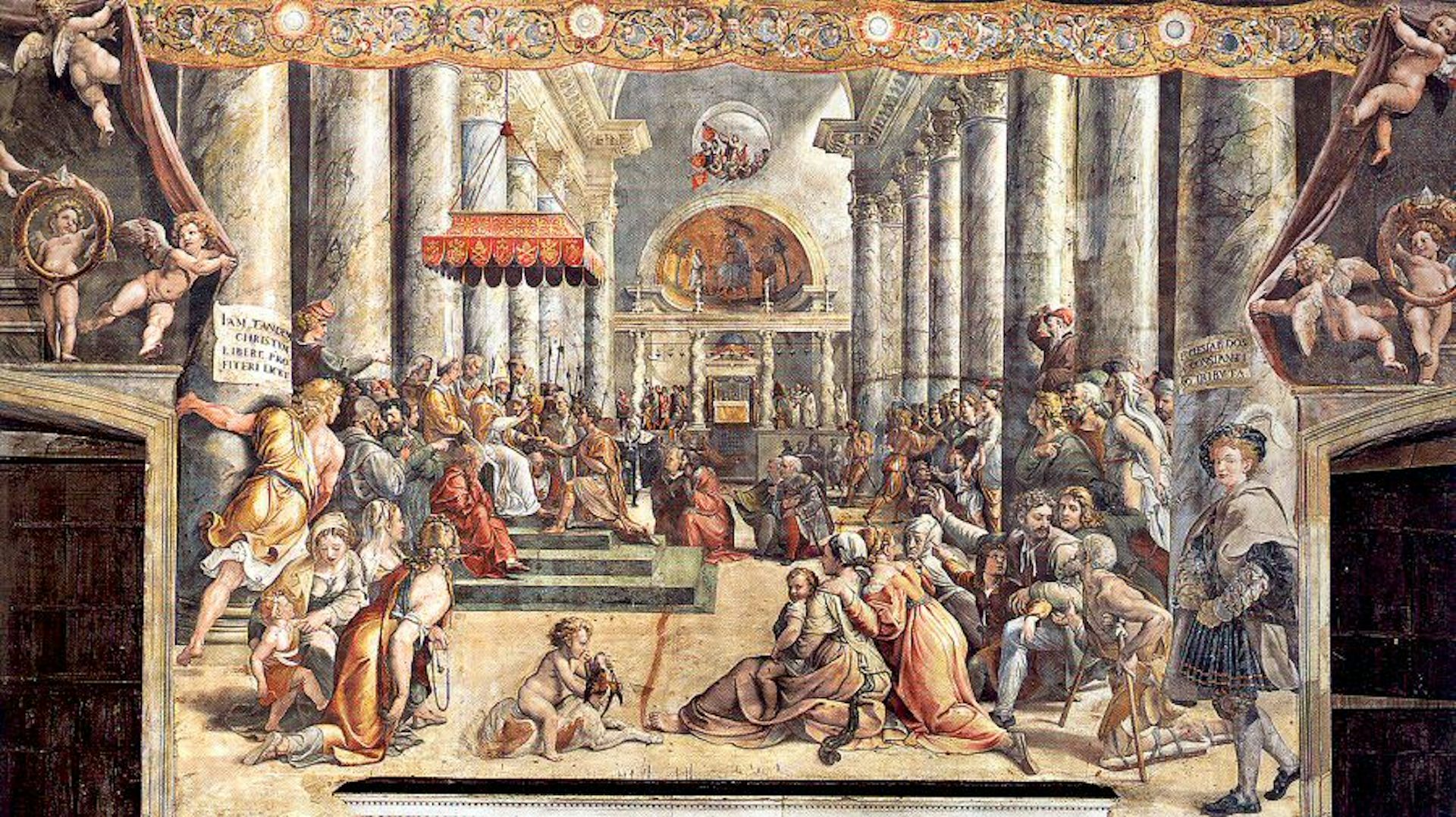
Gift of gratitude Throughout the Middle Ages, at least 10 popes cited the same fraudulent claim , which asserted that Emperor Constantine I had transferred…