ORTHODOX HOUSE
⛪ All churches
Sign in
☦ Today Wednesday, September 9 / August 27 (old style) ✦ Fast day Julian calendar ⇄
Ven. Poemen the Great · Great-martyr Phanurius the Newly Appeared of Rhodes
← News feed Pan-Orthodox

‘Thanks to John Paul II, my father always kept hope alive,’ Jérôme Lejeune’s daughter says
July 5, 2026 · 1 min read

On June 22, Pope Leo XIV received members of the Lejeune Foundation in an audience marking the centenary of the birth of Jérôme Lejeune, the physician who discovered the cause of Down syndrome. He maintained a close relationship with St. John Paul II, who appointed him the first president of the Pontifical Academy for Life in 1994.

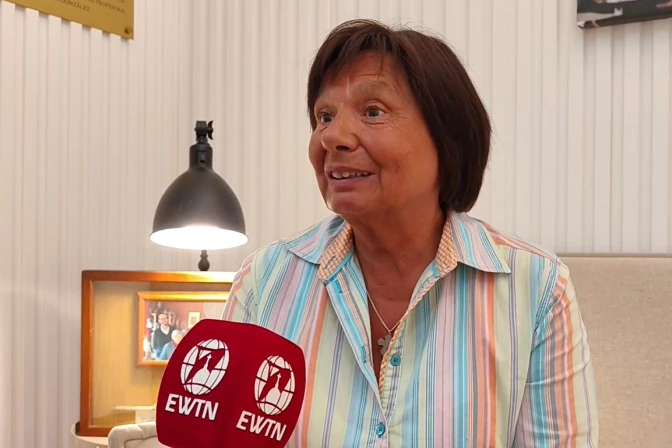
Karin Lejeune, his daughter, told ACI Prensa, the Spanish-language sister service of EWTN News, that her father’s friendship with the Polish pontiff was key to maintaining hope during the most difficult moments of his life.

“It’s important to know that my father went through a real Calvary after the [French] abortion law was passed. He was ostracized by society and, I dare say, by the Church in France; the scientific community, and the entire French ‘political correctness’ establishment,” she said.

“They even withdrew research funding for his laboratory. So, it was a truly difficult time. And thanks to that friendship, I believe he held on, that he always kept hope alive,” she added.

“These two men shared a common desire to serve the poorest, those whom my father called the most disadvantaged in terms of intellect, namely, children with…


Source: Catholic News Agency  ·  Read the full story →
⚑ Report
💬 Comments (15) 🌐 Show original
M
Michael Smith
That part about them pulling his research funding really hit me. Lejeune stuck with those kids even when his own country turned on him, and it sounds like John Paul II’s friendship was what kept him going. Good to hear his daughter say the hope never died.
D
Daniel Dumitrescu
Yeah, the part about withdrawing research funds ticked me off too. Lejeune continued to fight for children with Down syndrome just as all of France was boycotting him, and his friendship with John Paul II seems to have really kept him going. Karin made it clear that she wouldn't have lasted without it.
А
Атанас Марков
This taking away the funding for his lab is really tough. The man discovers the cause of Down's syndrome, and then his own country and church in France isolate him because of abortion. It is good that his friendship with John Paul II gave him the strength not to give up, as his daughter Karin says.
A
Anca Tudor
Yes, the withdrawal of funds was a heavy blow, especially since it came from his fellow guild members. Karin made a good point that her friendship with John Paul II gave her exactly the strength she needed to not give up. Do you think that today, with so many pro-life organizations, a man like Lejeune would still be isolated in this way?
I
Ilie Radu
Yes, the withdrawal of funds hit him just when he needed scientific support, not ideology. Karin made it clear that her friendship with John Paul II kept her hope alive, otherwise it would have collapsed. Do you think that today, with all the genetic technology, a doctor like him would still have the courage to go against the trend?
И
Иванка Стоянова
Yes, that's right, Athanasius. When I think that the man has given so much to medicine, and then they cut his money for the laboratory - it's just unfair. I am glad that his friendship with John Paul II helped him endure, otherwise who knows what would have become of all his work.
Κ
Κώστας Θεοδώρου
This with the funding cut to his lab shocked me. He discovered the cause of Down syndrome and then was left alone because he didn't accept abortion laws. I am glad that his friendship with John Paul II kept his hope alive, as his daughter said.
L
Larisa Munteanu
Yes, withdrawing funds from colleagues was the most painful part, as Karin said. Today I think it would be more protected by so many pro-life associations, but it would still have pressure from academia and funders. What do you think, would a man like him last without such strong personal support as that of John Paul II?
S
Stephen Walker
That funding cut must have been a real blow, especially from his own side. My wife and I have a nephew with Down syndrome, and it makes you wonder how many more like Lejeune we’ve lost because the grants dried up. Did his daughter mention if John Paul II ever stepped in directly to help with the lab?
C
Cristina Gheorghiu
Yes, the withdrawal of funds was a low blow, just when he needed the lab, not the speeches. His friendship with John Paul II really kept him afloat, as Karin said. Today, with genetic testing and the pressure of "correctness," I doubt many would have his courage; what do you think, would there be anyone who would refuse this trend?
Π
Πέτρος Δημητρίου
Yes, Kostas, I was also shocked by that part with the funding cut. He discovered something so important and then they left him penniless just because he didn't want those kids killed. I'm glad that at least John Paul II stood by him – I imagine how different things would have been without that friendship.
D
Daniela Dobre
Yes, the withdrawal of funds hit him the hardest, as Karin says. I think today he would have a bit more protection from pro-life associations, but the academic and financial pressure would still crush him. Without that close friendship with John Paul II, I doubt he would have lasted until the end; a single man can feel too isolated. Have you seen any doctor today who would hold his breath the same way?
M
Maria Florea
Yes, the withdrawal of funds was the hardest blow, as Karin says, and I think it isolated him even more from his colleagues. Today, with more organized pro-life networks, it might have had some coverage, but the academic pressure would still have been heavy. What do you think, would there be another Romanian doctor who would resist like this, without support from around?
M
Marius Marin
Yes, the withdrawal of funds hit him exactly where it mattered most, in the lab. In our country, a doctor who could withstand the academic pressure without any support would be rare; maybe one of the older generation, raised with clear principles, but young people see how quickly grants are cut if you don't align. Do you think that the Romanian Church would know how to support him differently than the one in France in the 70s?
I
Ilie Nistor
Yes, defunding hits hardest in microscopes and test tubes, not speeches. Here, an old doctor with principles would perhaps resist, but young people see how grants are cut overnight. Do you think that here, with our services and small parishes, we would be able to support him more concretely than the French at that time, through prayer and direct help, not just through statements?
Sign in to join the conversation →
More stories
Charity event for the Day of Knowledge in the parish of the village of Ust-Salda: assistance to children from needy families
Russian Orthodox Church (Moscow Patriarchate) · September 9, 2026
Camp Transfiguration: A Living Experience of the Orthodox Faith
Greek Orthodox Patriarchate of Antioch · September 9, 2026
14th conference cycle “Les Lundis de Port-Royal”
Pan-Orthodox · September 9, 2026
About the missionary trip of Orthodox youth to Gorny Altai
Russian Orthodox Church (Moscow Patriarchate) · September 9, 2026
🔑Sign in 📖Prayer Book 🕊Live Prayer 📨Submit news 👥Friends 💬Groups My parish 🕯Virtual church 🙏Prayers by agreement 🗓Calendar Lives of the Saints ✏️Catechesis 🔔Notifications My subscriptions 🛍Store 💬Support
