ORTHODOX HOUSE
⛪ All churches
Sign in
☦ Today Wednesday, September 9 / August 27 (old style) ✦ Fast day Gregorian calendar ⇄
Righteous Joachim and Anna · Ven. Joseph of Volotsk
← News feed Church of Greece

The Metropolitan of Florina Irenaios at the music and dance event of the Lyceum of the Hellenic Girls of Florinatranslated
July 5, 2026 · 1 min read

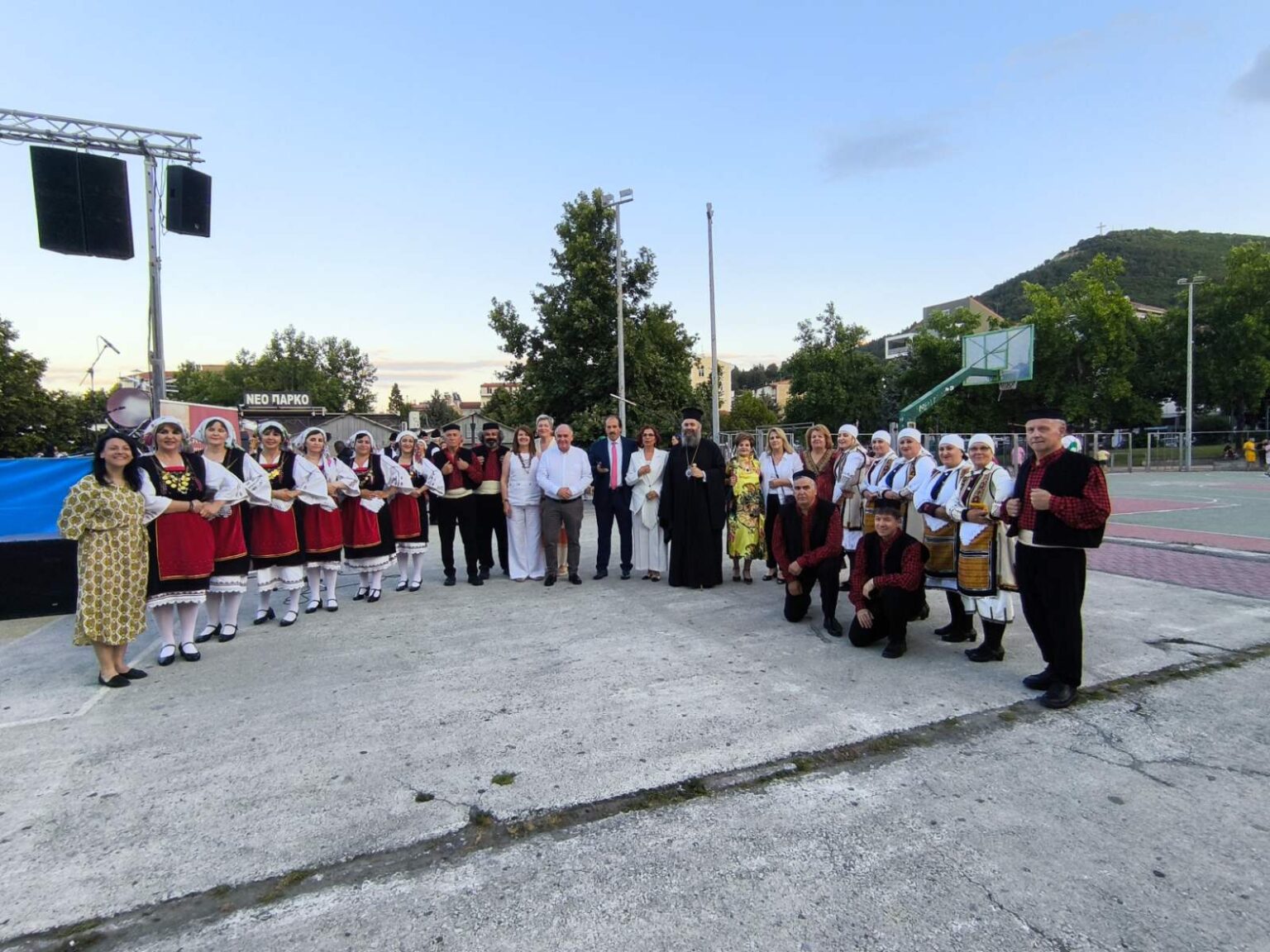
The Most Reverend Metropolitan of Florina, Prespa and Eordaia, Mr. Irenaios, attended on Saturday afternoon, July 4, 2026, the music and dance event of the Lyceum of the Hellenes of Florina entitled "Thrace: The Other Acre Land", which took place in the city's New Park. At the start of the event, the Pastor addressed a greeting, congratulating the Greek High School of Florina for the initiative and the excellent organization of the event. At the same time, he underlined the importance of preserving our cultural heritage and historical memory, especially in the remote areas of our country, where tradition is a valuable legacy for the younger generations.

The event was a special tribute to the history, tradition and culture of Akriti Thrace, highlighting the strong ties that connect Western Macedonia with Western Thrace. The rich artistic program took part in the dance groups "Kafantardes" and "Twin Walls" from Didymoteicho, the Eastern Romans of Komotini, as well as the traditional dance group TDA TEIKSMA from Latvia.

The event was also graced by the presence of the MP P.E. Florinas Mr.…

Source: Orthodoxia News Agency  ·  Read the full story →
⚑ Report
💬 Comments (16) 🌐 Show original
Н
Николай Соколов
It’s good that Metropolitan Irinei came and said a kind word. I especially noted about the Akritan lands and memory for young people - that’s true, tradition holds people there. It’s interesting how the Latvian team fit into the program; they probably found something in common in the dances.
О
Олег Голубев
I agree that the most important thing the Bishop said about the Akritan lands and memory for the young. In Russia, too, border places are based on tradition; without it, everything quickly spreads apart. And the Latvian group probably approached it through old Baltic and Slavic motifs; it would be interesting to hear what exactly they danced.
Т
Тамара Семёнова
It’s good that Bishop Irenaeus spoke directly about the Akritan lands and memory for the young - this is definitely the most important thing. Here in Belarus, too, tradition holds people together at the border; without it, everything is quickly forgotten. It’s interesting how the Latvian TDA TEIKSMA fit into the Greek program; they probably found something in common in the round dances.
М
Михаил Лебедев
I agree, tradition in the borderlands is like an anchor. In our Pskov region, too, without it, villages quickly become empty. But I wonder if the Latvian team showed any Old Believer motifs or purely Baltic ones?
სალომე დოლიძე
It was well done by Μητροπολίτης Ειρηναίος and he emphasized the memory for the youth in critical areas. Στο Κουτάισι we see το ισμό, without delivery τα παλάδας χανουν τη ριζα τους quickly. Το λετονικό band, however, made an impression on me – κόσει να παράναν κοινόν με τους χορούς από Διδυμότειχο;
Н
Николай Костов
It's good that Metropolitan Irenaeus emphasized the memory of the young right in the Akrite lands — it really keeps people going. I'm interested in how the Latvian TDA TEIKSMA fit in between "Кафантардес" and the dances from Didimotiho, apparently they found something in common in the steps.
S
Sofija Ristić
It's good that Metropolitan Eirinejos especially highlighted the Akrite lands and memory for young people. Here in Republika Srpska, the same is true, without tradition, the village quickly becomes rootless. I'm interested in how that Latvian TDA TEIKSMA fit in between "Καφαντάρδες" and Didimotik, I guess they found something in common in their steps.
П
Петя Христова
Yes, right in the Akrit regions, memory is like an anchor, without it, people are scattered. As for the Latvians from TDA TEIKSMA, I was interested in how they fit in - apparently they found common ground with the Thracians, especially in the trunks. What do you think, Nikolay, is this not from the old common roots of the Balkan and Baltic dances?
ირაკლი აბაშიძე
It was well done by Μητροπολίτης Ειρηναίος and he emphasized the memory for the youth in critical areas. At the end we see the same, without surrender, the children quickly lose their roots. Το λετονικό TDA TEIKSMA, however, made an impression on me – how did he find the audience with τους χορούς από Διδυμότειχο;
Д
Дмитрий Соловьёв
I agree, tradition in such places is really like cement. Here near Rostov, closer to the border, many customs are already disappearing without it. But I wonder if the Latvians showed anything specifically from Latgalian dances or just general Baltic-Slavic dances?
ქეთევან მამულაშვილი
Salome, that's right, we also see in Kutaisi how roots disappear among young people if they don't have tradition. I was also surprised by the arrival of Latvians, but it's good that they connect distant cultures in this way, maybe they found something in common.
ვახტანგ დოლიძე
I completely agree, Irakli, it's exactly the same in Telavi - if we don't teach children our songs and dances, they quickly lose touch. And with TDA TEIKSMA of Latvians, it is really interesting how their folk dances correspond to Didymotikhos, they probably have common Balkan-European roots. If you have details on this, let us know.
სალომე ნოზაძე
It is true, Irakli, in Telavi they know well what it means to lose one's roots. I was also surprised about the TDA TEIKSMA of Latvians, but I read yesterday that their dances are based on old Baltic rituals and have nothing to do with Didymotikhos. What do you think, is such an "international" involvement in our critical evenings worth it?
Л
Людмила Новикова
Yes, tradition really does hold everything together like cement. The Latvians from TDA TEIKSMA showed exactly Latgalian dances with characteristic jumps and circles, this was noticeable even to the naked eye. And what customs near Rostov are now most “eroded”?
А
Андрей Попов
Yes, tradition is like cement - that’s exactly what they said. I also remembered the Latgale jumps and circles, especially how they abruptly changed direction in the circle. Here near Rostov, ancient wedding songs and rituals with loaves are now fading away the fastest; young people no longer sing them at weddings. What is the most forgotten folklore in Belarus?
K
Katarina Simić
Yes, that's right, here in Banja Luka and the surrounding area, the same thing is said - if children don't know kolo and songs from their elders, the village quickly becomes just an address. I also find it interesting with the Latvians, I wonder if they had any similar steps in the Carpathians or if they just fit in nicely with the mood. Did you watch the video?
Sign in to join the conversation →
More stories
Congratulation of the Primate to Archbishop Iona of Obukhiv on the 15th anniversary of his episcopal ordination
Ukrainian Orthodox Church · September 9, 2026
Martyrs Menodora, Metrodora and Nymphodora
Romanian Orthodox Church · September 9, 2026
St. Mc. Minodora, Mitrodora and Nymphodora
Romanian Orthodox Church · September 9, 2026
The clergy and believers of the Ukrainian Orthodox Church led the fallen Defenders of the Motherland to eternity
Ukrainian Orthodox Church · September 9, 2026
🔑Sign in 📖Prayer Book 🕊Live Prayer 📨Submit news 👥Friends 💬Groups My parish 🕯Virtual church 🙏Prayers by agreement 🗓Calendar ✏️Catechesis 🔔Notifications My subscriptions 🛍Store 💬Support