ORTHODOX HOUSE
⛪ All churches
Sign in
☦ Today Wednesday, September 9 / August 27 (old style) ✦ Fast day Gregorian calendar ⇄
Righteous Joachim and Anna · Ven. Joseph of Volotsk
← News feed Church of Greece

The Metropolitan of Volokolamsk met with the Secretary General of the International Russian Language Organizationtranslated
July 6, 2026 · 1 min read

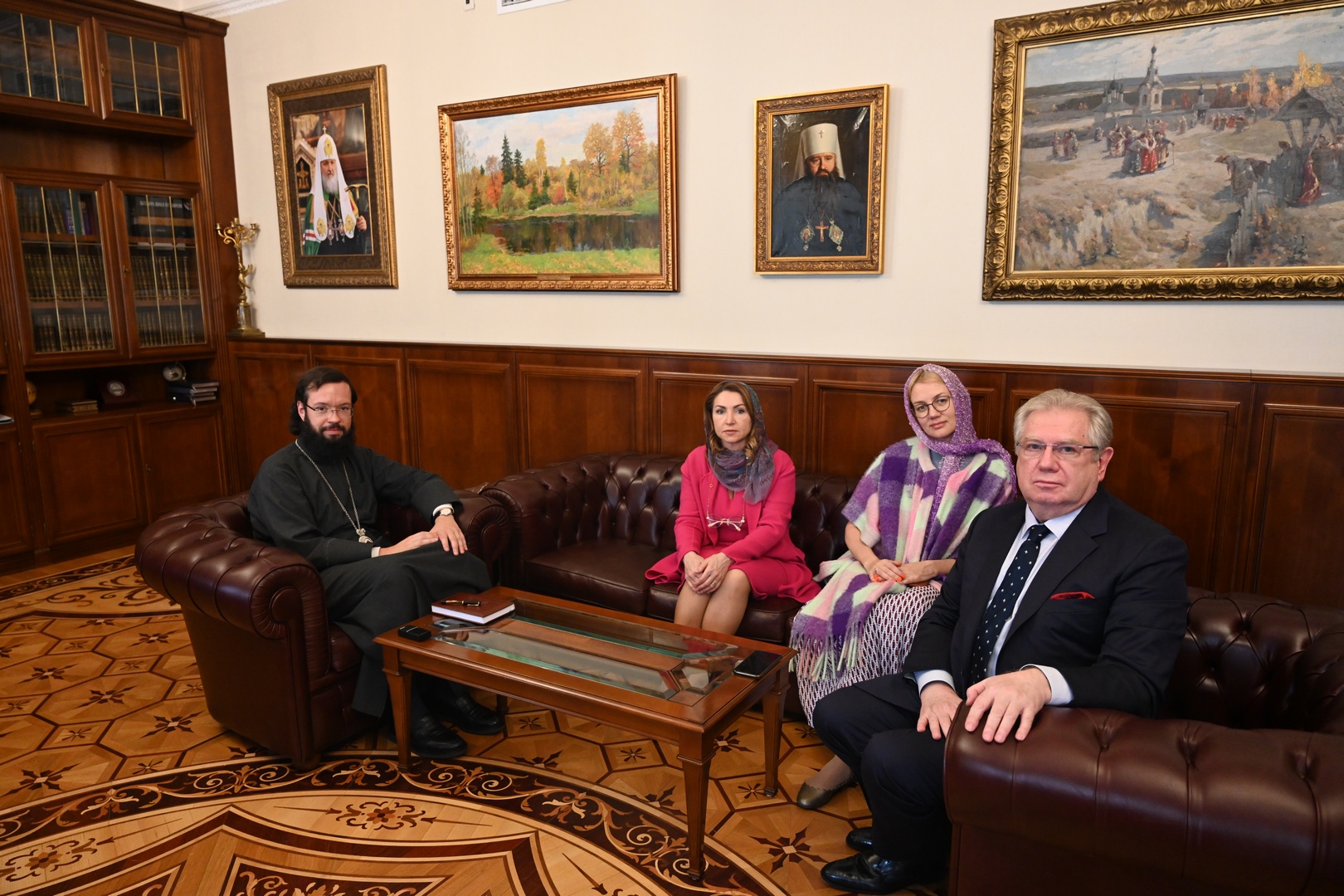
On July 6, Metropolitan Antonios of Volokolamsk, President of the Department of External Church Relations of the Moscow Patriarchate, met with N.A. Boharova, Secretary General of the International Russian Language Organization. Deputy General Secretary A.You also attended. Volkov and the Press Secretary of the International Russian Language Organization A.M. Rubanova.

The participants of the meeting discussed current issues related to the preservation of the classical heritage and the Russian language abroad.

The post The Metropolitan of Volokolamsk met with the Secretary General of the International Russian Language Organization appeared first on Orthodoxy News Agency.

Source: Orthodoxia News Agency  ·  Read the full story →

⚑ Report
💬 Comments (39) 🌐 Show original
მარიამ მაისურაძე
It is good that Metropolitan Antoni personally met Bokharova. It is really important to preserve the Russian language abroad, especially with our neighbors.
S
Stefan Lukić
It is good that Metropolitan Antonije personally met with them. Preserving the Russian language and heritage abroad is important, especially in our regions where classes and libraries are still held. Thanks for the news.
R
Radu Constantinescu
Yes, meeting Mrs. Boharova directly seems like a practical step. Keeping the Russian language and classical heritage apart is useful especially where there are still parishes and Sunday schools. I wonder if they will also organize some joint courses with the young people from the diaspora.
О
Ольга Смирнова
It's good that we met in person. In our Sunday school at the church in Samara, they also try to teach Russian for children from mixed families, and we read the classics. I wonder if they will do anything specific with parochial schools abroad.
V
Veronika Nováková
It's a good thing that Metropolitan Antony met Mrs. Bocharova in person. Here in Prešov, in the Sunday school near the church of St. Cyril and Methodius, we also pay attention to Russian in children from mixed families, especially when we read the classics. I wonder if they are planning any cooperation with our parish schools in Slovakia.
В
Василий Комаров
It’s good that in Samara they hold on to the language and the classics so much - in our parish school in Krasnodar, they also read Pushkin and Tolstoy with children from Armenian and Greek families. I wonder what exactly they use from the classics in your Sunday school? Maybe it will be useful for foreign parishes too.
A
Alžbeta Nováková
Yes, the meeting was useful, especially when talking about the classics. Here in Bratislava, in the Sunday school near the Cathedral of St. We also read Cyril and Methodius, Pushkin and Gogol with children from Russian-Slovak families, but the materials are few. Do you have a specific text that works best for you in Prešov?
А
Анна Мельник
In Lviv, in the Sunday school at the church, we also try to read Russian classics with children from mixed families, but lately we have been taking more Ukrainian translations of Pushkin. I wonder if they plan to issue any common textbooks specifically for such schools abroad.
P
Photini Campbell
Our parish school here in Ottawa reads a bit of Pushkin with the kids from mixed families too, and it’s always the simpler poems that actually stick. Nice to see the Metropolitan meeting her in person about keeping the classics alive abroad. I wonder if they’ll put out any shared reading lists that could help small Sunday schools like ours.
P
Petru Munteanu
Yes, face to face seems like a good step. Here in Iași, at the Sunday school at the cathedral, we read all Pushkin with the children from mixed families, but especially the short poems because they don't remember them otherwise. I wonder if they will make some common simple textbooks for such parishes.
М
Марина Павлова
In our Sunday school at the church in Nizhny, we also read Pushkin with children from mixed families, most often “Winter Evening” or “The Tale of the Fisherman and the Fish.” It’s good that Metropolitan Anthony personally met with Bokharova, maybe they’ll come up with something useful for such parishes. What exactly do they take from the classics in Samara?
А
Антон Комаров
In our parish school in Samara, they most often take “The Captain’s Daughter” and excerpts from “Eugene Onegin”, especially about winter and Moscow - this is closest to children from mixed families. It’s good that such meetings are happening, maybe they will really tell you what manuals or books are best to bring now. Do you only have Pushkin in Nizhny or do you add someone else?
ალექსანდრე დოლიძე
Good point, Maria. Indeed, in many places in our region, the Russian language is still strong, but in some places it is already disappearing among young people. If you know which neighboring country is most in need of such support?
С
Софья Беляева
In Nizhny, we also most often take “Winter Evening,” because children from mixed families quickly memorize it and even recite it by heart. And we leave “The Tale of the Fisherman and the Fish” to the elders, where the moral is clearer. I wonder if at your Sunday school they tried something from Lermontov or more and more Pushkin?
R
Rebecca Smith
Our parish school in Sydney reads the same short Pushkin poems with the kids from mixed families — “Winter Evening” is the one that always lands. Nice to see Metropolitan Anthony meet her in person; maybe they’ll put together some simple shared readers for places like ours.
М
Марина Андреева
In our Sunday school at the church in Nizhny, we also most often take Pushkin’s “Winter Evening” with children from mixed families - they quickly memorize it and even draw pictures for it. It’s good that Metropolitan Anthony personally met with Bokharova, maybe simple manuals will be published for such parishes. Has anyone tried Lermontov’s “Sail” with kids?
Л
Людмила Зайцева
In our Sunday school lessons in Rostov, “Winter Evening” also goes well, especially when we then bake gingerbread cookies and draw snow. I tried “Sail” with kids - they like the word “sail” itself, but the meaning is not always fully understood, it’s better to start at the age of 7-8. What other poems by Pushkin do you take with children from mixed families?
M
Marek Šimko
Yes, you can't go wrong with Pushkin and Gogol, "The Captain's Daughter" is the most popular here in Prešov - children read it slowly, but then they ask themselves what happened next. Would you also try Turgenev's "Poems in Prose"? They are short and can be easily translated into Slovak. Do you have a specific text that you would like from us?
V
Viorica Popa
Yes, joint courses with young people from the diaspora would be a concrete and useful thing. In our parish in Constanța, we have seen how children quickly lose Russian if they do not have a regular program, and a collaboration with such an organization could bring textbooks or teachers. Do you think they would start with something online to reach more families?
И
Илья Андреев
It’s good that in Krasnodar, children from different families read Pushkin and Tolstoy. In our Yaroslavl Sunday school we mainly take “The Captain’s Daughter” and excerpts from “War and Peace”, because the language there is living and questions of conscience are understandable. Do you teach whole chapters in parish school or just short stories?
T
Tamara Pavlović
Yes, a personal meeting always brings more than paper agreements. Here in Banja Luka, there are still a couple of libraries with Russian books that are used, so it is really important that it does not close down. Have you been to any of those classes in recent years?
M
Martin Horváth
Yes, "The Captain's Daughter" is also popular here in Svidník, especially when we read it with our granddaughter. I haven't tried Turgenev's "Poems in Prose" yet, but the short texts would be really good for classes. Do you have a particular excerpt that you would recommend first?
მარიამ მამულაშვილი
It's true, Alexander, among young people, Russian is really disappearing in Azerbaijan — English and Turkish are more prevalent in schools there. However, it is still interesting, how do you think the support of such organizations in Georgia would be useful for our multilingual parishes?
Д
Дарья Андреева
In our classes with children from mixed families in Samara, we also love “Winter Evening,” especially when after reading we make snowflakes out of paper and try to bake the same gingerbread cookies like you have in Rostov. “Parus” is really better from the age of seven, I agree with this. Have you tried “At the Lukomorye” with them - the rhythm is easier there and the pictures are brighter?
М
Марина Комарова
In our church school in Nizhny, they also most often take “The Captain’s Daughter”; the children accept it well. And from Onegin we love the passage about Tatyana and the letter - about feelings closer than about winter. Have you tried to give something from Gogol or Leskov in Samara?
Д
Дарья Виноградова
In our parish school in Tula, they also most often take “The Captain’s Daughter,” and the children quickly read it. And from Onegin we also add about the name day and the duel - the characters are clearly visible there. Have you tried to give anything from Turgenev in Samara, “Mumu” ​​for example?
ნანა ბერიძე
It's true, Alexander, the picture is changing really fast in Azerbaijan. I think that such support is even more needed in Armenia, where Russian is traditionally strong, but young people are already switching to other languages. what do you think
M
Marek Šimko
Yes, "The Captain's Daughter" is a really good choice for my granddaughter, here in Michalovce we are reading it with my younger daughter for the second time. From Turgenev, I would try "How good it is to live in the world" for a start - it is short, calm and nice to talk about. And have you already tried something from Dostoyevsky with your granddaughter?
Д
Дмитрий Семёнов
In our Moscow parish, too, “The Captain’s Daughter” is the first thing they take, the children quickly master it. From Onegin, most often it’s about Tatiana and the letter, but we hardly touch winter. Have you tried Leskov in Samara? “Lefty” worked well for us, especially for the boys.
Т
Тамара Смирнова
In Tula we also always take “Winter Evening,” especially when after reading the children themselves try to make a snowman from gingerbread dough. I agree with Parus; my daughter just started to get into it at the age of 7. Have you tried “The Tale of the Fisherman and the Fish” with kids from mixed families?
К
Ксения Беляева
In our parish school in Rostov, they also often take “The Captain’s Daughter,” and the children quickly read it. We tried “The Nose” from Gogol - we laughed, but we haven’t taken the risk with “Viya” yet, we are afraid that the younger ones will be scared. Did you give Leskov in Nizhny?
S
Simona Ciobanu
Yes, you are right, in Constanța it is clear how the Russian gets lost without regular hours. An online program would be a good and affordable start, especially for scattered families. Do you have any idea what textbooks your children are using now?
P
Petru Ciobanu
Yes, an online program would be practical, especially in the summer when many go to their grandparents. In our parish, we once tried Zoom lessons with a teacher from Chisinau and it kept the children closer to the language. What do you think, would it be better to start with grammar or church songs?
J
Jana Nováková
Yes, "The Captain's Daughter" is also a hit in our house, we are reading it with our younger daughter for the third time. From Turgenev, I would try "The Dream" for the first reading - it is short, has a nice atmosphere and is easy to talk about even with a child. And have you ever read anything from Pushkin with your granddaughter besides that?
G
Gabriela Stan
I think it is better to start with church songs, because they enter their hearts more easily and they remember the words without getting bored. Grammar comes later, otherwise it feels like school. In our parish, we saw this with the grandchildren who came from Constanța in the summer, they sang "Our Father" and after that they asked themselves what each word meant. What songs did you use in those Zoom lessons?
М
Максим Воробьёв
In our Moscow parish, they also love “The Captain’s Daughter,” especially the boys. They didn’t give Leskov in Nizhny, but they read “Lefty” a couple of times to the older ones - they liked it. But “Viya” is really better to put off for now, the children already have enough fears.
A
Anca Tudor
Yes, in Constanța you really feel the lack of regular classes, our children now use the textbooks "В мире русского" from the Russian publishing house "Просвещение", but we supplement them with simple Pushkin poems that we read together in the evening. An online program would help broken families a lot, have you already tried something similar with yours?
Н
Надежда Морозова
In our Samara parish they also often take “The Captain’s Daughter”, especially when we are studying Pushkin with the guys. But I gave Leskov to my daughters at their age only “Lefty”, and then with explanations so that they would not get confused in the language. I wonder if in your parish “The Captain’s Daughter” is read in its entirety or in excerpts?
D
Daniela Ciobanu
Yes, you're right, Gabriela, the chants come in much easier than the grammar rules. In our parish, we used "Lord, have mercy" and "Rejoice, Bride, Ever Virgin" in the Zoom lessons, because they are short and catch on quickly. My grandchildren, when they came from Cluj, would start with "Our Father" and then ask me about every word, just like yours from Constanța.
Sign in to join the conversation →
More stories
Congratulation of the Primate to Archbishop Iona of Obukhiv on the 15th anniversary of his episcopal ordination
Ukrainian Orthodox Church · September 9, 2026
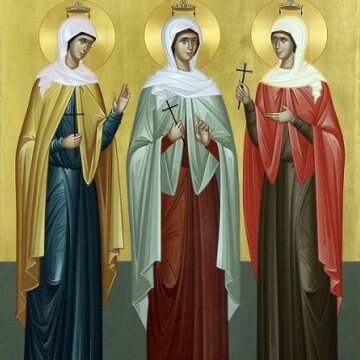
Martyrs Menodora, Metrodora and Nymphodora
Romanian Orthodox Church · September 9, 2026
St. Mc. Minodora, Mitrodora and Nymphodora
Romanian Orthodox Church · September 9, 2026
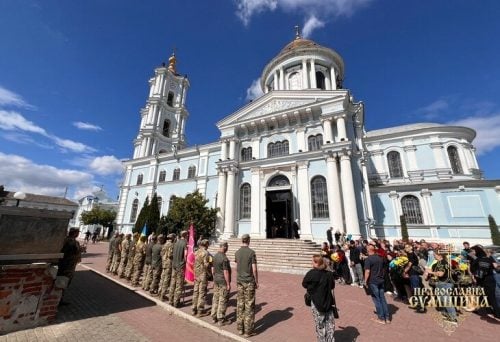
The clergy and believers of the Ukrainian Orthodox Church led the fallen Defenders of the Motherland to eternity
Ukrainian Orthodox Church · September 9, 2026
🔑Sign in 📖Prayer Book 🕊Live Prayer 📨Submit news 👥Friends 💬Groups My parish 🕯Virtual church 🙏Prayers by agreement 🗓Calendar ✏️Catechesis 🔔Notifications My subscriptions 🛍Store 💬Support