ORTHODOX HOUSE
⛪ All churches
Sign in
☦ Today Wednesday, September 9 / August 27 (old style) ✦ Fast day Julian calendar ⇄
Ven. Poemen the Great · Great-martyr Phanurius the Newly Appeared of Rhodes
← News feed Church of Greece

July 4, 1822: The Battle of Splantzatranslated
July 4, 2026 · 1 min read

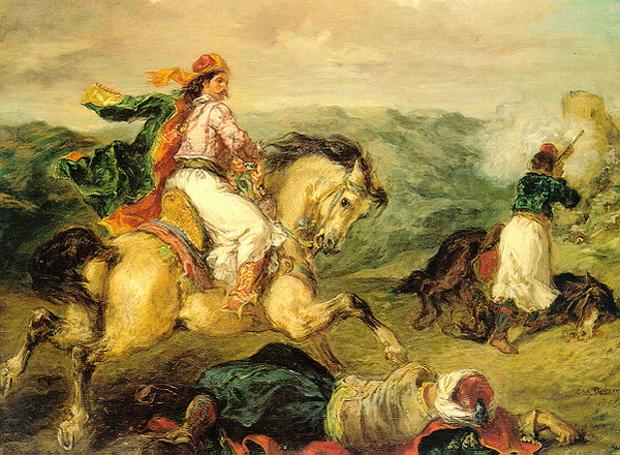
The Battle of Splantza was a military encounter between Greeks and Ottomans, in the context of the Revolution of 1821. It took place in Splantza or Spiatza Fanariou (present-day Ammoudia of Preveza) on July 4, 1822 and ended without a winner on the battlefield.

Before the Battle In mid-June 1822, Kyriakoulis Mavromichalis and Ioannis Razikotsikas, with a force of 500 men from Mani and Messolonghi, landed on the continental shores, by order of the President of the Executive (prime minister) Alexandros Mavrokordatos. Their mission was to reinforce the closely besieged Kiafa Souliotes. They were transported from Messolonghi by water ships, led by Nikolaos Vokos.

The small Greek force first occupied the port of Mourtos (today's Sivota in Thesprotia), where they burned the houses and captured 150 Turkish inhabitants of the area, whom they sent by ship to the Peloponnese. The amphibious action provoked the reaction of the English, who then occupied the Ionian Islands and defended the Ionian Sea. An English ship that arrived at Mourtos demanded that Mavromichalis leave the area immediately. The maniacal chieftain, because he was afraid of military action...


Source: Orthodoxia News Agency  ·  Read the full story →
⚑ Report
💬 Comments (5) 🌐 Translate comments
A
Anna Wilson
The part where the Maniots and Mesolongi men burned the houses at Mourtos and took 150 Turkish prisoners really stuck with me. It’s wild how quickly the English showed up and told Mavromichalis to clear out. Makes you wonder what would’ve happened if the British hadn’t stepped in right then.
X
Xenia Brown
The burning of those houses at Mourtos does sound harsh, especially with the prisoners sent off to the Peloponnese. I always wondered if the English were more worried about their Ionian protectorate getting dragged into the fighting than anything else. Did the article say what happened to the Maniot force after they pulled out?
M
Mary Thomas
The English intervention does feel abrupt, almost like they were more concerned with keeping their Ionian patch quiet than with the actual fighting. Mavromichalis had already sent those prisoners off on the ships, so pulling out of Mourtos must have left a bitter taste for the Maniots. Do you think that British pressure changed the whole landing plan, or was it just a temporary setback?
I
Irene Wilson
The prisoners being shipped off to the Peloponnese must have been a real headache later on. I didn’t realize the English got involved that fast after the landing at Mourtos. Do you think Mavromichalis would have pushed on toward the Souliotes if the British ship hadn’t shown up?
T
Thomas Taylor
The English were definitely jumpy about their Ionian protectorate getting pulled in, that much is clear from how fast the ship showed up. After they pulled out of Mourtos the Maniot force linked up with local Souliote bands but never really broke the siege at Kiafa. What do you make of Mavromichalis burning the houses though, was it just standard raiding or something more?
Sign in to join the conversation →
More stories
14ᵉ cycle de conférences « Les Lundis de Port-Royal »
Pan-Orthodox · September 9, 2026
About the missionary trip of Orthodox youth to Gorny Altai
Russian Orthodox Church (Moscow Patriarchate) · September 9, 2026
Orthodox Church in America
Archbishop-elect Apostolos of Canada honored at farewell banquet
Orthodox Church in America · September 9, 2026
September 10
Pan-Orthodox · September 9, 2026
🔑Sign in 📖Prayer Book 🕊Live Prayer 📨Submit news 👥Friends 💬Groups My parish 🕯Virtual church 🙏Prayers by agreement 🗓Calendar Lives of the Saints ✏️Catechesis 🔔Notifications My subscriptions 🛍Store 💬Support