The enigmatic Bayeux Tapestry — a bothsidesism for the ages
Get RNS’ thoughtful, essential religion reporting every morning. Sign up for free!
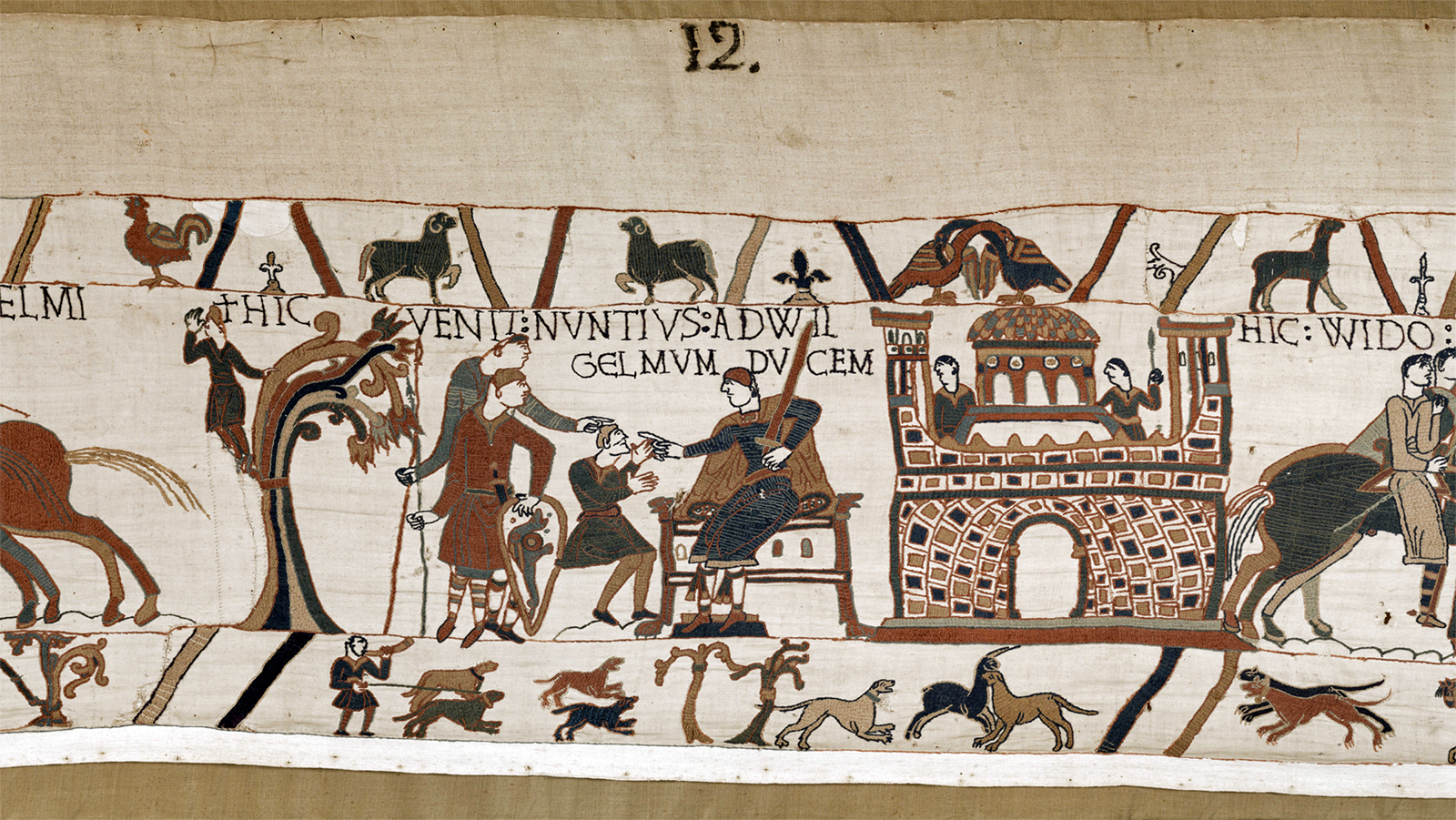
(RNS) — The Bayeux Tapestry, which depicts the story of the Norman conquest of England in 1066, returned from France to England this month, to be displayed in the British Museum nearly 1,000 years after it was created. An embroidered cloth rather than a woven tapestry, it is 230 feet long and 20 inches high and as challenging to interpret as it is chock full of detail.
The prevailing hypothesis, established in the 19th century, has been that it was commissioned to be made at St. Augustine’s Abbey in Canterbury by the warrior prelate Odo of Bayeux as a way to justify the conquest and glorify his own role in it. Odo was William the Conquerer’s half brother and chief adviser until he was found guilty of defrauding the government and returned to his bishopric in Normandy, presumptively taking the tapestry with him.
This hypothesis became problematic in the 1970s and ’80s when some scholars noticed that, far from justifying the conquest, the narrative at times seems critical of the Norman cause while showing support for the English side. They speculated that perhaps it offered a covertly…