“Women understand that they will receive support. And this is the destruction of patriarchy.” How feminist media operate in Kazakhstantranslated
Feminist media operate under the pressure of a patriarchal society, face bullying and financial difficulties, and gender equality seems unattainable. How do publications and blogs with femme optics survive in Kazakhstan?
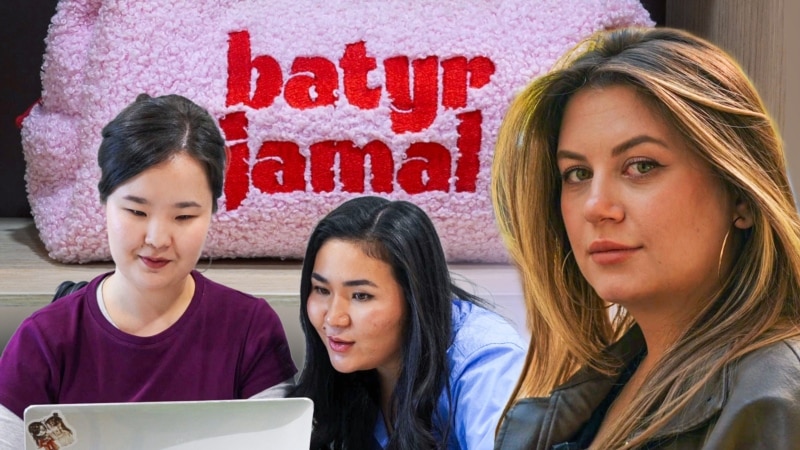
Feminist media and bloggers from Kazakhstan are under pressure from the conservative part of society; advertisers who do not want to be associated with content about violence are reluctant to approach them. However, Almaty-based publication Batyr Jamal celebrated its fifth anniversary this year, and gender researcher Maria Savelyeva finds strength in her activism. How do they manage this and why do women need this struggle?
“What is it like to live in Kazakhstan? Everything is fine in your room, but in the kitchen they cut a person,” media manager Aisana Ashim figuratively talks about the presence of violence in life. “You can’t just close your ears or turn up the TV and sit.”
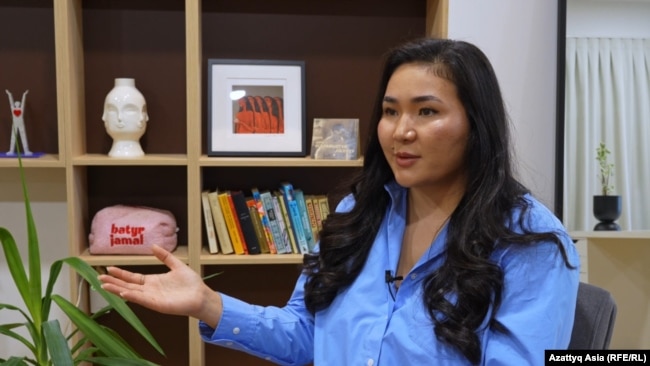
Five years ago she founded the feminist publication Batyr Jamal. Aisana’s idea to create media for women came during the coronavirus pandemic in 2020. At that time, human rights activists reported an outbreak of domestic violence due to the fact that women found themselves isolated-in the same space as their aggressors.
On March 8, 2021, Aisana launched Batyr Jamal, an independent media outlet for girls with an emphasis on rights, safety and self-worth, the publication says about itself. And now the heroine of Mirzhakyp Dulatov’s novel “Bakytsyz Zhamal” is no longer a persecuted and powerless woman, but a brave person (Bakytsyz is unhappy, batyr is brave), but the tragedy of the girl from the last century is still relevant.
“Zhamal was very talented, she had a great future, but she was forced into marriage. This man beat her. She ran away from him and died in the steppe. A hundred years have passed, but, in essence, the situation has not changed: we are beaten, raped, killed every day. And not to say that we see justice. Only after resonance, and not always,” says Aisana.
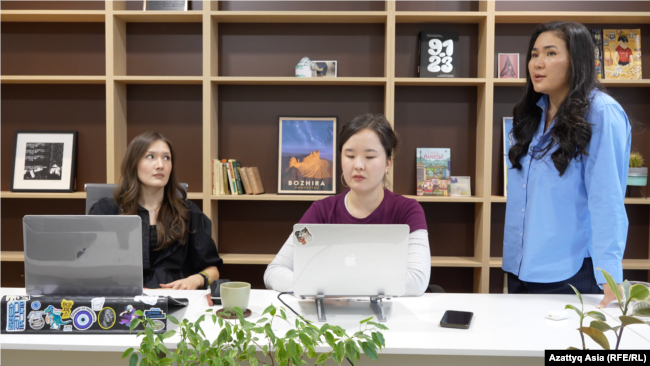
“Why are we covering femicide so hard? It all starts at the bottom of the rape culture pyramid. At first it’s some kind of ridicule: the woman driving is a monkey with a grenade, jokes about a “snake ball”. The second stage is harassment, harassment, and the culmination is violence and femicide, that is, the murder of women. Our society is already at its climax. Therefore, we place great emphasis on murders, and also on impunity for criminals. This is facilitated by laws, police and courts that do not protect us. And in order to achieve justice, victims need to knock on doorsteps, write to the media, trumpet, shout,” explains the media manager.
As an example, she cites the case of 32-year-old Aizat Zhumanova from the Zhetysu region. A woman was beaten to death by her husband out of jealousy. The victim's family and the public demanded a life sentence for him. The court sentenced him to 14 years in prison. The editors of Batyr Jamal covered this case, like many other cases of murder of women.
“We were in close contact with the relatives of the deceased. They gave us photographs of her corpse, and we published them. We went to extreme measures to make sure people saw what happened. But even this had no effect,” says Aisana.
“Brands are afraid to be around violence”
Ayim Matekova, a graphic designer, designs all Batyr Jamal materials. Ayim is 21 years old and has been reading the publication since school.
“Even as a child, I noticed that we have very different attitudes towards boys and girls from society. I started delving into this topic and in high school I realized that, yes, I am a feminist,” says Ayim.
She has been working at Batyr Jamal for a year and a half and says that it is impossible to fully adapt to such an agenda.
“Every time you think that you’re about to get used to it, but then you read the news and it just knocks you out emotionally. Even though it's mentally hard, you still want to be a part of it. I would like to have a hand in helping women,” says Ayim.
23-year-old Ksenia Sayfulina is a commercial editor at Batyr Jamal. She develops affiliate materials. As an example, she cites material about menstruation with a brand of hygiene products.
“We completely looked at how menstruation was viewed in the past, how it is viewed now, what women have used throughout history. That is, this is a full-fledged journalistic material on a femme topic, we just do it together with brands,” explains Ksenia.
When asked whether a feminist editorial office in Kazakhstan can make money, the editorial office answers rather negatively: expenses are covered, there are advertisers, but there are not many of them.
“Brands are afraid to be around violence, which is very strange to me, because we don’t invent it. We live in the same country, and you also see these cases. But I think that will change because we have had successful collaborations. Brands also want to be social,” says Aisana Ashim.
Men make up about ten percent of Batyr Jamal's readership and this is mainly the younger generation. The editors do not set a goal to increase the male audience.
“We shouldn’t involve men, they should get involved themselves: share, read, be on the agenda and, of course, act. Almost all of our publications are commented on by women. Men are usually inactive, even those who call themselves feminists. Media men speak out only when everyone has already spoken, as if by obligation. Men can do a lot; they don’t have to go to rallies. You can start by not speaking offensively to girls or refusing to shake hands with an acquaintance who does not pay child support,” says the publisher.
“I was afraid of the word “feminism””
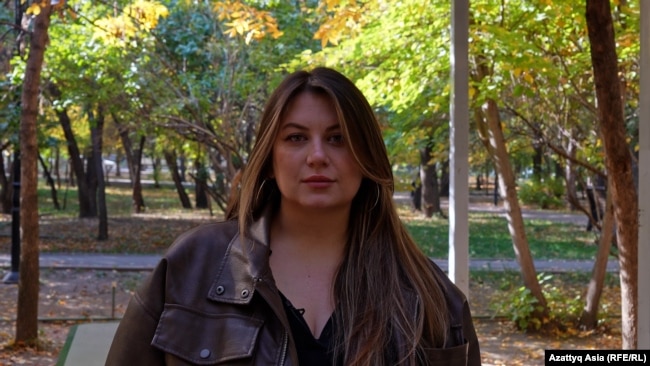
Maria Savelyeva, a 32-year-old gender researcher and blogger, has a similar situation: 90 percent of her audience are women. According to Maria, conveying a message to a woman and a man are two completely different tasks.
“Women are immediately involved, they immediately understand what this problem is about and how to solve it. To reach a man with the same idea, you need to go through several stages. First you need to say it politely, then say it politely again, then again. And the third time you say it a little more rudely, and you are already a “crazy feminist.” And somewhere at this stage, someone begins to listen, and someone, on the contrary, begins to hate even more,” she says.
Maria Savelyeva grew up in the south of Kazakhstan, in a society, she emphasizes, where traditional foundations are strong. “From about the age of 17, I became more independent, but I was afraid of the word “feminism.” I said: “Yes, I love all these buns, but I’m not a feminist, don’t call me that.” The more I educated myself, the more I realized that I was afraid of this word simply because I was afraid of being the “wrong” woman, a strong woman, and not a delicate flower,” says Maria.
Maria studied in Kazakhstan, but completed her last year of school in the USA. Then she entered the university in Kyrgyzstan, and received a master’s degree in the UK in public administration. She puts all her knowledge and experience into her blog, which she runs through femme optics. She raises issues such as violence against women, infringement of their rights, unpaid women's labor - the “second shift”, and imposed beauty standards. Maria also talks about communities and movements that are dangerous for women, for example, about the manosphere and its part - incels.
In addition to violence, Maria calls the objectification and sexualization of women a serious problem in Kazakhstan.
“Any woman who expresses an unpopular opinion has at least once heard in response from a man that she is “scary, fat.” Why the immediate attack on appearance? In patriarchal systems, there is a term called social currency, and one element of social currency for women is appearance. For many centuries, women were not given access to politics, education, or independent finances. The only way for a woman to have class mobility is to successfully marry. And to marry successfully in a patriarchal society means to look the way a man in this system wants,” explains the expert.
Maria often receives hateful and offensive comments due to her content. Early in her career, she was doxxed. Her video about the anti-racism movement Black Lives Matter found its way into misogynistic communities. Links to her social media accounts ended up in the “Male State” Telegram channel. This is a large movement of people with far-right, misogynistic, homophobic views, founded by Russian Vladislav Pozdnyakov. In Russia it is prohibited and recognized as extremist.
“I was flooded with comments from strangers. They sent me terrible audio! They not only cursed at me, they threatened me, they said that they would come in a crowd and rape me. But the wildest thing is that you go to their page, and this is, for example, an ordinary Lesha, father of three children. Here he gives gifts to children for the New Year, plays Santa Claus. So he took his wife to the sea. And at the same time, while he is spending New Year’s Eve with his children, he is writing audio notes to some random woman on Instagram. This is such wildness. And there were many of them,” recalls Maria.
“We must continue to fight together at all levels”
Aisana Ashim notes that in recent years, Kazakh women have become less afraid to talk about abuse. She believes that the increase in the number of complaints about violence is due to the fact that women began to go to the police and publicly talk about their experiences.
“Every day on Instagram someone says that she was beaten and raped. It’s not that this didn’t happen before-of course it did. Now women understand that they will receive support. And this is also the destruction of patriarchy. So we must continue to fight together at all levels,” she concludes.
Founder Batyr Jamal considers the low representation of women in politics to be one of the important problems in Kazakhstan. And those who have high positions and parliamentary mandates, according to the journalist, do not properly protect the interests of women.
“We have patriarchy not only at the everyday level, but precisely at the level of power, in politics. For example, according to statistics, there are only 12% of women top managers in large companies on the board of directors. There is not a single female akim. Independent candidates are not allowed to participate in elections,” says Aisana.
Both Aisana Ashim and Maria Savelyeva emphasize that, according to the latest UN data, not a single country in the world has achieved full gender equality.
“It won’t even be in the next 20-30 years that women’s problems in Kazakhstan will be resolved. Our mission will be important for many, many years to come,” Aisana is sure.
According to Maria, there are still changes. In the six years that she has been blogging, the perception of feminism, she believes, has changed dramatically: topics that were previously uncomfortable are now easily discussed on social networks, and some even reach parliament.
“We need to have a sober assessment of the society we live in. It is very difficult to turn any social changes into a really working bill. Some steps have been taken: for example, we have adopted a law on stalking. But, on the other hand, the level of domestic violence is still high. It is very important that the state also begins to participate in these dialogues, because so far only civil society is speaking,” the expert believes.
Maria admits that she sometimes thinks about a measured, quiet life without activism. But I’m convinced that now is not the time to quit blogging.
“I wake up, go on social networks and think: damn, something else happened again that needs to be told. All this news is spinning in my head non-stop 24/7. Every day I think that maybe I should quit everything and return to hiring, go with someone else’s flow. It's been like this for several years now, but I'm not leaving. I have so much patriarchal trauma from men and I still don’t care to live with it. But when I engage in activism, it’s like I’m helping myself. I speak this experience, I validate it for myself. When you admit out loud that you have a problem, that's a step. And the community I get from activism helps keep me going. On the one hand, activism makes me feel bad, but it also makes me feel good.”
Azattyq Asia is the Russian-language department for Central Asia of Radio Free Europe/Radio Liberty, RFE/RL.