Memoirs of Elena Mikhailovna Gundyaevatranslated
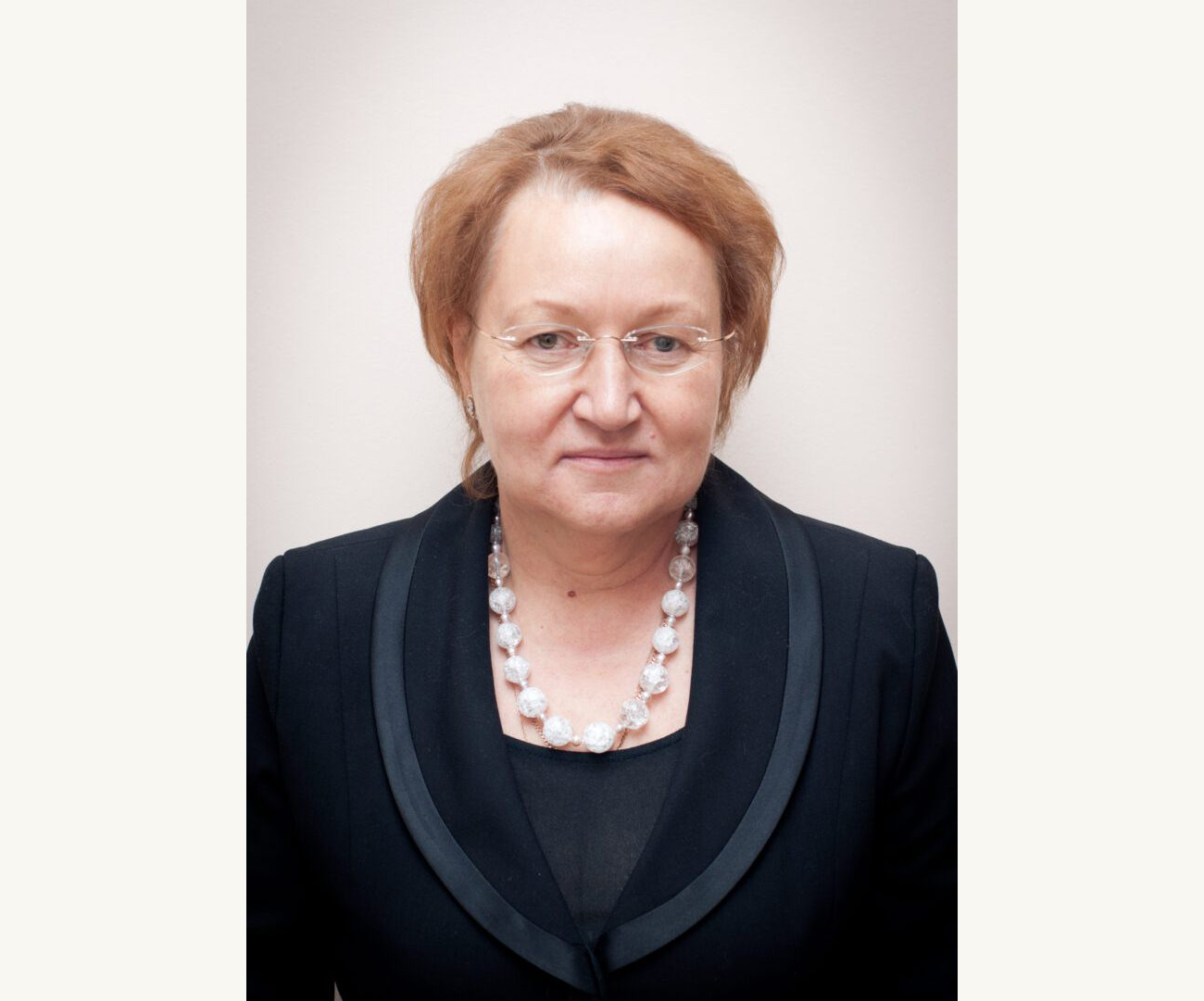
This date has approached - the 80th anniversary of His Holiness the Patriarch... We were preparing for this date with our entire School. I'll explain why later. If you think about what can be done in 80 years, you are trying to embrace the immensity. It is unrealistic to list what His Holiness did; many people know what, or feel it. In life, I don’t give interviews on personal topics, and now it’s my 80th birthday, and everyone is asking me to say something.
We have three parents. The elder brother, Archpriest Nikolai [1], who has already died, was also an absolutely amazing person, a professor at our Theological Academy, for a short time its rector and an excellent preacher, although in childhood he was lively and very active, with pranks, like all children.
As for Vladimir, who is now His Holiness Patriarch Kirill, this child was special from childhood - he stood out. Because how do children feel about prayer and church? Sometimes they are naughty, sometimes they are lazy, but all the time he had such a spark of God, which my father respected very much. Even when we prayed in the morning - we always read morning prayers together with dad and mom, something by heart - dad gave him the floor, and he read the prayers. Our family was generally very zealous and religious. This upbringing that our parents gave us became part of our flesh and blood, and of course, it greatly helped His Holiness on his life’s path. But as a child, he surprised me precisely with his love of prayer.
We all entered school a little differently, because our elder brother was born on the eve of the war, His Holiness was born immediately after the war, and I was born later. And, of course, the family lived with a single impulse, because our father was... special.
Probably many people know the history of our family. Before us is always and in everything their portrait - grandfather, father, mother - our roots. All the characteristic features of our life paths come from them.
Our grandfather, Father Vasily[2], is amazing, who went through many, many prisons and camps for the sake of Christ. He served a huge part of his life and, relatively speaking, could have been broken, but no. Our grandfather was a great man. By education, then just Vasily Stepanovich, he was a driver of very good roads von Meck[3], drove letter trains. I think it was a very highly paid position, because all of his colleagues lived very richly, they all had houses, all kinds of household items, and livestock. Our grandfather, as it turned out later, sent all the money to Athos, and when our Holiness was on Athos, he was given a book where it was written: “Vasily Gundyaev. Eternal remembrance" and names. Of course, grandmother Paraskeva[4] was special, because, imagine, having a lot of children, living in a rented house. And when what happened in our country happened, my grandfather truly became a soldier of Christ. When renovationism came and all these trials known to church history, grandfather Vasily devoted his life precisely to the struggle for the Church, for the purity of the faith.
This is easy to say, but at that time it was difficult to talk about faith in general. He practically fought to keep churches in the Nizhny Novgorod region from being closed. At first, he was still considered a hegemon and, I think, that’s why he was received in Moscow - he went to the All-Russian Central Executive Committee, sought meetings with people who could help. And the churches that he tried to “break through” and demanded that they not be closed, really were not closed for some time. But after all this, grandfather went to Kolyma. He spent years in exile, he was released, he came home - he would look around, look around what was happening - and again there: to fight again, not to remain silent, and again the same story. He went through an incredible number of prisons, because there were transit prisons, then terrible camps. And he was already a prisoner several times... He was literally the first prisoner of Solovki, moreover, he was a prisoner of Sekirnaya Gora. It’s amazing how he survived there... Only the Lord saved him. It is physically and morally unbearable to go through these tests - how many died, how many dead people had to be pulled out of the icy water and buried. This is all unbearable.
Physically, he was a hard worker from childhood, he was wiry among us, but that’s not why - the Lord preserved it, apparently, so that the family would continue. Our grandfather continued his struggle literally until his last years, when time had already changed, but he was forbidden to live and serve in big cities. After all, he later accepted the rank of deacon, then priest, and he was sent to serve far away. In addition to the fact that between exiles, grandfather fought against renovationism, he also went at one time to the holy hierarch Patriarch Tikhon - around him, of course, there were people who knew about the exploits of His Holiness, and grandfather managed to bring him notes from them several times and some food. How did he get there? I think that this already happened in the Donskoy Monastery. It must be said that he was well acquainted with the future Patriarch Sergius; as he said, they sat “knee to knee.” Grandfather, in fact, fought all his life for the Church, for purity
As for grandmother Paraskeva, her life was very difficult, she remained alone in this whirlwind of hard times, but there were many children, and they had to be fed. My dad and his older sister, as small children, about 7–9 years old, grew something in the fields there, because my grandmother had no time for that. They were the eldest children, and the youngest were very small, because grandfather was returning from prison. It was very difficult, but the year came when famine began. And the grandmother said that she goes to bed in the evening and realizes that in the morning there is nothing to feed the children. Well, there’s nothing at all, there’s nothing else at all. And at night he hears a knock. You know, there is one woman in the house, the village, the children are small, she did not go to open it. And when I opened it in the morning... there was a full sack of grain standing on the porch! This is at that time. It was a real miracle of God. We consider it this way, that it is a miracle of God. She was a very wise and deeply religious woman, all her children revered her very much. Grandfather Vasily is a pillar, a family flint who fought, such a warrior.
But Grandma Paraskeva was warm, she managed to both raise the children and somehow reconcile them to what was happening - after all, children always ask why and for what. She created an amazing family nest, and this house where they lived still stands, it has been restored. This is the village of Obrochnoe, not far from Saransk. This house, in general, is so small, but very, very cozy, and everyone fit in there. Grandfather Vasily came to us in Leningrad once, when I was very tiny, but I remember it. He was passing through or from some regular layover, I was too young, and this was not explained to me - it was literally one day. But when dad was transferred to Krasnoe Selo for his wonderful sermons and communication with the intelligentsia, then grandfather came to us there very, very sick. Krasnoye Selo was not a city then, but a village, and, apparently, that’s why they were able to settle him with us; grandfather lived with us for about a year. He told us: “Do not be afraid of anyone, do not be afraid of anything, just fear the Lord and never anger Him.” After a while, he decided that he would go home and went to his place, in Obrochnoe.
There he rested. It’s amazing how he basically lived alone all his life, only visiting his family’s house, so he was buried alone (his grandmother and all his relatives were buried in the city cemetery in Saransk) - he had a huge cross, at first it was wooden, then they put up this granite one. It’s amazing that he was a railway worker, and this cross on his grave rises right next to the railway track, which seems to go around the cemetery, and the cross is visible from the railway...
As for our dad, he was the same, only softer. Dad also managed to end up in the camp because he studied at the Higher Theological Courses, which were later closed. He sang in the choir of what is now Optinsky, and then the courtyard of the Kiev Pechersk Lavra in Leningrad. And literally on the eve of the wedding he was sent to Kolyma. His life was entirely connected with worship, he was a very churchly person, he suffered for the Church while still an engineer. Mom was waiting for him. Mom, Raisa Vladimirovna, is an amazing woman who was able to give us her culture, her inner world and amazing devotion. Her devotion to dad was all her life and, of course, to the cause he served. And that’s how my parents lived, because my dad wasn’t afraid of anything either. Dad raised us in the same spirit as grandfather Vasily, only softer. He, with his culture, with his knowledge, was the only one of the prisoners when he was an exile who could walk around the camp at night - they did not touch him. He was even called “dear father”; he began to teach technical sciences to the inmates, since he himself was a good technician and also taught them languages.
He communicated with everyone quite calmly, came to the barracks, gave lessons, taught them a lot. He seemed to be gentle, but with strict principles. Dad never changed his principles, but he showed gentleness towards people when he saw weaknesses, saw human difficulties - he was an amazing person.
At the beginning of the blockade, dad was still in Leningrad, because he was an engineer, and they were still kept here. They were sent to various other jobs to protect our city, digging trenches. Then there were still, I think, some crackers left. Dad brought his rations to mom - her first son was born in November 1940. He had to be fed somehow. Then dad, out of duty, naturally moved on, and mom was left alone with Kolenka in the besieged city. They lived on the fifth floor; at that time there were no elevators, especially during the war they did not work; mother went with Kolenka to get water. Since she, naturally, could not work, she was just a small child, she had very small grams on the card, some grams of bread. How did she survive? I don't know. When dad still brought crackers, she probably saved them a lot somehow. And so she went to fetch water with Kolenka, and he was heavy, she was completely exhausted - she had to go down from the fifth floor with him in her arms, then somehow go back up, also with water. It's hard to say how she survived it.
I burned all the books I could, all the furniture - it was very difficult. I can’t say everything for sure, because they didn’t talk about it, they tried not to talk about it. But from some fragments of conversations, I understand that somewhere in the spring, when our Lake Ladoga had already begun to melt, my mother and Kolenka and her dear sister Ekaterina, who lived with her in this apartment, the three of them made their way across Lake Ladoga. There was also a truck ahead of them, it fell through... It was, of course, a nightmare. But even here God is merciful. They somehow got to the shore, and the mother, since she was with the child, opened the car door and said: “If we fall through the ice, then jump in order to save the child.” And so she stood on this step, holding the child - my mother was a small, thin woman - where did the strength come from after the blockade, to hold the child, when the car was walking on uneven melted ice, and everyone was shaking? The Lord is merciful, we reached the shore. Then my mother went to my father’s relatives in Obrochnoe - naturally, there were a lot of children there. Mom decided to look for work; there was some kind of timber industry enterprise there.
Mom took Kolenka and walked with him through the huge fields - yes, I had to know my mother, she could not be a burden. And she walked across these fields. And the only thing she said was that huge birds were flying over them, they were hungry and predatory. She walked and only prayed that they would not hit her with the baby in her arms. By the grace of God she reached the timber industry enterprise, somehow they settled down there, Kolenka was with her. It’s surprising that when dad was sent to Stalingrad, the train passed right next to them, through Ichalki, near this timber industry enterprise. Dad later told me that he was on this train. I must say that he had very good and clear handwriting, in this regard he was very pedantic with regard to papers. And so, on this train he had a place where he filled out some business - “And,” he said, “suddenly I heard a knock.” She looks out the window, and there is her nose - you can’t see her, she’s small. That is, she is not
They asked me why dad took this step and took ordination - after all, he saw the life of his grandfather. This, of course, was really a step, because after serving his sentence, dad was still able to graduate from college, was the chief mechanic of a numbered plant, and for him this was a big deed. But he dreamed, and not only dreamed, but always knew that he would be a priest and prepared for this. He was ordained when he already had two sons, but in order to be ordained, he had to give up all the cards (then there was still a card system). In addition, dad gets sick and ends up in the hospital with purulent appendicitis, and mom is a teacher by training, but she could no longer teach, because the earth was full of rumors, and everyone knew that Mikhail Vasilyevich was going to be ordained. But it so happened that the Lord helped us endure the period when dad was in the hospital and other difficulties - mom tried to somehow raise the children and feed them. Therefore, our mother is very persistent and courageous.
Maybe that’s why we all have quite strong characters – soft in some places, but hard in others; this probably comes from the stamina and core of our parents. They were so purposeful, so devoted their lives to their service that, of course, it seemed to be in their genes.
The only thing the pope asked Metropolitan Grigory (Chukov)[5] was not to send him to the Smolensk church, because his factory was nearby. Bishop Gregory told him that he would be the youngest priest in Leningrad after the war period. We lived nearby, on Vasilyevsky Island. Of course, the plant was quite nearby, and everyone went to look at it, it was difficult for him, but then he resigned himself. The Lord judged in such a way that dad nevertheless began to serve in the Smolensk Church of the Mother of God on Vasilievsky, this church became dear to us. I was baptized in it. There were already three of us, and instead of going to parks and other places, my mother took us for a walk in this cemetery. We have known “Smolenka,” as we called it, since childhood. Mom always brought us to St.
Xenia the Blessed, but this place was in a terrible state - they made some kind of workshop there, there were gravestones around, the building was not a chapel and was smeared in a yellowish color, the crosses were all removed, much was made of wood, and from previous years there was probably only a brick wall covered with paint. And we came there very often, my mother told us everything. In this office building at that time there were some sounds of the presence of someone, atheists were working there, they were afraid of this place, and later they boarded up everything around with a fence. We still came, prayed, and then went to the church - it has such a bit of amazing architecture, it’s long, and it seemed to us little that it was a very large church. At that time, our dad was still serving there, it was still at a time when it was possible to serve near this building where Blessed Xenia rested, and he served funeral services there, and the path that led to the church... There is even a photograph where dad is walking along this path and there are people around. He was loved very much, so much so that they called him “Father Mikhail Smolensky.”
It is providential that Vladyka Kirill was then transferred to Smolensk. By the way, when he was transferred to Smolensk, there was a worldwide sob here - neither students nor teachers could accept that in the middle of the academic year before the New Year he was taken and transferred. This became known at the Council and announced after the akathist. Of course, the entire School was shocked, because the School was thriving.
But it was the same when the pope was transferred from the Transfiguration Cathedral, the central cathedral of St. Petersburg, to Krasnoe Selo. Our dad, as I already said, first served in the Smolensk Church on Vasilievsky Island, and then he was transferred to the Transfiguration Cathedral. The future Holiness entered elementary school in Leningrad, we still studied for some time in the city, and then our dad, for his amazing sermons, when he served in the Transfiguration Cathedral, and the Leningrad intelligentsia gathered around him, was transferred to the village. He always preached superbly, was a deeply educated person, and after the war, moreover, the staff of the clergy was very small, and there were few churches, and the pope had a lot of activities. Dad, as a priest, was very strict, but at the same time warm and sensitive - in our home memories we remember how many intelligentsia, professors of higher educational institutions, came to our home, to our apartment on Vasilyevsky Island, for example, the future bishop, and then professor Mikhail Nikolaevich Mudyugin [6].
Vladyka Nikon (Fomichev)[7] came to our house in Krasnoye Selo, the future Patriarch Pimen came then as a metropolitan to serve with the pope in Krasnoye. I remember the carer for Christ, Vladyka Alexy (Konoplyov) [8], who began to restore our Lavra; my mother and I came. By the way, Father Andrei Mazur came to Leningrad with him[9]. These meetings were amazing.
We fully experienced the difficult times of Khrushchev. Dad found himself in such rural conditions that it is impossible to describe. But the most important thing is mom. She is a resident of St. Petersburg in all generations and of noble roots. Imagine, this fragile woman finds herself in an old house, where there is snow on the baseboards. And my mother was a faithful wife, she was very modest among us, but after a city apartment and still Leningrad, Krasnoe Selo was a very difficult village at that time. Dad says: “What are we going to do? Let's go." And we went to that ice house near the church. Both grandmother Paraskeva, mother of grandfather Vasily, and my mother, Raisa Vladimirovna - they, of course, are strong, focused and faithful to their husbands in everything and in their brave works. Our mother was amazing. She had a teaching education, she is a German teacher. When dad took ordination, schools, naturally, were closed to her - during Soviet times.
Mom took care of our upbringing, it was difficult to raise three of us - there were very big financial difficulties, because terrible taxes were imposed on dad back in the Smolensk Church. Dad paid off these debts until 1961. We lived more than modestly. Our apartment on Vasilievsky was not separate, with tenants, and our childhood was decorated by the Church, so to speak. We attended services every Sunday in Smolenka, then, when we grew up a little, we began to go to the Vladimir Cathedral, and everyone seemed to have grown up there, too, because it was a long way to go to the Transfiguration Cathedral, where dad was transferred. Then there were buses, and there was a tram to Vladimirsky, which was much closer.
Our childhood was very interesting, because there was an excellent library and, of course, lessons on the Holy Scriptures. Dad gave us assignments from books, we had to answer all this for him in about two days and received a new assignment. What we didn’t understand, he explained to us, and thus, when I came to work at the Academy (I was adapting English books into Russian so that students knew what it was about when they ordered a book on a subscription), then all these texts were more than familiar to me, thanks to such a childhood and my dad. Mom, of course, continued this path: when dad left early, we answered mom.
And my parents, amazing people, made it possible to move to Krasnoe. We went to the local school. And that's where it started. But we studied well and stood out in some way, apparently due to our upbringing - everyone also knew that our dad was, as they said, a “priest.” At the same time, we went to services regularly and religiously. And they began to “re-educate” us. Basically, Vladimir got everything... He was not a Komsomol member, not a pioneer, he was a brilliant student, and at the same time bright. He had an excellent certification, but I studied more modestly, and somehow the girls were treated less seriously, although I was also offered all sorts of nice things, such as “send to Artek” if I went to the pioneer organization. I must say that dad told us from early childhood that this is our will: “As you think, so you do, but remember that if you join these organizations, the church will be closed to you.” This said everything for us, because for us the church was life, this was our main thing in it.
And, finding himself in such severe persecution, Vladimir absolutely amazingly defended his rights - the rights of a believer. Imagine a boy, 6–7 grade: he is called to a huge teachers’ meeting, they put him in a chair in the middle of the teacher’s room, and his re-recruitment begins. As I already said, dad had a magnificent library, and dad taught us from childhood to read these books, which he selected to suit our understanding. And therefore Vladimir was already very erudite by that time, he was a man who had very good information and knew more than those people who called him for this pressure and did not know much at all. They asked very primitive, stupid questions, to which he, of course, answered and posed uncomfortable questions to them - at that time! And his class stood outside the door and listened. Therefore, over time, the guys, of course, treated us very seriously, and we were very respected. This was also important. Our father Nikolai was already studying at the seminary at that time, and therefore he was spared this cup with the teachers in Krasnoe Selo.
By the way, he was the first in Leningrad to enter the Leningrad Theological Seminary from a family of priests; everyone was still afraid. Other clergy families began to follow him - they saw that they could study without being sent to prison. In the course where Father Nikolai studied, all the kids were secular students, but naturally, religious ones.