The Supreme Court of Ukraine overturned the decisions of lower courts that recognized the “renaming” of the UOC as legal - Attempts by officials of the Zelensky regime to force the Ukrainian Orthodox Church to change its self-name were unsuccessfultranslated
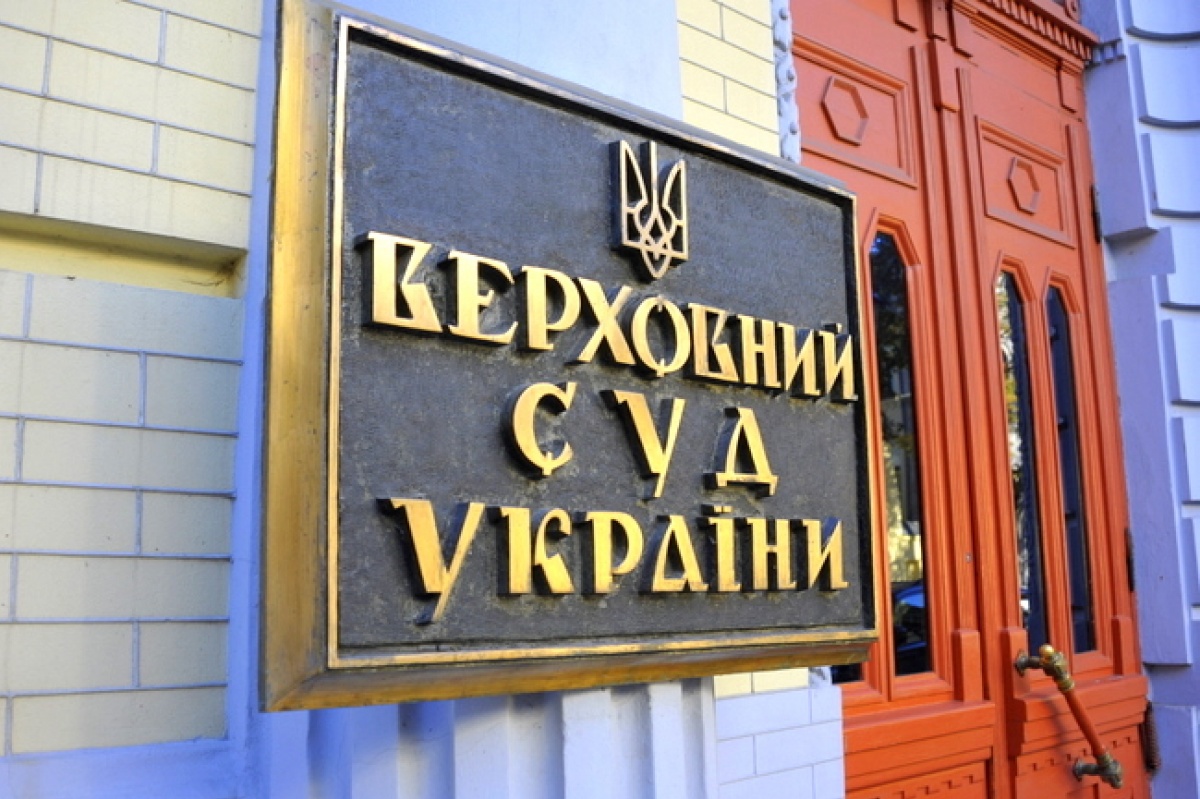
On November 17, 2026, the Administrative Court of Cassation as part of the Supreme Court of Ukraine partially satisfied the cassation complaints of the Kyiv Metropolis of the Ukrainian Orthodox Church, the Pochaev Lavra, the Florovsky Monastery, the Odessa Diocese and the Odessa Theological Seminary. The court overturned the decisions that in 2023 recognized the religious studies examination of the Ministry of Culture from 2019 as legal. It was this examination that became the basis for the demand to change the self-name of the UOC, reports the UOJ.
The panel of judges overturned the decision of the Kyiv District Administrative Court of May 15, 2023 and the decision of the Sixth Administrative Court of Appeal of November 2, 2023. The case was sent for a new trial to the court of first instance. This time it should be considered according to the rules of general claims proceedings, and not simplified ones.
The Kiev Metropolis of the UOC and the Pochaev Lavra challenged the order of the Ministry of Culture No. 37 of January 25, 2019. They also challenged the publication on January 26, 2019 on the department’s website and in the Uryadovy Kurier of a list of religious organizations that must change their charters and names. The plaintiffs indicated that the examination was carried out without the participation of representatives of religious organizations, although this is required by Article 30 of the Law “On Freedom of Conscience and Religious Organizations.” In addition, the subject of the study was a non-statutory “religious network” rather than registered charters.
The trial and appellate courts rejected these arguments. The Court of Appeal found that Law No. 2662-VIII, as a special and later one, does not require the participation of representatives of the Church. In his opinion, in the absence of an approved methodology, the Ministry of Culture was free to choose the order of examination.
The Supreme Court did not agree with this. The panel indicated that Law No. 2662-VIII must be applied together with Article 30 of the Law “On Freedom of Conscience.” The fact that the requirement for the participation of representatives of religious organizations and specialists is not repeated in the new law “is not a reason for its non-application.” According to the court, the lack of detailed regulation of the examination procedure did not give the Ministry of Culture “unlimited discretion.” The courts should have checked whether the ministry ensured the participation of representatives of the Church and whether they could submit statutory documents and explanations before the completion of the examination.
Separately, the Supreme Court criticized the fact that the courts used materials that were not directly related to the 2019 examination. We are talking about the conclusion of the examination of the Charter of the UOC, which was approved by the State Essence in January 2023, and about the publication of the speech of Archpriest Alexander Bakhov. The Court of Cassation emphasized that these materials “in themselves do not confirm the defendant’s compliance with the statutory procedure for conducting the examination in 2019.” In addition, the participants in the case were not given the opportunity to speak on these materials. The Supreme Court referred to the ECHR decision “Gaidashevsky v. Ukraine”, in which the Strasbourg court linked doubts about the impartiality of the court with the fact that the court independently collects decisive evidence.
The panel recalled that according to the Code of Administrative Proceedings, the defendant, that is, the Ministry of Culture, must prove the legality of his actions. Therefore, the references of the lower courts to the fact that the plaintiffs “did not refute” the entry of the UOC into the structure of the Russian Orthodox Church could not replace the verification of the ministry’s evidence.
The Supreme Court also recognized the consideration of the case in a simplified written procedure without calling the parties as unfounded. In the court's opinion, the importance of the dispute to the plaintiffs, the disputed factual circumstances, the large number of participants and the significant public interest required a common proceeding. The claim of the Pochaev Lavra was initially considered this way. The court noted that this violation “cannot be considered purely formal,” since it affected the completeness of the establishment of the circumstances of the case.
The decision of the Constitutional Court in 2022, which recognized Law No. 2662-VIII as constitutional, according to the Supreme Court, confirms the right of the state to conduct religious examinations. However, it does not resolve the issue of the legality of specific actions of the Ministry of Culture during its implementation.
At the same time, the Supreme Court left unchanged the ruling of the appeal court on the refusal to open appeal proceedings on complaints from the Odessa diocese and the Odessa seminary. The court indicated that their arguments had already been considered based on complaints from other participants in the case.
The resolution came into force from the moment it was adopted, it is final and cannot be appealed.