The participation of students in the “Great Russian Northern Route” project was discussed at the Presidential Academytranslated
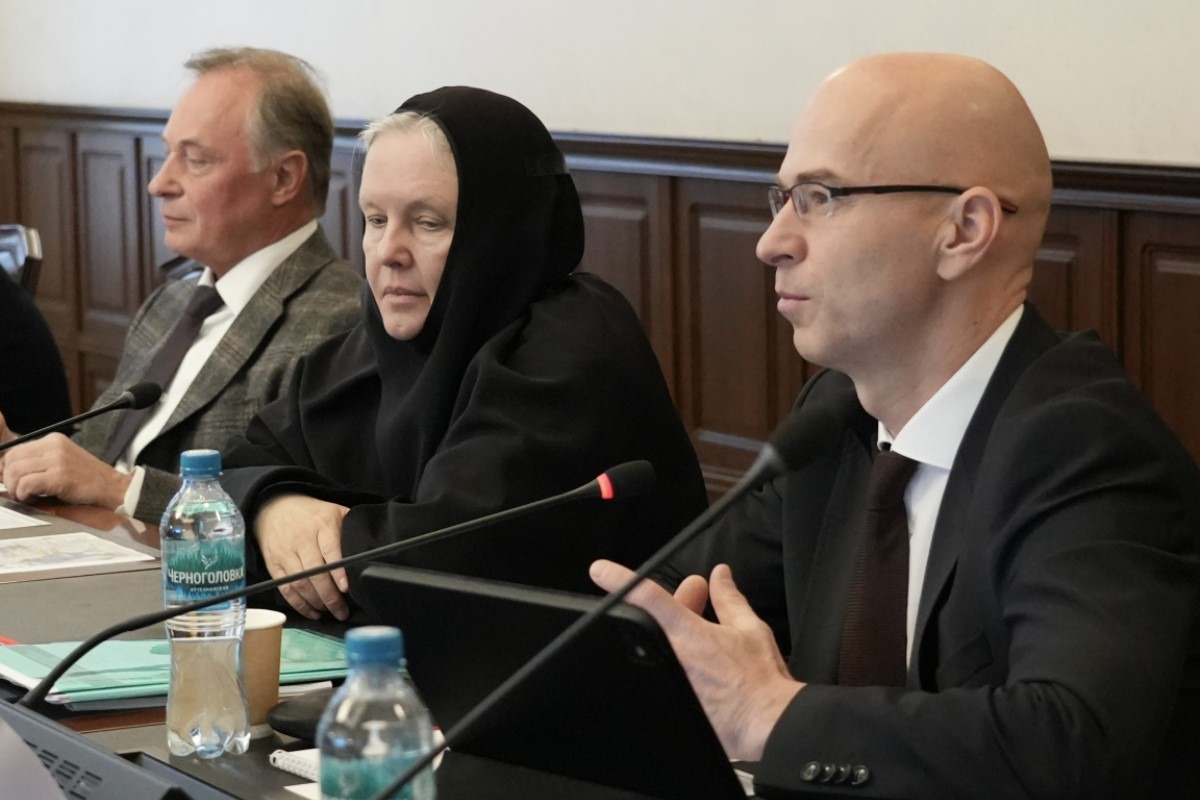
At the Russian Academy of National Economy and Public Administration under the President of the Russian Federation (RANEPA, Presidential Academy) in Moscow, a meeting was held with the head of the interregional project “The Great Russian Northern Route”, the abbess of the Novodevichy Stauropegial Convent, Abbess Margarita (Feoktistova).
The meeting was held in the format of an open dialogue with teachers and students of the Institute of Public Service and Management (IGSU) of the Presidential Academy, representatives of the Tourism.RF corporation and the public organization Business Russia.
The participants discussed the prospects for interaction between the state, the Church, business and NGOs for the development of tourism in 12 Russian regions.
The event was led by acting Dean of the Faculty of Public Economic Administration of IGSU, Doctor of Economics Alexey Rvachev.
The essence of the project is to unite spiritual centers, ancient cities and historical monuments into a single route from the Novodevichy Convent in Moscow to the Spaso-Preobrazhensky Solovetsky Stavropegic Monastery in the Arkhangelsk Region. According to the deputy director of ISSU Tigran Zanko, branches of the Presidential Academy are located in eight of the twelve regions of the route. The Academy offers to facilitate the development of the project and involve students in its implementation and promotion, including within the framework of the Service-Learning program.
As an example of a “journey with meaning,” Abbess Margarita (Feoktistova) cited the history of the famous pilgrimage route Camino de Santiago - the Way of St. James. It leads to the revered tomb of the apostle in the Spanish city of Santiago de Compostela, and its historical routes are included in the UNESCO World Heritage List. An important principle of organizing the route is its accessibility for travelers with different levels of income. More than a million pilgrims have walked along the route, including heads of European states. In addition to spiritual and cultural significance, it also acquired economic significance: the flow of travelers gave impetus to the development of the hotel business and other service sectors.
As Abbess Margarita (Feoktistova) noted, the “Great Russian Northern Route” combines tourism and pilgrimage destinations and has great development potential. The 5,000-kilometer route passes through 15 dioceses of the Russian Orthodox Church and includes historical and architectural monuments, including 14 UNESCO World Heritage Sites, including the Novodevichy Convent, the Holy Trinity Lavra of St. Sergius, the white stone monuments of Suzdal and Vladimir, the ensembles of the Ferapontov and Solovetsky monasteries.
“The route must ensure a balance of interests,” the project manager believes. - For tourists this is an educational aspect, for pilgrims it is an opportunity to participate in divine services and become familiar with the spiritual values of Russia. For the economies of the regions participating in the project, this means federal funding for the construction of infrastructure, the restoration of churches and monasteries, the protection of cultural heritage sites, and the potential for public-private partnerships.”
Executive Director of the Tourism.RF Corporation Sergei Ivanov noted that to promote the route, it is necessary to solve a number of organizational problems: carry out certification, build logistics, identify an operator, provide clear terms for the sale of tours and information support in the media. In his opinion, the task is to make the “Great Russian Northern Route” accessible to travelers and as recognizable as the “Golden Ring”.
The head of the working group for the development of the project from Business Russia, a member of the board of the MotoWings motorcycle club of Business Russia, Vladislav Lobzin, said that representatives of the motorcycle community intend to travel this route by personal transport in order to evaluate the logistics and possibilities of individual travel.
The head of the federal program “Service-Learning” at ISSU, Inna Agalarova, spoke about the opportunities for Academy students to participate in the project and explained how to organize student participation by posting tasks on the Dobro.rf platform. Under the guidance of mentors, young people can develop a mobile application for tourists and pilgrims, route maps, booklets with descriptions of attractions, work as volunteer guides during practical training, and perform other tasks. According to Inna Agalarova, participation in the project gives students much more than just practical skills: it is an opportunity to feel involved in a great cause, get to know the country from the inside, broaden their horizons and take their first steps in the profession.
Abbess Margarita (Feoktistova) answered students’ questions about the cost of travel for pilgrims and tourists, approved the creation of a virtual tour for people with disabilities, assessed the importance of protecting historical monuments from the negative impact of humans, and announced the first 10-day familiarization tour along the route, which will take place at the end of December 2026.
Concluding the event, Alexey Rvachev expressed confidence in the success of the project. According to him, the university will help ensure that the “Great Russian Northern Route” becomes increasingly popular and accessible to travelers, and students can become its active participants.