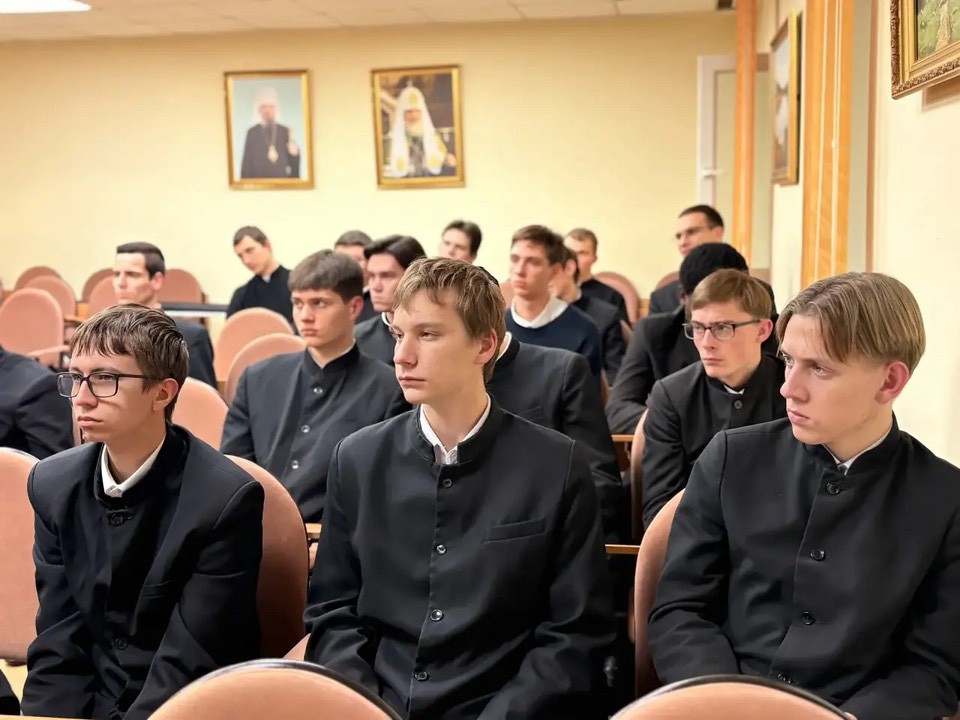
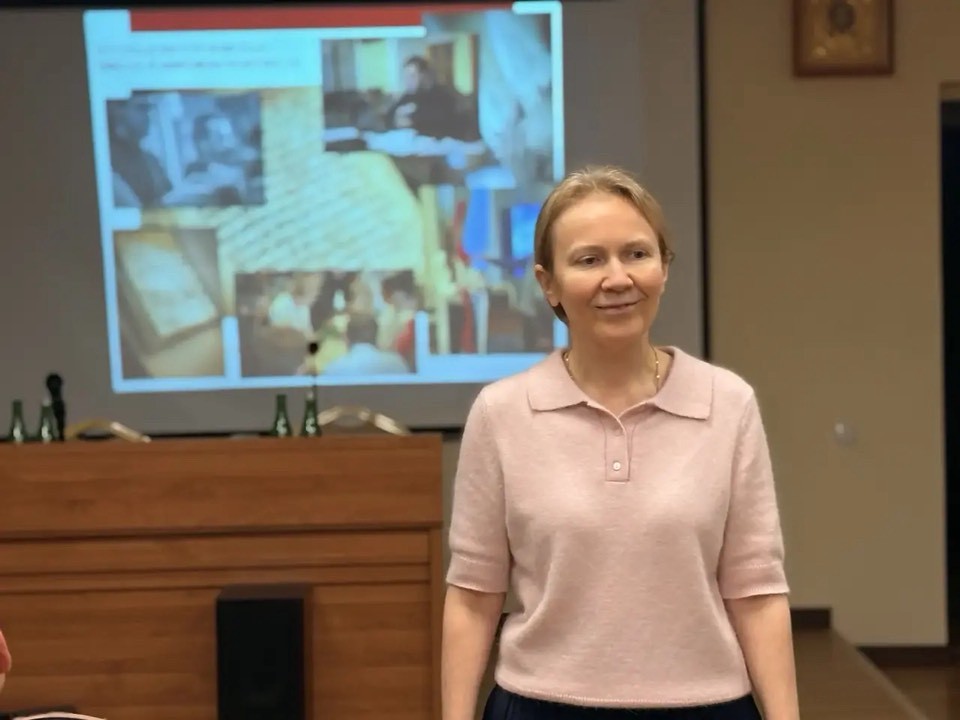
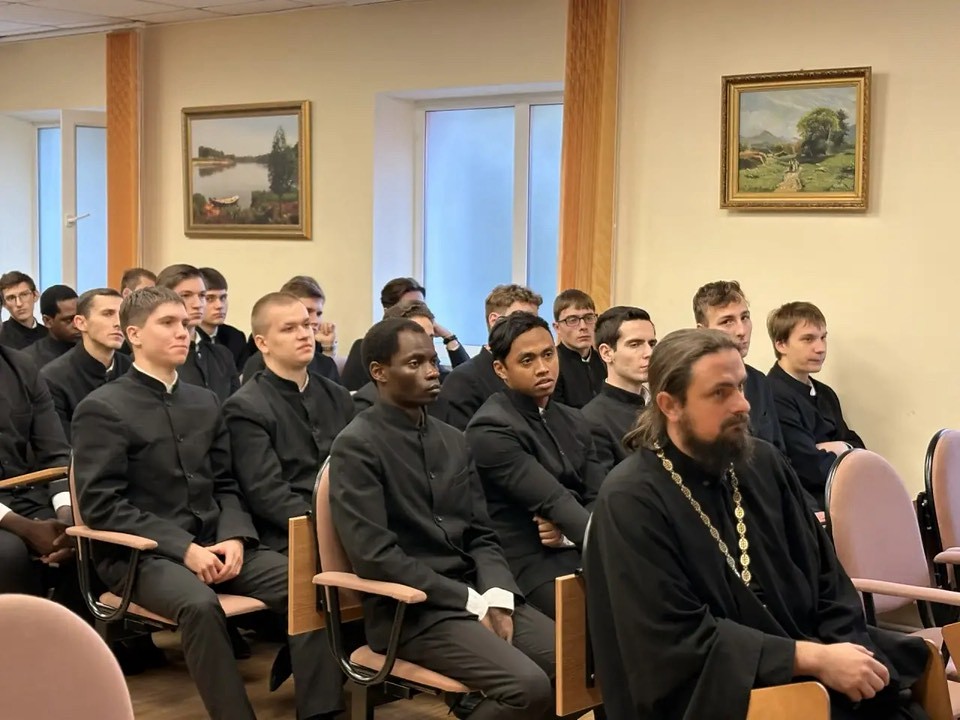
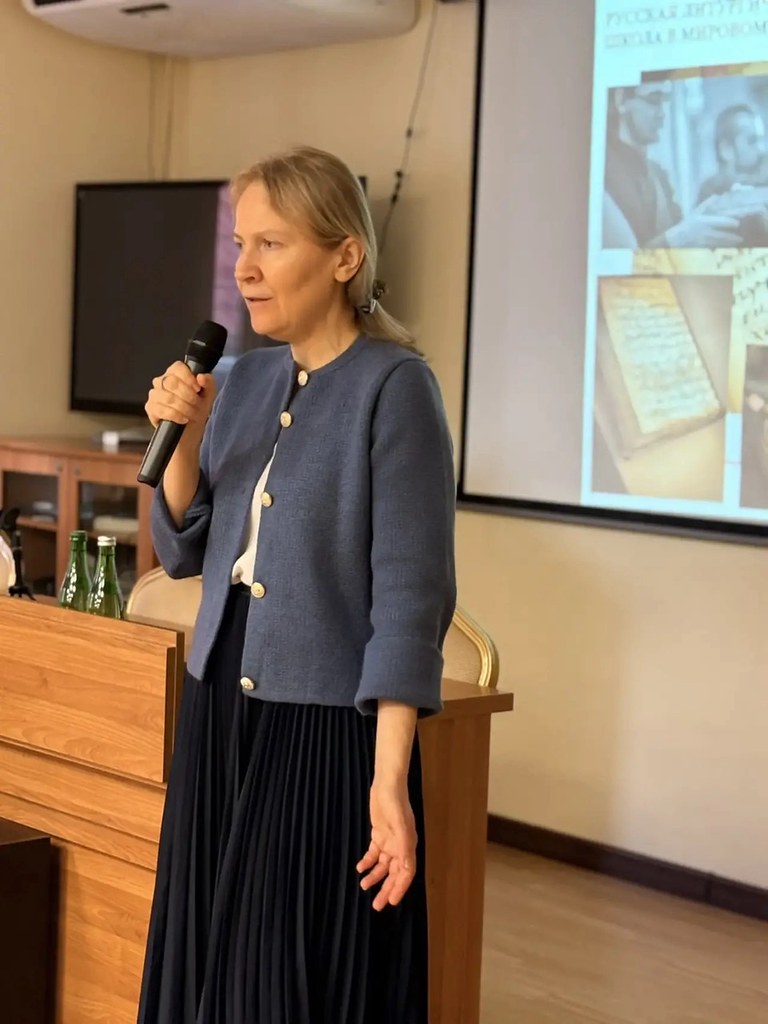
At the Ekaterinodar Theological Seminary a meeting was held with the candidate of philological sciences Alexandra Yuryevna Nikiforovatranslated
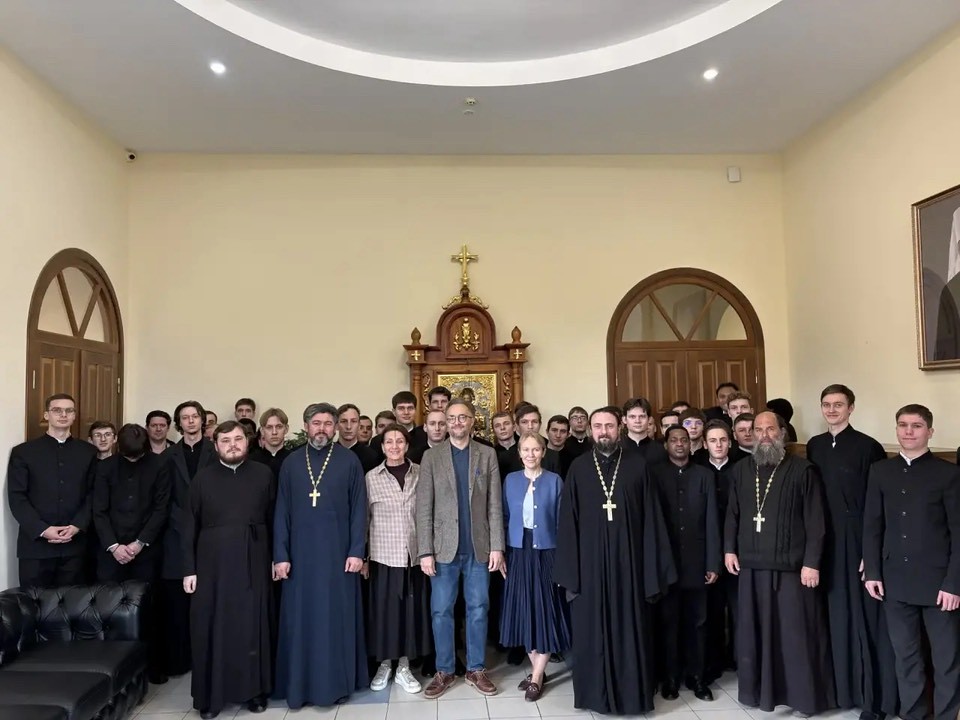
On November 23, 2026, at the Ekaterinodar Theological Seminary, a meeting was held with a candidate of philological sciences, a specialist in historical liturgics and Christian hymnography, the head of the master’s program of the All-Church Postgraduate and Doctoral Studies named after. Saints Cyril and Methodius “Historical Liturgics” by Alexandra Yuryevna Nikiforova.
The meeting was dedicated to the Russian liturgical school and its significance in the global context.
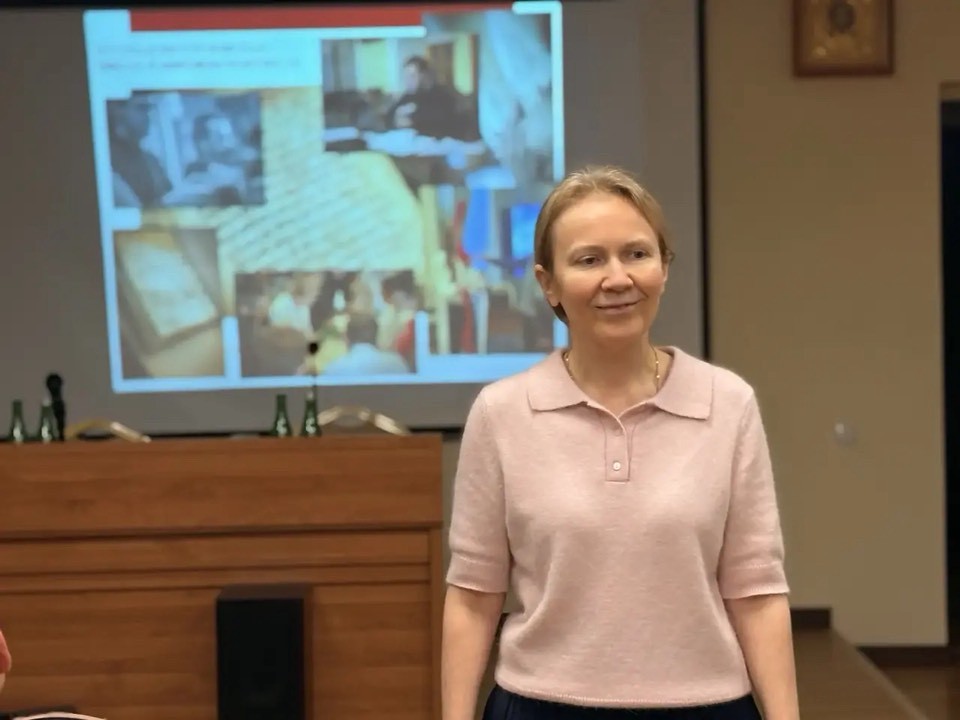
Alexandra Yurievna spoke about the contribution of Russian scientists of the 19th century, primarily the professor of the Kyiv Theological Academy Alexei Afanasyevich Dmitrievsky, in the development of the method of liturgical science, which is called historical-liturgical, or genetic. “Following this method, we must trace,” wrote Dmitrievsky, “how the ranks and successions that we have today developed from the inclinations given by Christ.” To do this, the maximum amount of manuscript evidence in the main languages of Christian liturgical writing - Greek, Georgian, Syriac, Slavic, etc. - as well as archaeological and historical data must be analyzed in chronological order.
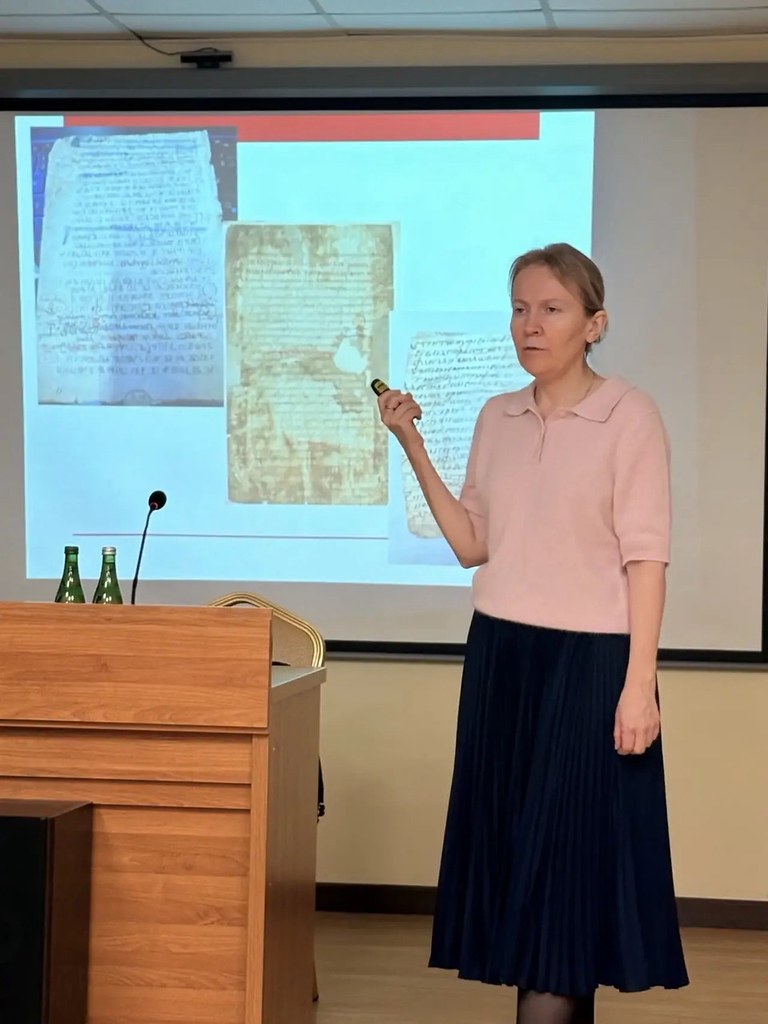
Particular attention was paid to the discovery of the century, when a secret room filled with ancient manuscripts was discovered in the monastery of St. Catherine in Sinai in 1975, and to the analysis of three codices from “new finds” that reveal to us the early liturgical traditions of the Christian East.
Texts from new Sinai finds were offered for consideration. The Liturgy of Peace and Tropologies were considered.
At the end, Alexandra Yuryevna spoke about the master’s program “Historical Liturgics” and invited students to enroll and participate in the Third International Mansvet Readings in October 2027 in Moscow, which will be dedicated to the memory of Russian liturgical scholars and a wide range of liturgical topics.
The second day was devoted to an analysis of the method in which historical and liturgical science works today. After listing the basic laws of Anton Baumstark and Professor Robert Taft, such as “Liturgical development moves from simplicity to increasing complexity” or “Initially practical liturgical actions gradually acquire symbolic meaning,” and others, the formation of the rite of foot washing was analyzed. The process of reconstructing a rank was likened to assembling a puzzle, where out of a thousand original parts, only 350 are available to the researcher. The earliest evidence is taken as the starting point, from which movement is made to later editions based on a comparison of handwritten data.
The meeting concluded with the words of Professor Robert Taft: “The history of the liturgy is studied not in order to recover the past, but in order to intellectually comprehend the present, which can only be perceived as part of a larger whole. A knowledge of history is absolutely necessary to form a fluid point of view... The only true way to understand and criticize the modern manifestation of any cultural phenomenon is to see what once was and how it came to be what it is. This can only be done by studying origins and evolution.”