United on two wheels: ‘On a bike, there is no difference. We're equal'
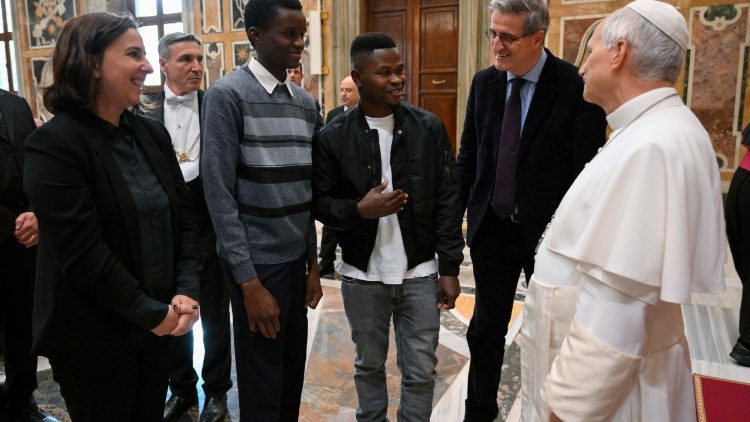
Former and current cycling champions gather at the Vatican to meet Pope Leo and partake in a ceremony to donate bicycles to young people in vulnerable situations, bringing to life the notion that cycling breaks down social barriers. Read all
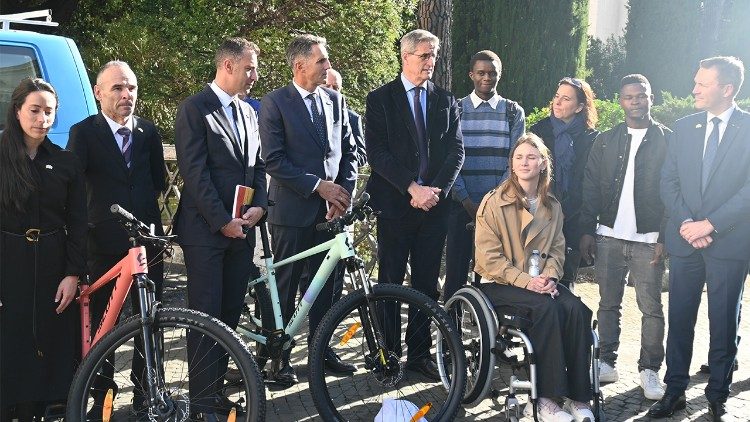
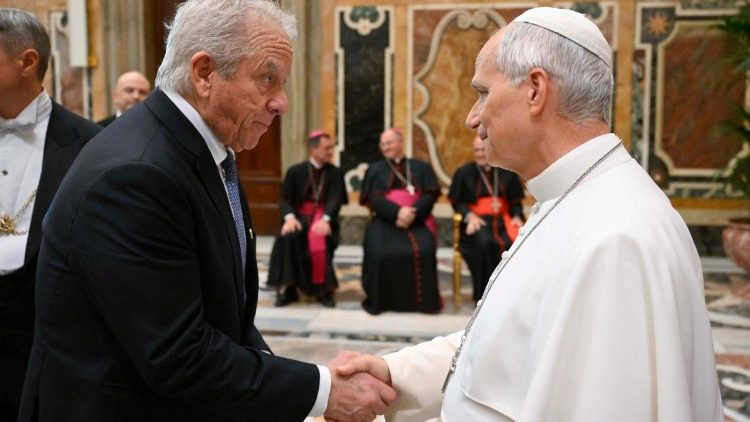
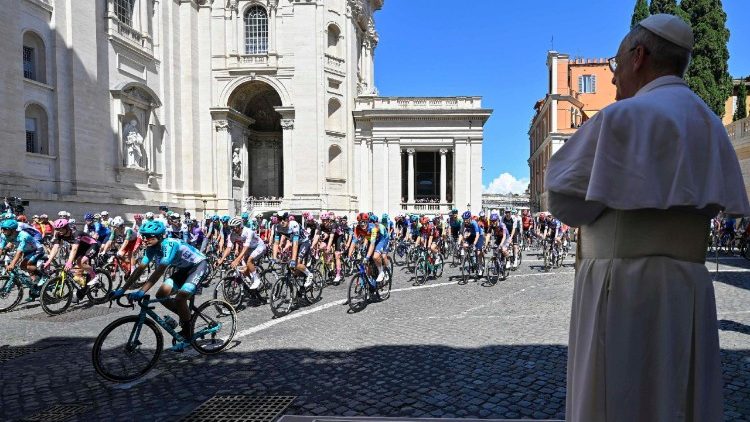
A year and a half after the 108th Giro d’Italia made history by riding through Vatican City State for the first time, 120 former and current cycling champions gathered in the world's smallest state to share their love of cycling with Pope Leo XIV.
“The bicycle is part of the history and identity of many cultures,” the Pope told the group of cyclists coming from around the world-from France, Spain, Italy, Belgium, and the United States- when he received them on Monday, November 23, 2026.
One of these cyclists was three-time Tour de France winner and two-time Road Race World Champion Gregory LeMond from the United States. He says the Pope’s message reflects his own view of cycling: as something that brings people together.
“Sports are unifying for people. You can have all the differences-political, racial, etc.-but when you get on a bike, you’re one. There is no difference,” LeMond explains.
For centuries, cycling has been seen as an inclusive sport. In the 17th century, a disabled German watchmaker built a three-wheeled, hand-cranked carriage in order to travel and move independently.
Two hundred years later, in 1894-1895, Annie “Londonderry” Kopchovsky broke down gender stereotypes, becoming the first woman to cycle around the world. Around the same time, Marshall “Major” Taylor was the first black cycling world champion from the United States-tearing down racial barriers.