The Church embraces everyone with its prayertranslated
7th Discourse on the Divine Liturgy Metropolitan Athanasius of Limassol We are all on a journey because our life is nothing but a journey. In this world we are travelers.
7th Discourse on the Divine Liturgy
With God's help, we continue to analyze the text of the Divine Liturgy. Last time we considered the petition for the peaceful litany: “For the blessing of the air, for the abundance of earthly fruits and peaceful times...”. Today we will try to consider the following petition, with which the deacon addresses God on behalf of all the people, and which sounds like this:
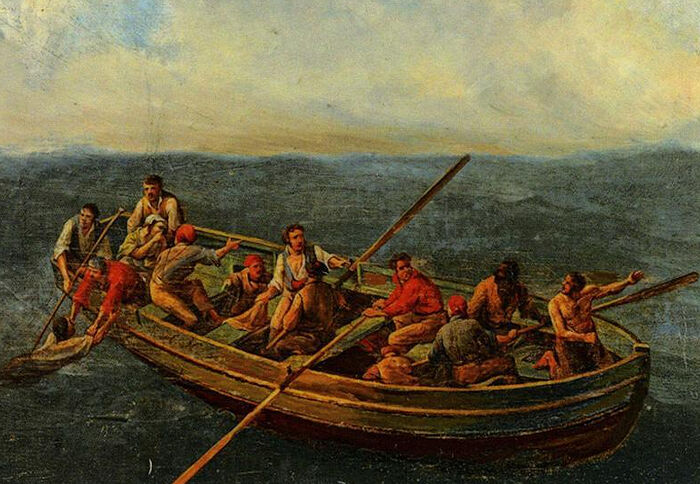
“For those who are sailing, traveling, the sick, the suffering, the captives, and for their salvation, let us pray to the Lord.”
In other words, let us pray to the Lord for everyone who travels by sea or land, who is sick, who is tired from work, who is captured - let us ask God for the salvation of these people.
The Church does not have her head somewhere in the clouds, does not pray for something abstract - no, during the Divine Liturgy she prays for specific human needs
As you can see, the Church does not have her head somewhere in the clouds, does not pray for something abstract - no, during the Divine Liturgy she prays for specific human needs. It is not an exaggeration to say that the Church asks God for all human needs. Despite the fact that the Lord sees and knows what our true need is, nevertheless the Church does not neglect to pray for all this, resorting to special petitions and prayers.
One person asked me if we are doing the right thing when we pray for the sick: “If God wants to heal someone, He will heal them, so why should we pray for it? Wouldn’t such a prayer testify to our lack of faith in God?” I answered him: “No, it won’t. After all, the Church itself has special prayers for the sick. The Church does not leave sick brothers without help, but prays for them. The Church has the sacrament of Anointing, thanks to which the sick receive help for both physical and mental illnesses.”
During the Divine Liturgy we hear how the Church several times turns to God with prayer for the sick. And not only about them, but also about those sailing, traveling, widows and orphans, about all those who experience one or another need. We pray to God to help every person in his need. And human needs, we note, are of a very different nature: from mental and intellectual to physical and material. Some may just need a piece of bread. Of course, man does not live by bread alone (Deut. 8:3), but nevertheless he needs it too. You cannot say to a hungry person: “Go, God will feed you.” Rather than asking for bread, read the Holy Scriptures and feed your soul with them.” A person will read Scripture for a day, two, three, but his need for bodily food will not disappear. You remember, the Holy Scripture tells how the Lord, having brought the Jews out of Egypt, took care of them and provided them with food. He did not limit them to spiritual food alone—His presence in their camp—but He also fed the Israelites with bodily food.
Some of our contemporaries experience a kind of allergy to the petition “for the most pious and God-protected kings” and protest: there is no need to pray for kings, this phrase should be changed, the word “most pious” should be removed and the like. Again, I don’t feel any complex about asking for kings. “Tsar” here does not mean any specific representative of the ruling dynasty, since the monarchy has long been abolished in our country. The petition for kings must be perceived in a broader sense: as a prayer for the authorities, for all those who stand at the helm of state power. The Church has always prayed for such people, even when the rulers of the state were pagans. The Apostle Paul, as can be seen from his letters, taught Christians to pray for kings (see: 1 Tim. 2:1-3). But remember who was the king in the Roman Empire then? Pagan Nero, persecutor of Christians. Nevertheless, the Church prayed for him and for other emperors like him, since they ruled the state, were responsible for the lives of their subjects, and the prosperity of the country depended on them.
"About floating, traveling...". So, the petition mentions those sailing on the sea and those on the way. Our distant ancestors traveled most often on foot. Now we only walk along the coast in order to lose excess weight. And in ancient times, people traveled on foot or, if possible, on horseback - there was simply no other way of transportation. Travelers of this kind naturally needed the prayers of the Church, because along the way they got tired, were exposed to dangers, and overcame many difficulties. Knowing this, the Church prayed for them, asking God to be their constant protection and protection.
St. Paisiy Svyatogorets said: “If previously God protected the world with one hand, today He protects the world with two hands.”
But aren’t travelers still in danger today? How many accidents and incidents occur on the roads every day? The Monk Paisius the Svyatogorets said: “If previously God protected the world with one hand, today He protects the world with two hands.” You yourself are witnesses to what is happening. You get into the car and don’t know whether you will get to your destination safe and sound or not. Every day, large numbers of people are killed or seriously injured on the roads.
So, the Church embraces with her prayer all who set out on the journey. And not only them. Any of us can be called floating and traveling. We are all on a journey because our life is nothing but a journey. In this world we are travelers. Saint John Chrysostom spoke about this: “You are not a citizen, but a traveler...”. You are a traveler who is constantly on the move. And on the path of life you encounter many events and circumstances: happiness and unhappiness, successes and failures, dangers and a thousand other things. In this world you are a traveler. You are also a swimmer, because you float on the waves of the sea of \u200b\u200blife. The Holy Fathers often liken our life to the sea. And at sea there can be complete calm, and there can also be a terrible storm. Therefore, we all need a quiet haven, rest and peace, we need a lighthouse, signposts guiding us on the right path.
With age, a person understands better and better that life is a path and that we need the presence of God, because we do not know what we will have to face on our way. And let no one hope that he will spend his life in complete peace and quiet. No matter how attentive and prudent a person is, no matter how many conditions he creates for himself for a wonderful and serene life, he nevertheless cannot avoid temptations and sorrows.
Many of you know the modern holy elder Herman from the monastery of Stavrovouni. Once the monks of one monastery wrote to him in a letter:
“...Geronda, we finally finished the construction of our monastery and secured it with barbed wire: we stretched the wire along the entire perimeter so that no one would disturb us.”
“I was glad that you completed the construction of your monastery. I was also glad that you secured it with wire. But I want to ask you this: will the barbed wire that you have strung around the monastery be able to drive away the tempter from the monastery?”
A person can prevent some circumstances in his life, and he can protect himself from something and protect himself. Nevertheless, no matter how hard a person tries to completely protect himself from troubles, in life he will undoubtedly have to face something that he would never wish for himself. This is the path of our life. And in these difficult moments a person needs God’s help. Without it, a person cannot cope with difficulties; they will crush him.
Now we are all going through a difficult period associated with the explosion of the naval base in Marie, which occurred in July of this year. I had the opportunity to meet and communicate with people whose relatives were killed or suffered from the explosion. A few years earlier, I had similar interactions with people whose relatives had died in a plane crash. We then visited 4-5 families a day and performed funeral services. And I witnessed how important faith is for a person. I saw how in these difficult hours the faith hidden in the human heart reveals itself, how it supports a person, becoming a support for him. If faith did not support a person, he would not be able to bear the sorrow that befell him. Grief would have crushed him, for the sudden death of the closest and dearest people inflicts a deep wound on the soul.
I don’t know how it happens with other nations, but from the example of our Cypriot people I see that Orthodox identity helps a person, even if he is not particularly church-going or is a purely formal member of the Church. At critical, difficult moments in life, everything that he has heard and knows about God, that he has previously experienced in his own spiritual experience, emerges in the mind and heart of a person - and this becomes support and support for him, helps him survive the shock that he experiences in these tragic hours. He can be likened to someone who fell into the ocean, but grabbed onto some kind of board and, thanks to it, was able to stay afloat and not go to the bottom.
I admit, I was always perplexed, and I was extremely interested to know what psychologists tell people in such critical moments. Let me note right away that I respect psychologists and their work and advise many to turn to them, and even more often to psychiatrists. As for psychiatrists, I would change the name of these doctors, since they still do not heal the human soul[1]. With prescribed medications they treat something else (the brain, for example), but not the soul. Moreover, if these doctors were called something else, people would approach them more easily. Some, when I advise them to see a psychiatrist, immediately and flatly refuse. People agree to go to a psychologist or neurologist, but not to a psychiatrist. They have a certain prejudice against psychiatrists. Perhaps this is due precisely to the fact that psychiatrists do not really heal souls. Nevertheless, there is help from them too. However, in tragic moments of life, when a person suffers sudden grief, what can medicine do? Just to ease a person’s internal tension a little.
So, I asked one mother, an elderly woman, whose children died in the mentioned plane crash:
– What did the psychologists tell you, whom the relatives of the victims were offered to contact on the radio?
“I only went to a psychologist once...” she answered vaguely.
I explained to her that I did not want to diminish the role of psychologists, but I was interested in what a psychologist could say to a person who has suffered severe grief, how he could help him cope with misfortune, and that he could answer his questions about why the death affected his family.
“I came there,” she began her story, “and realized that the psychologists themselves, the poor ones, were in great difficulty.
Really, what can you say to a mother whose children have all died? If I were a psychologist, I would not know what to answer to the relatives of the victims. After all, they were faced not with some minor incident, such as the theft of a bag, but with the event of death. Moreover, the death of the most beloved person, your child. We can, at the very least, face our own death with understanding. But facing the death of your child... How to react to it correctly? What answer can you give to a person who asks you: “Why did my child die?” I think it is difficult for psychologists themselves to answer such a question.
The grace of God can give a person strength. God is always there for those who experience tragic events in their lives.
However, the grace of God can give a person strength. God is always there for those who experience tragic events in their lives. God consoles, strengthens a person, gives him support. Not in the sense that it takes away the cup of suffering from him - a person will have to drink this cup to the bottom - but in the sense that, in the midst of sorrow, he feels some consolation in his soul, gives a person answers to his questions, shows him a way out of the dead end.
Death comes and takes away those close to you. And Christ and the Gospel give you a way out of the darkness of death. How? Thanks to faith in the immortality of the human soul, in the Kingdom of God, in the resurrection of the dead, and above all - in the resurrection of Christ. Thanks to the conviction that only the body died, while the soul of our child, our relative, did not die, but remains near God, praying for us, just as we pray for it.
On our journey through life, we all need the prayers of our brothers. And we ourselves must pray for our neighbors, even if our prayer consists of only two words. As the Monk Paisius the Svyatogorets said, one prayerful sigh to God that He would strengthen the souls of our brothers who are suffering sorrow helps them. And indeed, often those for whom we prayed subsequently admitted that in tragic hours they felt the protection of God over them, like some kind of umbrella that protected and protected them from the storm of sorrows and misfortunes that broke out over them.
So, we are the very “floating and traveling” ones for whom the Church prays. Floating in the abyss of life, among storms, hurricanes and storms. Our task is to learn to face all the difficulties that befall us. As one Svyatogorsk proverb says: “Better than cursing the sea, learn to steer the ship better.” There are always storms and storms at sea, you can’t escape them.
On his life's journey, a person has to endure fatigue and weariness. We are all weary and heavy laden (Matt. 11:28). As we age, more and more things and circumstances become burdensome to us. Sometimes to such an extent that we get tired of the smallest and most insignificant things.
After “swimming and traveling,” the petition mentions “the ailing,” that is, the sick. Here is another category, and a very, very large category, of our Christian brothers, for whom we pray at the liturgy. In addition to the sick themselves, it can also include those who treat them and serve them in some way. Medical workers perform a great work of social, philanthropic service, which cannot be truly fulfilled if you do not have love for a person, or more precisely, for a sick person.
Many of us are unable to comfort and support the sick - not because we lack medical knowledge and skills, but because we lack mental strength. Some people faint at the sight of blood. Others cannot bring themselves to touch the patient, they are afraid to even look at him. Still others, when they just want to measure their blood pressure, get so scared that their blood pressure jumps sharply. Where can such people deal with other people's blood, wounds or simply uncleanliness?
In one of the troparia of the Paraklis of the Mother of God there are these words: “My body is weak, and my soul is weak.” What does it mean? The fact that during illness a person may lose patience, become somewhat picky or capricious. For example, he refuses food because his illness makes it unpleasant for him, and he often complains about this or that inconvenience, which makes it difficult for others to please him. The patient needs to maintain patience and peace of mind, and have mental strength. This is why it is so important that we pray for our sick brothers.
Do you remember what Christ said in the Gospel: “I was sick, and you visited Me” (Matthew 25:36). I will make a reservation: visiting a patient does not mean coming and sitting with him for an hour, chatting about this and that. In ancient times, visiting the sick was of great importance, since it meant that the one who visited the sick cared for him and served him. And today, when we visit the sick, as a rule, we only bother them in vain. The patient turns into a kind of “attraction” for us. The patient receives help and care from doctors and nurses, and not at all from us, who for the most part are not capable of this kind of service.
We must not forget that a sick person needs peace and quiet. Come to him, sit with him for a few minutes and leave. Don't sit with him for hours reading the newspaper. How can a patient rest if you sit with him for several hours in a row? How can he get himself in order? How to go to the toilet? How to lie down more comfortably? In your presence he is shy and finds it difficult to do this. Therefore, let us behave with the sick extremely delicately and judiciously: when visiting the sick person (if there is really a need to visit him), we will not linger with him. Sitting at the patient’s bedside, we won’t be very talkative; we won’t, for example, describe how we spent today: how we got up in the morning, where we went with our husband during the day, what we told our son, and so on... Imagine what it’s like for a sick person to listen to all this.
And we will be much more silent in a house where some kind of grief or misfortune has occurred. For example, let’s not start talking about how we are preparing our daughter for a trip to England to study, in a house where the parents lost a child. After all, how often do we fall into meaningless idle talk, which has no end and edge! Again, a lot of deliberation is required.
We will pray for the sick, we will visit them - but not just to pass the time, but to provide them with love some kind of service, help
So, let's pray for the sick, let's visit them - but not just to pass the time, but to provide them with love some kind of service, help.
We need to be compassionate to every sick person. Diseases are not only physical, which medicine has somehow learned to cope with with the help of drugs and doctors, but also mental. By mental illness I do not mean mental disorders, but precisely illnesses of the soul that stem from our passions, sins, infirmities and vices. And from this point of view, we are all sick, and therefore we need the prayer of the Church, we need the grace of God to heal us, so that we gain spiritual health and become the way God created us, the way we came from His hands.
So, I repeat, prayer for the sick is of great importance - and not only for the sick, but also for ourselves. By praying for a sick person, you learn to share the pain and suffering not only of this person, but of all people, the whole world. And thus you free yourself from being closed in on yourself, from your egoism, become open to other people and embrace the whole world with your prayer. You become a global person.
If at this hour all the countless hospitals in the world appeared before your eyes, you would see that in these hospitals there are hundreds of thousands, millions of patients, and other hundreds of thousands, millions of people serving them. All of them - both patients and medical staff - need our prayer, love and support, as well as the presence and help of God's grace.
After the “sick” in the petition we are examining, the “suffering” are mentioned. This participle is derived from an ancient Greek verb that means “to work until you are tired.” That is, we pray for those who work hard every day, try their best, shed sweat, get tired and tired - tired physically, mentally or mentally.
All people work; there is no person who does not work to one degree or another. People get tired not only physically, but also mentally. Modern man is burdened with many worries, worries, cares; time, circumstances, and the state of affairs put pressure on him. Over time, this pressure increases more and more, so that a person becomes mentally tired to a greater extent than before. Modern man suffers from overwork.
It is much more difficult for someone who is mentally tired to rest than for someone who is physically tired. A physically tired person recovers his bodily strength much faster. As the proverb says, “a young man is tired - give him something to eat, an old man is tired - put him to bed.” The young one quickly regains its strength if it eats well. An elderly person gains strength after a good night's sleep. But it is very difficult for someone who is mentally tired to restore their spiritual strength. To do this, he needs patience, feat and time. He needs special conditions for this, he needs the great grace of God. I believe that only the grace of God can truly calm a person’s soul and give it rest. Everything else does not bring peace to the soul. Only when Divine grace visits a person and gives him rest, then everything else can bring peace to his soul.
For example, contemplating beautiful nature, communicating with beloved friends or simply with a person with a pleasant, easy-going and kind character can give rest to the soul, provided that grace overshadows it. Otherwise, all these things are of little use, and if they help, then only to a certain extent. It often happens that people go to relax somewhere in nature and get even more tired. They make recreational trips in order to relax - and on the physical plane they can actually get rest and have a good time - but the soul remains tired. Why is this happening? Because the human soul needs other things.