The silence in which God is borntranslated
Priest Leonid Bartkov Fasting is not an exam that we pass to God, but a medicine that we take to get well.
My dears, I am writing these lines in late autumn, when the air outside the window is already getting cold, and in the mornings the ground is covered with fragile, seemingly uncertain snow. The Nativity Fast is approaching. And I know: for many of you, these words are not about joy, but about tension. “Again restrictions, again “impossible”, again you have to force yourself.” I see this in the eyes of the parishioners, I hear it in the questions: “Father, can I fish?.. And if I snap, is it a sin?” And in these questions lies all our pain, all our misunderstanding of what is happening to us in these 40 days.
But something happens that does not fit into the culinary instructions. There is a meeting, or rather, preparation for a meeting - one that can change everything. And if we don’t understand this, then 40 days will pass us by, just as everything in this life passes by: fussy, anxious, without a trace. And then there will be a holiday - and we will again feel the same emptiness that we felt last year, and the year before, and in all the years when Christmas was just a date on the calendar for us.
A post that doesn't start with the refrigerator
We are used to thinking that fasting is about food. But Saint John Chrysostom says with merciless clarity:
“The honor of fasting does not consist in abstaining from food, but in avoiding sins, so whoever limits fasting only to abstaining from food dishonors it most of all.”
These words burn. Because we really often reduce fasting to gastronomy, forgetting that the real struggle is not in the kitchen, but in the heart.
St. Isaac the Syrian calls fasting “a weapon prepared by God.” Weapons are not to torment yourself, but to protect the most fragile and precious things in yourself. And we need this weapon because we ourselves, voluntarily, do not know how to otherwise break the vicious circle in which we live: vanity, resentment, endless news, small and not so compromises with conscience.
Fasting, in its essence, is what gives our prayer, our longing for God, our love for Him the opportunity to get off the ground and take off
Fasting is an opportunity given to us to stop. Saint Basil the Great says amazing words: “Fasting sends prayer to heaven, becoming like wings for it.” Wings. This is what fasting is, in its essence - what gives our prayer, our longing for God, our love for Him the opportunity to get off the ground and take off.
But if we reduce the fast only to “impossible”, we will be like a person who bought a ticket on a ship, but stood at the gangway all the way, afraid to go ashore. Fasting is an invitation to enter into that silence where God speaks to us - not in thunder and lightning, but in the “breath of the quiet wind” (1 Kings 19:12). And in order to hear this wind, we need to learn to be silent - at least 40 days.
We often forget that fasting is not a church “invention” of later centuries, but a reality that permeates all of Holy Scripture. Moses, before accepting the tablets of the Covenant, fasted for 40 days and 40 nights on Mount Sinai (cf. Ex. 34:28). The Prophet Elijah, before hearing the quiet voice of God, walked 40 days and nights to Mount Horeb (cf. 3 Kings 19:8). And finally, our Lord Jesus Christ Himself, before going out to preach, was led by the Spirit into the desert and fasted there for 40 days and 40 nights (cf. Matt. 4:1-2).
Please note: fasting always precedes a meeting. Moses fasts and meets God at Sinai. Elijah fasts and hears His voice. Christ fasts and defeats the tempter, and then goes out to serve.
Fasting is not an end in itself. He is preparation, clearing a place in the heart where God must enter. And if we fast without expecting a meeting, we are like a man who cleared a field but did not sow seeds in it.
The Nativity Fast is our “40 days in the desert.” The desert is a place of silence. A place where we are finally left alone with ourselves and with God. And there, in this desert, something happens that does not happen in noise: we hear our real selves. We hear our real desires, our real pain, our real longing for the One who alone can satisfy it.
The expectation that makes us human
What is the main meaning of these forty days? The answer is simple and infinitely deep: we are preparing to meet the Baby. Not abstract “spirituality”, not “holiday mood”, not a reason for a feast. We are preparing to let into the world, into our lives, into our hearts the One Who is Love in its utmost, naked, defenseless fullness.
We are preparing to let into the world, into our lives, into our hearts the One Who is Love in its utmost, naked, defenseless fullness
We are tired of being distracted. We are tired of the fact that our lives are scattered in a hundred directions, and we are not fully present in any of them. Lent is a time of gathering oneself. The time when we finally return to our present selves - to the person God intended us to be from eternity.
And here is the most important thing. If we do not prepare for a meeting, we risk simply not noticing it. Christmas can pass us by, just as many holidays pass by: a Christmas tree, a table, a TV, gifts... And only fasting, only this conscious, loving effort of expectation can make us able to see. To see not in the manger of Bethlehem (they are long gone), but in the silence of your own heart, where He comes - quietly, imperceptibly, like dew at dawn.
Waiting is what makes us human. An animal does not wait, it lives by instinct. And a person is a creature that can wait. It may be waiting for dawn, it may be waiting for spring, it may be waiting for a meeting. And in this expectation he becomes himself. The Nativity Fast is a school of waiting. A school where we learn to wait for the One who comes. And the purer our expectation, the more complete the meeting will be.
A post that doesn't leave you alone
But there is another dimension to fasting that we talk about too rarely. We are used to thinking of fasting as a personal achievement. Me and God, me and my struggle, me and my “don’ts.” And in this loneliness, oddly enough, fasting can become not liberation, but a new captivity - a captivity of one’s own righteousness, one’s own effort, one’s own self-focus.
St. John Chrysostom denounces this with merciless directness: “Not only the mouth should fast - no, let the eye, and hearing, and hands, and our whole body fast.” Eye - from what? From condemnation. Rumor - why? From slander and slander. Hands - from what? From not taking someone else's. What about the heart? The heart must fast from resentment, from rancor, from arrogance. And then fasting ceases to be my personal “sports achievement.” He becomes what creates peace where there was none.
Lent is a time to reach out to those closest to you. Turn to face them. Gather together in the evening not in front of the screen, but with each other. Read a book to children, talk, forgive. This is what fasting is. And children, mind you, feel this better than us: they love fasting not because of the “no”, but because their parents are finally doing something with them.
I know families in which Lent has become a time when parents finally find time for their children. I know houses where during these 40 days they read the Gospel together for the first time in a year. I know people who, during Lent, called an offended relative for the first time in many years and said: “Forgive me.” And this is not a “spiritual” addition to the post. This is fasting in its most authentic, evangelical sense. For fasting, according to the words of the prophet Isaiah, is not only “to humble your soul,” but also to “share your bread with the hungry, and bring the poor wandering into your house; when you see a naked person, clothe him, and do not hide from your half-blood” (Is. 58:7). A fast that has not made you kinder to those around you is not a fast, but a diet.
But there is one more facet to fasting, without which everything else loses its meaning. This is prayer. Fasting without prayer is a body without a soul. It may be good for health, but it has nothing to do with God. Saint Basil the Great called fasting the wings of prayer, but the opposite is also true: prayer is the soul of fasting. Without it, fasting becomes just a diet.
Prayer is the soul of fasting. Without it, fasting becomes just a diet
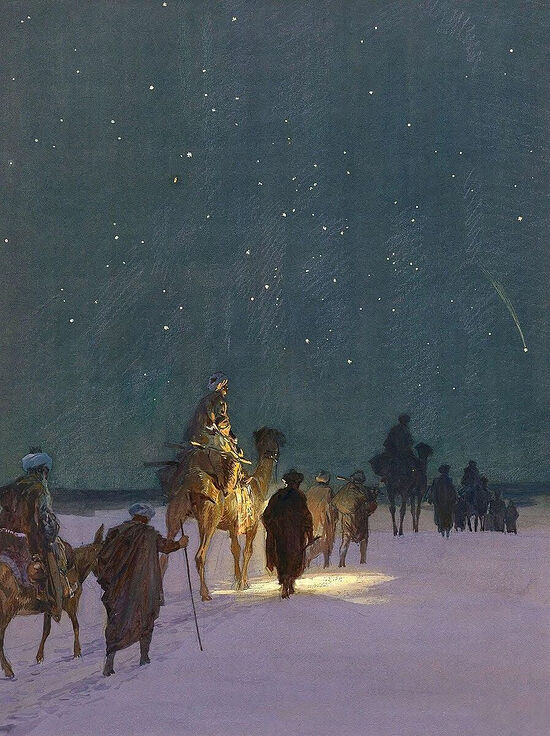
During the Nativity Fast, the Church offers us special prayers that are read at home and in church. These prayers are hymns that take us into the heart of expectation. They remind us of the prophecies that will be fulfilled, of the star that will rise, of the Child that will be born. Reading them, we seem to become participants in the story that led to the Bethlehem Cave.
But prayer is not limited to reading them. Prayer is a conversation that can start on the bus, in the kitchen, at the crib. A conversation that doesn't need special words. Sometimes it is enough to simply say: “Lord, I am waiting for You. Help me not to miss You." And this will be real prayer. Because God hears not words, but the heart. And in the silence of this conversation, something happens that does not happen in vanity: we begin to hear Him.
I remember how one person, who decided to fast for the first time, told me: “Father, I thought that fasting was all about tension. But in fact, it turned out to be the time when for the first time in many years I just talked to God and felt that He was nearby.” That's what fasting is. That's what prayer is. This is a meeting that can happen at any moment - if we are ready to wait for it.
And now we come to the manger. What will we bring? Gold, frankincense and myrrh? We don't have them. Our gifts are poorer and more precious at the same time. We bring ourselves. Not “ideal” (there are no ideal ones), not “sinless” (only God is sinless), but real ones, capable of containing, capable of seeing, capable of loving not in words, but in deeds.
Fasting is the way to ensure that we are not ashamed to appear under the rays of the Star of Bethlehem - because we have stopped pretending. Because we came to the Baby as we are, and He accepted us.
And if we break down - and we do, all of us, each in our own way - this is not a reason to give up everything and leave, but a reason to remember that fasting is not an exam that we pass to God, but a medicine that we take to get well. Medicine is sometimes bitter and sometimes we forget to take it. And then we simply return to it again - with repentance, with trust, with hope.
The silence in which He is born
My dears, there are 40 days ahead. They will pass quickly, as everything in this life passes. And I would like to ask you about one thing. Don't turn them into a complete "don't." Don't turn it into counting calories and reading labels. Turn them into silence. Into that silence in which we finally hear not ourselves, but Him.
He comes to us every day, every moment, but we are so rarely at home to open the door to Him
Because Christmas is an event that is happening now, in this very world, in this very life, in this very heart. God is not tired of being born. He comes to us every day, every moment, but we are so rarely at home to open the door to Him.
The Nativity Fast is the time when we return home: to God, to loved ones, to ourselves. And then, in the silence of this meeting, something happens that cannot be contained in any words: He is born. Not in distant Bethlehem, 2 thousand years ago, but here and now, in you, in your family, in your life.
Don't be afraid of these forty days. They are about the love that awaits. And if you enter into them with confidence, you will see what the shepherds and the wise men saw: God became Man, so that man would become God by grace. And this is eternal life, which begins here and now.
Holy Scripture of the Old and New Testaments (quotes: 1 Kings 19:8, 12; Exodus 34:28; Matthew 4:1-2; Isaiah 58:7).
John Chrysostom, St. Conversations about statues. - Quote by: The honor of fasting is not abstinence from food... // ABC of Faith. URL: https://azbyka.org/quotes/chest-posta-sostavlyaet-ne-vozderzhanie/
Basil the Great, St. A word about fasting (Conversation 1 about fasting). - Quote from: “Fasting sends prayer to heaven, becoming like wings for it” // Almetyevsk diocese. URL: https://almet-eparhia.info/
Isaac the Syrian, St. Ascetic words. Word 30. - Quoted. from: Ascetic Instructions // ABC of Faith. URL: https://azbyka.org/otechnik/Isaak_Sirin/podvijnicheskie_nastavleniya/
John Chrysostom, St. A word about fasting (fragment “Not only lips should fast...”). - Quote from: Gates of Repentance: Words spoken in different years during the singing of the Lenten Triodion // ABC of Faith. URL: https://azbyka.org/propovedi/vrata-pokajanija-slova-proiznesennye-v-raznye-gody-v-period-penija-triodi-postnoj.shtml