The city of the Apostle to the Apostles
Fr. Francesco Patton, OFM, explores the archaeological remains of ancient Magdala on the Sea of Galilee and reflects on how Jesus healed Mary Magdalene and entrusted her with announcing His Resurrection to the Apostles. Read all
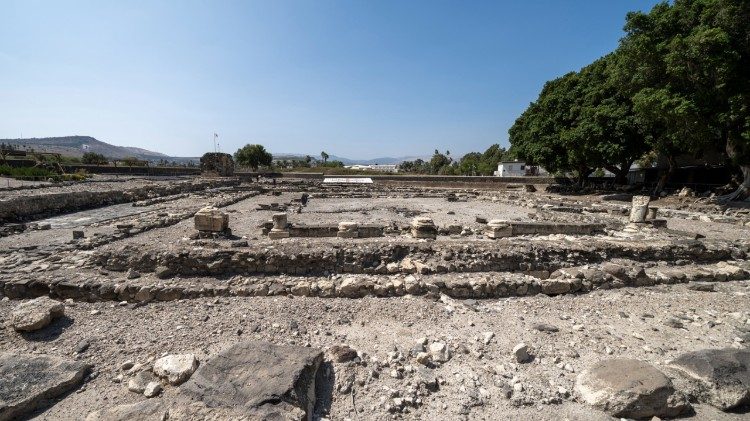
In his first piece in a series of features dedicated to Bible characters published in the daily L’Osservatore Romano (and later collected in a book), Fr Frédéric Manns describes Magdala in the following way: “Dawn illuminated the fortified city of Magdala as it appeared in all its splendour to the weary eyes of the disciples. The Sea of Galilee glistened like a large mirror in the rising sun. The hills of Gaulanitis stood out on the other side of the lake. Jesus suggested making a brief stop to visit a new synagogue that had just been inaugurated. He wanted to proclaim the Good News of the Kingdom of God there. To avoid upsetting his disciples, he had deliberately avoided passing through Tiberias, a Roman city that had been recently built on a cemetery” (cf. Frédéric Manns, Raccontando la Bibbia, 2022, p. 148). Fr Manns’ first piece was dedicated to a fascinating woman who was born and lived in that city in Jesus’ time: Mary Magdalene.
According to Fr Manns, the encounter between the Teacher and Mary Magdalene may have taken place on the pier of the port, when the luxurious boat of this wealthy and tormented woman crossed paths with the decidedly more ordinary and humble boat of the Apostles, during the time of preaching known as the “Galilean Spring”. Luke the Evangelist wrote: “Soon afterward [Jesus] went on through cities and villages, preaching and bringing the good news of the kingdom of God. And the twelve were with him, and also some women who had been healed of evil spirits and infirmities: Mary, called Magdalene, from whom seven demons had gone out” (Lk 8:1-2). At the end of his Gospel, Mark (16:9) wrote that Jesus had cast away seven demons from Mary Magdalene, healing her from a very serious illness that affected her whole person and the most important aspects of her life. Seven demons indicated an “illness” that was very serious, affecting body, mind, soul, conscience, relationships, life choices and behaviours. It is no coincidence that Christian tradition identifies seven capital sins. In the New Testament, Mary Magdalene is by far the most important woman after the Virgin Mary.