His Holiness Patriarch Kirill: happiness lies in gratitude to God for joys and trialstranslated

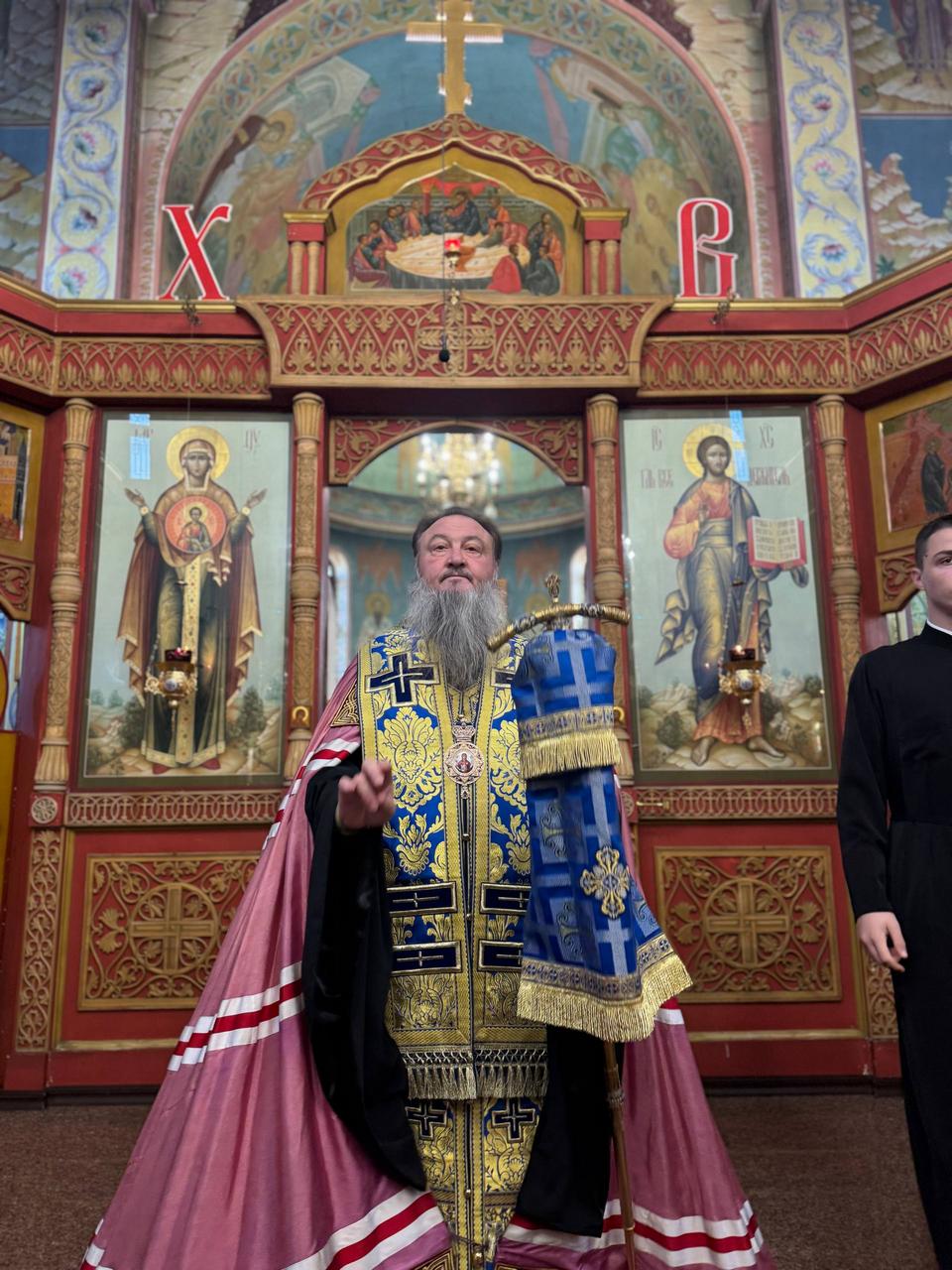
His Holiness Patriarch Kirill of Moscow and All Rus' turned 80 on November 20, 2026. In an interview with RIA Novosti, he shared that he celebrates the anniversary with gratitude to God and feels the support of millions of believers. The Primate of the Russian Orthodox Church told how the Church helps soldiers and how he feels about predictions of the timing of the apocalypse, what actually prevents people from remaining calm, why one should not postpone having children for too long, and how to find faith and happiness.
- Your Holiness, we congratulate you on your 80th anniversary from the entire staff of MIA “Russia Today”, we wish God’s help in your ministry, many and prosperous summers! What feelings and thoughts do you celebrate the anniversary with, what do you consider your main achievement?
“I celebrate this date with a feeling of gratitude to God for the years I have lived and with gratitude to the episcopate, clergy and laity for their prayers for me and for their help in fulfilling the ministry entrusted to me. As for achievements, I have never thought of my life in terms of personal achievements. However, the Patriarch, as the Primate of the Church, heading the Holy Synod and presiding at the Bishops' and Local Councils, bears a significant part of the responsibility for the decisions made by these bodies of the highest church authority. And the result of my labors will be appreciated by history and the Lord.
- How do you look at the Northern Military District today? Are there plans to increase assistance from the Church - to whom and what kind first?
- Wartime has prompted many to show their best qualities: thousands of Orthodox people sacrifice time, money, even personal safety to help military personnel and those affected by the conflict. Not to mention those who gave their lives, including military priests, doctors and volunteers. We still have a lot to do to help soldiers who have gone through difficult trials return to peaceful life. With God's help, the Church will exert strength to fulfill its calling.
- Do you see confirmation of biblical prophecies, signs of the apocalypse in geopolitical tensions between nuclear powers, in the growth of military conflicts, in the arms race, in the introduction of AI and digital control in all spheres of life? And how can a person remain calm and joyful in such conditions?
- In what is happening to humanity one can always see a formidable reminder of what the Holy Scripture warns against. But it is necessary to distinguish between a spiritually useful perception of the finitude of the earthly world and our own lives from an obsession with the idea of searching for signs of the end of the world.
Christian sobriety is incompatible with both carelessness and self-confident calculation of the end times. We are warned of the danger, but we are not appointed interpreters of God's calendar. After all, even the Savior warns: “But about that day and hour no one knows, not even the angels of heaven, but only My Father alone” (Matthew 24:36). In the gospel conversation about the end times there are these words: “The love of many will grow cold” (Matthew 24:12). This is what we should be most concerned about! To become not those many in whom love has become scarce, but those few, “the little flock” (Luke 12:32), in which love does not cease. Let me remind you: a Christian is not waiting for a catastrophe - a fantastic end of the world, shown in numerous films of the same kind, but a meeting with Christ. And he prepares for this meeting with faith, prayer and deeds of love.
Academician Dmitry Sergeevich Likhachev, being a deeply religious person, said: “You cannot correct humanity - you can only correct yourself. To feed a child, not to say a rude word, to lead an old man across the road, to console a crying person, not to respond to evil...” Another thing is that without God’s gracious help, no correction is possible.
What prevents us from maintaining peace and joy is not so much geopolitical tension as our sinful passions and lack of faith. And we must fight them not on the international stage, but in our hearts.
- What advice would you give to women who are postponing having children? And how to convince pregnant women who doubt whether to keep the child?
- Before giving advice to those who are postponing having children, you need to hear from the person. You cannot judge from afar why a woman does not dare to become a mother and blame her behind her back. Moreover, the position of the spouse is no less important. For a married couple who wants children, a possible question is: what exactly needs to happen for us to stop postponing? Does our expectation have a specific purpose, or is the condition constantly changing? After all, you can prepare the soil for so long that sowing will always be postponed to the next season. Preparation is necessary, but it makes sense for the sake of the life that must grow from this soil. Many of those who set themselves more and more new conditions for childbearing ultimately cannot give birth when they already wanted to.
When a woman is pregnant, the situation is completely different. For the Church, human life is sacred from the moment of conception. Therefore, the pastoral call to preserve the child must be specific. By protecting the life of the baby, we protect the mother, understanding what suffering infanticide will bring her in the future. When we persuade a woman to keep her child, we must be willing to share the complexity of her situation, at least to some extent. For our Church these are not empty words. In Moscow there is a crisis center “House for Mom” of the Orthodox help service “Mercy”. It helps pregnant women and mothers with children in difficult life situations: it provides temporary shelter, social, legal, humanitarian and spiritual-psychological assistance. Here words do not differ from deeds.
The emergence of new life is always a miracle. And a miracle is not a subject of absolute human control.
-Who do you consider to be your closest people, who do you rely on in your life?
- The Savior said in the Gospel: “Whoever does the will of My Father in Heaven is My brother, and sister, and mother” (Matthew 12:50). These words contain a message about the deepest unity of the Christian community in its connection with Christ. For the pre-Christian world, family ties were absolute; for example, the idea of the chosenness of the Jewish people was built on them. Christianity is the unification of people around Christ, when family ties are secondary. In my daily life I rely on those who are close to me in spirit and who share with me their work for the benefit of the Church. And, of course, I feel the support of millions of believers who constantly pray to God for me. Everyone who remembers me in prayers is for me support, support and a person close to me.
- Do you consider yourself a happy person? Could you give me a recipe: what is needed for happiness?
- Nowadays they often try to reduce the very concept of happiness to a feeling of comfort and security, and some also add idleness to this. Unfortunately, the desire for such “happiness” - and in fact only for material well-being - has become a way of destroying Christian civilization. A person who strives only for comfort at any cost becomes incapable of creation. The basis of civilization is the traditional family, and in this vicious logic it is superfluous. The decline of the traditional family and the demographic problems of our time are an indicator of the crisis of civilization. Happiness begins when a person realizes life as a gift from God and gratefully accepts everything that the Lord sends - both joy and testing.
- What advice do you give to a person who wants to believe, but just can’t? And what parting words would you give to our audience?
“The Church does not require confidence from a person seeking Christ, to which he is still just moving. The very desire to believe deserves careful treatment. There is no need to shame a person because he cannot yet pronounce words of faith with complete conviction. In the Gospel, the father of a suffering child turns to Christ: “I believe, Lord! Help my unbelief” (Mark 9:24). Here faith and the experience of one's own insufficiency are brought together. A person does not hide his internal contradiction; he honestly brings it to Christ and receives what he wants-the healing of a sick child.
The priest is called upon to show attention to those who want to believe by entering into dialogue with him. It is useful to invite a person to clarify his own question: what exactly does not allow him to believe? Unable to agree with a certain idea of God? Any serious intellectual objections? Are you haunted by the existence of suffering in the world? Did the behavior of the believers put you off? Behind the same words there can be completely different obstacles. Therefore, an honest conversation is needed here, and not some kind of answer formula that is the same for everyone.
Some look for imperfections in church life and present them as the reason for their unbelief. But only Christ is perfect, and they believe in Him, and not in the priest from the nearest parish, who, perhaps, is overweight or has quarreled with his wife. After all, no one refuses to listen to music just because he once heard some musician playing out of tune. Turn to God in your own words, without trying to speak more beautifully than you feel: “Lord, I don’t know how to believe. Help me! Read a short passage of the Gospel, slowly. Talk to a priest in whom you feel trust and who you can openly ask your questions. And, what is also very important, do specific kindness to those who are nearby. This will put you on the path that leads to Christ.