The clergy of the Tver Diocese participated in the work of the courses for judges of the diocesan courts.translated
The main goal of the courses was to enhance the competencies of the judges of the diocesan courts, familiarize them with the work of the Church Court of the Russian Orthodox Church, and acquaint them with the latest developments in the field of canonical law of the Orthodox Church. Message: The clergy of the Tver Diocese participated in...
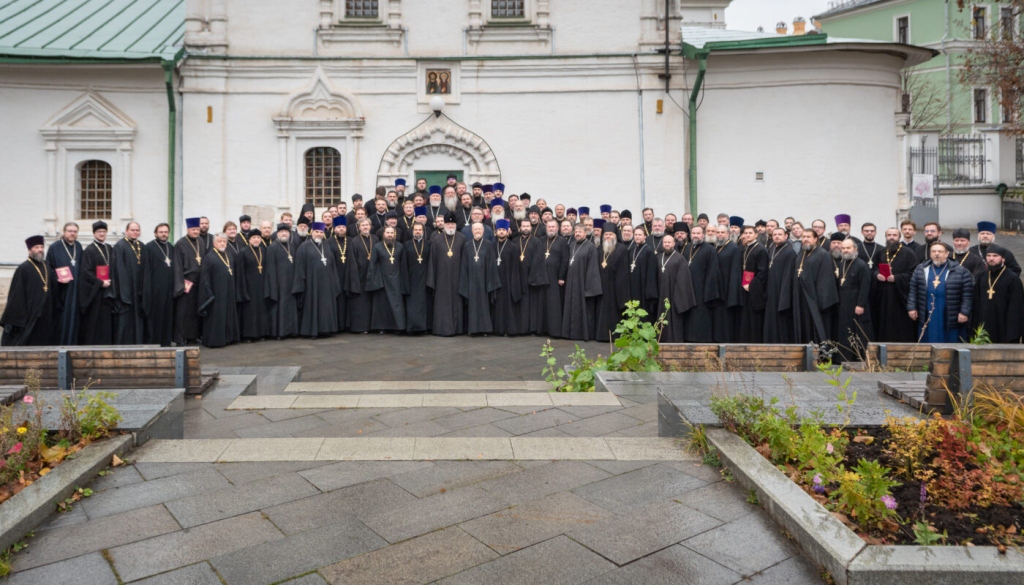
As part of the cooperation between the All-Church Postgraduate and Doctoral Studies named after the Equal-to-the-Apostles Cyril and Methodius and the Administration of the Moscow Patriarchate, the courses for judges of the diocesan courts titled "Effective Organization of the Work of Diocesan Court Judges" were held.
With the blessing of Metropolitan of Tver and Kashin Ambrose, the deputy head of the Diocesan Court of the Tver Diocese, Archpriest Dimitry Nemychanin, and the secretary of the Diocesan Court of the Tver Diocese, Archpriest George Ivanov, participated in the work of the courses.
The main goal of the courses was to enhance the competencies of the judges of the diocesan courts, familiarize them with the work of the Church Court of the Russian Orthodox Church, and acquaint them with the latest developments in the field of canonical law of the Orthodox Church.
At the opening of the courses for judges, Metropolitan of Kursk and Rylyvsk German, deputy administrator of the Moscow Patriarchate, Archbishop of Zelenograd Savva, and rector of the All-Church Postgraduate and Doctoral Studies, Archpriest Maxim Kozlov, delivered welcoming remarks.
The program of the courses included presentations by specialists from the Administration of the Moscow Patriarchate, teachers from the All-Church Postgraduate and Doctoral Studies named after the Equal-to-the-Apostles Cyril and Methodius, Higher School of Economics, Moscow Theological Academy, Filaretov Institute, and the Institute of Russian History of the Russian Academy of Sciences, as well as representatives of the diocesan courts of the Russian Orthodox Church.
The topics of the presentations covered a wide range of important issues related to the effective organization of the work of diocesan courts.
At the end of the closing ceremony, all those who completed the training were presented with a certificate of qualification improvement in the standard OCAAD format.