A conference was held dedicated to the 80th anniversary of the revival of monastic life in the Trinity-Sergius Lavratranslated
On November 19, a scientific conference dedicated to the 80th anniversary of the revival of monastic life in the Holy Trinity Sergius Lavra was held at the Moscow Theological Academy.
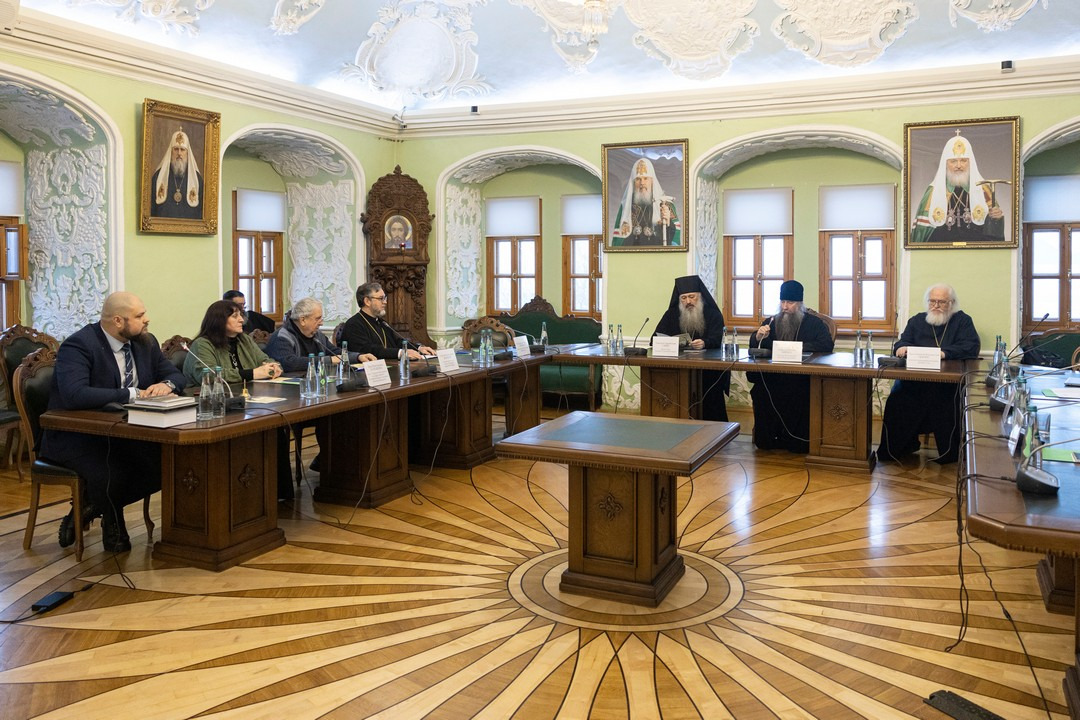
On November 19, 2026, a scientific conference dedicated to the 80th anniversary of the revival of monastic life in the Holy Trinity Lavra of St. Sergius was held at the Moscow Theological Academy.
The organizers of the scientific forum were the Trinity-Sergius Lavra and the Moscow Theological Academy. The conference was attended by teachers of the Moscow Academy of Arts, the All-Church Postgraduate and Doctoral Studies named after Saints Cyril and Methodius, employees of the Orthodox St. Tikhon's Humanitarian University, the Sergiev Posad State Historical and Art Museum-Reserve, experts in the field of architecture and restoration.
The conference took place in the Elizabeth Hall of the Moscow Academy of Arts, and was moderated by Associate Professor of the Department of Church History P.E. Lipovetsky.
The rector of the Lavra, Bishop Savva of Zaraisk, the rector of the MDA, Bishop Kirill of Sergiev Posad and Dmitrov, and the first deputy general director of the Sergiev Posad State Historical and Art Museum-Reserve N.V. addressed the conference participants with welcoming words. Grigorieva.
During the conference, the historical and political context of the revival, the personalities of individual participants in the restoration of monastic life, work to preserve the architecture, shrines and liturgical tradition of the Lavra, cultural memory and the image of the monastery in church literature were examined.
Professor of the Department of Church-Practical Disciplines of the Moscow Academy of Sciences, Doctor of Church History, Archpriest Vladislav Tsypin, showed that the return of the Lavra to church life in the 1940s was part of the complex processes of the period of the “new course” of the state’s religious policy.
Secretary for Far Abroad Affairs of the Department for External Church Relations of the Moscow Patriarchate, Professor of the Center for External Church Relations, Doctor of Church History, Archpriest Sergius Zvonarev, in his report showed how the Lavra and the MDA quickly became not only internal, spiritual, but also representative centers of the Russian Orthodox Church. The inhabitants of the Lavra and the teachers of the MDA not only received foreign guests at the monastery of St. Sergius, but also themselves participated in theological interviews, pilgrimage trips and other inter-church contacts.
Head of the Department of Church History, Professor A.K. Svetozarsky dedicated his report to His Holiness Patriarch Alexy I of Moscow and All Rus' and his connection with the Lavra. From childhood, the future Patriarch revered St. Sergius. Patriarch Alexy played a crucial role in the revival of the Lavra in 1946. He often visited her, performing divine services and devoting time to solitary prayer.
Junior Researcher of the Research Department of Contemporary History of the Russian Orthodox Church PSTGU D.V. Pavlov presented a report on the life of Archimandrite Gury (Egorov) during the period of his viceroy. The history of the activities of the first governor after the revival of the monastery shows how administrative decisions were made, the brethren were convened and the daily life of the monastery was built. The report showed how a particular person, thanks to his gifts, influenced the restoration of monastic life.
The rector of the Church of the Transfiguration of the Lord - the Patriarchal Metochion in Star City, a resident of the Trinity-Sergius Lavra, Hieromonk Paphnutius (Fokin) drew the attention of the conference guests to those people who were the first to settle in the Lavra after its revival to perform monastic deeds. It was not only about the composition of the community, but also about the life, internal structure and peculiarities of the biography of some monks from among the brethren.
The chief architect of the Holy Trinity Sergius Lavra, Honored Artist of the Russian Federation, honorary restorer of Moscow S.V. Demidov turned to the architectural and restoration side of the revival. After the transfer of the Lavra to the Church, it was necessary to preserve and restore its monuments. In the report, the author shows what tasks the restorers faced and how they were implemented. Special attention was paid to the original approaches of the main Lavra architects.
Leading researcher at the Sergiev Posad State Historical and Art Museum-Reserve N.V. Kholodkova in her report showed the museum and state context of the existence of Lavra monuments before and after the revival. With the help of archival photographs of that time, it was clearly shown in what state the monastery and its heritage were in 1946 and what the transfer of the Lavra to the Church meant for the fate of the monuments.
The assistant to the senior bell ringer of the Trinity-Sergius Lavra, Hierodeacon Joasaph (Ustyuzhaninov), dedicated his performance to one of the most recognizable traditions of the Lavra - bell ringing. It was presented how the tradition was renewed, developed and lived in the 20th century, what was preserved and how it influenced the revival of monastic life.
MDA library employee N.I. Grigorieva touched upon the history of the academic Church-Archaeological Cabinet after the return of the academy to the walls of the monastery. It was about restoring not only the educational, but also the scientific and collection dimension of academic life.
The conference made it possible to unite the efforts of the monastery residents, teachers and researchers, which significantly expanded the understanding of the life of the Holy Trinity Sergius Lavra during the period of its revival.
Trinity Lavra of St. Sergius/Patriarchia.ru