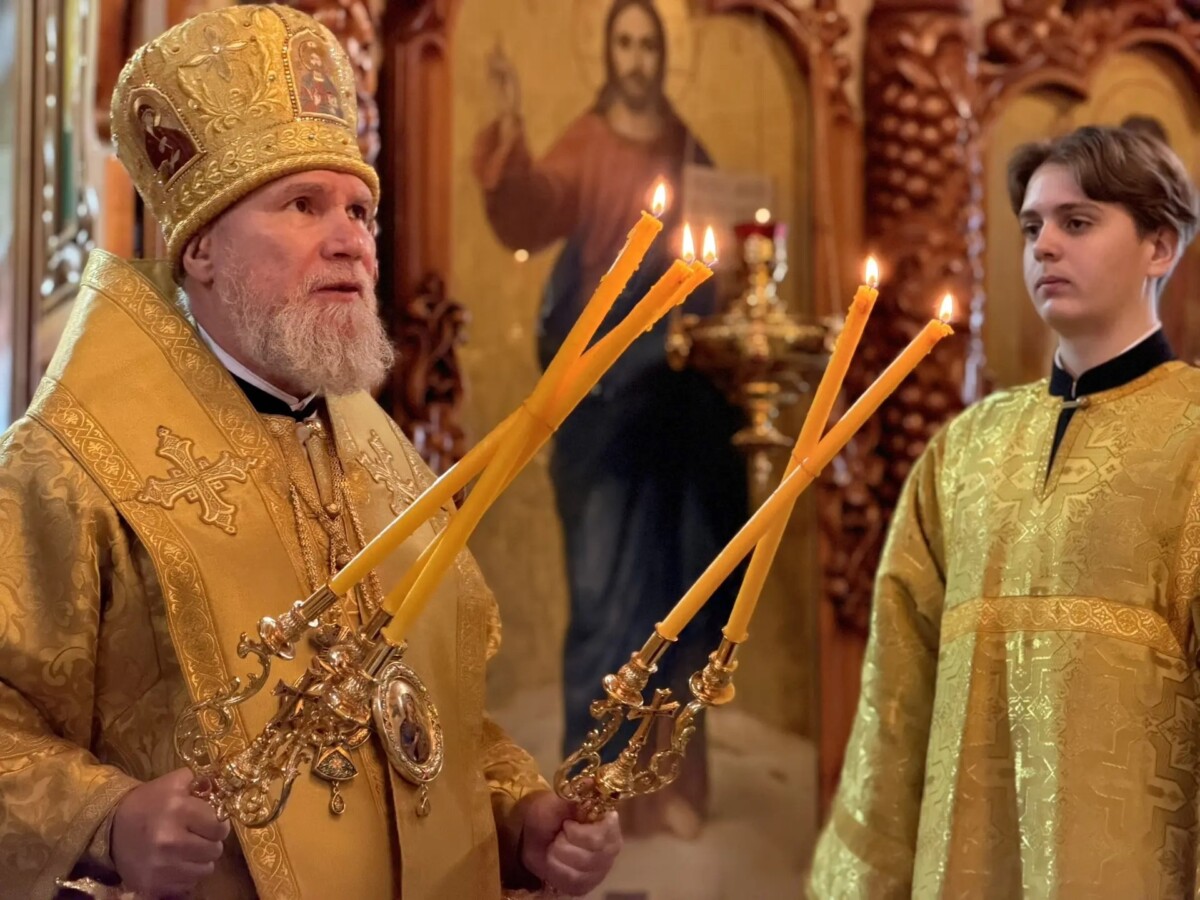
Word from Metropolitan Matthew of Pskov and Porkhov on the day of remembrance of the Apostle and Evangelist Matthewtranslated
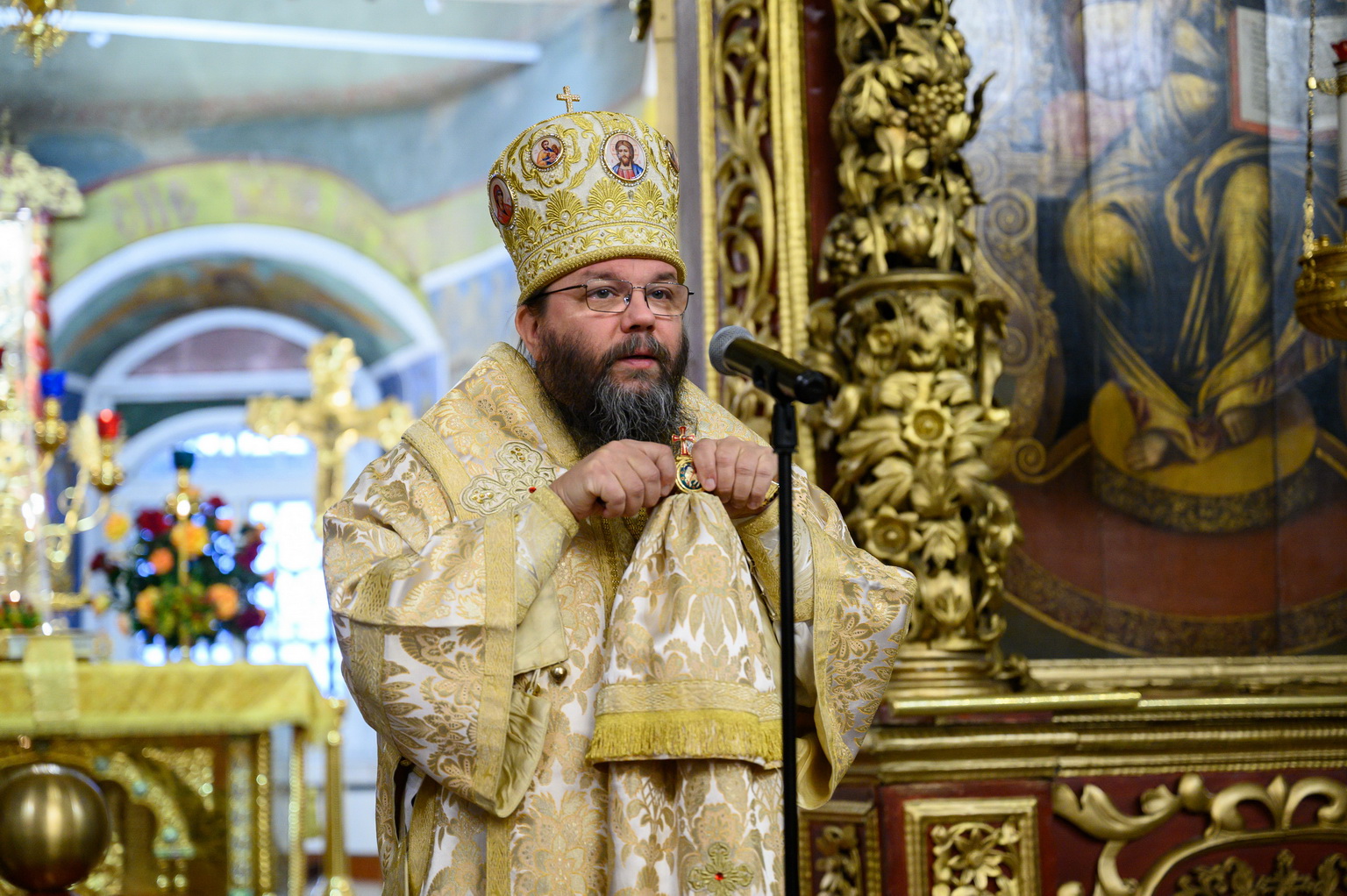
Dear fathers, brothers and sisters! Today is truly a special day. The day of remembrance of the heavenly patron for a person is always a certain point, having reached which, you compare how much you generally correspond to the image of your saint. And again and again you come to the realization of your unworthiness, as, I think, is true for each of those standing here - the height of our heavenly patrons is in many ways unattainable in our lifetime - the life, I’m not afraid to say, of the last times. The elders also talk about this, and we see, according to the word of the Divine Revelation of the Apostle John the Theologian, “signs of the times” that are happening before our eyes.
The holy fathers compared the lives of Christians in the first centuries, the middle centuries and those who will live in the last times. The first centuries are a high-flying bird soaring under the sky, which sees everything and carries the word of God high about the born and risen Christ. The Middle Ages are a bird that is already closer to the water, and the latter are a bird that, flying slightly above the water, falls again, its wings get wet, it tries to fly again and with difficulty overcomes the path necessary to gain salvation. So our life is similar to these birds that fly over the water, take off with difficulty, and then fall again. Looking back at my life, I also see this ministry of mine - Kamchatka, Chukotka, Novosibirsk, Moscow, now the extreme North-West, our borders, western borders. Of course, I would like to glorify Christ with my life, but this does not always work out (probably everyone, thinking about themselves, can say this), especially when you are placed in the highest service, the archpastoral service.
Looking at the Apostle Matthew, we see what kind of labors he endured, how the Lord through him revealed to the world His gospel, which we read during worship - the Holy Gospel. He testified his love for God with his martyrdom, while converting to faith through his confession, his martyrdom, many of those to whom he came to the lands of Ethiopia, quite wild, where cannibalism, paganism, and what not was there at that time, flourished. And so he went, without fear, there and brought to Christ not just ordinary residents of the tribe, but representatives of the nobility. How much was it necessary to have this combustion and how pure was it necessary for miracles to work with your hands? Almost all the apostles were distinguished by this - in that the Lord, through their hands, raised the dead, healed the sick, returned demon-possessed people to life, freeing them from spiritual captivity.
And, comparing ourselves with the servants of the altar of Christ who preceded us - at the service, when we take out particles for the bishops and clergy who served here in the cathedral in the Soviet years and before the revolution - you understand how far you are even from these people, not to mention the apostles, they were so burning with love for God.
Today in the Gospel we heard the parable of the Good Samaritan. The Apostle Luke tells about a certain lawyer who came to Christ and asked: “What must I do to inherit eternal life?” (Luke 10:25-37). Then the Lord said to him: “To inherit eternal life, you must love your Lord with all your heart and your neighbor as yourself.” Well, it’s clear to ourselves, we all love. How can you love your neighbor as yourself? For the Jews, neighbors are at least fellow tribesmen, because they believed that the Law of Moses applied only to the Jews. And all the others - Samaritans or some Moabites, or someone else - this does not apply to them, they are not among the people to whom respect and love should be shown. So, the Lord, showing who his neighbor is, offers him and everyone present the following parable: “A certain man was walking from Jerusalem to Jericho and was caught by robbers, who took off his clothes, wounded him and left, leaving him barely alive. By chance, a priest was walking along that road and, seeing him, passed by.
Likewise, the Levite, being at that place, came up, looked and passed by. A certain Samaritan (and the Samaritans were not even allowed to sit at table with the Jews, because the people who lived in Samaria deviated from the faith in one God and were despised for this), passing by, found him and, seeing him, took pity and, coming up, bandaged his wounds, pouring oil and wine; and, setting him on his donkey, he brought him to the inn and took care of him; and the next day, as he was leaving, he took out two denarii, gave them to the innkeeper and said to him: take care of him; and if you spend any more, when I return, I will give it back to you” (Luke 10:30-35). So, Christ, addressing the lawyer and those who stood nearby, asks: “Which of these three... was a neighbor to the one who fell among the robbers?” And the lawyer himself says: “He who showed him mercy.” And the Lord answers him: “Go and do the same” - also show mercy towards your neighbors.
Thinking about the words and lines of this parable, let's look into our heart: where is it located in relation to the commandment of mercy - the commandment that is given in the New Testament. Because in the Old Testament everything was quite tough: an eye for an eye, a tooth for a tooth. And the Lord brought a new, let’s say, renewed faith of love to everyone who surrounds us.
Today, speaking about the service and the Pskov diocese, I would like to wish to all the fathers who share this service with me with the blessing of His Holiness the Patriarch, and to all of you, dear brothers and sisters, that mercy would be our distinctive feature, that the love that the Lord commands us to have among each other would be the quality of the soul that unites us all into a single people - a people who lives in the vastness called Russia.
Thank you all for today’s service! I thank the mother abbess who came from their places of service, the dean fathers who perform their service in the areas of our Pskov diocese, the Head of our city Stanislav Yanovich for coming and sharing with me the joy of today’s celebration. We will continue to work! The Nativity Fast has come - a time when we can somehow show deep love for God and our neighbors - what our Gospel today calls for. Let us work hard and accept with gratitude to God everything that the Lord gives us on our path. Happy holiday!
November 29, 2026, Holy Trinity Cathedral in Pskov