Representatives of the Nizhny Novgorod diocese held a number of lectures in educational institutions of Nizhny Novgorodtranslated
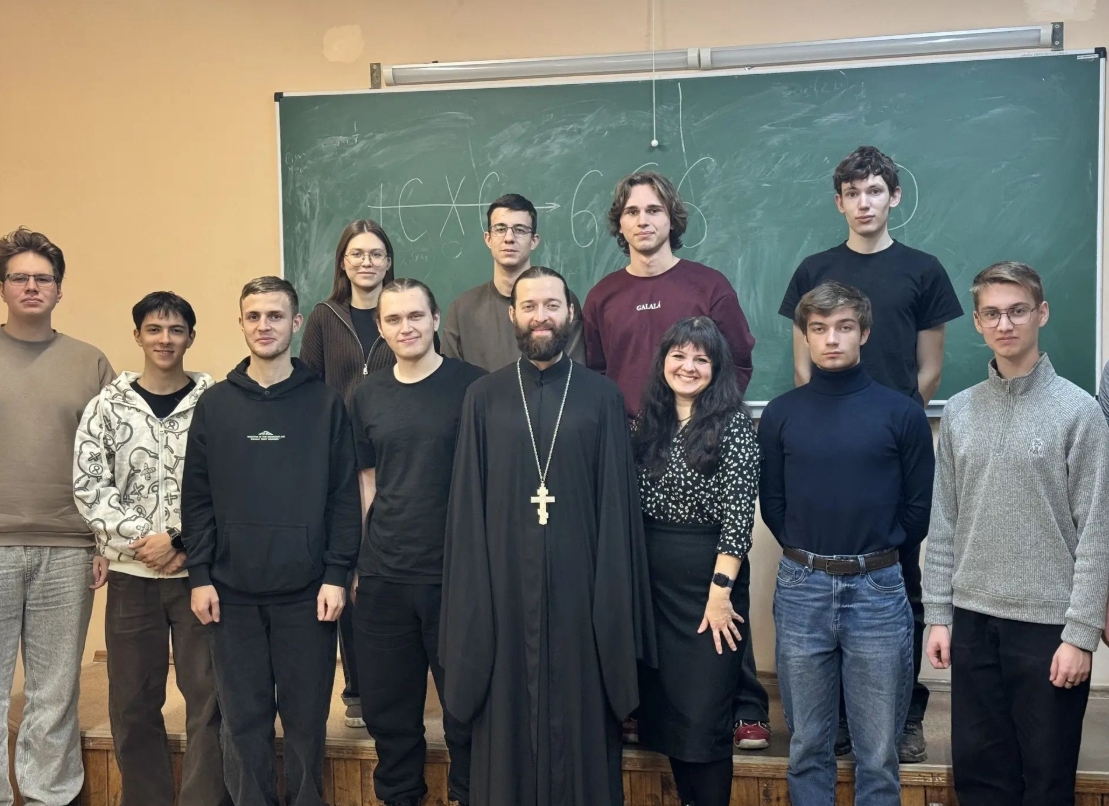
Text and photo of the Nizhny Novgorod diocese department for interaction with higher education
From November 16 to 19, as part of the educational project of the commission of the Council of Rectors of Universities of the Nizhny Novgorod Region on spiritual, moral and patriotic education, representatives of the Nizhny Novgorod diocese held a number of lectures in educational institutions of the region.

On November 16, a specialist in the department of the Nizhny Novgorod diocese for interaction with higher education, Dmitry Stroganov, gave a lecture “Patriarchs in the Russian Orthodox Church” at the Nizhny Novgorod State Pedagogical University named after Kuzma Minin. During the conversation, he introduced the students to the etymology of the term “patriarch” itself. Particular attention was paid to the formation of the church hierarchy in the first centuries of Christianity - in particular, the theory of the pentarchy as the concept of the five oldest and most authoritative apostolic sees. The lecturer revealed its theological foundations and political context, and also told how new patriarchates arose and how their status was consolidated.
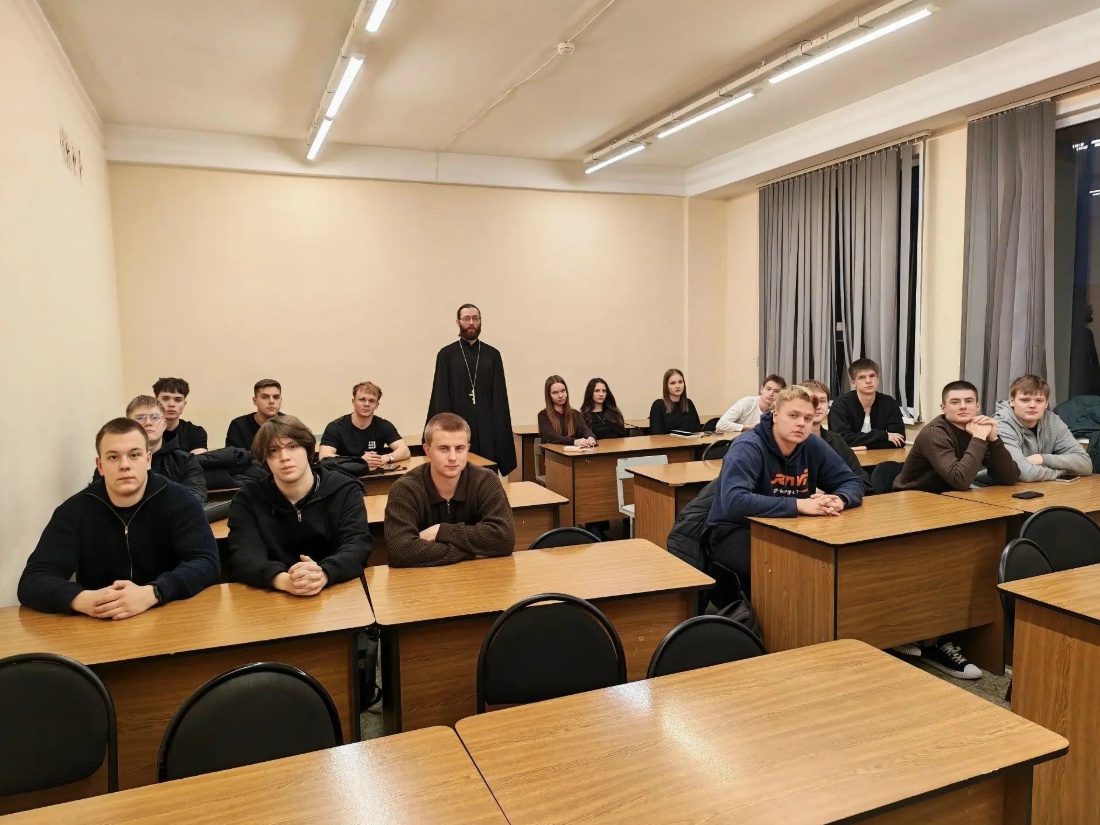
On November 16, the teacher of the Nizhny Novgorod Theological Seminary, Priest John Evdokimov, met with students of the Russian Academy of National Economy and Public Administration under the President of the Russian Federation. He gave a lecture “The Role of the Church in the Formation of the State.” The priest explained to the audience what the Russian worldview is, how it reflects the values, beliefs and mentality of the Russian people, and also why studying the worldview allows us to understand the historical, cultural and social characteristics of the country, the causes and consequences of various historical events. In addition, the lecturer told how the worldview of Russia changed depending on the stage of development of the state, and outlined the main characteristics and ideological features of the worldview of each historical period.
On November 17 and 18, the assistant to the dean of the Nizhny Novgorod district for youth affairs, Priest Pavel Moloshtan, met with students of the Nizhny Novgorod State Technical University named after R. E. Alekseev. The classes were devoted to the role of religious organizations in modern Russian society. In his speech, the priest highlighted the key areas of activity of religious associations - from spiritual and moral education and charity to participation in interfaith dialogue and social support for citizens. Particular attention was paid to the interaction of the Church with state and public institutions, as well as the contribution of religious organizations to the preservation of traditional values and strengthening of civil unity.

On November 17, the assistant to the dean of the Balakhna district for missionary service, Priest Alexander Gimoyan, gave a lecture “The Russian Orthodox Church in the 90s of the twentieth century” for students of the Nizhny Novgorod Institute of Transport. The lecturer examined the key processes of the revival of church life after decades of restrictions of the Soviet period. The issues of restoration of churches and monasteries, expansion of educational and social activities of the Church, as well as its new interaction with the state and society were covered.
On the same day, Priest Alexander Gimoyan gave a lecture for students of the Nizhny Novgorod State Linguistic University named after N. A. Dobrolyubov on the topic: “The Russian Orthodox Church during the Great Patriotic War.” The priest told the students about little-known pages of history associated with the patriotic service of the clergy during the war. Those gathered learned how the Church supported soldiers at the front and home front workers, raised funds for tank columns and air squadrons, and also provided spiritual support in the most difficult moments.
On November 18, Dmitry Stroganov gave a lecture “Worldview principles and constants of Russian civilization” at the Volga State University of Water Transport. During the lecture, key value guidelines were revealed that for centuries formed the basis of Russian society. Particular attention was paid to historical constants - stable models of social behavior, traditional ideas about justice, service to the Fatherland and conciliarity. Listeners learned how these principles manifested themselves in different eras - from Ancient Rus' to the present - and how they continue to influence social processes today.
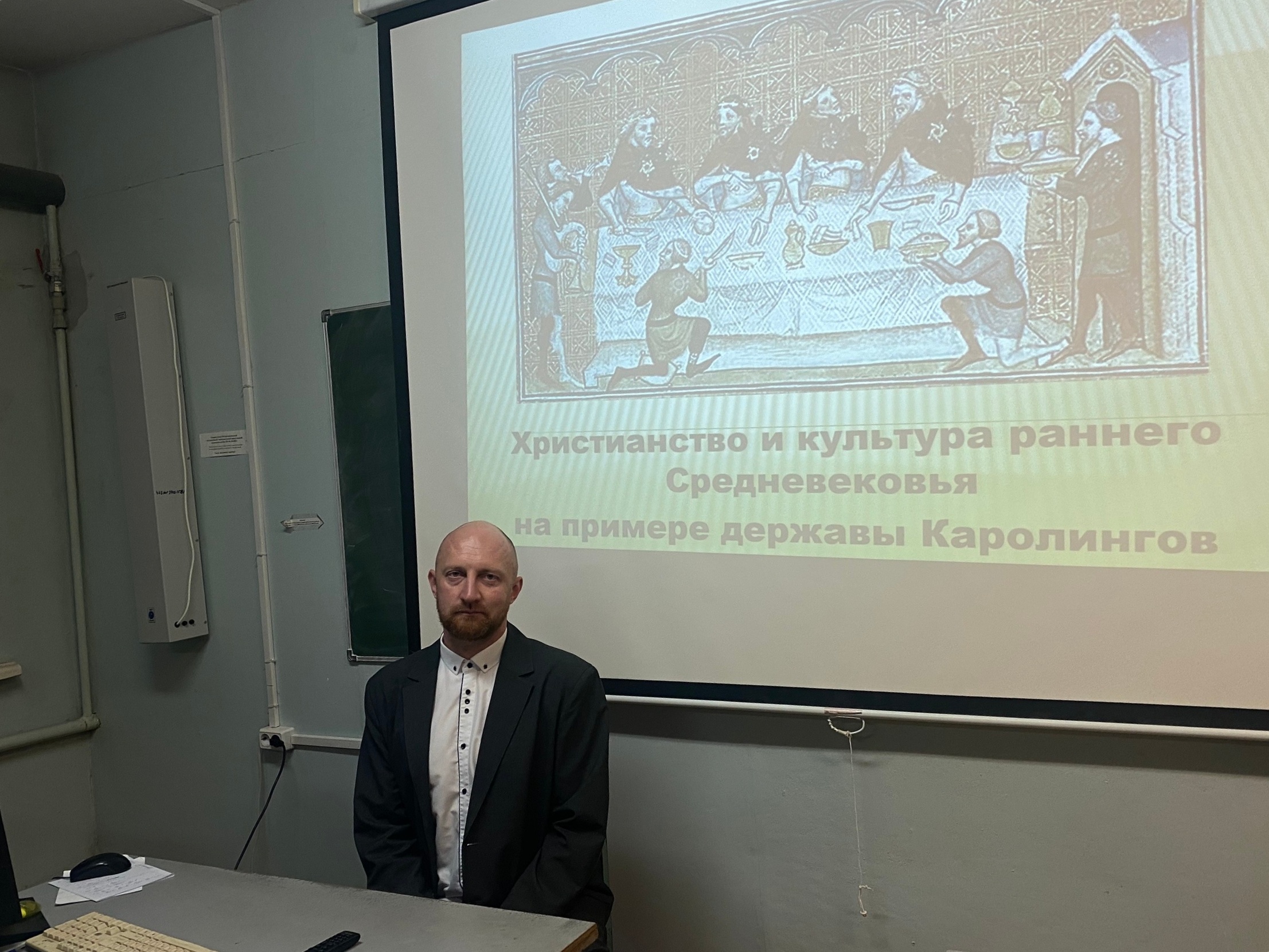
On the same day, Dmitry Stroganov gave a lecture “Wealth and Poverty of the Middle Ages and the Christian Church” for students of the Nizhny Novgorod State Agrotechnological University named after L. Ya. Florentyev. He analyzed in detail how wealth and poverty were perceived in medieval society - not just as economic categories, but as phenomena with deep moral and religious overtones. In addition, we were talking about the dual position of the Christian Church: on the one hand, about the proclaimed evangelical poverty and condemnation of money-grubbing, on the other hand, about the significant accumulation of material resources by monasteries and dioceses, the development of church land ownership and participation in economic life.
Also on November 18, Dmitry Stroganov conducted an online lesson on the topic “Catholicism and Protestantism: reasons for the division of the Christian world” for students of the Faculty of Social Sciences of Nizhny Novgorod State University named after N. I. Lobachevsky. The lecturer revealed the theological, political and socio-economic background of the schism, including the role of Martin Luther’s “95 Theses” and previous reform movements. Those gathered discussed how the division influenced the development of European culture and social thought.
On November 19, Dmitry Stroganov gave a lecture at the Nizhny Novgorod State University of Architecture and Civil Engineering. Students became familiar with the key phenomena of the Middle Ages: the structure of monasteries as centers of book learning, the symbolism of Gothic cathedrals, the genres of medieval literature and the system of theological education at universities. At the end, a discussion took place: the meeting participants discussed which elements of medieval Christian culture continue to influence modern society.
On November 19, Priest John Evdokimov gave a lecture for students of the Volga Research Medical University. The topic of the meeting is “The formation of the culture of medieval Rus'.” The priest examined the formation of medieval Russian culture and the traditional worldview, which determined the spiritual and moral values of the national identity of Rus'. The lecture examined medieval literature, architecture, art and life of the Slavs of the 10th-15th centuries. Using historical and archaeological material, the seminary teacher showed the process of formation of an original Russian traditional culture on the foundation of Christian values.
When quoting, a link (hyperlink) to the website of the Nizhny Novgorod Metropolis is required.