Righteous Jacob Borovichskytranslated
Marina Shmeleva When the next day they began to transfer the relics into a new shrine, the Patriarch saw that the saint’s hands were folded for blessing - just as it had been revealed to him in a dream.
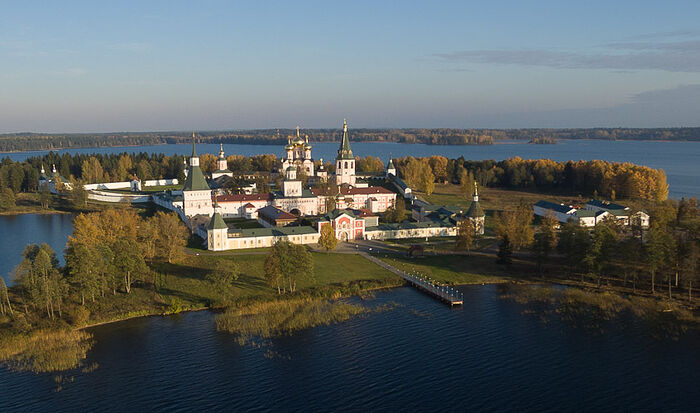
The heavenly patron of the city of Borovichi, Novgorod region and the entire Borovichi diocese is the righteous Jacob Borovichsky. Nothing is known for certain about the earthly life of the saint; there are only assumptions. It is believed that he came from simple villagers who were engaged in navigation along the Msta River; died in adolescence. According to local legend, Saint James accepted the foolishness of Christ for the sake of Christ.
Glorification, as well as documented evidence, begins after the death of the saint, under exceptional circumstances. Villagers living on the banks of the Msta River, on the site of the modern city of Borovichi, on April 11, 1452, Tuesday of Bright Week, witnessed an unusual spectacle. Along a fast river, a large ice floe floated against the current, on which, in a dilapidated log, lay the barely covered body of an unknown youth. Thick steam, like smoke from a fire, rose from it.
A large ice floe floated along a fast river against the current, on which in a dilapidated log lay the barely covered body of an unknown youth
Fearing responsibility for the death of the unknown youth, the residents pushed the ice floe away from the shore 3 times, taking it far downstream, but 3 times it returned to its original place. Finally, the youth appeared in a dream to several Borovichi elders at once and said: “Why do you, Orthodox Christians, unmercifully drive away a Christian like you? Why do you resist the Lord, who sent my body to you? Is it because you don’t know my name? So know that I am called Jacob, and so named in honor of Saint James, the brother of the Lord according to the flesh.”
The Borovichi people realized that this was a difficult youth, and they repented of their unreasonable attitude towards the appearance of his relics. They hurried to the bank of the Msta River and accepted the relics with honor, placing them in a chapel specially built for them on the bank. For more than 90 years, the incorruptible remains of Saint James rested here under a bushel, exuding grace-filled help to the believers.
Transfer of relics to the Holy Spirit Monastery
After many miracles that took place at the tomb of the righteous Jacob, the inhabitants of the region sent petitions from the clergy and laity to Archbishop Theodosius of Novgorod, asking for his assistance in the discovery of the relics. A special commission was appointed from the clergy of the St. Sophia Cathedral - Priest John and a deacon, which examined the relics and miracles, drawing up an act on this on July 2, 1544.
Following this, with the blessing of the Moscow Metropolitan Macarius, by order of Archbishop Theodosius (his letter dated October 6, 1544 has been preserved), persons sent from Novgorod, led by the abbot of the Anthony Monastery, Constantine, solemnly carried out, with the participation of the local clergy and a large crowd of people, the transfer of the relics of the righteous Jacob from the chapel to Holy Spirit Monastery. This happened on October 23 (November 5, new style) 1544, on the day of remembrance of the Apostle James, brother of the Lord.
At the very place where the relics of St. James were buried, a healing spring opened. Residents built a small church here in honor of the “Tenderness” icon of the Mother of God, which still exists today.
However, this celebration was not yet in the proper sense the church canonization of the saint. Archbishop Theodosius in his charter orders that only “veneration” be given to the righteous and that a memorial service be served annually on the day of the transfer of the relics. At the Councils of the New Wonderworkers of 1547 and 1549, Saint James is not among the general church saints or among the local saints. The lack of canonization, despite the apparent sympathy of the church authorities, is explained by the complete lack of information about his life.
The lack of canonization, despite the apparent sympathy of the church authorities, is explained by the complete lack of information about his life
Nevertheless, local veneration of Saint James only intensified with the solemn transfer of his relics. His canonization followed around 1572. In February 1572, Novgorod Archbishop Leonid sent the priest of the Novgorod Rozvazh Monastery Tryphon, the priest of the St. Sophia Cathedral of Posnik and the deacon of the Demetrius Church Simeon to Borovichi with an order to verify the stories of miracles from the relics of Jacob Borovichi. After the second examination, the righteous Jacob Borovichsky was canonized as a locally revered saint. And later, in the 17th century, it was included in the Cathedral of Novgorod Saints.
At the same time, the polyeleos celebration was established and the canon of St. James was written by a certain Ivan: the initial letters of the troparia of the ninth song of the canon in a number of lists form an acrostic containing the name of the author - “Canon of Ivanov.” And also a church was built in his name in the Borovichi Holy Spirit Monastery.
Miracles are associated with healing from head disease, from “heart” and “fire” disease, from “demonic” illness, paralysis
The first updated edition of the legend about the saint contains information about 169 miracles, and their recording in the years 1561-1582 (starting from the 44th miracle) was carried out according to weather conditions. Healing from an “internal” illness is reported; miracles are also associated with healing from a head disease, from a “heart” and “fire” disease, from a “demonic” illness, paralysis, etc. Miracles happened to the residents of Borovichi, to the clergy of nearby monasteries, and to peasants assigned to the Novgorod St. Anthony Monastery.
Transfer of the saint's relics to Valdai
On February 23, 1654 (in some sources - 1657), with the blessing of Patriarch Nikon, the relics of the righteous Jacob of Borovichi were transferred to the Iveron Monastery, which he had recently founded on Lake Valdai.
The Iveron Monastery was created in the image of the Iveron Monastery on Mount Athos. It is noteworthy that the appearance of the saint’s relics in 1452 occurred on the moving day of celebration in honor of the Iveron Icon of the Mother of God.
The Patriarch sent Archimandrite Dionysius of the Iveron Monastery, Archimandrite Evfimy of the Vyazhishchi Monastery and Abbot of the Spassky Monastery in Staraya Russa Theodosius to Borovichi. The patriarchal envoys witnessed the miraculous healing of a certain priest who had been suffering from headaches and deafness for three years. Saint James appeared to the sick man in a subtle dream and touched his sore ear, after which the priest was healed.
Saint James appeared to a sick man in a subtle dream and touched his sore ear, after which the priest was healed
20 versts before the Iversky Monastery, at the Edrov Pit, the relics of the righteous Jacob of Borovichi were met first by Metropolitan Macarius of Novgorod, then by Patriarch Nikon. During a stop at Edrov's pit, a certain Maria was healed of blindness.
The second miracle occurred on February 25, during the transfer of the saint’s relics into a new silver shrine. On the night before that day, the Patriarch in a dream saw a bright light on the site of the Iveron Monastery and on a hill the lying body of St. James of Borovichi, “naked,” covered with “rubs.” The Patriarch approached to cover the remains, and the saint’s hands clasped for blessing. When the next day they began to transfer the relics into a new shrine, the Patriarch saw that the saint’s hands were folded for blessing - just as it had been revealed to him in a dream.
In the Iversky Monastery in 1826, the chapel of the Righteous Jacob of Borovichi was built. In 1858, Fyodor Verkhovtsev created a new shrine for his relics, which was located in the Assumption Cathedral of the monastery.
In 1919, the Iversky Monastery was transformed into a labor artel and closed in 1927. In 1919, the relics of the righteous Jacob Borovichsky were uncovered.
In 1947, the request of the Moscow Patriarchate for the return of the Church, among the ancient shrines, the relics of the righteous Jacob Borovichsky, was rejected. The “Case of the Relics of Jacob” records that on July 10, 1947, information was received about the absence of relics in the Valdai museums already before the Great Patriotic War, but “when and where they were confiscated is unknown.” According to another version, after the opening the relics were returned to the Iveron Monastery, and then disappeared after the monastery was abolished. It is not known for sure whether they were hidden by the inhabitants or destroyed by the atheists.
A particle of the relics of the righteous Jacob of Borovichi was in the reliquary of a 19th-century icon depicting the saint from the Iversky Monastery. After the monastery was closed, the icon was transferred to the Church of the Apostles Peter and Paul in Valdai. The image was stolen in 2006, but was soon returned.
After the transfer of the shrine to the Iversky Monastery in the 17th century, the rib of the righteous Jacob of Borovichi was kept in the Holy Spirit Monastery, for which a wooden gilded shrine was made. Eight stamps of the reliquary depicted the appearance, burial, discovery and transfer of the saint’s relics.
In the monastery, above the holy gate, a wooden church was built in the name of the Righteous Jacob of Borovichi (mentioned in the inventory of 1658). After the fire of 1732 and the flood of 1743, a new wooden fence with towers was built in the Borovichi monastery; to the east of the Holy Spirit Cathedral, a wooden holy gate with a church in the name of the Righteous Jacob of Borovichi was built.
In 1778, the Jacob Church burned down and was soon rebuilt in stone. In 1865-1872, a warm refectory church was built north of the Holy Spirit Cathedral, consecrated in 1872 in the name of the Righteous Jacob of Borovichi. In the same year, the gate church was reconsecrated in honor of the Iveron Icon of the Mother of God. In the Borovichi Monastery, the memory of the appearance of the relics of St. James of Borovichi was celebrated on Tuesday of Bright Week. On October 23 (November 5) a religious procession was held from the city cathedral to the monastery.
At the site of the saint’s original burial - on the banks of the Msta - there was a well with healing water
After the liquidation of the monastery in 1918, the ark with the rib of Jacob Borovichi was transferred to the Assumption Church in Borovichi, and in 1960 - to the Church of the Great Martyr Paraskeva Pyatnitsa, which until 1917 was assigned to the Holy Spiritual Monastery. In 1937, the church in honor of the Tenderness Icon of the Mother of God was closed, and the holy spring was filled with concrete. It is likely that the shrine kept in the church, a fragment of the saint’s coffin block, also perished at the same time.
According to legend, during the Great Patriotic War, the righteous Jacob Borovichi appeared in a dream vision to one of the city residents and promised to save Borovichi from occupation if the residents walked around the city three times with his icon. For 3 nights in a row, Orthodox residents of Borovichi walked around the city outskirts with an image of the saint and a particle of his relics. The front stopped 70 km from the city. Many hospitals were set up in Borovichi, where the wounded received healing.
In 1993, the church in honor of the Icon of the Mother of God “Tenderness” was returned to the Church, and on October 23, 1995, the first liturgy was celebrated in it. In the summer of 1997, the holy spring was restored. The tradition of making a religious procession to the church on Tuesday of Holy Week has been renewed.
In September 2000, services began to be held in the refectory church in the name of the Righteous Jacob of Borovichi in the Holy Spirit Monastery, and the ark with a particle of the saint’s relics was returned to the cathedral in honor of the Descent of the Holy Spirit.
On the icons, Saint James is depicted as a youth with his hands folded crosswise on his chest and with a girdle around his loins. “In the likeness of a young man, naked, girded with a scarf,” says the iconographic original. His image is close to the appearance of holy fools, who, as a rule, were depicted naked, half-naked, or dressed in rags, as well as to the appearance of the Monk Alexy, the man of God, who apparently served as one of the sources of Russian iconography of “mendicant” saints - blessed and righteous laymen.
The oldest news about the icons of Jacob Borovichi is an extract from the scribe books about the property and lands of the Borovichi Holy Spirit Monastery, dating back to 1582. Above the saint’s tomb was “a local image in the frame of the Apostle of Christ Jacob, and the Wonderworker Jacob, and St. Nicholas the Wonderworker.”
Apparently, the veneration of the righteous Jacob of Borovichi was initially limited to the Borovichi monastery. However, by the end of the 16th - beginning of the 17th century, it gained relative fame outside the Novgorod lands, among customers who showed special attention to the newly-minted Russian miracle workers.
The main variants of iconography differ in that the saint could be depicted both in a girdle, reminiscent of similar attributes of the Moscow blessed Vasily and Maxim, and in a chasuble (shirt) and ports (sometimes only in a chasuble).
Having been enlightened by divine grace,/ and after death you grant healing/ to those who come to you, the wise Jacob:/ even so, we now honor the presentation of the honorable relics,/ making joyous for the soul and body./ Thus We all cry out:/ Glory to Him who gave you strength!/ Glory to Him who crowned you!// Glory to Him who brings healing to all through you!
By faith and love/ your honest dedication to those who celebrate, O blessed one,/ preserve and protect from all malice and temptation of the serpent,/ and for your boldness towards the Lord of all, Christ God./ Him. Pray to save the Orthodox people, / beseeching you, and let us all cry out to you: / Rejoice, Father Jacob, // all Russian lands are fertilized.
We magnify you,/ righteous one of Christ Jacob,/ and honor your holy memory,/ for you pray for us// Christ our God.
The third day after Easter is the day of the appearance of the relics of the saint in Borovichi.
The third Sunday after the feast of Pentecost (Trinity) is commemorated as part of the Council of Novgorod Saints.
November 5 is the day of transferring the relics of the saint to the Holy Spirit Monastery and the day of his namesake (memory of the Apostle James, brother of the Lord).