“He was able to unite the Church”translated
Priest Alexander Mazyrin On the day of remembrance of the Fathers of the Local Council of 1917–1918, a cleric of the Patriarchal Metochion at the Church of St. Equal-to-the-Apostles Prince Vladimir PSTBI and PSTGU, a specialist in the history of the Russian Church of the 20th century, Doctor of Theology,…
On the day of remembrance of the Fathers of the Local Council of 1917–1918, the cleric of the Patriarchal Metochion at the Church of St. Equal-to-the-Apostles Prince Vladimir of PSTBI and PSTGU, a specialist in the history of the Russian Church of the 20th century, Doctor of Theology, Doctor of Church History, Professor, Chief Researcher of the Department of Contemporary History of the Russian Orthodox Church of PSTGU, priest Alexander Mazyrin, talks about this significant event.
– Father Alexander, what became the most important in the work of the Council?
– The most important fact was its very holding - something that had not happened for about two centuries, since the time of Peter I, the abolition of the patriarchate and the establishment of the Holy Synod. The Synod has long been considered a permanent “small Council”, precluding the convening of a full-fledged Council. But the need for such a Council was felt very strongly, especially since the beginning of the 20th century, in the context of the accelerating transformations of state and public life. Other confessions represented in the country became sharply more active and held their all-Russian meetings. The Russian Church was deprived of such an opportunity. Already during the First Russian Revolution, a fundamental decision was made on the need to hold a Council. The king was sympathetic to this, and the necessary preparations were made. But after its completion, things did not come to the opening of the Cathedral either in 1906 or in 1907. Then there were hopes to hold a Council in connection with the celebration of the 300th anniversary of the Romanov dynasty, in 1913. But it didn’t work out either. Then the First World War began, and, it would seem, the time was completely inopportune.
But it so providentially happened that it was precisely at the most inopportune moment according to human understanding, after the fall of the autocracy, in a critical situation at the front, that the Council was convened - in the summer of 1917.
In all respects, it surpassed those Councils that took place in the Russian Church in previous centuries. Those Councils were predominantly bishops in composition, although with the participation of some prominent archimandrites, possibly also archpriests. But the situation in 1917 required widespread involvement in the work of the Council not only of the highest clergy, but also of ordinary clergy and especially representatives of the laity. This was a moment of incredible activation among the lower church ranks. It was simply impossible not to give them the opportunity to fully speak out at the All-Russian Council. The hierarchy realized this. As a result, most of the members of the Council were from the laity: more than half of the Council members were laymen. But this does not mean that during the Council the canonical principle was violated, according to which the main responsibility for church life lies with the bishops. The Council was structured in such a way that decisions adopted by a majority vote came into force only after their canonical approval by the Conference of Bishops. This Bishops' Conference had a kind of veto power.
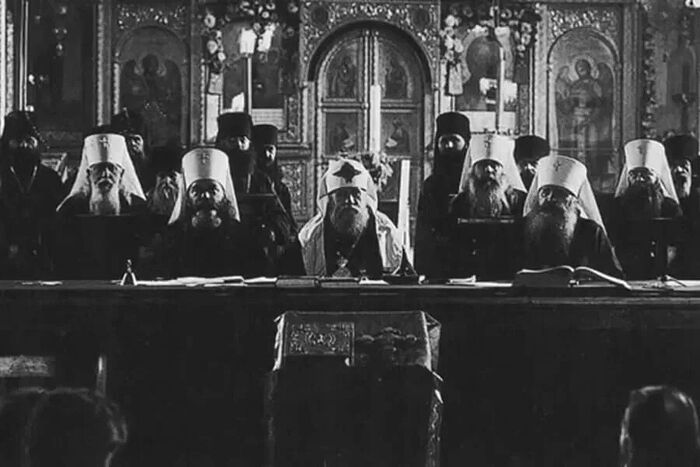
True, this required a qualified majority of bishops participating in the Council. In practice, the bishops almost never had to use this right: the disagreement that was feared did not happen between representatives of different hierarchical groups.
This Council in all respects surpassed those Councils that took place in the Russian Church in past centuries
But there were indeed serious concerns, especially at first. More than five thousand people came to the Council - a variety of political views, from monarchists to socialists (there were some). They came from a variety of backgrounds, from princes to simple peasants, with different levels of education. At the same time, many went, filled with the desire to fight for their own agenda, for their rights, preferences, so there was a great risk that the Council would degenerate into a political meeting. The external situation seemed to be completely favorable to this. By the providence of God and, of course, the feat of the fathers of the Council - both prayerful and intellectual - this danger was overcome. The cathedral really became what it is customary to say: “It pleased the Holy Spirit and us” (see Acts 15:28), - the place of action of the Holy Spirit.
This was especially important because shortly after the start of its work - the Cathedral opened in August 1917 - a coup d'état took place in the country. Only two and a half months have passed. The most radical, most godless political party came to power - the Bolshevik Party, which quite quickly launched open persecution against the Russian Church. And the internal unity of the Church as a whole and at the Council especially was extremely important. In the face of this godless persecution, the Council was able to unite.
– Did the consolidation occur precisely because of external pressure?
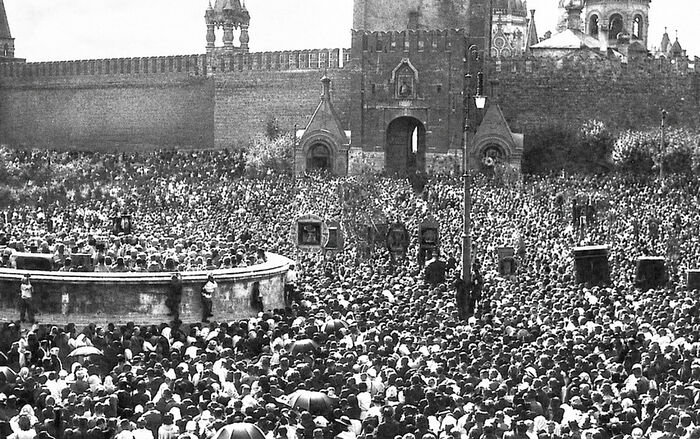
- To a large extent, yes. It is generally accepted that the main act of the Council was the restoration of the patriarchate in November 1917. There really is a direct connection here with the political upheavals that were taking place at that moment. As they said, under the roar of Bolshevik cannons shooting at the Moscow Kremlin, this fateful decision was made at the Council. But it would be wrong to reduce the significance of the Council to the restoration of the patriarchate alone. He really was able to unite the Church. The Council endowed broad rights and called upon broad layers of believers, the people of God, to participate in church governance - from the highest level to the lowest, parish level. Thus, he strengthened in these people the sense of their great responsibility for the Church.
The Bolsheviks sought to split the Church: to divide the clergy - the professional part of the Church members, the clergy - and the broad masses of the laity. According to Soviet laws, the clergy was deprived of their civil rights. From the point of view of Soviet laws, a bishop or even a Patriarch did not have any special rights in the Church and could not speak on its behalf. All clergy were equally equal - equal in their lack of rights. But the Bolsheviks were no longer able to deprive the rights of tens of millions of ordinary believers, therefore, in accordance with Soviet laws, responsibility for the Church, in particular for church property, was assigned to voluntary associations of lay believers. It was they who had to accept church and liturgical property from the Soviet authorities into their care. Not clergy, not bishops, not priests, but groups of laity.
In those realities, this did not just mean signing some Soviet act. This meant that at any moment you could be asked for the safety of this church property, declared Soviet property. It is no longer church - it is only for the use of the Church. In conditions of rampant criminality, which was then closely linked with the Bolshevik political power, no one could guarantee its safety. Churches were constantly subjected to raids, robberies, and thefts. Meanwhile, the responsibility was very severe. The Bolsheviks hoped that in the Church there would not be so many madmen, from their point of view, who would agree to become voluntary hostages for the Church. Probably, their calculation would have been justified if the Council had not taken place, if not for its decisions. They contributed to the fact that the masses of believers realized: if they do not stand up for the Church with full responsibility, it will perish in Russia as an organization. This is the main merit of the Council.
- Let's go back to the beginning of his work. What problems of the Church were mentioned at that moment?
– There were a huge number of problems. The previous system of church government, formed since the time of Peter I, the so-called synodal system, actually collapsed. It was based on the closest alliance with state power, on the close guardianship of the Church by the Orthodox state and the Orthodox monarchy. But there was no more monarchy. Many at that time were very dissatisfied with the form of interaction between secular and church authorities that existed during the synodal period. And now such voices are heard. At that time the term “Caesar-papism” was very widely used. The hierarchy and broad church circles saw the task as consolidating internal church freedom, freedom from this Caesar-papism: to establish a church government that would be guided precisely by church interests, and not by political ones. Which will not be forced to serve the interests of the political authorities, even those sympathetic to the Church.
The main task was to defend and consolidate intra-church freedom. The hierarchy, the rank-and-file clergy, and the laity were more or less unanimous in this. Difficulties arose even when resolving questions about how exactly church governing bodies would be structured, how the powers of bishops, priests and laity would be distributed. But in the end we managed to find the optimal solution.
– What issues caused the most controversy?
– The issue of restoring the patriarchate was probably the most hotly discussed, at least at the first session of the Council. And other similar questions concerning church government. Let's say how the ruling bishop should interact in a diocese with the elected diocesan council. This was a difficult issue, and here the differences were most visible. Almost the only case when the bishops had to insist on their understanding and use the veto power given to them. But in the end, a compromise was still found.
The parish administration also attracted increased attention from the cathedrals, and very heated discussions took place there. Some - even among the bishops there were some - believed that parishioners should be given the right to elect their own abbots. Still, we managed not to go to such extremes, which, especially in conditions of revolutionary ferment, could lead to very negative results.
– Were any of the decisions of the Council erroneous?
– Not that they were erroneous... But if you look at the subsequent time, it is obvious: the decisions that the Council made, in the new realities, to a large extent could not be implemented - at least in full. Let's start with the main thing. The Council assumed that in the future its convening would become regular, at least once every three years. But this did not happen, because the authorities prevented it in every possible way. The Council formed a full-fledged higher church administration from two bodies - the Holy Synod and the Supreme Church Council - and carefully regulated their activities. He also indicated the place of the Patriarch, which, it must be said, was quite modest in the then system of higher church government. The Patriarch, of course, had special responsibility and the right of initiative. But he could pursue his line only collegiately, in interaction with the Synod and the Supreme Church Council. In practice, the full composition of the highest church administration, which was formed at the end of 1917, was never able to meet. At best, half of the VCU members were available.
And then just a few people instead of more than twenty.
The Patriarch himself, starting from the end of 1918, was almost constantly under house arrest and very often could not preside over meetings of the highest church administration. Things didn't go as planned. And at the level of diocesan administration, and at the parish level, too.
But the main idea of the Council, the main aspiration - to impart a sense of responsibility to the broad church masses - was realized, despite all the external factors that prevented this. In general, the Council was able to solve the task assigned to it - to unite the Church. And this is the main thing.
The Council was able to solve the task assigned to it - to unite the Church. And that's the main thing
– Today it is difficult to imagine how people in the Russian outback could learn about the actions of the Council. After all, the railway communication was disrupted, the post office, the telegraph - everything was in the hands of the Bolsheviks. How did the information arrive?
– Post and telegraph did not immediately come under complete control of the authorities. Until the spring of 1918, church newspapers were still published. In those territories where white governments were subsequently established during the Civil War, the church press continued to operate for several more years, until the restoration of Bolshevik power. So one cannot present the matter as if there was a complete information vacuum. Information diverged, although sometimes they caught it bit by bit. We had to trust private messages sent by some people who traveled beyond the front line. This became commonplace, especially from the second half of 1918, when a full-scale Civil War began and Moscow really found itself cut off from most of the territory of Russia. Nevertheless, all of Orthodox Russia knew that the greatest meeting was taking place in Moscow, which had no equal, and that it had colossal authority. After all, the election of members of the Council in the summer of 1917 through parish meetings affected all active parishioners of the Russian Church.
After the Bolsheviks dispersed the Constituent Assembly in January 1918, the All-Russian Local Council remained the only body elected, one might say, popularly - by the Orthodox majority of the country's population. Therefore, the Council could speak not only on behalf of the Church, but also on behalf of the majority of the Russian population, which the Bolsheviks actually could not do. They were not vested with such a mandate of popular trust and acted exclusively by methods of violence.
– But they had great opportunities for manipulation of consciousness. They could instill in believers anti-church ideas directed against archpastors. But people didn't follow them...
– Bolshevik propaganda, of course, intensified every month. But one should not exaggerate its significance at that time. Even the central Bolshevik newspapers - Pravda and Izvestia - covered a small percentage of the country's population, mainly in the capitals. The bulk of the population could retain some immunity from this propaganda for a long time. It was not long before the Bolsheviks were able to present to the masses a picture that was beneficial to them, to slander both the All-Russian Local Council and the holy Primate of the Russian Church that it had elected. This took many years of intense campaigning.
– Father Alexander, tell us about the organization of the Council. How were delegates elected?
– Nowadays this method of organization is no longer practiced. The entire adult Orthodox population of the country was indirectly involved in the election of members of the Council. It all started with the holding of parish meetings: in all parishes at the same time, on one Sunday in the summer of 1917. They elected delegates to deanery congresses. A deanery is, one might say, a county level: as a rule, several dozen parishes. Each parish delegated the clergy to the dean's congresses - the rector, the deacon, where he was, the psalm-reader - and the laity elected from the parish. A week later, deanery congresses were held in district towns, also on one Sunday after the Divine Liturgy. So everything was church-like. At these congresses, delegates were elected to diocesan congresses and diocesan meetings. Their delegates also became representatives of monastics in the diocese, theological schools that were there, and possibly church and public organizations. And already at diocesan congresses elections of members of the Council took place.
Each diocese, in addition to its ruling bishop, delegated two clergy and three laymen to the Council. In addition, elections were held from a number of church and public organizations, from congresses of scientists and simple monasticism, from the military clergy, the active army, theological academies, universities, the State Duma, and the State Council. The cathedral was very representative.
– What did it look like technically? People came from all over Russia - where did they stay?
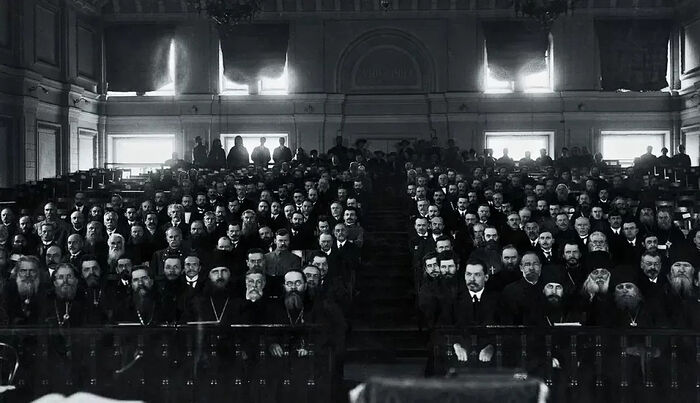
- It was a big problem. Now we have created all the necessary technical infrastructure for holding large church events. There is a huge hall of Church Councils at the Cathedral of Christ the Savior. There are church hotels, and, in the end, non-church hotels can be used. There was nothing like that then. The largest hall that was at the disposal of the Church was the Cathedral Chamber of the Moscow Diocesan House on Likhov Lane, where the main building of St. Tikhon's University is now located. The Cathedral Chamber was urgently equipped for the All-Russian Council. The Council met as a bicameral assembly. The bishops sat in the presidium with their backs to the altar, and the bulk of the other cathedral members were facing them. Everyone was placed in one place. Resolving work issues in such a large meeting of more than five hundred people is not just difficult - it is actually impossible. Therefore, they immediately decided that the main working sessions (“conciliar studies”) would take place not at plenary meetings, but in departments.
More than twenty thematic departments were formed: on the reform of higher church administration, on diocesan administration, on parish, legal, and so on. The departments were headed by bishops. Each member of the Council could, at his own choice, enroll in those departments in which he was really ready to work. Therefore, no one felt disadvantaged or left out. People had every opportunity for creative work. Most of the work took place in the Diocesan House: there is not only the Cathedral Chamber, but also a number of other rooms.
Everything was well organized. Most of the cathedral's members lived in the Moscow Theological Seminary, located near the Diocesan House (across the Garden Ring, in the center of Moscow, now there is a museum there); Some of the members of the Council, especially the bishops, are in Moscow monasteries. Some are in the monasteries of the Moscow Kremlin. During the October battles they had a particularly hard time: they found themselves under siege, under fire from the Bolsheviks. Fortunately, at the moment of the coup itself, none of the members of the Council were killed. But later, almost everyone who remained faithful to the Church was persecuted.
– Subsequently they began to call it the “Cathedral of the New Martyrs”...
– The first to die in January 1918 (according to the old style) was the oldest hierarch of the Russian Church, the honorary chairman of the Council, Metropolitan Vladimir of Kiev and Galicia. By the way, earlier, while still Metropolitan of Moscow, he built the Diocesan House, in which the Council was then held. Metropolitan Vladimir became the first martyr among the members of the Council, among the bishops of the Russian Church. And then this count began to rapidly multiply. In the summer of 1918, the holy martyr Archbishop Andronik of Perm was brutally murdered in Perm. The Council sent a delegation to investigate this murder, but its participants were also killed. About fifty members of the Council are now canonized. And the absolute majority suffered.
– At the Council, a Commission on Persecution was created. Did this happen on the initiative of Patriarch Tikhon?
“It was a unanimous decision.” Soon after the martyrdom of Metropolitan Vladimir, as information about widespread reprisals against the clergy and active laity multiplied, the Council decided to organize a special commission. She had to collect and systematize this information. It sat for several months. At the last meeting of the Council, already in September 1918, a report was made on the work of this commission and on the information that it managed to collect.
From the height of our current knowledge, we can say that then it was possible to collect only a small amount of information. Moreover, they were not always accurate and complete: sometimes they did not know the names of the victims. Simple: in such and such a city a priest was killed. And that's all that was known at that time. Nevertheless, this was the beginning of the most important work - collecting information about those who suffered for the faith, about the new martyrs and confessors of the Russian Church - which later grew into work for their glorification. When the opportunity arose to openly collect and process such information in the nineties of the 20th century, this made it possible to quickly carry out the necessary collection of information for the glorification of the Council of New Martyrs and Confessors. In 2000, this Council was glorified: both the ascetics known to the world who suffered for Christ, and those hitherto not revealed to the world, but known to God. These include a significant part of the members of the Local Council.
– What difficulties did the organizers of the Council face, besides political unrest?
“They appeared from the very beginning, in the first days of the Council’s work, when the question arose of how to form its working bodies and departments. It is clear that the nature of the prepared project directly depended on their composition. Since the interests were different, there was a danger of following the path of political meetings, the same State Duma: dividing into factions - left, right - counting who had more, and proportionally dividing portfolios. And then, through inter-factional, to put it mildly, dialogue or, to put it bluntly, behind-the-scenes conspiracies, resolve pressing issues. This is how political life was usually done. It was a very strong temptation. Among the members of the Council there were people with experience in the Duma, and they tried to pursue exactly this line, since this path was clear.