One lettertranslated
Story Alexey Solonitsyn At the age of 14, he intuitively understood that the difference in the spelling of surnames could be just one letter, but if you don’t understand that they have the same root, you will eventually lose yourself.
Story
During the winter holidays, my father gave me a gift that I will remember for the rest of my life. It was a rather thick book in a smart yellow binding with a catchy black title: “The Vicomte de Bragelonne, or Ten Years After.” Just above is the name of my favorite writer: Alexandre Dumas. And on top there is an inscription: “Library of Adventures.”
During the winter holidays, my father gave me a gift that I will remember for the rest of my life.
- This book, I hope, is the last one after which you will grow up. It's time to end the adventure. Read!
I sat down at my father's desk and opened the book. The pages are new, the paper is white and clean. And here are the illustrations: d'Artagnan lunges, and his irresistible sword pierces his opponent. But the giant Porthos holds the stone arches of the cave with his hands - the stones are already falling down.
I literally pounced on the treasured pages: “Twenty Years Later” was read a long time ago, but the last book about the musketeers only now finally fell into my hands.
This means that duels cannot be avoided here either. This means that this is the same real book as the previous ones. Because if there are no duels, these are already so-so books, second-class.
I was in the seventh grade at that time, I considered The Three Musketeers the best book in all literature, and my father, of course, knew this.
But before I started reading, I had to go buy some bread.
The post-war years passed, bread was issued on ration cards. And you had to stand in a long line before you got the coveted loaf that our family was entitled to.
But then I returned with bread. There is no one at home - everyone is at work. Well, I'll cut myself the slice I'm entitled to. I’ll lie down on the sofa and start reading...
Now nothing and no one will stop me.
But then the doorbell rang.
If I had known what would follow after this call, I would never have opened the door.
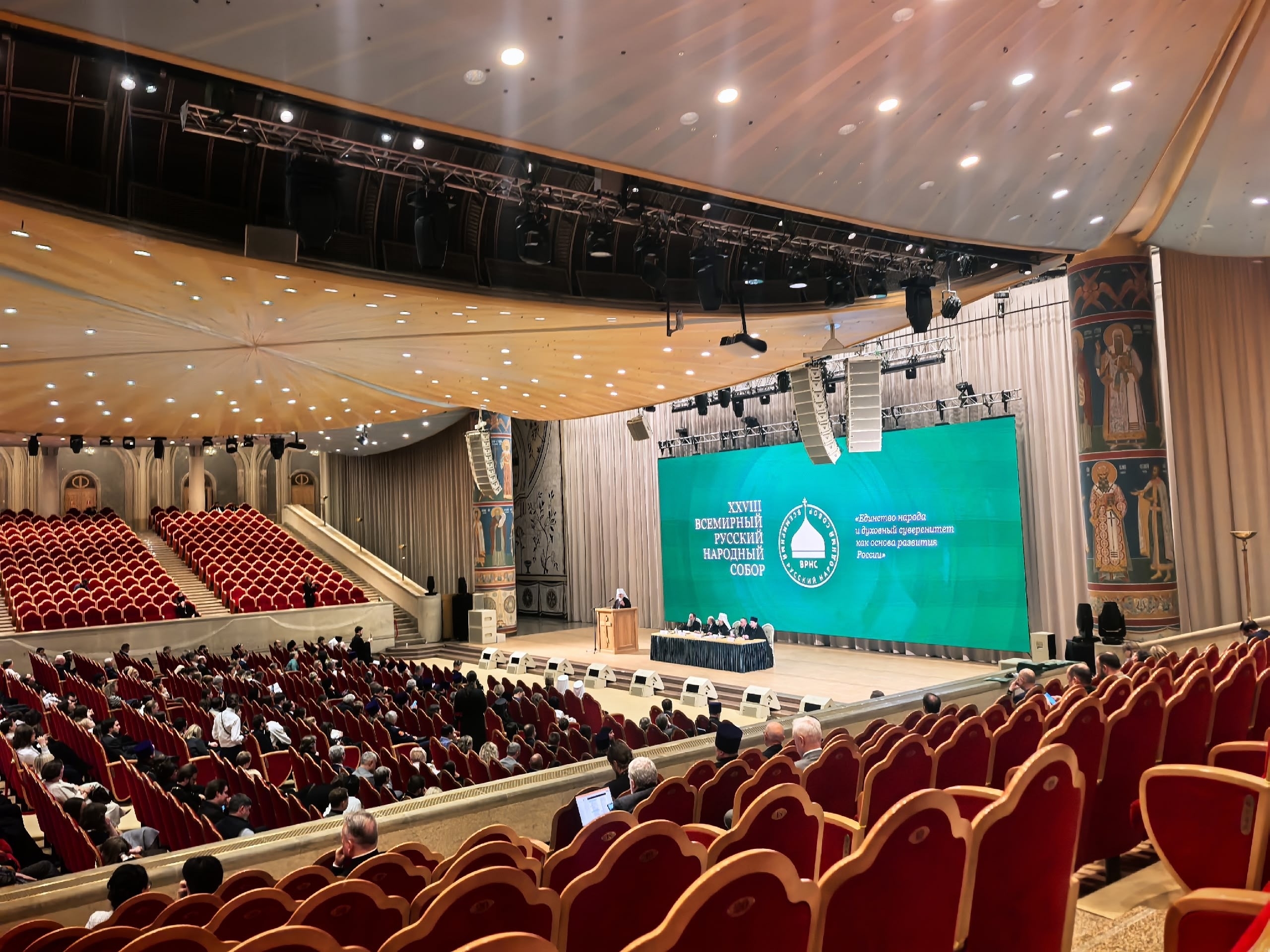
Standing at the door was Philip Timofeevich Deniskin, a neighbor from the second floor. As always, he grinned his patronizing, half-drunk smile, condescendingly viewing me as something small, insignificant, like a cat or a dog. Deniskin is tall, thin, his neck is wrapped in a long scarf hanging over a fairly shabby autumn coat, in which he wears both in winter and at other times of the year - I only remember him in this coat, light coffee, worn, but which he wore not without elegance, slightly open.
Deniskin has a fur hat on his head, also shabby. He wears it slightly askew, so that his thick gray hair peeks out both in front and behind.
- Father? - he asked, walking into the corridor, beyond which immediately began both our front room and the kitchen at the same time. There were two doors leading from this hallway - to my parents' room and to mine.
This is why I am describing our apartment in detail so that you can better imagine all the events that unfolded in our old house, made of stone, with a main entrance, with a high entrance door, above which two stone lion heads with tightly closed jaws were fixed on the sides.
On the second floor with high windows, this same Deniskin, his father’s editorial colleague, lived. His wife, Elvira Sergeevna, was a small, graceful creature like a porcelain figurine. She dressed in some special outfits: either a colorful shawl that covered most of her small body, or some unusual sweaters, fluffy, but also worn, like her husband’s coffee-colored coat.
Elvira Sergeevna taught music at the school, and we often heard chords and passages that she was learning with her students. But in the spring of that memorable year for me, the piano was taken away from the apartment - so Philip Timofeevich was forced to pay off his debts.
Venka, my school friend, who, in fact, will be the story about, also lived in the Deniskins’ apartment. Because Venka is “my pale-faced brother,” as I sometimes called him for his too pale face with dark brown eyes, widened, as if surprised by the injustice of everything that surrounds him. I also remember Venka’s thinness and long fingers - he played well, but he admitted to me that he did not like to study music, because there was too much cramming, as he put it.
Venka's hair is coarse and black, like her mother's. And in general, he and Elvira Sergeevna had something special in their features - in their eyes, which sometimes sparkled with a mischievous, even somewhat robber, sparkle. I especially want to emphasize this. Because here, if they write or show an intelligent family, they will certainly present them as such blond beasts, pampered and unadapted to life.
The Deniskins, as you will see for yourself, were not like that at all.
- Mother? - still smiling condescendingly, asked Philip Timofeevich, walking into our hallway, unwinding his scarf and rubbing his hands. He took off his coat and hat and walked into my room, as if he were at home.
“There’s no one,” I answered, hurrying after him.
He walked up to the table and took my jewel: “Oh, the Vicomte de Bragelonne...”
“It’s strange,” he walked up to the table and took my jewelry. - Oh, “Viscount de Bragelonne”... Your father promised to be at home... Do you know who the Viscount is? A?
He sat down on my chair, leafing through the book and looking at the pictures.
“No, I don’t know,” I admitted. “But that’s why I started reading, to find out.”
I probably said this too sternly, because he no longer looked at me arrogantly, but with some surprise.
- Remember, the Viscount is the eldest son of the Count. Dumas does not explain this, because the French do not need to say what is generally known. But in general, viscounts are something in between in the nobility, not only French, but also in English, between counts and barons, you know?
Now his voice became edifying.
- You should be interested not only in love adventures, but also in something else. Although where would we be without love adventures! On this, Alexey, my dear, all literature rests! Yes, perhaps, the whole world... However, Alyoshenka, dear, I’m frozen somehow. Can't you figure out the seagull?
I realized that Deniskin could not be gotten rid of so easily. He is so talkative, he knows everything and everyone so much that my father sometimes simply hid from him, ordering me not to open the door under any circumstances and to announce to Deniskin as sternly as possible: “No one is home!”
But even this did not help one day: Deniskin stood at our window and continued to talk about something: it seems about droughts in the Volga region, because it was summer. He suffered from a hangover, his only hope was in his father, and he continued to philosophize, knowing that his father was hiding from him.
Finally, my father secretly handed me a thrift box and told me to give it to Deniskin - otherwise there was no way to get rid of him.
He accepted the treasury, sighed, and said:
- Okay, Alexey. Another time I will tell you how our farmers coped with the drought. You'll need it for your essay, you'll see. It’s a shame you don’t want to have a beer with me. Now is the time.
The father sat under the table and put his finger to his lips.
And I went to the window and spread my arms to the sides, indicating that the conversation was over, and then closed the window.
Only after this Deniskin left.
While I put the kettle on the stove and looked to see if we had saccharin and tea leaves, Deniskin remained alone in my room.
The kettle boiled, I brought it into the room, poured boiling water into a cup, and pushed it towards Philip Timofeevich.
- Thank you, thank you, dear. The weather is disgusting, I'll tell you. Dankness - like in St. Petersburg. Did I tell you how I escaped from enemies there?
- ABOUT! There were different enemies - sometimes white, sometimes red! At that time, it seems, I was fleeing from my own people... One of our people reported that I began to collaborate with the security officers. And that was a half-truth! Because I wrote about the real feat of one boy who went under the bullets and gave his life! And this time - for a just cause!
His jacket lifted, his shirt too, and then I saw something that immediately confused me: there was my book behind the belt of his trousers!
He raised his long arm up, pointing his finger at the sky. His jacket rose, one side rose higher than the other, his shirt also rose, and then I saw something that immediately confused me: a book was bulging behind the belt of his trousers, stuffed there.
The book is too thick to go unnoticed.
He noticed my gaze and quickly straightened his jacket. He also straightened his shirt. It's a blue shirt, buttoned up with all the buttons. And on top of it is a tie, light, but with a spot in the middle, noticeable if you look closely.
I looked too closely and therefore I saw and remembered this spot.
- So, listen, Alexey. This guy - I forgot his name, but it doesn’t matter - uncovered the enemy’s lair. And he led the security officers behind him. He opened the door first! Bullets at him! Died... Heroically...
He bowed his head mournfully, and once again straightened his jacket and straightened his tie.
- Well, tell me, Lesha, is it a betrayal that I wrote about the hero? And they wanted to shoot me... The security officers posted a guard... They gave me a Browning... It was so heavy... When Elya saw it, she got scared... I had to give the Browning back...
My father has repeatedly said that Deniskin likes to lie, but he does it completely naturally, already forgetting himself where the truth is and where the fiction is. After all, he is almost a writer, an essayist, and in an essay, speculation is necessary for greater truth in the presentation.
- Yes, Leshka, I found myself in a very difficult situation. My classmates at the university are dear to me, and the security officers are also excellent guys. And I’m between them... That’s the plot, huh? Why didn't you write? Wait, the time will come...
He stood up and straightened his jacket again.
Both I and he understood that he had my book under his belt.
He, without looking at me, went to the door.
Here he is putting on his light coffee coat.
But my tongue seemed stuck to my larynx.
- Well, Alexey, thanks for the tea. Tell your father to come see me. There is an important matter...
And he left, and the door closed behind him.
I looked at the table, on which there was a cup of unfinished tea.
I gave him my portion of saccharin! And he even wanted to cut off a piece of bread. And he... Thief!
But I gave him my portion of saccharin! And he even wanted to cut off a piece of bread.
Why didn’t he tear his jacket so that the buttons flew to the sides, why didn’t he snatch his book from under his belt?
I clenched my fists and wanted to rush after him.
Something made me stand, frozen from the horror of everything that had happened. Not understanding what was happening to me, I sat down on a chair and sat there until the evening, until my mother came home from work, and then my father.
My parents noticed my condition, too obvious, immediately.
“Go to him,” mother ordered father. - And so that he doesn’t have a foot here. Never!
The father smiled strangely, but instead of getting dressed, he took off his jacket and untied his tie.
“First you go to him,” mom’s voice became louder and more demanding. A scandal was brewing, and I already regretted telling about the theft. I knew that my father worked with Deniskin back in Moscow, that it was Deniskin who persuaded my father to move to Kruchinsk, on the Volga, to his native land. At that time, my father was sent to work as a correspondent, they offered several cities to choose from, and Deniskin was fired from the editorial office - and not so much for drinking, but for some statements addressed to his superiors.
In Kruchinsk, Deniskin managed to settle us in this stone house with lions above the entrance - as we later found out, in their family home, for the Deniskins owned it before the revolution, and after the “compaction” they left them only a room on the second floor, where the old Deniskin and her youngest son, a railway engineer, began to live.
As a result of the hassle, we managed to move our family into this house and onto the first floor. Philip Timofeevich attributed this “merit” to himself, although, of course, this was the will of the regional party committee, since the family of the central newspaper’s own correspondent was provided with housing.
That’s why Deniskin came to us as if it were his own home, which my mother really didn’t like. Mainly because Philip Timofeevich visited his father not at all on editorial matters, but because of his already constant drunkenness. He was also fired from the regional “Kommunist”, and now from time to time he only contributed “nails” to the newspaper, as he put it regarding his local history notes, sketches about nature or stories about the theater of past times.
Actually, it was precisely these “nails” of Deniskin, placed on the fourth page, and even the weather reports that were only read in the party, thoroughly official “Communist”.
Mom didn’t prepare food for the table, she waited for father to go to the second floor.
“Tanya, there’s no need to go there,” the father said irritably. - The book was handed over to the “Bukinist”. I'll go there in the morning, maybe our Viscount hasn't been sold yet.
Mom realized that father was right. But she didn’t want to give up her position:
“We need to tell him what he’s come to.”
- Poor Elya! If I were her, I would have gone to my brother Igor long ago. She is an excellent musician and can easily find a job. And I would have settled down with housing. And Venya would have grown up in normal conditions. Such a talented boy!
Only after this maxim did we sit down to dinner.
I thought about Venka. How to communicate with him now? Pretend like nothing happened? But he saw “The Viscount” and asked that he, and not anyone else, read after me.
The hope that the book was not sold at the Bukinist was in vain.
The “deductive” method of Sherlock Holmes, which my father used while laughing, only half worked: Deniskin actually took the book to the “Second Bookseller,” where he was well known. But my father could not imagine the consequences of the money he received for the Viscount.
A bottle of vodka, brought home in addition to drinks “for three” at the grocery store, turned out to be fatal: the worn-out vessels could not withstand the daily violence, rebelled, some vessel burst, blood poured into the heart.
After school, I barely had time to approach our house when I immediately noticed an unusual crowd of people at the entrance. People stood by the ambulance in strange silence, as if they were waiting for something.
In addition to the neighbors, I noticed Volodya from the shoe shop, which was located on the corner of our street. From time to time we played football with the “shoemakers”: I gathered boys from ours and neighboring yards, Volodya - young guys from his workshop. The shoemakers gave us a choice of shoes: on our cobblestone street, we often got our feet bloodied, and if we seriously struggled with the shoemakers, we would break our sandals or canvas low shoes. Then they began to give us shoes brought in for repairs - after the game they put all the shoes in order.
“Timofeich has died,” Volodya told me.
For the first time I saw in Volodya not a rival in football and in matters of the heart, but a comrade in misfortune
He looked at me not with the eyes of a regular rival, gloomy or angry, vindictive, especially if I scored more than him, but with friendly, sad eyes. For the first time I saw in him not a “shoemaker” who always told us to play more carefully in other people’s shoes, a rival not only in football, but also in matters of the heart, which I will talk about later, but a comrade in misfortune, because he knew that Venka was my best friend.
I saw Venka himself when Philip Timofeevich had already been ritualized and prepared for burial.
The coffin stood in the middle of the living room on the table. Venka was sitting against the wall, next to his mother. She had not changed much - only pink spots appeared on her cheeks and her speech became somewhat intermittent, too loud. She kept getting up and going into the kitchen, calling her daughter Rimma to her, giving unnecessary commands to open the door or straighten the collar of her dress. Today it was not lace, always starched, snow-white, like the apron on her dark brown woolen school dress. Today she put on a black dress, but it looked somehow even attractive on her fine, quite adult figure. However, maybe it seemed that way because I liked Rimma too much.
She obediently followed ridiculous commands, moved around the room confidently, trying not to look at the neighbors who entered the living room, approached the coffin, and said some unnecessary words to Elvira Sergeevna.
Venka seemed to see no one and hear nothing; he looked detached from everything that was happening around him. His black hair was combed smoothly, his gray cloth jacket was buttoned with all the buttons, and his mouth also seemed to be buttoned up. I didn’t hear a single word from him while I was saying goodbye to Philip Timofeevich.
The deceased himself made a special, strong impression on me, which remained in my memory for a long time. The wrinkles on his face smoothed out, that condescending, patronizing smile disappeared, and his face acquired an expression of severity, even a certain solemnity. Closed eyes with long gray eyelashes enhanced the impression of this solemnity. And the hair - thick, gray - was not now coquettishly curved in a wave running over the forehead, but opened it - clean and also imparting solemnity to the deceased. It was as if he had freed himself from the nonsense that he spoke, that surrounded him in Moscow, and in Kruchinsk, and in those cities where he happened to be on assignments from the editors and on vacation - everything, everything rejected him, everything went away, finally giving peace to his soul.
This new Philip Timofeevich now seemed to me not like the half-drunk offender who stole my favorite book, but as some kind of person significant to me
It’s strange, but this new, completely unfamiliar Philip Timofeevich at that moment seemed to me not like the half-drunk offender who stole my favorite book, but as some significant, important person for the future of my life, who now, this very minute, should stand up and tell me some unusually important words.
I also wanted to say some good, soothing words to Elvira Sergeevna, and Venka, and Rimma, but I couldn’t find these words and quietly left.
I didn’t go to the cemetery - quite a lot of people were packed into the old bus, and my mother said that everything there was organized by my father, I would only get in the way.
When we went to bed, I lay with my eyes open and again returned my thoughts to Venka, then to Rimma, then to Philip Timofeevich. It turned out to be impossible to fall asleep. I got up and quietly went to the kitchen to drink water - my mouth was dry.
The door to my parents’ room was ajar, and I heard what they were talking about while lying in bed.
My mother's voice was heard more often. The father got off with short remarks:
- Elya looks lost. He's afraid to go to Igor. He didn't even come to his father's funeral.
- That's it. But what kind of work is there when your father is dead? Of yours, only Sima came from the local committee and Kruglyak from the letters department. Where is this good? Hasn't he done enough for the newspaper? The money allocated was meager. Shame. How to feed children? Elya lost her part-time job. The next thing you know, she'll be fired from the school - she can barely stand on her feet.
- They gave me three days. They say take a vacation at your own expense. How to live, they thought? All hope is for Rimma.
- Rimma. And Volodya. He has serious intentions. And he makes good money - he makes shoes to order.
- Volodya idolizes Rimma. And Rimma treats him well, Elya told me.
The bed creaked, which meant my father got up. Now he will go into the kitchen to smoke, and then I disappeared.
I began to make my way along the wall to my room.
Mother followed father into the kitchen.
- Stop smoking. The whole apartment stank. I know why you're annoyed. I know!
- Leave your fantasies. I’m not thinking about El, but about Venka.
- Volodya will not immediately go to live with them... Let Rimma finish the tenth grade, enter the conservatory... And everything will work out...
- How can they live now? Although Philip drank, he earned something. I told you that Elya could be fired. And Volodya...
- Don't shout! You'll wake Alyosha! And then…. Who is on duty near our house? And your Venka is a fool. Elya said that he threatened his sister with his fists if she did not stop dating the shoemaker. He saw them in the cinema. You should talk to him.
- And I’ll talk! Not the way you imagined!
I already thought that they had calmed down and gone to bed, when my father suddenly said:
- Tanya, will Elya survive? Don't you think she...
- I was afraid to tell you about it.
- So I was not mistaken. But... Venka and Volodya are two incompatible things... Do you understand this?
- Yes, I understand! Maybe Elya will get better... Then... Well, let's think about it...
On one of these memorable days I went to see Venka.
The room in which the coffin had stood on the table a few days earlier now seemed strangely empty and even seemed to have grown in size
The room in which the coffin stood on the table seemed strangely empty and even seemed to have grown larger. Maybe it seemed so to me, because the piano, which I was used to when coming to the Deniskins, was now missing. It was as if with the departure of Philip Timofeevich from this cozy room, where our families sometimes gathered on holidays, the music was taken away.
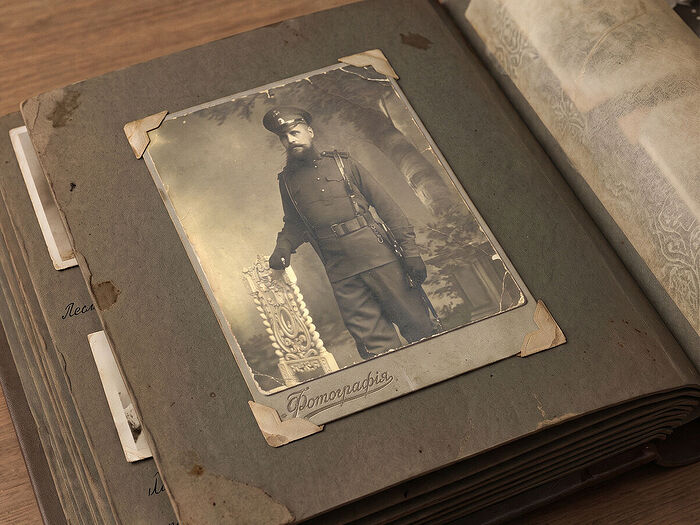
Venka was sitting at a table on which lay a large folder of music. But in front of him were not music books, but some papers and photographs. Seeing me at the door, he slowly began to put them in a folder and only after that said to me:
I sat down at the table opposite Venka, away from the folder, so that he would not suspect me of being too curious.