“A very powerful prayer for good luck”translated
Alexey Tereshchenko Real prayer is not a spell that changes the circumstances around us. This is living communication with God that changes us.
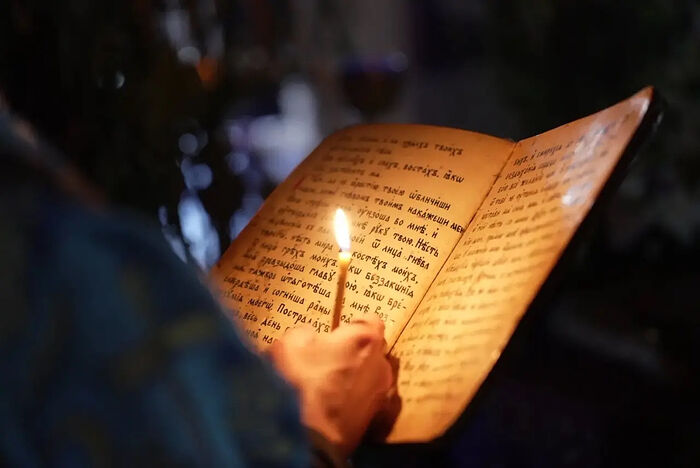
Many have encountered this strange artifact. One of our acquaintances, and sometimes a random interlocutor in the church, looked around mysteriously and held out a piece of paper folded in four: “Take it, rewrite it. This is a very powerful prayer. Helps against illnesses, brings success in business and attracts money, etc., etc.” And sometimes there are even special conditions, like “you must read it three times at dawn.”
At such moments, a logical question arises: why are these “secret” texts passed from hand to hand necessary at all, if we have a Church with its incredible, two-thousand-year-old treasury of spiritual experience?
Why do we need these “secret” texts if we have a Church with its two thousand-year-old treasury of spiritual experience?
Orthodoxy gives a person amazing freedom in communication with God. We can and should pray in our own words - sincerely, fervently, from the very depths of our hearts, telling God about our pains and joys. We also turn to the Orthodox prayer book, because the texts collected there were written by holy people. These words were born not in offices, but in the crucible of exploits, in the silence of cells and in the joy of communion with God. They are dictated and guided by the Holy Spirit Himself. Reading them, we seem to tune our out-of-tune inner instrument to the tuning fork of holiness.
But what happens when a person picks up a homemade “prayer” from an unknown piece of paper?
Often a fake is visible even to the naked eye. It is not clear who compiled it, what state the author was in, and, most importantly, in what spirit he spoke. Behind outwardly pious words and Church Slavonic phrases there is often hidden outright magicism, a pagan conspiracy, which is simply disguised as Orthodoxy. In essence, this is paganism in disguise. The point is that the spirit there is completely alien. There is not a word about repentance in them, only a consumer attitude towards God.
Behind Church Slavonic phrases there is a pagan conspiracy, which was simply disguised as Orthodoxy
The main difference between a genuine prayer and a homemade fake lies in its very essence - in what exactly a person asks for.
Let’s read the popular “samizdat”: one hundred percent of the content there is devoted to earthly things. People ask for ironclad health, wealth, prosperity, career growth, success in business - and for “evil people to bypass.” This is an attempt to conclude a profitable contract with heaven for arranging the most comfortable earthly life.
In one similar self-written “prayer” distributed by hand, an unknown author turned to God with a request to grant him a “worthy life.” The author of this homemade product clearly used the word “worthy” in a worldly, secular sense - as a synonym for comfort, prosperity and respectability. But in the face of Divine Justice, asking to give what we “worthy” is an act of insane pride! When a person asks for a “decent life,” he boldly declares to Heaven: “I deserve a good salary, satiety and respect.” And the Lord can really respond to this pride by giving a person exactly what he really deserves for his sins: sorrow, illness and humiliation. This is the terrible poison of apocryphal prayers. They are composed by people who know neither Scripture nor their own sinfulness. Church prayers cry out: “have mercy on me, a sinner!”, “I am not worthy...”. We cry out for mercy. And these leaves rightfully demand comfort. Doesn’t he who prays in such a homemade manner bring upon himself the judgment of God?
Now let’s open the prayer book. What did the saints ask for? John Chrysostom, Basil the Great, Macarius of Egypt and many other saints beg God for the forgiveness of sins, for the granting of the Kingdom of Heaven, for the memory of death, for the gift of repentance and for a “good answer at the Last Judgment.” Yes, the saints also prayed for health, but look at the wording: “for mental and physical health.” The soul always comes first! It was obvious to the saints: if the soul is sick with sin, good physical health will only become a tool for multiplying evil.
If the soul is sick with sin, good physical health will only become a tool for multiplying evil
Does this mean that a Christian cannot pray for earthly well-being at all? Of course you can! If we look at biblical examples of prayer, we will see: the Savior Himself gave us the perfect formula for asking for earthly needs in the “Our Father” prayer. We say: “Give us this day our daily bread.” Think about it: not “provide me with a comfortable old age”, not “give me wealth and fame”, but give me bread - that is, the basic necessities - daily, for today (today). This is a petition in which there is neither pride nor excessive demands - this is the children’s request to the Father for food for the current day.
In Scripture, in the book of Proverbs, there is an amazing prayer of the righteous Agur, which the desert fathers loved very much:
“Do not give me poverty and wealth, feed me with daily bread, lest I be full and deny You and say, “Who is the Lord?”
In this prayer we ask God to save us from extremes.
Let us remember the prayer that Saint Philaret left us. Let us listen to these words, full of absolute filial trust:
“Lord, I don’t know what to ask of You. You alone know what I need. You love me more than I know how to love myself... I do not dare to ask for either a cross or consolation: I only stand before You...”
Man refuses to dictate his terms to God.
Yes, we also pray for healing of loved ones, for help in work, for peaceful skies. But this should not become an end in itself that lasts forever. Earthly well-being is just scaffolding around the building of our soul that is under construction. When the building is ready, the scaffolding is removed.
That is why genuine prayer for earthly things always has a “fuse”. If you need work, housing or health, the saints teach to ask for it, but be sure to add at the end the words of Christ Himself in the Garden of Gethsemane: “Nevertheless, not My will, but Thine be done” (Luke 22:42). Once we have spoken these words sincerely, the request ceases to be an audacious demand and becomes a holy obedience.
Many great saints were crippled, seriously ill, and suffered from chronic illnesses
As for “good health” or “the most important thing is health,” we must remember that many great saints were crippled, seriously ill, and suffered from chronic illnesses. Venerable Pimen the Much-Sick, Blessed Matrona of Moscow, Elder Ambrose of Optina and many others - their physical strength was undermined. But would they really want to exchange their holy infirmity for heroic health if it were accompanied by a cruel, petrified, evil heart? For saints, weakness often became a blessing. Some ascetics even specifically prayed that the Lord would send them illness, because it humbled pride, pacified passions and did not allow them to forget about God. As the Lord revealed to the holy Apostle Paul: “My power is made perfect in weakness” (2 Cor. 12:9).
Homemade leaflets with “prayers for success” promise us heaven on earth without the slightest spiritual labor. But real prayer is not a spell that changes the circumstances around us. This is living communication with God that changes us.
Addressing God in your own words - sincerely, honestly, from the heart - is wonderful, but at the same time we must not forget about the prayer book, the heritage of the holy fathers. As Metropolitan Anthony of Sourozh noted, sometimes these texts may seem incomprehensible to us or too sublime. And this is completely logical: we simply do not have the spiritual level and inner experience that the saint who composed this prayer had. But, following the example of Metropolitan Anthony, we can turn to the author himself for help in the prayer composed by this saint.
The words of the holy fathers are impeccably correct spiritual guidelines, because the Holy Spirit Himself spoke and acted in them. Their prayers are absolutely pleasing to God and are undoubtedly useful for our salvation. Therefore, let us forever leave aside dubious homemade pieces of paper with magical promises. We already have a genuine path to God - a living, honest presence before the Creator and centuries-tested patristic experience, which will always carefully support and guide our weak soul.