His Holiness Patriarch Kirill: where there is faith, there is no fear for the futuretranslated
About the biggest miracle in 80 years of life, the meaning of trials in the 90s, the danger of artificial intelligence, the future of Russia and strong faith as the key to the invincibility of the Fatherland, and also about why you should not postpone your meeting with God...
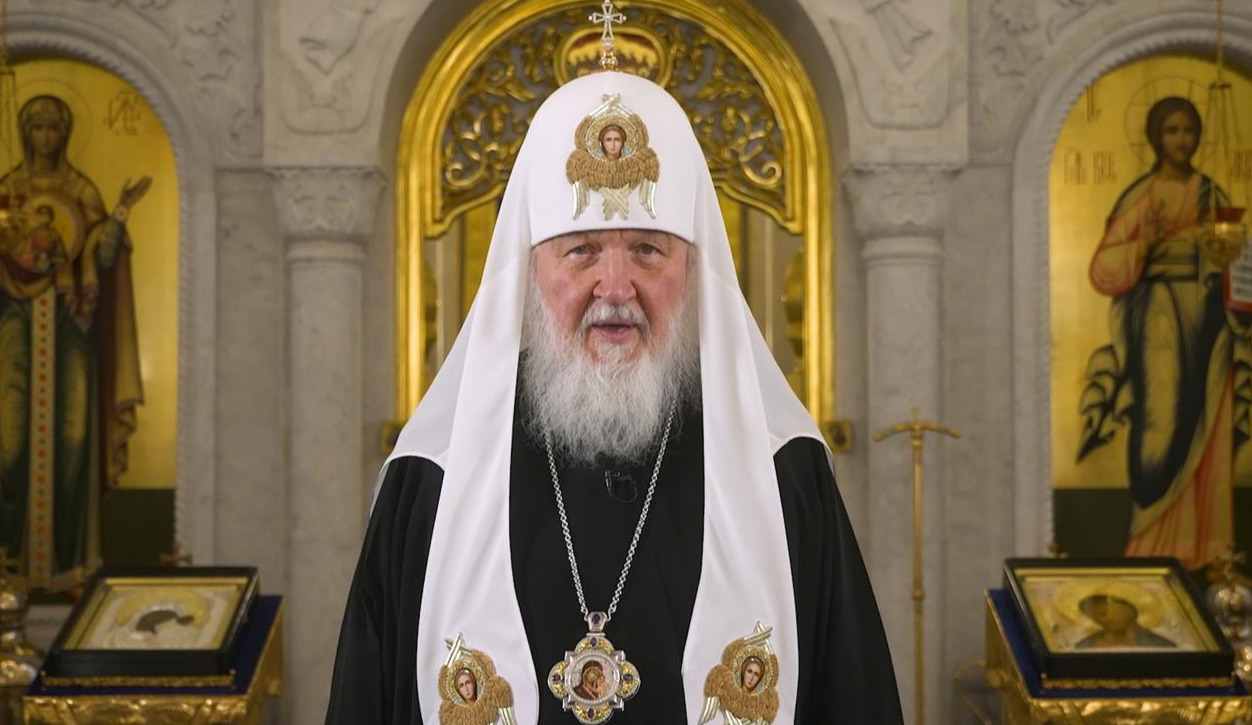
His Holiness Patriarch Kirill of Moscow and All Russia spoke in his anniversary interview with TASS about the biggest miracle in 80 years of life, the meaning of trials in the 90s, the danger of artificial intelligence, the future of Russia and strong faith as the guarantee of the invincibility of the Fatherland, as well as why one should not postpone the meeting with God.
- Your Holiness, in 80 years of life, full of colossal historical disruptions, what became the biggest miracle and the most bitter disappointment for you?
- The greatest miracle is not just the restoration of churches and parish life, but the revival of a living faith after decades of severe persecution.
The miracle began long before the church revival of the 1990s, and its basis was in the faithfulness of ordinary people. I was born into a family that knew the value of confessing faith: my father was repressed for his religious beliefs in 1934 and almost on the eve of his wedding with my mother he was sent to Kolyma; grandfather, who later became a priest, went through Solovki, prison and exile. Faith was not stopped because strong-willed Orthodox people passed it on to the next generation not as a relic of the past, but as the main, fundamental value and meaning of life. And many Russian families did the same. Therefore, the Church, which was supposed to be left in the past, “shaken off” like dust, again became the content of the lives of millions.
Looking back into the past from the perspective of today, you understand that a miracle is a person who begins to pray for the first time after decades of silence. A family that turned to the gospel out of unbelief. A young man who decided to choose service to Christ instead of the cult of consumerism. Each of these cases is a true miracle of transformation, a miracle of God’s action in people’s lives. Here the words of the Gospel ring with special force: “And the light shines in the darkness, and the darkness does not overcome it” (John 1:5). The Church survived not because people were strong, but because God did not abandon our people.
The bitterest disappointment is that the external freedom that has opened up has not become freedom from hatred and indifference. We received the freedom to profess faith, build churches, publish spiritual literature, and raise children in the faith. But “freedom from” prohibitions does not always become “freedom for” truth, responsibility and sacrificial love. Nikolai Berdyaev warned: freedom, understood only as right and arbitrariness, easily falls into new slavery; true freedom is, first of all, an obligation and duty to God.
Therefore, it is difficult to see when external religiosity coexists with hard-heartedness and selfishness, when believers do not notice a suffering person, when faith remains words and does not become actions. But “faith if it does not have works is dead” (James 2:17). However, I believe that a deep transformation of the people is underway, and it just takes time and patience to see good results.
Despite any historical vicissitudes, I would like to say, together with St. John Chrysostom: “Glory to God for everything.” Let us continue to work so that faith determines the way we live.
- Before your eyes, a change of historical eras took place: from the destruction of the USSR to the construction of a new Russia. The Church is often called the only institution that has preserved the continuity of spiritual tradition. What was the most difficult thing in the pastoral mission at a time when state bonds were collapsing?
“It was difficult to see the suffering of people who experienced the destruction of their usual life, lost their jobs, and were deprived of the opportunity to work honestly. They turned out to be unnecessary for the society of the new formation. Scientists and teachers traded in markets, some former military men and athletes became members of organized criminal groups. The false thesis “money, wealth by any means” was considered almost the ultimate truth. But where “sin abounded, grace abounded all the more” (Rom. 5:20). In times of crisis, the life of the Church was reborn from the ashes, people sought and found consolation in it, performed feats of faith, and helped each other. And we were all once again convinced that difficult times cannot be an obstacle to the salvation of a person in faith, for freedom and the ability to resist evil are given to us by the Creator Himself.
Perhaps the trials of the 1990s were given to us to appreciate what we have and not to believe the promises and promises that come from outside. The unity of state and society, rootedness in faith is immunity against the challenges of our time. Each era, both destruction and construction, can give us lessons that we are called to learn for the spiritual benefit of ourselves and those around us.
- You are known as a brilliant preacher and author who has always attached enormous importance to the word. Today humanity is immersed in an ocean of digital information, neural networks are learning to imitate speech and meaning. Will the word of a shepherd lose its power in a world where artificial intelligence learns to speak “more convincingly” than a human? And how can the Church interact with this challenge without rejecting technology, but also without dissolving in it?
- The purpose of our preaching is the good and eternal salvation of man. This sermon appeals to the conscience and reason of man. There can be no manipulation or ulterior motives. As the holy Apostle Paul says: “For in our teaching there is no error, no unclean motives, no guile; but since God has deigned to entrust us with the gospel, so we speak, pleasing not men, but God, who searches our hearts” (1 Thess. 2:3-4).
One of the dangers associated with artificial intelligence is that it can be used to identify and analyze the weaknesses of mass audiences in order to influence people most effectively. But for Orthodox preaching, a person is not an object of psychological influence, but always a living person and an enduring value in the eyes of God.
The machine can learn to imitate the preacher’s speech and intonation. She is able to analyze a huge number of texts and produce something that looks like a sermon from the outside. Even if it's of good quality. But the shepherd is not a mechanism for creating beautiful and convincing texts. This is a person who not only talks, but also does. Comforts, supports, performs acts of mercy. The shepherd's word has power when it is born in his heart, when it is the fruit of his spiritual life. If the priest's words are completely at odds with his deeds, then sooner or later he will lose the competition to the smart machine.
We must carry the word, which also comes from our spiritual life, and not just from the skill of skilfully composing texts.
- Before your eyes, the world entered the era of globalization, and now it is again entering the era of bloc confrontation, the “clash of civilizations” and new walls. The Russian Church is one of the few institutions with a real global network and pastoral authority that can cross political borders. What is her political responsibility as a peacemaker today?
- The Church is not some kind of global political institution, it is first and foremost the Body of Christ, a community of believers. Therefore, it does not directly deal with issues of domestic or international politics. This is a matter for states. But it does something else - it gives people the opportunity to gain a different perspective on things, a different basis for decision-making, including in the field of politics. Christ says: “For what does it profit a man if he gains the whole world and loses his own soul?” (Mark 8:36).
A Christian views everything he does, including in the field of politics, as serving God. Worldly people may wonder, “Is this effective? Will this help me achieve my goals? The Christian asks: “Does this please God? Will I give a good answer to this at the Judgment of Christ?
The Church gives a person a different heart and a different vision. Having acquired faith, a person realizes that God created the whole world and every person out of His love, He seeks the good and salvation of everyone - including those who are still in “darkness of minds and hardening of hearts.” Those who expect high-profile political actions and some global initiatives from the Church are mistaken. This is the arena of government action.
- How do you see Russia in 50 years? Which one - the Russian Church? Russian youth? And the world in general?
- Our future depends on our will, on our ability to live according to the commandments of Christ. If our children grow up with firm faith in their hearts and love for the Fatherland, then Russia will be invincible, unshakable both in the face of internal unrest and in the face of all threats from without. Where there is Orthodox faith, where there is love for each other, where there is a sincere and living preaching of moral values, there can be no fear for the future.
- Your Holiness, if you had the opportunity through this interview to give just one piece of advice or parting words to every person - even to those who have not yet crossed the threshold of the church, but are looking for meaning and support - what would you tell them?
- If very briefly, it would be just two words: don’t delay! Do not put off meeting God “for later”; good deeds that can be done right now. All great things begin with small steps. Take one honest step towards God from where you are - and this will be the most important action.
I would not expect, much less demand, from a person in the beginning