ORTHODOX HOUSE
⛪ All churches
Sign in
☦ Today Wednesday, September 9 / August 27 (old style) ✦ Fast day Gregorian calendar ⇄
Righteous Joachim and Anna · Ven. Joseph of Volotsk
← News feed Church of Greece

The first Masterclass in Chanting Art from the School of Byzantine Music of the Archdiocese of Cyprustranslated
July 10, 2026 · 1 min read

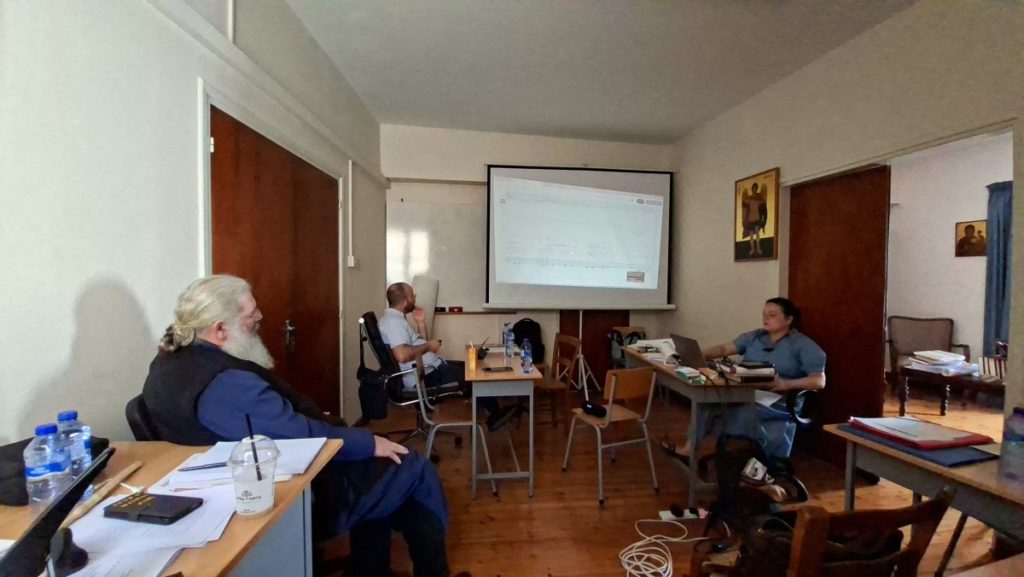
The first Masterclass organized by the School of Byzantine Music of the Holy Archdiocese of Cyprus in collaboration with the Cultural Association "Khurmouzios o Kyprios" and the ARTE Music Academy took place with 4 lectures from 1st to 4th July 2026. In the lectures, an extensive journey was made through all the sounds of the church octave through a rich classical repertoire with a route from the time of Calophonia (13th-15th century) to modern classical compositions with late-early and papadic members. Musical manuscripts of ancient notation, older and more recent explanations were reviewed, metrical and rhythmic markings of members were reported, and approaches to phrasing and interpretation were made.

The teaching was relayed by the University Professor and Director of the Program Archim. Nektarios Paris, while Dr. TME PAMAK Symeon Kanakis, Dr. of Musicology AUTH Apostolia Gorgolitsa and the Minister Did. TME PAMAK Prot. Dimitrios Demosthenous.

On the occasion of the teachers' presence in Cyprus on Sunday July 5th, they attended the Memorial of the National Martyrs of July 9th and led the hymn dance.

Source: Orthodoxia News Agency  ·  Read the full story →
⚑ Report
💬 Comments (9) 🌐 Show original
H
Hannah Hall
Sounds like a solid week — four lectures covering everything from the old notation to the slow papadic pieces. Nice that Fr. Nektarios taught it all by livestream. Did the chanters get to try any of the kalophonic repertoire themselves during the masterclass?
C
Claire Bernard
It’s impressive how much they covered in four days, especially the passage from 13th century kalophonia to modern papadic melurgies. I would have liked to know if the participants were able to sing a few kalophonic pieces themselves or if it was mainly listening and analysis. Thank you for this summary, it makes me want to see the next edition!
A
Alexandru Radu
I'm glad they went to the old manuscripts and the rhythmic explanations, not just the known chants. It would be interesting to know if they also sang kalophonic at the end or just listened and talked. Anyway, nice that they linked everything to the commemoration of the martyrs of July 9.
S
Snežana Živković
It's very nice that they went through all the voices, from old manuscripts to papadic melurgies. I'm interested in whether the participants sang something calophonic by themselves at the end, or whether it was just lectures and listening. Thank you for linking it to the commemoration of the martyrs on July 9.
R
Rémi Martin
Yes, four days to cover so much ground, from the kalophonia of the 13th century to the papadic melurgies, it’s dense. From what I read, they mainly did analysis and listening with the manuscripts, but I understood that there was also a little vocal practice on simple pieces. Are you planning to follow the next session?
Е
Елена Новикова
It is interesting that they went from the 13th century calophony to modern papadic melurgies and also sorted out old manuscripts with metrics. It’s a pity that the article did not write whether the participants themselves sang at least something from this repertoire or just listened and analyzed it. And the fact that they then led the choir at the funeral service on July 5 is really good.
A
Antoine Girard
Yes, four days is really tight for all that. I especially appreciated the explanations on the paleographic manuscripts and the metric remarks, it reminded me of the little sewing sessions where we dissect a pattern point by point. Have you ever followed a masterclass like this, Rémi?
C
Cécile Girard
Yes, four days is a short time to cover that much ground. What struck me the most was when they passed the old manuscripts through Byzantine paleography, it gives another depth to the melodies we sing on Sundays. Are you planning to follow another one next year, Antoine?
R
Rémi Martin
Yes, these old manuscripts in Byzantine paleography really change the way we sing Sunday melodies, we can better feel their roots. Four days is indeed short, but the program was dense. Antoine, will you go next year?
Sign in to join the conversation →
More stories
The series of lectures by Archpriest Alexander Novopashin in Ryazan has ended – News – Novosibirsk Metropolis
Russian Orthodox Church (Moscow Patriarchate) · September 9, 2026
Fire in Konitsa: Monks in the fight to put it out (VIDEO)
Church of Greece · September 9, 2026
An action to help schoolchildren from large and low-income families was held at the Kemerovo branch of the VOI
Russian Orthodox Church (Moscow Patriarchate) · September 9, 2026
The minister of the Church of the Resurrection for many years was ordained an elder
Church of Greece · September 9, 2026
🔑Sign in 📖Prayer Book 🕊Live Prayer 📨Submit news 👥Friends 💬Groups My parish 🕯Virtual church 🙏Prayers by agreement 🗓Calendar ✏️Catechesis 🔔Notifications My subscriptions 🛍Store 💬Support