Lavrov: The Russian Orthodox Church is a powerful tool of our foreign policy News from the world | Newstranslated
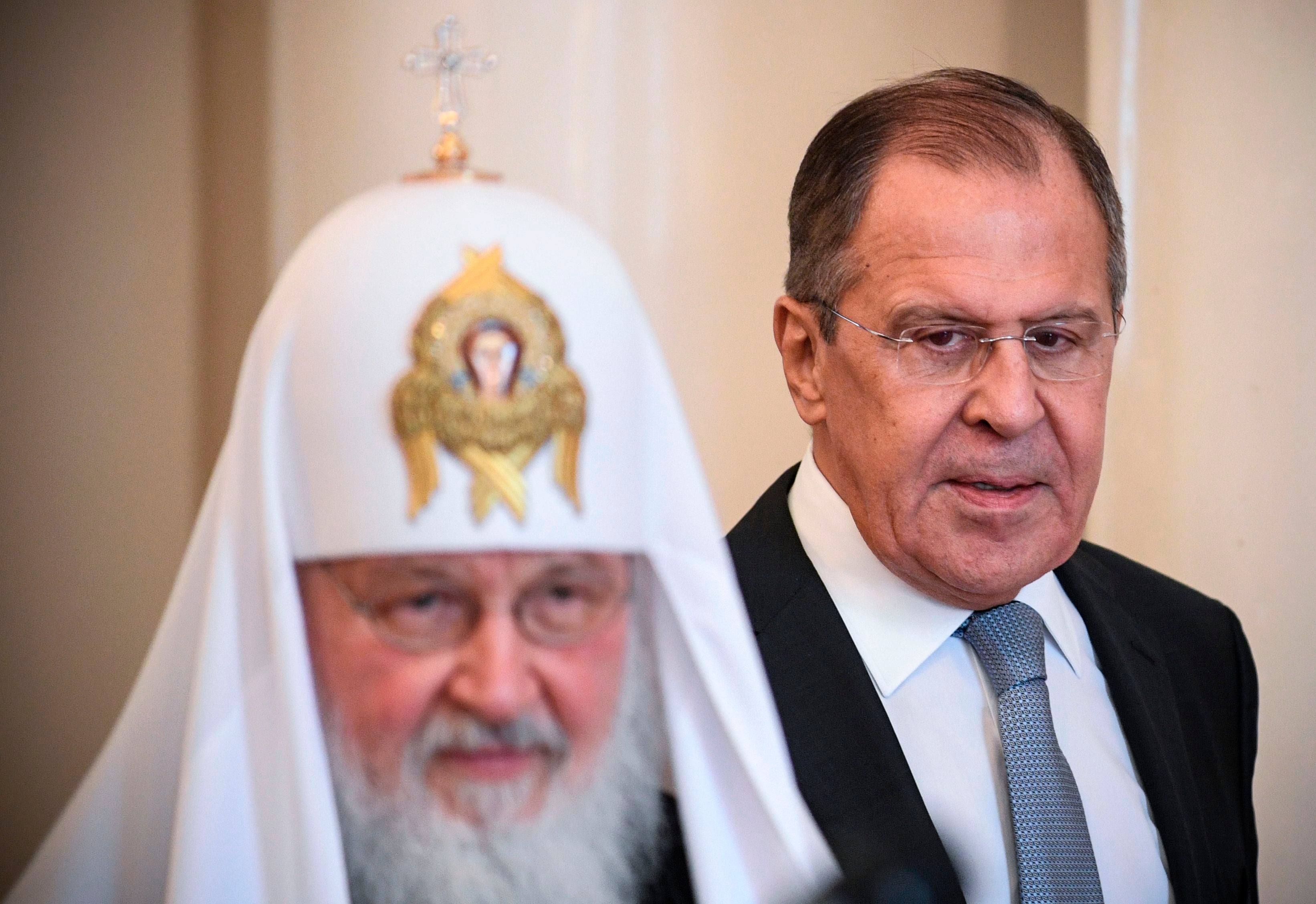
Russian Foreign Minister Sergey Lavrov stated that the Russian Orthodox Church is playing an increasingly important role in Russia's foreign policy, and he personally holds regular one-on-one meetings with Moscow Patriarch Kirill, where the two agree on their approaches to activities abroad. In an interview with the Russian Orthodox Spas TV channel on November 19, on the eve of Patriarch Kirill's 80th birthday, Lavrov emphasized the importance of cooperation between the Russian Orthodox Church and Russian diplomacy. "When I communicate with His Holiness, we often hold face-to-face meetings to coordinate our approaches to work abroad, as well as to talk about life in the broadest sense of the word," the Russian foreign minister said. The words of the Russian foreign minister about the role of the Church as an instrument of state foreign policy are indicative. According to him, the Russian Orthodox Church contributes to the strengthening of national unity through interreligious cooperation and the establishment of the so-called traditional values.
Lavrov said the values, which the Russian Orthodox Church consistently defends and which he says are shared by the world's major religions, are becoming increasingly important to Russian diplomacy. "Today it is becoming a very powerful tool of our foreign policy," he stressed. In the interview, Lavrov made further criticisms of the West, which, according to him, has "moved away from its religious and cultural roots" and that "satanic values" are spreading there in culture, art and literature. According to him, these processes make citizens of other countries, including Western countries, perceive Russia as an attractive place where they can preserve their traditional beliefs and way of life. Lavrov's words are an open confirmation by the Kremlin's highest representative of the close coordination between the Moscow Patriarchate and Russian foreign policy. They show that under the pretext of advocating for "traditional values", the state uses the Orthodox Church for its actions abroad. Source: Orthodox Times