The Entry into the Church of the Most Holy Mother of God: origin and meaning of a celebrationtranslated
On November 21, the Orthodox Church celebrates the Entry into the Church of the Most Holy Mother of God and ever-virgin Mary, one of the twelve major feasts of the year. None of the four Gospels says a word about it. It comes from a story older than most liturgical texts, that…
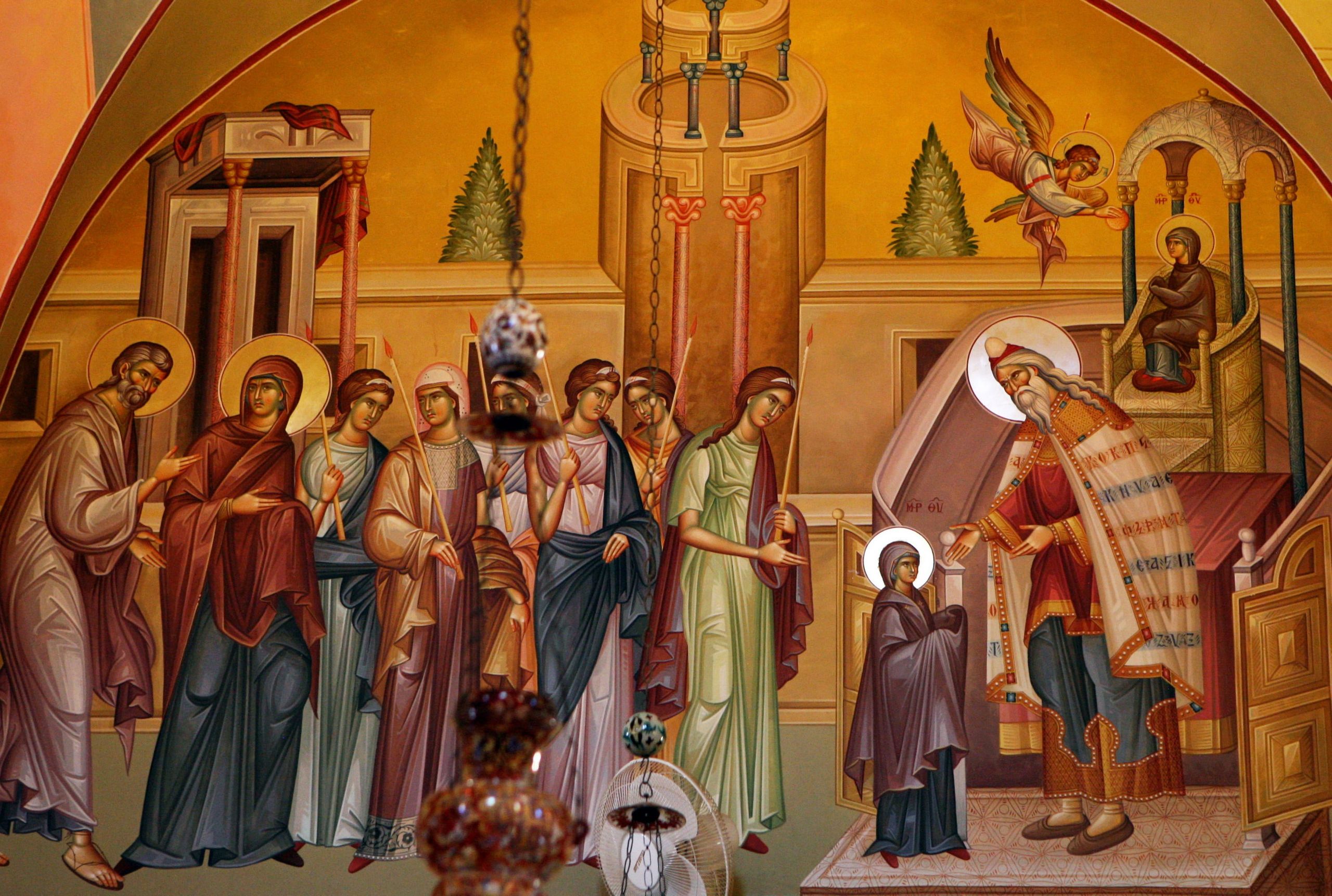
This story is the Protevangelium of James, an apocryphon written around the middle of the 2nd century. Joachim and Anne, childless for a long time, had promised to consecrate to God whoever was given to them. When Mary was three years old, they took her to the Temple in Jerusalem, escorted by young girls from Israel who carried lighted lamps, so that the child would not turn towards her father's house. The priest receives it, blesses it, places it on the third step of the altar. She then remains in the Church until the age of twelve, nourished, says the text, by the hand of an angel.
The priest has no name in the apocrypha. In the 4th century, Gregory of Nyssa saw Zacharias there, the father of John the Precursor, and the hymns of the festival kept this reading. They go further than the text: Zechariah leads the child to the Holy of Holies.
The historians, for their part, stumble. No other source confirms the episode, and it goes against what we know about the Church: only the high priest entered the Holy of Holies, once a year, on Yom Kippur. There is also no indication that little girls were raised there.
But the Church has never read this feast as a chronicle. For her, the young girl who crosses the threshold of the Stone Church will become the living church where God will take flesh. The kondakion calls it “the most pure church of the Savior.” The Holy of Holies of the old Covenant receives the one who will bear the true one.