ORTHODOX HOUSE
⛪ All churches
Sign in
☦ Today Thursday, September 10 / August 28 (old style) 🍽 Fast-free day Julian calendar ⇄
Ven. Job of Pochaev
← News feed Russian Orthodox Church (Moscow Patriarchate)

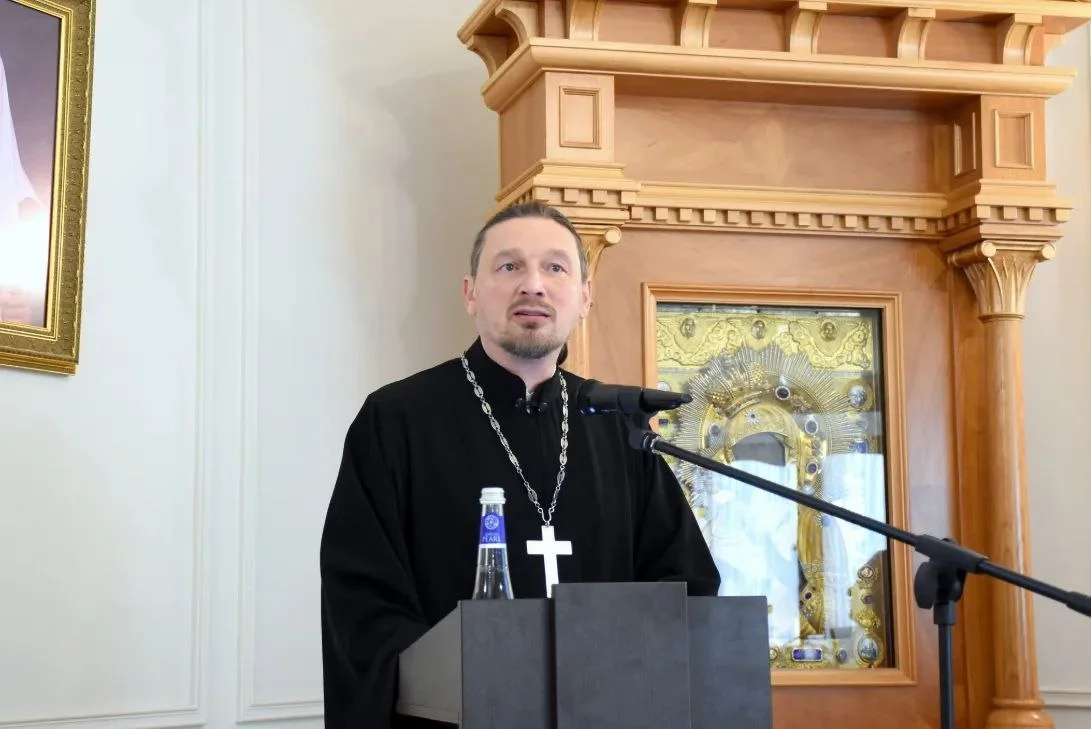
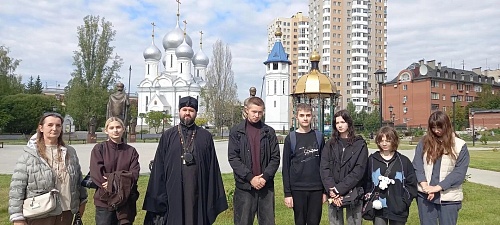
PRIEST VASILIY LOSEV ON THE LEGAL STATUS OF A CLERGY OF THE RUSSIAN ORTHODOX CHURCHtranslated
July 12, 2026 · 1 min read

The Russian Constitution establishes that the Russian Federation is a secular state, and no religion can be established as state or compulsory. Religious associations are separated from the state and are equal before the law.

Sometimes, unfortunately, this norm is interpreted as a denial of the participation of the Church and clergy in the public life of the state. This interpretation cannot be called correct! The state, along with the internal regulations of the Church, carries out legal regulation of the exercise by citizens of the right to freedom of religion and the activities of religious associations.

This is precisely due to the fact that religious associations have historically been institutions of civil society in Russia and participate in public relations. The principle of historical succession of our state appeared in the Constitution of 2022. He refers us to the thousand-year history of the formation of our Fatherland: “The Russian Federation, united by a thousand-year history, preserving the memory of our ancestors who passed on to us the ideals and faith in God, as well as the continuity in the development of the Russian state, recognizes the historically established state unity.” This highlights the deep historical roots...
Source: Site: Одинцовская епархия  ·  Read the full story →
⚑ Report
💬 Comments (10) 🌐 Show original
К
Красимира Георгиева
Thank you, father. I especially liked how you mentioned the principle of historical succession from 2022 - it is precisely this that shows that faith is not something on the side, but has been part of our roots for a thousand years. Without it, the country would seem cut off from its history.
M
Miloš Obradović
Priest Vasilije well reminded of that principle of historical succession from 2022. Without it, it would really seem as if faith is someone else's thing, and not what has held the state and the people together for centuries. Thank you, Father, for making that clear.
T
Teodora Ionescu
Yes, Father Vasile put the dot on the "i" well with this principle of historical succession from 2022. Without it, it really seems that faith is something added on top, not the root of a thousand years that the Constitution talks about. Thanks for this simple and straightforward clarification.
Α
Αναστασία Μιχαηλίδου
Father Vasilios says it well about this historic law of 2022. It clearly shows that faith is not something foreign that we add later, but a root of thousands of years as the Constitution also says. Without it it would be like cutting the tree by the root.
P
Petru Constantinescu
Yes, Teodora, I too was left with the same impression after reading. That principle of 2022 naturally connects faith with our history, does not put it as an addition. Have you read the rest of the article, how does priest Vasile explain the legal regulation of priests' activity?
А
Атанас Марков
I agree with you, Krasimira. This principle of 2022 is indeed a reminder that faith is woven into the very foundation of our country, not some add-on. I am interested in how, in your opinion, this affects the daily work of the parishes here in Bulgaria - do we need a similar clear reminder in our country?
M
Marie Černá
Yes, I was also interested in the principle of historical legal succession from 2022. It shows that faith is not an afterthought, but part of the roots of the state for a thousand years. I would be interested in how this affects the work of priests in practice here in the Czech Republic, where the situation is a little different than in Russia.
В
Васил Стефанов
I agree, Krasimira, this very principle of 2022 shows that faith is not something added afterwards, but is in the very roots. As a mechanic in Rousse, I see every day how our old churches stand as part of the city, not as decoration. I'm interested in what you think - should we talk more about this in school in Bulgaria?
С
Стоян Колев
I agree, Vasile, the principle of 2022 really reminds that faith is the basis, not an add-on. As a pensioner from Veliko Tarnovo, I see the same - our old churches here are part of everyday life, not just monuments. I think that in school we should talk more, but more simply and honestly, without turning it into a mandatory ideology. How exactly do you imagine these hours?
I
Ioana Stan
Yes, Petru, I also noticed how Father Vasile clearly links the legal regulation to the role of priests as citizens in society, not as something separate. The article explains well that the state only regulates the exercise of the right to belief, without replacing the internal ordinances of the Church. What do you think, do you think this helps more in getting them involved in public affairs, or are there still misinterpretations?
Sign in to join the conversation →
More stories
At the courtyard of the Sergius-Kazan Church, care continues to take care of the garden and vegetable garden - News - Novosibirsk Metropolis
Russian Orthodox Church (Moscow Patriarchate) · September 10, 2026
For lyceum students, acquaintance with history continued on the territory of the Church of the Sign - News - Novosibirsk Metropolis
Russian Orthodox Church (Moscow Patriarchate) · September 10, 2026
Saints, Feasts, and Readings for 9/10/2026
Ecumenical Patriarchate of Constantinople · September 10, 2026
Bells were installed in the Church of St. Seraphim of Sarov – News – Novosibirsk Metropolis
Russian Orthodox Church (Moscow Patriarchate) · September 10, 2026
🔑Sign in 📖Prayer Book 🕊Live Prayer 📨Submit news 👥Friends 💬Groups My parish 🕯Virtual church 🙏Prayers by agreement 🗓Calendar Lives of the Saints ✏️Catechesis 🔔Notifications My subscriptions 🛍Store 💬Support