This day in Russian history - Today, on the day of memory of Emperor Justinian the Great, we remember Count P.D. Kiselev and Archbishop of Ekaterinoslav Vladimir (Sokolovsky-Avtonomov)translated
Emperor Justinian is one of the greatest Byzantine emperors, codifier of Roman law, creator of Orthodox state ideology, builder of St. Sophia Cathedral in Constantinople. The Church honors him precisely for his state virtues, glorifying him with the rank of “truthful king.” He was born in 482 or 483 in the town of Tauresia near modern Skopje and was an Illyrian (according to other sources, he was a Slav and was born in the village of Verdyanya, near present-day Sofia). The future great Emperor was born into a simple peasant family, but was raised in Constantinople, where he was taken by his maternal uncle, Emperor Justin I, who ruled in 518-527. His full name was Peter Savvatius (received at baptism) Flavius (a sign of belonging to the imperial family) Justinian (in honor of his uncle). Gradually, Justinian rose through the ranks and rose to the post of commander of the capital's military garrison. Justin, who had no children of his own, adopted him and made him his co-ruler in the last months of his reign, so on August 1, 527, when Justin died, Justinian ascended the throne.
He became famous for his successful wars against the enemies of the Empire. Despite the fact that in the east there was an almost continuous war with the eternal enemy - Persia, Justinian managed to restore for a short time the great Roman Empire practically within its previous borders. In 533−534. Justinian's commander Belisarius defeated the Vandal kingdom, and by 548 Africa again became a province of the Empire. By 555, another commander Narses finally defeated the Ostrogothic kingdom and completely cleared Italy of the Goths, Franks and Alemanni, Italy became a province of the Empire with its center in Ravenna. Justinian also submitted to the western coast of Spain and the southern coast of Gaul.
Under Justinian, another grandiose thing was accomplished - the codification of law was carried out. Under the leadership of the outstanding lawyer Tribonian, the famous Corpus iuris civilis (“Code of Civil Law”) was published, consisting of three parts: 1) the “Code of Justinian” (completely published in 534), which included all the imperial decrees that remained relevant starting with Emperor Hadrian, who ruled at the beginning of the 2nd century; 2) “Digests”, prepared in 530−533. a compilation of the views of the best jurists (mainly 2-3 centuries), these texts became mandatory for all courts; 3) “Institutions”, or “Fundamentals”, a law textbook for students published in 533. After Justinian's death, Novellas were published, an addition to the Code, which contained 174 new imperial decrees.
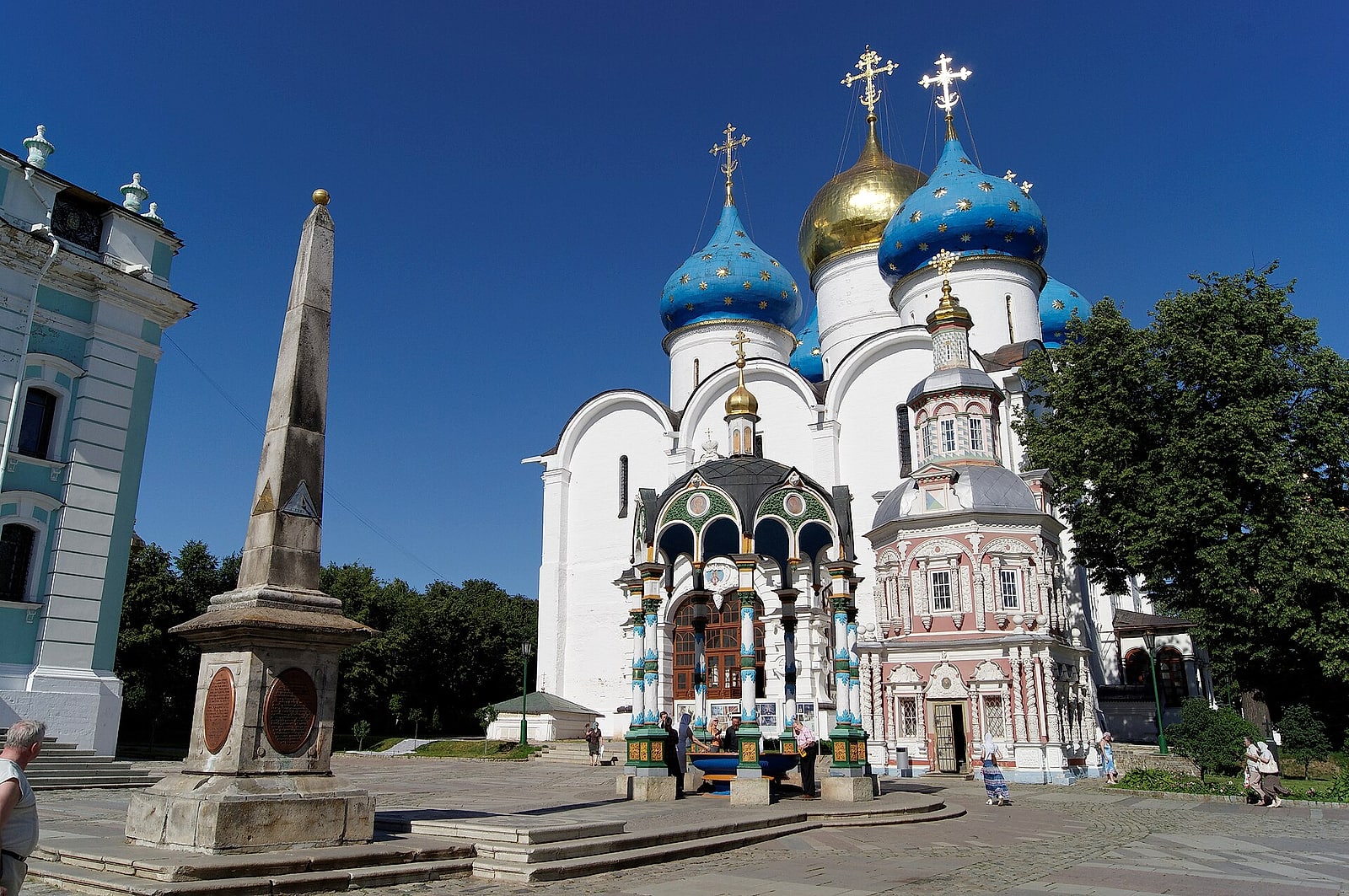
But the Church glorified Emperor Justinian for his great services to Orthodoxy. He zealously sought to spread Christianity and eradicate paganism, ordering, for example, the closure of pagan schools in Athens so that the teaching of sciences there would be taught by monks. Under Justinian, the majestic Cathedral of St. Sophia was built in Constantinople. The cathedral created by Constantine the Great was burned during the Nika uprising. The pious Emperor Justinian created a new church, which for centuries amazed everyone with its grandeur and beauty. Justinian cared not only about the spread of Christianity, but also about the purity of the Orthodox faith. Speaking against the Nestorians, Monophysites and other heretics, he composed the song: “Only Begotten Son and Word of God...”, which is sung at the liturgy in front of the small entrance. Through his efforts, the V Ecumenical Council was convened in 553 to condemn Nestorian thoughts and to end discord in the Church. Justinian established a law on the obligatory celebration of the Nativity of Christ, the Baptism of the Lord and the Resurrection, and the Annunciation of the Blessed Virgin Mary.
One of the most important acts of Emperor Justinian was the development of an Orthodox state ideology. In the Byzantine Empire, even under Constantine, the power of the state and the spiritual power of the Church were united on the principle of a “symphony of powers.” In the preamble to the 6th Novella of Justinian, a legislative justification was given for this: “The greatest gifts of God to man, bestowed by the Supreme love for mankind, are the priesthood and the kingdom: one serves divine things, the other governs and takes care of human things; both come from the same beginning and beautify human life. If that (the priesthood) is impeccable in everything and shares boldness with God, and this (the kingdom) correctly organizes the society entrusted to it, then there will be a kind of good symphony.”
Together with Emperor Justinian, the Church also honors his pious wife, Queen Theodora, whom he married in 523 and whom he selflessly loved and revered. Theodora helped him govern the state, and during the Nika uprising, showing composure and restraint, she actually saved the throne. She died in 548, and Justinian in 565.
Today we also remember a prominent statesman, honorary member of the St. Petersburg Academy of Sciences, Adjutant General Count P.D. Kiselev, who died in 1872.
Pavel Dmitrievich Kiselev was born on January 8, 1788 in Moscow into an old noble family. Having received home education, in 1806 - 1815. served in the elite Cavalry Regiment, in which he participated in the Patriotic War of 1812 and the Foreign Campaigns of the Russian Army of 1813-1814. During the war, Kiselev attracted the attention of Emperor Alexander I, was granted by him to the aide-de-camp, and accompanied the Emperor at the Congress of Vienna. From 1817 - Major General.
Initially, Kiselev adhered to rather liberal views, was a supporter of the “enlightened monarchy”, shared many of the views of the Decembrists, while condemning their desire to realize their ideals by violent means. Later he moved to the right. Kiselev considered the main transformation vitally necessary for Russia to be the abolition of serfdom, about which in 1816 he provided Emperor Alexander I with a special note. In 1829 - 1834 Kiselev served in Moldavia and Wallachia, in 1834 he was appointed a member of the State Council, and in 1835 he was introduced by Emperor Nicholas I to the Secret Committee created to discuss the project of peasant reform. The Emperor called Kiselev his “chief of staff for the peasant unit.” In 1837 - 1841 Kiselev prepared a reform of the management of state peasants, called the “Kiselev reform” and which became the largest attempt to resolve the peasant issue in the second quarter of the 19th century. In 1837, for his services in the field of public service, he was granted a count. Since 1856 - Russian Ambassador in Paris, since 1862, retired.
Count Kiselev was rightfully considered one of the most prominent dignitaries of the reign of Emperor Nicholas I.
Today is the day of remembrance of the chairman of the 5th All-Russian Monarchist Congress, Archbishop of Ekaterinoslav Vladimir (Sokolovsky-Avtonomov), who died in 1931.
Archbishop Vladimir (Sokolovsky-Avtonomov) was born on December 31, 1852 in the Poltava province in the family of a priest and was called Vasily Grigorievich in the world. He received his education at the Kazan Theological Academy, from which he graduated in 1878, in the same year he was tonsured and ordained a hieromonk. In January 1879 he was appointed a member of the Japanese Theological Mission, and from 1886 he was a teacher at the Kholm Theological Seminary. In December 1887 he was consecrated Bishop of Aleutian and Alaska. In December 1896 he was appointed Bishop of Orenburg and Ural, and in November 1903 - Bishop of Yekaterinburg and Irbit. In March 1910, due to health reasons, he was retired and appointed rector of the Spaso-Androniy Monastery in Moscow. Metropolitan Vladimir (Epiphany) was delegated to the 5th All-Russian Monarchist Congress, which took place in May 1912 in Petrograd. His welcoming speech was enthusiastically received by the delegates, and he himself was unanimously elected honorary chairman of the congress.
After the revolution in 1921, His Holiness Patriarch Tikhon elevated him to the rank of archbishop and appointed him to the Yekaterinoslav See, but did not accept the appointment. From January to June 1926 he was in the Gregorian schism. He died in Moscow in terrible poverty and completely alone.