God is the comfort and hope of the worldtranslated
9th Discourse on the Divine Liturgy Metropolitan Athanasius of Limassol In our mundane ways, we never think about the important role the presence of God plays in our lives.
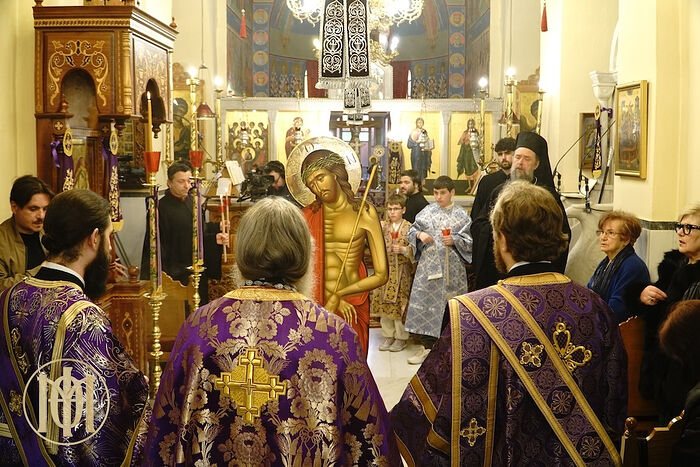
9th Discourse on the Divine Liturgy
Last time we discussed the petition “Let us pray to the Lord for deliverance from all sorrow, anger, danger and need.” And today we move on to the next petition, which sounds like this:
“Intercede, save, have mercy and preserve us, O God, by Your grace.”
We ask the Lord: “Help us, save us, have pity on us, preserve us, O God, with Your grace.”
Our first request is “stand up.” From the ancient Greek language this literally means: “snatch, pluck from the abyss.” Indeed, in our lives we are often like people who find themselves in the depths of the sea, and therefore we need the Lord to take pity on us, to rescue us from the midst of the difficulties that befall us, to give us support, to preserve us with His grace, to save us. Only God can save a person from great difficulties and temptations.
Due to our down-to-earth nature, we never think about the important role the presence of God plays in our lives
God is the comfort and hope of the world. There are inevitably difficult times in each of our lives, and truly blessed is he who knows the door that leads to God. Unfortunately, due to our mundaneness, we never think about the great importance God plays in human life, what an important role His presence plays in our lives. No matter how spiritually insipid and lukewarm we may be, nevertheless, when difficult times come, we feel the need to resort to God and lean on Him.
We, clergy, often communicate with suffering people (especially when some kind of catastrophe and calamity occurs), and every time I am convinced how important it is for a person to have faith in God. If a person has a feeling of the presence of God in a person’s soul, then in difficult times this feeling helps him find support in God, even if the person is not a particularly zealous Christian or a particularly churchgoer.
What can you say to a suffering person who has lost everything in his life: either he has lost those closest to him, or he himself is on the verge of death, or everything that he worked for for many years has disappeared - if this person has no hope in God? There's nothing to say to him. Promise him 10 million? Imagine you come to a dying person and say: “Don’t be afraid, I will give you 10 million euros.” But the person knows that in a few hours or days he will die, the doctor told him about this... Or the person has lost a child. What will you give him that would compensate him for his dead son or daughter? Nothing. Only God can become the compensation for the misfortunes and troubles of this world.
I remember 20 years ago, in the first days after my arrival from Mount Athos to Cyprus, I visited a house. The owners set the table, their friends came, and we all sat down to dinner. In conversation at the table I touched upon the topic of alms. And one lady - a good, serious woman - objected to me:
- Father, there are no more beggars in Cyprus.
- Not at all. All Cypriots are now rich and wealthy.
In fact, of course, there were beggars in Cyprus. Not as many as now, but there were some. In my naivety, I believed her words and at the same time thought: “What unfortunate people! They don't have any poor people to give alms to. How can they be saved? Then, of course, I became convinced that there were beggars. It’s just that this lady was very rich and did not understand that there were also very poor people nearby. It happens sometimes that a person lives in his own world and denies what is outside this world. When the situation changes, he unexpectedly discovers what he had previously denied.
Today we are going through difficult times with no end in sight. The only hope and consolation for man is the All-Good God. There is a beautiful psalm that we sing after the consecration of the loaves at the vigil: “Those who are rich are poor and hungry, but those who seek God will not be deprived of any good” (Ps. 33:11). We are not talking here only about physical poverty and hunger, which we may never encounter in our lives. A person can be poor and hungry in many other ways: he can yearn for words of consolation, yearn for joy, yearn for support from his neighbor, but receive none of this. For example, today you are rich, you are surrounded by friends, acquaintances and other people. And tomorrow you lose your fortune and then suddenly you discover that everyone around you has disappeared. Then you see that only God remains your true hope.
In the truest sense of the word, God is the true hope of the world. He does not leave anyone, not a single person can say: “I placed my hopes in God and was deceived by Him.” Of course, when you trust in God, what matters is what you hope to receive from Him. After all, God may not give you what you expect. He will act with you in a fatherly way: he will give you what is truly useful to you in your life.
Our elder Joseph of Vatopedi told us a lot about the action of God's Providence in human life, and we ourselves, from our own experience, hundreds of times found confirmation of his words. The elder said that during the German occupation people lived in great poverty. Money became devalued, so people exchanged goods: if you give a bag of wheat, you get a bottle of oil. Many rich and wealthy people before the war went hungry during the occupation. And the fathers who lived in the desert of the Holy Mountain never went hungry. They lived poorly, meagerly, ascetically, sometimes they were deprived of the most necessary things, but they did not know real hunger. During the years of occupation, the brotherhood of St. Joseph the Hesychast, whose novice our elder was, lived in the caves of the Small Skete of St. Anna. More than once Elder Joseph the Hesychast saw Saint John the Baptist throwing food into their yard through the kaliva fence. Then the elder said to the brothers: “Take a mule and go down to the sea. They’ll send us something today.” And indeed, on Arsan the fathers found some kind of parcel for their brotherhood. So God took care of them with His Providence.
Sometimes the time of great tribulation is the most important time in a person’s life
When a person trusts in God and calls on His name, when, out of love for God, he shows patience, diligence, and tries to struggle, then God does not abandon him. And know that sometimes the time of great tribulation is the most important time in a person’s life. Hours of sorrow may be very bitter for a person, but then they bring him sweetness, just as bitter coffee brings sweetness. Those who drink coffee without sugar claim that they do this in order to later feel the sweetness of the water. After the bitterness of sorrows comes the sweetness of Divine consolation. And the Monk Paisius the Holy Mountain said that he does not know greater grace than that which a person experiences when he is treated unfairly. He said: when a person is treated unfairly, then Christ comes into his soul, Who also endured unjust suffering from people. Christ settles in this soul and remains in it, like a good tenant who has paid for housing and is not going to leave, to whom you are ready to give this apartment.
Christ does this because He is the Protector of all the offended. Ultimately, happy is the one who has experienced such hours in his life - difficult, but at the same time unusually significant for a person.
I remember one metropolitan who had to endure great temptations and difficulties in his life. Our elder Joseph once wanted to go and visit this bishop. The elder told me:
“It’s very difficult for him as a human being right now.” A lot of slander is being leveled against him, he is accused of both. His enemies are trying to deprive him of his chair.
In a conversation with us, the bishop shared that when the hour of trial and great sorrow came for him, all the people who had previously surrounded him disappeared. One or two people remained with him, as is usually the case in such cases.
After the temptation had passed, the “fugitives” began to return one after another. But then the bishop said to them: “Why do I need you now? Now there are many around me who tell me: “Is these polla, Despota” (these words are translated from Greek “for many years, lord” and mean a wish to the bishop for many years of life). I don't need you now. When did I need you? Back when I was nailed to the cross and needed a drop of water.”
Remember how the Lord, who once fed thousands of people with bread and fish, while hanging on the cross, did not have anyone who would give Him even a drop of water. Not only were they not given a drop of water to Him, but, on the contrary, they brought gall and vinegar to His lips. The Lord endured all this for our sake, so that we would have an example in our lives and find support for ourselves in His suffering. So that we tell ourselves: if Christ on the cross did not receive even the slightest human consolation, then we should also show patience, place our trust in God, and wait for consolation from Him, and not from people. And truly blessed is that person who had to endure great trials, but who also tasted the sweets of Divine consolation. Only those who have entered the furnace of sorrows, temptations, and trials taste such sweetness. Being in this oven, a person begs God to use His grace to snatch him from this oven, have mercy, save him, and save him from everything that is ready to destroy him.
I was impressed by the story of one old man (I will not mention his name, since he is still alive). He told me the following. In the place where he lived, he was engaged in great and useful work. One day he had to face many temptations, difficulties, problems, slander and attacks from people and the enemy devil. And during prayer, through the action of God’s grace, the elder had such a vision.
He saw himself in an impenetrable jungle. He held the baby in his arms. A huge snake was hunting for the baby to devour him. The old man, gripped by fear for the baby, fled from the serpent. With incredible difficulty, he made his way with the baby in his arms through barely passable thickets, crossed rivers along the way, and climbed rocks. From right and left, snakes crawled out at him, lions and panthers rushed, seemingly wanting to tear him apart. He and the baby were on the verge of death. Seized with fear, the old man nevertheless noticed that all these animals were trying to devour not so much himself as the baby. When he ran like this, clutching the baby to his chest, he found himself in a very narrow place: it was a passage between two rocks, at the opposite end of which a huge dragon was waiting for the old man to devour him along with the baby. The situation is hopeless: behind are wild animals ready to tear him to shreds, in front is a dragon with its jaws open wide.
The elder cried out: “Most Holy Theotokos, save me!” Immediately he heard a commanding female voice: “Mikhail!” - and saw the holy Archangel Michael, who struck the dragon with his spear. At that same moment the elder came to his senses. In alarm he asked himself:
- What does what I saw mean?
- The baby is your soul. All these animals want to devour your soul.
Negative events can be very painful, but not dangerous for our soul
Thus, the sorrows, temptations, trials, and incidents that we are exposed to in our lives can be likened to beasts seeking to destroy our soul. However, often it is not so much something negative that is destructive and dangerous for the soul, but its opposite. Negative events - such as being slandered and blamed, being mocked and ridiculed, being despised and hated - can be very painful, but they are not dangerous to our soul. What is dangerous for her? It’s completely different: when they say good words to us and flatter us, when they praise us: “How good you are! How wonderful everything is with you! What a great guy! How beautifully you said it!” This is much more dangerous for the soul.
I remember how I told my elder Joseph:
- Geronda, so-and-so is slandering you.
“Fear not the one who slanderes us, but the one who praises us.” Harm is caused by those who lavish praise.
We receive the greatest harm from praise and flattery, because they blind us. We can live for years in blindness and in this state look like a drunk. A person in a drunken state does something, says, laughs, and then sobers up and wonders: “Where am I? What have I been doing all this time? How could I not be aware of what I was doing and what I was saying?” The same thing happens to those who are spiritually blind. This happens in many areas of our lives. Even in the family. Being in a deep sleep of spiritual insensibility, we believe that everything is fine with us, but suddenly awakening, we discover, for example, that our family has broken up. Where have you been for so long? You didn't even notice that your family had broken up. But it couldn’t fall apart in one day. How many years have you been sleeping? And you wonder: how did I not notice anything? How did I not understand what I said, what I did, how I behaved? You can remain in such spiritual intoxication for whole years.
So, danger awaits us from two sides. On the one hand, there is the danger of falling into despair due to many trials and difficulties. When the time comes for a person to be exposed to temptations, they come at him one after another - a real hurricane. Just as during a thunderstorm, lightning flashes one after another and peals of thunder follow one after another continuously, so it happens to a person during a period of temptation: first you will get sick, then one trouble will happen, then another, a third, a fourth... It seems to you that these trials are grinding you into powder, that everything is lost. Of course, nothing is actually lost - God will not allow this.
On the one hand, a hurricane of sorrows, trials, misfortunes, difficulties rushes towards us, and on the other hand, another hurricane hits us, which seduces and lulls us to sleep. This hurricane is invisible, but it is much more terrible than the first, and this is prosperity, voluptuousness, love of money, love of fame, selfishness, a state of blissful sleep. The kind lady who said: “Father, there are no more beggars in Cyprus” was in a similar state of sleep. Of course, how do you know whether there are beggars or not? You have everything. You get everything you want, whenever you want it. You don't notice poverty, you can't understand a poor person. In order to notice and understand, you need to keep your eyes open and look around you, you need to use your other senses. When you see nothing, you naturally declare that there are no troubles or misfortunes in the world.
How can a person keep his soul unharmed from this or that hurricane - this is what we are looking for. In order to achieve this, you need, according to St. Paisius the Holy Mountain, to maintain contact with God, to be on the same “frequency” with Him. When you lose your connection with the Lord, you lose hope of salvation.
In difficult times, only God can help a person, and therefore we need to pray. And pray a lot. Pray and place all your hopes in God. A person will drink cups of difficulties one after another, but God will not abandon him. Man leaves God, but God never leaves man. Even if a person himself was guilty of the troubles that befell him, if he seeks God, calls on the name of the Lord, asks God for help, then God will not say to him: “Serves you right! Wrap it around yourself so that next time you can be smarter and not repeat this.” No, God, as the All-Good Father, consoles a person, He, as they say in the litany, “intercedes” for him, snatches him from the whirlpool of sorrows with great love and care, takes him into His arms, cares for him, like a doctor cares for a sick person. The doctor is not interested in whether his patient is a good person or a bad person, he takes care of every patient, gives him everything he needs. God deals with us in a similar way.
Let's learn the great art of prayer, let's learn to turn to God. Difficult hours are the most useful and beneficial time for a person to learn to pray. In the life of St. Silouan of Athos there is the following story. The monk noticed how one young worker prayed fervently, with all his heart. And he asked this man:
- Where did you learn to pray so fervently?
- At war. When bombs and shells were exploding around me, that’s when I learned to pray.
Just as water, when you squeeze it from all sides, rushes upward with force, so the human soul, oppressed by difficulties and temptations, rushes to God
The Monk Paisius the Svyatogorets said that he was perplexed: why did Elder N live in a cave, over the entrance to which hung a rock, ready to collapse at any moment. And although the old man was advised to move from there, otherwise the day would come when the rock would collapse right on his head, he nevertheless did not leave the cave and continued to live in it. Why did he do this? Because, enduring need and difficulties, feeling the vanity of everything, the elder learned to pray. Just as water, when you squeeze it from all sides, rushes upward with force, with the same force and swiftness the human soul, oppressed on all sides by difficulties and temptations, rushes to God and seeks His mercy. And God comforts a person in an unimaginable way in these difficult hours. So great is God's consolation that the one who tastes it, after the temptations have passed, remembers with nostalgia the grace that he felt in the hour of trial. He admits: “Yes, it was very, very difficult, but there was also great grace.”
When everything is in order with us, there are no difficulties and problems, then often the power of our prayer decreases, the fervor of our heart cools down. We, let's say, resign ourselves to everyday life and lose the warming presence of Divine grace.
I remember our elder Joseph of Vatopedi, who had to face many temptations in his life, once said to me:
- You know, child, I feel thirst in my soul.
- Oh, if I could go out into the city square, where all the people would mock me, humiliate me and spit on me! Indeed, in the temptations that I had to endure, I received great grace from God.
The elder said this during one of those rare periods when he was free from temptation. There were very few such “changes” between trials in his life. Only the last time of his life did he spend in relative peace, whereas in previous years he was tossed from storm to storm, from storm to storm, like an airplane that falls from one pocket of air into another. Elder Joseph longed for his former state, because he knew what great grace a person receives in the hour of temptation and what fervent prayer he then has.
In all the years that I spent with Elder Joseph on the Holy Mountain, I never saw the elder approach communion without tears. In our community I was a hieromonk, every day I served and gave communion to Elder Joseph and the brothers. The elder received communion four times a week and always with tears. And what kind of tears were those! Not at all the tears that flow from our eyes with difficulty. No, it was a real cry! The elder prayed in his cell, the small window of which looked directly into the church. Through this window the elder listened to the liturgy until the great entrance. After entering, he entered the church, took his stasidia and prayed in it until communion. He stood with his head bowed, and tears flowed from his eyes so abundantly that both the robe and the elder’s monastic habit became wet.
I often wondered: where does this man get so many tears? It should be noted that in general Elder Joseph was not gloomy, gloomy or grouchy. He was a very cheerful person. He communicated with ease, laughed, joked, and enjoyed listening to different stories. In moderation, of course. But when he began to pray, he seemed to change entirely. A similar change occurred with him while reading at a common fraternal meal. Every time the reader pronounced the name of Jesus Christ or the Mother of God, the Great Martyrs George or Panteleimon (especially the elder’s favorite saints), Elder Joseph immediately began to cry and could no longer eat. As a result, we couldn’t eat either. So on those days when the elder ate with us at meals, we tried to select some “neutral” reading. Once I even said to the elder:
- Geronda, it would be better if you came to us for a morning meal, during which there is no reading.
Where did Elder Joseph reap such rich spiritual fruits? Из великого множества скорбей, испытаний, трудностей, которые ему пришлось перенести в своей жизни. Когда душа человека проходит через все это, тогда она обращается к Богу. Man unites with God, and God comforts his soul. The soul calms down, softens, little by little rises from strength to strength, gradually acquires spiritual maturity, becomes “baked sweet bread,” as Saint Ignatius the God-Bearer says. You eat well-baked, fragrant bread with pleasure, while raw or burnt bread may be impossible to eat. Таким хорошо испеченным хлебом оказывается человек, который по-христиански проходит через испытания и скорби, в чьей душе проявляются все те благородные силы и дарования, какими Бог наделил человека при творении. What happens is what the prophet king David says: “It is good for me, for you have humbled me, so that I may learn through your justification” (Ps. 119: 71).
You, God, have shown me a great benefit by humbling and humbling me, showing me my weakness, so that I might know Your way, so that I might know how All-Good, Righteous, and Holy You are.