ORTHODOX HOUSE
⛪ All churches
Sign in
☦ Today Wednesday, September 9 / August 27 (old style) ✦ Fast day Julian calendar ⇄
Ven. Poemen the Great · Great-martyr Phanurius the Newly Appeared of Rhodes
← News feed Pan-Orthodox

As US turns 250, Pope Leo says liberty is represented through life, immigrants and faith
July 3, 2026 · 1 min read

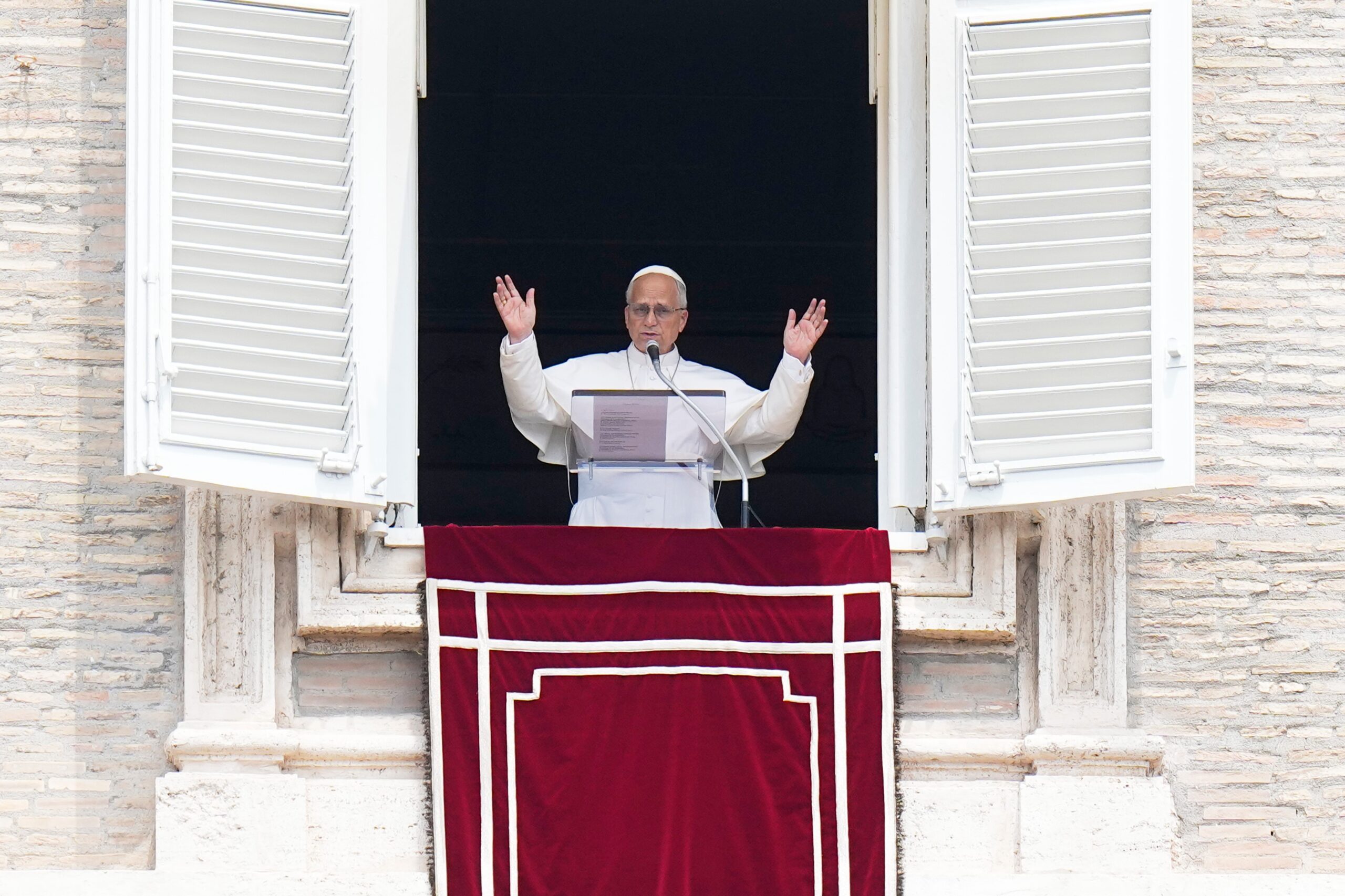
VATICAN CITY (RNS) – Pope Leo XIV marked the United States’ 250th anniversary by calling his home country back to its founding ideals, during a speech in which he defined liberty through protecting human life, welcoming immigrants and supporting religious freedom and interfaith cooperation — themes that cut across some of the country’s most divisive debates.

The pope delivered a pro-life and pro-immigrant message, stating that the strength of a country “is deeply tied to the value it affords to human life in every form and condition,” during his live virtual remarks to the National Constitution Center in Philadelphia on Friday (July 3).

The first U.S.-born pontiff, born in the suburbs of Chicago, acknowledged his roots “as a son of this great country.” He earned his bachelor’s degree in mathematics at Villanova University, about 12 miles west of Philadelphia.

Leo, who spoke from the Vatican, was honored at the event with the annual Liberty Medal, in recognition of his work in advancing religious liberty and freedom of conscience. He addressed the gathering alongside figures including Philadelphia Archbishop Nelson J. Pérez and some of the city’s Muslim, Jewish, Black…
Source: Religion News Service  ·  Read the full story →
⚑ Report
💬 Comments (20) 🌐 Show original
T
Thomas Taylor
The pope mentioning his Villanova math degree and Chicago roots made it feel more personal. I get the liberty-through-life part, but the immigrant piece feels a lot more complicated when you look at actual border numbers and what cities are dealing with right now. Interesting choice of themes for the 250th.
K
Kristina Dhima
Pope Leo spoke from Chicago and Villanova, which makes the message a little more relatable. I liked that he connected freedom with the protection of human life in all circumstances, but the immigrant part seems more complicated when I see what is happening in big cities. What do you think about the balance between welcome and order?
В
Василий Новиков
Dad mentioned his math degree from Villanova and his Chicago roots - it really makes it sound like he's talking to his boyfriend. I completely agree with life in every form and condition, this is the basis. But with immigrants, as Thomas correctly noted, in practice everything is more complicated when you look at the real numbers at the border and what’s going on in the cities. In your opinion, where is the healthy middle ground?
П
Полина Павлова
Vasily, a diploma from Villanova and Chicago roots really make the speech come alive, as if a neighbor is talking. I am also completely for life in any form - it is not discussed. As for immigrants: the middle ground is probably to accept those who are ready to work and live according to our laws, and not just let everyone in and then be surprised at the chaos in the cities. Do you think this can be clearly stated in the rules?
И
Иван Орлов
Polina, I completely agree with the middle point on immigrants. After the 90s, we also had enough people in Samara who came only for benefits and did not want to work - order in the city immediately sank. But you can clearly state in the rules: for example, a mandatory language test, a confirmed specialty and subscription to our laws with immediate expulsion in case of violation. Do you think this is enough?
V
Vasilika Thanasi
Yes, Kristina, the connection to Chicago and Villanova makes the message more relatable to those of us who have seen America from afar. I agree that the protection of life is fundamental, but for immigrants I think the balance comes when we welcome people who respect the law and integration - as we have seen in Berat with young families who work and do not create trouble. What do you think, can order be established without harming goodness?
E
Elizabeth Baker
The personal touch about Villanova and Chicago did make it land differently. I agree the life part lines up straight with the founding documents, but on immigration I keep thinking of the old “give me your tired, your poor” line we learned as kids; still, the actual numbers and strain on cities Thomas mentioned are real and can’t just be waved away. How do we square the ideal with the practical side without losing either?
E
Elena Nako
Yes, Vasilika, the connection with Chicago and Villanova made me feel like someone who knows the American reality inside out spoke to me too. Agree on the balance of immigrants - in Gjirokastër we have seen families from the south who work hard and respect the rules, but when some take advantage of kindness without integration, order breaks down. How do you think we can preserve that kindness without becoming naive to those who simply seek to exploit?
S
Sarah Evans
The Chicago and Villanova bits did make the whole speech feel more like it came from one of us rather than just the Vatican. On the immigration side I keep wondering how we square the founding idea of ordered liberty with the sheer volume of crossings that have overwhelmed some shelters and schools these past couple years. Do you think there’s a workable middle that still honors both the Statue of Liberty poem and basic rule of law?
Д
Дарья Виноградова
Ivan, a language and specialty test is the right thing to do, you definitely can’t do without them. In Tula, after the nineties, we also had enough newcomers who only went to the market to get benefits, but didn’t want to work, and tension immediately grew in the lines for bread. But as for immediate expulsion for any violation - isn’t it too harsh? Maybe a warning or a fine first, so as not to create more offended people?
T
Thoma Nako
Yes, Elena, I saw that connection with Chicago and Villanova too – it sounded like someone who has walked our common streets spoke. In Elbasan, we have had cases when immigrants from the south worked well and became part of the neighborhood, but when someone comes only to take without giving any contribution, then our kindness turns into a burden for the neighbors. What do you think, should our churches help more in their practical integration, not just in words?
K
Katerina Prifti
Yes, Vasilika, I liked how you connected it to Berat – I've seen the same thing here, like the young family from Kosovo that opened a shop near the church and paid taxes without a problem. I think order can be brought about by tightening the law at the border without closing the door to those who really want to work, but your question is true: how do we find that point without being harsh?
H
Hannah King
Yeah, the Chicago and Villanova details did make it feel personal, like he gets the place. On immigration I think you're right that ordered liberty has to include basic rule of law; otherwise shelters and schools just buckle. Maybe the workable middle starts with enforcing borders while still expanding legal pathways, so the welcome stays real instead of chaotic.
И
Илья Андреев
Ivan, after the nineties, in Yaroslavl we also had enough people who came only for help and immediately stood in line at the stock exchange, but were in no hurry to work. A language and specialty test is a must, plus at least another year of mandatory work under a contract with verification. Would you add something to this list about family or children at school?
E
Emily Walker
The Villanova math degree part was a nice personal detail, like he was just some guy from the Midwest who ended up in Rome. I get why the immigration angle feels messy with the actual numbers at the border and the pressure on cities, but the life part seems non-negotiable if we're talking real liberty. How do you think the founding generation would've balanced the two?
T
Thomas Hall
The Villanova detail hit home for me too — drove past there plenty hauling kids on my old bus route. On the immigration piece, you're right that the poem's ideal matters, but so does the day-to-day overload on shelters and schools that folks in Philly have seen up close. Maybe the practical side starts with enforcing the laws we already have first, then figuring out a fair system that still welcomes people without breaking the cities. What do you think a workable middle looks like?
S
Sofia Thanasi
Yes, Katerina, that family from Kosovo that opened a shop near our church in Berat is a good example - they pay taxes, help at the feast of Saint Mary and the children go to school without problems. I think the point you say is found by better controlling the border like they do in Greece, not letting in those who come only to take without giving. What do you think, can we do this without being like those who say "shut it all down"?
П
Пётр Киселёв
I agree, Daria, the language and specialty test is a basis; without it, Tula was truly a mess after the 90s. And when it comes to deportation, you’re right, it’s not worth it right away for a small thing, it’s better to get a fine or a warning, so as not to breed anger. How much time do you think should be given for correction before deportation?
P
Petro Nako
Yes, Thoma, the connection with Chicago and Villanova also made me think of our people who came back from America with some experience. In Korça we have seen the same thing: some immigrants work hard and help in the church, but others just wait for help without trying at all. I think our churches should organize something simple like language courses or volunteer work, so that it is not just words.
B
Basil Young
The Villanova mention stuck with me too — my son took his family there for a tour a couple years back and couldn’t stop talking about the campus. On the immigration side, I agree the practical overload in Philly is real; I’ve heard the same from friends at St. John’s who volunteer at the shelters. A middle that works might be securing the border first like you said, then expanding legal entry for folks who pass basic checks, so we can actually help without collapsing the services. What’s one change you’d start with?
Sign in to join the conversation →
More stories
September 10
Pan-Orthodox · September 9, 2026
August 28 (old calendar) / September 10 (new)
Pan-Orthodox · September 9, 2026
Congratulation of the Primate to Archbishop Iona of Obukhiv on the 15th anniversary of his episcopal ordination
Ukrainian Orthodox Church · September 9, 2026
Martyrs Menodora, Metrodora and Nymphodora
Romanian Orthodox Church · September 9, 2026
🔑Sign in 📖Prayer Book 🕊Live Prayer 📨Submit news 👥Friends 💬Groups My parish 🕯Virtual church 🙏Prayers by agreement 🗓Calendar ✏️Catechesis 🔔Notifications My subscriptions 🛍Store 💬Support