November 9 (old calendar) / November 22 (new)translated
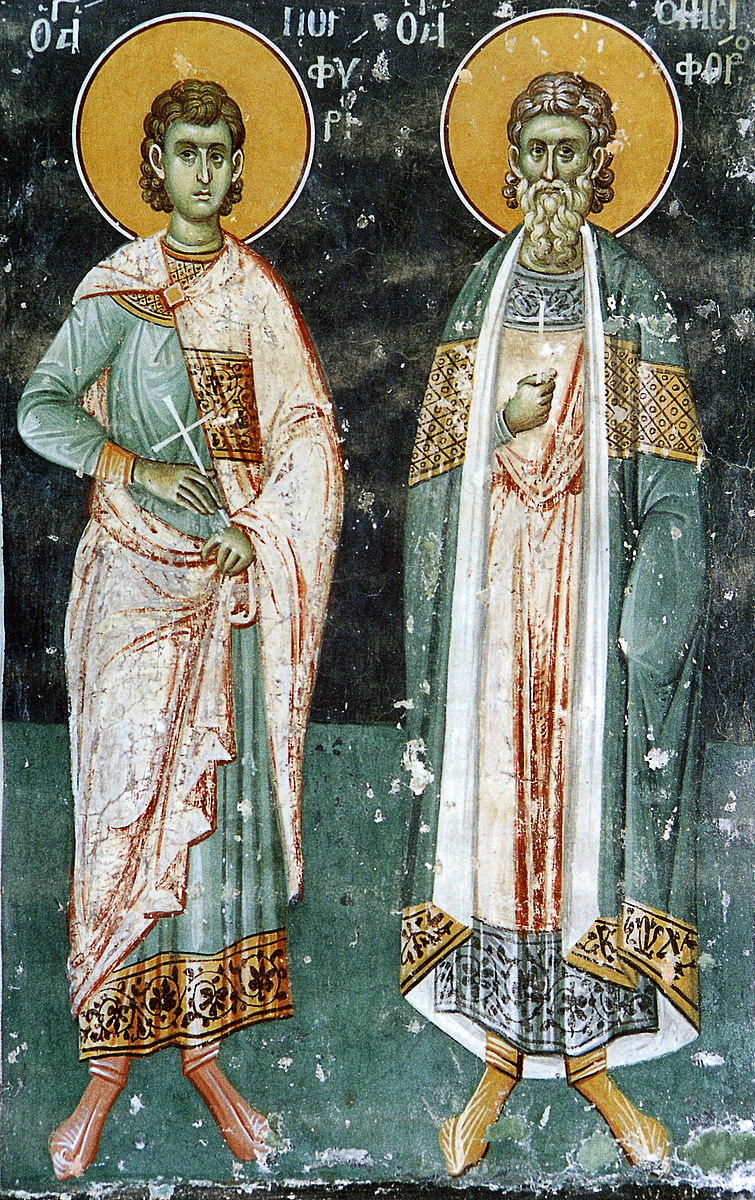
Saints Onesiphorus and Porphyry, martyrs (around 310); Saint Ursin, first bishop of Bourges (around 300); Saint Matrona, nun in Constantinople (around 492); Saint Anthony, martyr in Syria; Saints Claudius, Castor, Symphorian and Nicostratus, martyrs in Pannonia (4th century); Saint Alexander, martyr in Thessalonica (4th century); Saint Vanne, bishop of Verdun (around 525); Saint John Colobos (5th century); Saint Eustolia (610) and Saint Sopatra (around 625), nuns in Constantinople; Saint Théoctiste, hermit on the island of Mitylene (881); Saint Onesiphorus of the kyiv Caves (1148); Saint Nectaire of Aegina, Metropolitan of Pentapolis, miracle worker (1920); neo-martyr saints of Russia: Parthene, bishop of Ananievsk, Constantine (Tcherepanov), Demeter (Rousinov), Nesto (Panin), Theodore (Tchitchkanov), Constantine (Nemechaïev), Victor (Klimov), Elijah (Rylko), Paul (Anisimov), priests, Joseph (Stchensnovitch), deacon and Alexis (Zadvornov), monk (1937).
Our holy Father Nectaire was born on October 1, 1846, in Selybria, to a couple of poor but pious Christians: Demos and Marie Képhalas. Named Anastasius at holy baptism, he showed great piety and a deep taste for study from his childhood. As his mother taught him Psalm 50, he liked to repeat the verse: I will teach sinners your ways... (Ps 50:15). After receiving elementary education in his homeland, he was sent by his parents to Constantinople to complete his education, while working as an employee in a store. The young boy remained insensitive to the troubles of worldly life and was only concerned with building within himself, night and day, the inner man in the image of Christ, through prayer and meditation on the writings of the holy Fathers. At the age of twenty, he left Constantinople to become a teacher on the island of Chios. There he zealously encouraged the youth and the villagers to piety and works of virtue, not only by his words, but above all by the very example of his life of asceticism and prayer. Long desiring to embrace the life like the angels, he became a monk under the name of Lazarus on November 7, 1876, in the famous monastery of Néa-Moni. Seeking only things from above, a model of gentleness and obedience, he endeared himself to all the brothers, and was ordained a deacon a year after his monastic profession. Thanks to the generosity of a pious inhabitant of the island, then to the protection of the Patriarch of Alexandria, Sophronius, he was able to complete his studies in Athens and obtain a diploma from the Faculty of Theology.