November 7 (old calendar) / November 20 (new)translated
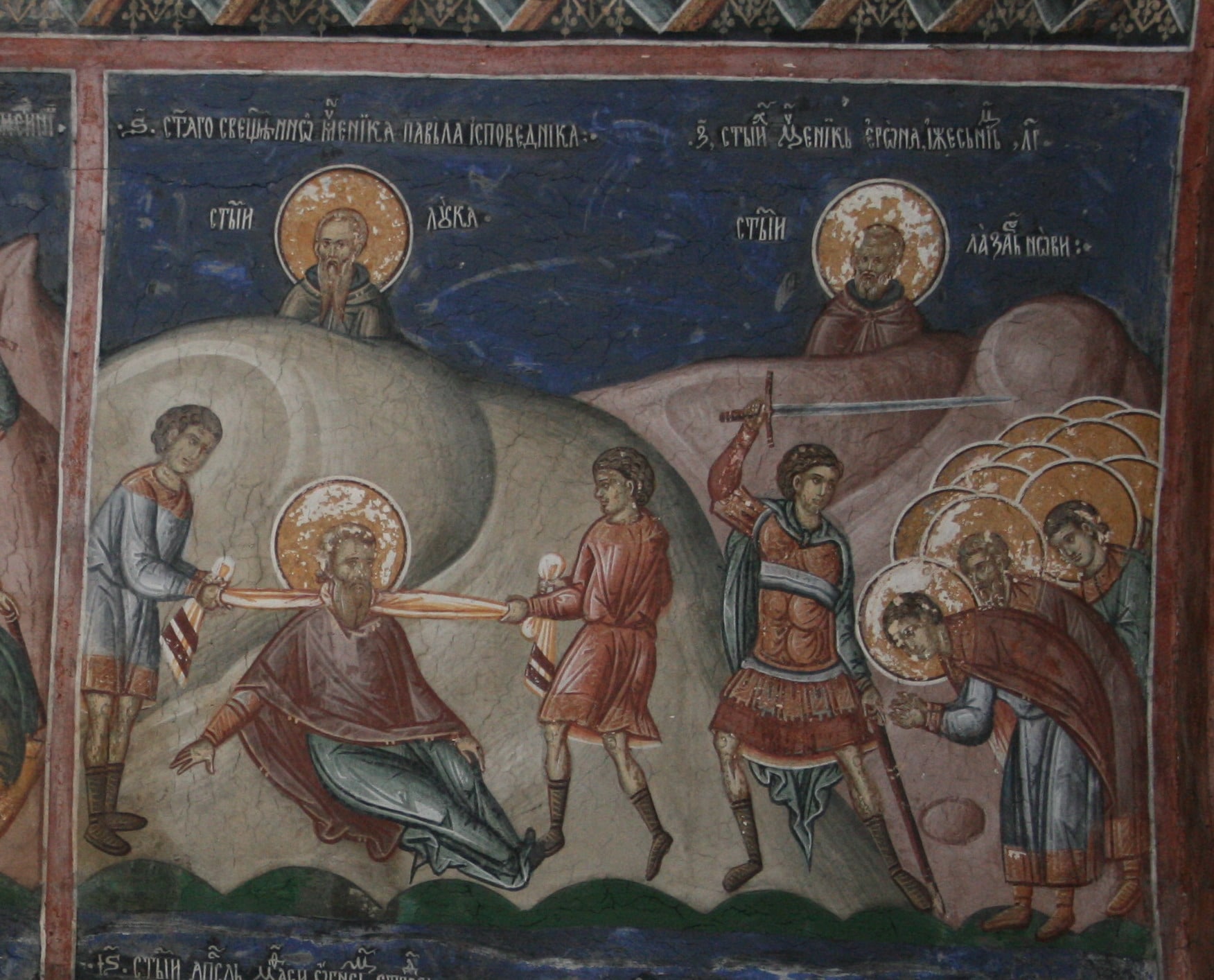
The 33 martyrs of Melitene: saints Hiero, Nicander, Hesychius, Athanasius, Marnas, Barachus, Valerius, Saint Lazarus, ascetic on Mount Galese, miracle worker (1054); Saints Auctus and Taurion and Saint Thessalonica, martyrs in Macedonia; Saint Zosima, igumen of Vorbozomsk; Saint Amarant, martyr in Albi (3rd century); Saint Ruf, bishop of Metz (4th century); Saint Baudin, bishop of Tours (6th century); Saint Agmer, bishop of Senlis (7th century); Saint Florent, bishop of Strasbourg (around 660); saint Willibrord, archbishop of Utrecht (739); holy neo-martyrs of Russia: Cyril, Metropolitan of Kazan, Alexander (Kourmychsky), Michael (Goussev), Alexander (Krylov), Nicholas (Romanovsky), Alexei (Moltchanov), Paul (Borissoglebsky), Basil (Krasnov), Paulin (Staropolev), priests, John (Mochkov) and Benjamin (Vladimirsky), deacons, Nicholas (Philipov), Elizabeth (Sidirov) (1937), Serge, archbishop of Yeletsk, Nicholas (Troitsky), priest and George (Yourneve) (1937).
Saint Hiero was from Tyana (Cappadocia). He lived simply and peacefully from working the fields under the tyrannical reign of Diocletian and Maximian (around 290). Not content with persecuting Christians, these two despots had all able-bodied and vigorous men recruited into their army by force, to make them serve their thirst for conquest. Hieron was renowned throughout the Cappadocia region for his strength and valor, which is why the governor Lysias decided to enlist him in his troops. He sent two soldiers to arrest him one day when he was working in the fields. Upon seeing them, Hiero immediately understood the reason for their coming, and that enlisting did not only mean facing the risks of military life, but above all that it would force him to deny his faith in Christ to sacrifice to the emperor, considered a god by the Romans. Grabbing his spade by the handle, he rushed at the soldiers and put them to flight, causing them serious injuries. They returned a little later with reinforcements and found the saint taking refuge in a cave with eighteen relatives and friends. To avoid a bloody fight, Hiero agreed, at the urging of his brother Cyriacus, to surrender himself to the soldiers and be taken to the governor at Melitene.