November 26translated
Lent of the Nativity Saint Alype, stylite in Adrianople (7th century); Saint Amateur, bishop of Autun, (3rd century) Saint Jacques, hermit in Syria (457); Saint Stylian of Paphiagonia (5th-6th century);
Saint Alype, stylite in Adrianople (7th century); Saint Amateur, bishop of Autun, (3rd century) Saint Jacques, hermit in Syria (457); Saint Stylian of Paphiagonia (5th-6th century); Saint Acacius, monk of Sinai (VI); Saint Basle, hermit in Verzy (620) Saint Nicon the Metanoite, (around 1000); Saint Innocent, Bishop of Irkutsk (1731); commemoration of the dedication of the Church of Saint George in kyiv (1051); Saint George of Chios, neo-martyr (1807); saints neo-martyrs of Russia: Nicholas (Zamareev), John (Vinogradov), George (Kolokolov), Nazaire (Gribkov), Basil (Agafonikov), Basil (Kolosov), Elijah (Zatchateïsky), Basil (Stoudnitsyn), Daniel (Meshchaninov), Michael (Zelentsovsky), priests, Tikhon (Bouzov), monk (1937), Peter (Tsarakine) (after 1937).
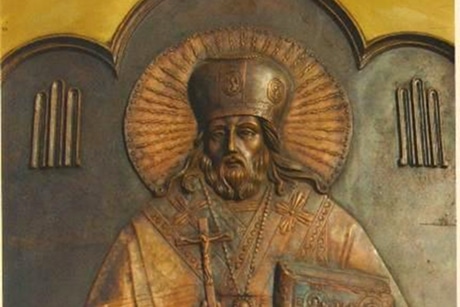
The 18th century was the time of the spiritual birth of Siberia, due to the great hierarchs glorified by the Church: John of Tobolsk (†1715), Innocent of Irkutsk († 1731), Sophronius of Irkutsk († 1771) and Paul of Tobolsk († 1770). Thanks to the spiritual zeal and the continual labors of these hierarchs, but also of the righteous and ascetics of Siberia who remained unknown, the light of the faith of Christ shone upon the immensities of the Siberian land. St. Innocent of Irkutsk was born in the Chernigov province in 1680 and received his training at the ecclesiastical academy in kyiv, which he completed in 1706. Shortly after, the future hierarch took monastic vows and was ordained a priest, then taught at the Moscow Academy. At that time, the Holy Synod having decided to send a bishop to Beijing, it was Father Innocent who was chosen to accomplish this mission. He was therefore consecrated bishop “to preach the word of God and spread Eastern Orthodox piety in the Chinese state, where there has been no bishop until now.” However, the Chinese authorities opposed the entry of Mgr Innocent into China. Indeed, the letter from the Russian Senate to the said authorities mentioned that the bishop concerned “was a religious personality”, giving him the title of “great lord”. However, the Chinese objected to this that, in the entire world, only the Emperor of China was entitled to the title of "great lord" and that, consequently, there could not be another... This is how the hierarch remained in Selenginsk, a small town located near the Chinese border, for three years, awaiting a possible change of heart from the authorities. No longer receiving remuneration from the Russian authorities, the hierarch and his entourage lived on donations and fishing, or even working with peasants in the region. Throughout this difficult period, the saint found consolation in the Divine office, but he also took advantage of this time to learn the Mongolian language and began to preach Christianity to pagan peoples. In 1727, the Holy Synod of the Russian Church appointed him bishop of Irkutsk, where he worked extensively for the conversion of the Buryats, Yakuts and Tunguss. Towards them, the hierarch showed great gentleness and delicacy. Shortly before his death, he met the Mongolian sage Lasan, very well known at that time, who, following his discussions with the saint, received baptism and became a preacher of Christianity. But it was not only the pagans who needed the saint's preaching, but also the Orthodox Russians who had drifted away from the faith due to the lack of churches in this vast land. Also, St Innocent made all his efforts to have churches built. Unfortunately, the harsh Siberian climate seriously damaged the saint's health. In the fall of 1731 he fell ill and stopped celebrating. On November 27 of the same year, he rested peacefully in the Lord, at the age of 51. HAS