November 20 is the day of remembrance of the 13 Nizhny Novgorod new martyrs and confessorstranslated
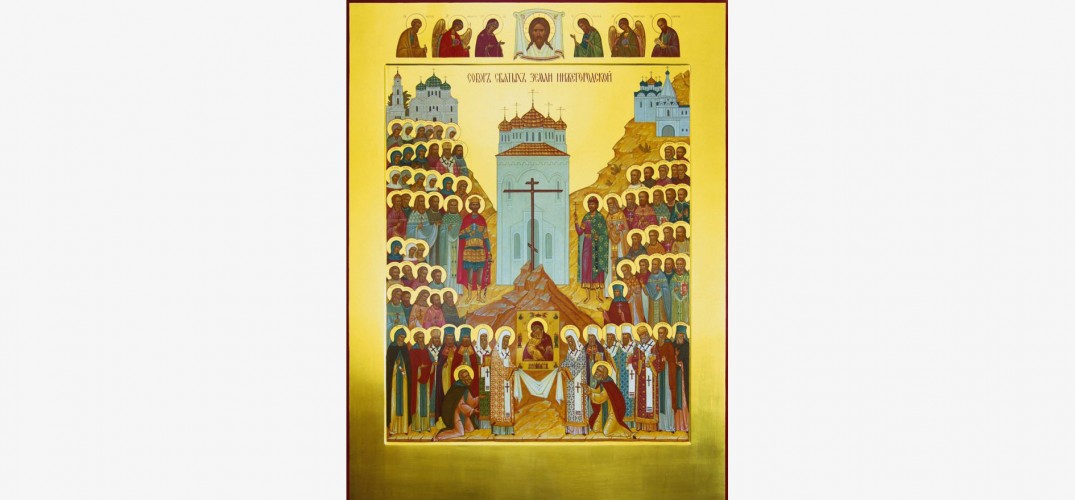
On November 20, the Russian Orthodox Church honors the memory of the 13 new martyrs who served in Nizhny Novgorod. These are the holy martyrs Mikhail Gusev, Mikhail Adamontov, Alexander Ilyinsky, Alexander Kurmyshsky, Pavlin Staropolev, Nikolai Troitsky, Alexander Krylov, Pavel Borisoglebsky, Alekei Molchanov, Ioann Moshkov, Veniamin Vladimirsky, martyrs Nikolai Filippov and Elisaveta Sidorova.
Mikhail Gusev was born on October 25, 1890 in the family of the priest of the Seraphim-Diveevsky Monastery, John Gusev. In 1913 he was ordained a priest and assigned to the Seraphim-Diveevsky Monastery. In 1927 the monastery was closed. On the Feast of the Nativity of the Blessed Virgin Mary, the policeman forbade the sisters from calling for the all-night vigil. Father Mikhail was preparing for service at this time. He left the church to find out why they were not preaching the gospel, and was immediately arrested. Two weeks later, Father Mikhail was released. Soon he was appointed rector of the Church of St. Nicholas in Kulebaki. According to the recollections of those who knew him, the priest was distinguished by his kindness, justice, enjoyed the love and respect of parishioners and neighbors, helped the sisters of the devastated Diveyevo monastery, and also did not forget the children of those arrested.
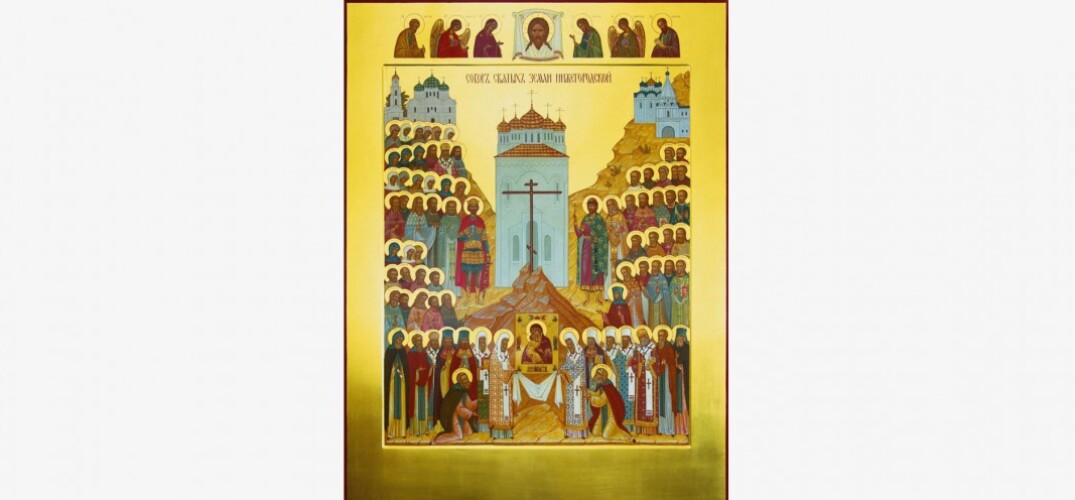
On the eve of the arrest, Father Mikhail was twice summoned to the NKVD, offering to renounce his rank. The priest was arrested on August 31, 1937, he was 47 years old. He left a note for his wife with the words: “Don’t cry, don’t complain-the time will come. The words of the Savior have come true for us...”
Father Mikhail was accused of organizing a counter-revolutionary church-fascist group in the Kulebaki district, leading and recruiting new members into it, and conducting “religious propaganda aimed at disrupting the ongoing activities of the party and government.” During the investigation, Father Mikhail was demanded to admit guilt and presented with “evidence”: a whole series of “testimonies of accomplices.” The investigator’s attempts were unsuccessful - the priest behaved stoically and categorically rejected the accusations: “I have nothing to confess.”
By the decision of the NKVD troika in the Gorky region on November 11, 1937, the priest was sentenced to death with confiscation of property (even a child’s bicycle was confiscated).
Archpriest Mikhail Gusev was shot on November 20, on the eve of the day of his Angel - the Council of the Archangel Michael and other ethereal Heavenly Powers. In 2001, priest Mikhail Gusev was included in the Council of New Martyrs and Confessors of Russia.
Hieromartyr Mikhail Petrovich Adamontov
Mikhail Adamontov was born on August 31, 1892 in the village of Shishkoverd, Vasilsursky district, Nizhny Novgorod province. His father served almost his entire life as a psalm-reader in the Baptist Church in the village of Shikoverdi. The family lived poorly, but deeply religious parents raised all their children in faith and piety. In 1913, Mikhail Adamantov completed a full course of study at the Nizhny Novgorod Theological Seminary and soon married the daughter of a priest.
On February 15, 1914, he was appointed rector of the church in honor of the Nativity of the Blessed Virgin Mary in the village of Borisovka, Vasilsursky district. Despite his youth, he enjoyed great authority among the peasants, and many of the parishioners came to his house for advice.
In the 1930s, Father Mikhail began serving as rector of the Nativity Church in the village of Berendeyevka, Lyskovsky district.
The priest was arrested on September 15, 1937 as an active participant in a church-fascist sabotage and terrorist organization. During the search in his house, they were looking for counter-revolutionary literature and weapons. When asked to hand them over, Father Mikhail replied that he did not have such things in his house and that his weapon was the word of God. NKVD officers were able to confiscate only liturgical books.
On November 11, 1937, Father Mikhail was sentenced to death. He was shot on November 20, 1937 and buried in a common unknown grave at the Gorky NKVD training ground.
Hieromartyrs Alexander Ilyinsky, Alexander Kurmyshsky, Pavlin Staropolev and Nikolai Troitsky
On the night of October 20-21, 1937, the priests of the Perevozsky district of the Gorky region were arrested. The investigation lasted less than a month and on November 11 everyone was sentenced to capital punishment and executed. On November 20, the Church celebrates the memory of four of them: Alexander Ilyinsky, Alexander Kurmyshsky, Pavlin Staropolev and Nikolai Troitsky.
Hieromartyr Alexander Ilyinsky was born on October 22, 1899 in the village of Pustyn, Arzamas district, Nizhny Novgorod province, into the family of a priest. Before the revolution, he managed to complete only two classes at the Nizhny Novgorod Theological Seminary. Alexander Ilyinsky accepted the priesthood after 1918. In the 1930s, he was the rector of the Znamenskaya Church in the village of Bolshiye Kemary. On the night of October 20-21, 1937, the priest was arrested along with a group of clergy from the Perevozsky region. Priest Alexander Ilyinsky, like others arrested, was charged with participation in a counter-revolutionary sabotage-insurgent and terrorist organization under the leadership of Metropolitan Feofan (Tulyakov). The investigator claimed that, based on the testimony of other accused and witnesses, Father Alexander allegedly repeatedly received anti-Soviet assignments directly from Metropolitan Feofan, as well as the dean. Father Alexander denied all these accusations during interrogation.
Hieromartyr Alexander Kurmyshsky was born on January 23, 1879 in the city of Simbirsk in the family of priest Mikhail Kurmyshsky. After completing the full course at the Simbirsk Theological Seminary, Alexander Kurmyshsky taught for many years. In 1917, he accepted the priesthood, but where and when this happened is unknown. In the 1930s, Father Alexander served in the Assumption Church in the village of Tanaykovo, Perevozsky district. In 1935, he was sentenced to five years in the camps by the Perevozsky District People's Court for non-payment of taxes, but was subsequently acquitted by the Gorky Regional Court at the request of parishioners. On October 20, 1937, the priest was arrested a second time as a member of a fascist church, sabotage and terrorist organization and was detained in Perevozskaya prison, and then was sent to Gorky prison. During the only interrogation, on October 22, 1937, Father Alexander categorically denied all the charges brought against him.
Hieromartyr Archpriest Pavlin Staropolev was born on January 31, 1865 in the village of Bykovye Gory, Vasilsursky district, Nizhny Novgorod province, where his father served as a psalm-reader at that time. Having received his education at the Lyskovsky Theological School, on November 26, 1884, he was assigned to perform the duties of a psalm-reader in the village of Velikovskoye, Makaryevsky district. Three years later, on August 23, 1887, he was ordained to the surplice, and on April 29, 1890, he was ordained to the rank of deacon with a further appointment to the village of Zaserezhye Pustyn, Gorbatovsky district. After serving in this parish for nine years, Deacon Pavlin Staropolev was moved to the village of Shatki, Arzamas district. Five years later, in 1904, he was transferred to serve in the Arzamas Cathedral. And a year later, at the age of 40, he was ordained a priest in the church of the village of Devichye Gory, Lukoyanovsky district. In 1909, an appointment followed to a new parish, in the village of Bolshiye Mozharki, Sergach district, and a year later - to a parish in the village of Berezniki, Sergach district.
Priest Pavlin Staropolev served in the Berezniki parish for only three years; on January 9, 1913, he was again moved to the Trinity Church in the village of Kirmany, Arzamas district. Beginning in 1930, Father Pavlin, already having the rank of archpriest, served as rector in the Nativity Church in the village of Dubskoye, Perevozsky district.
On the night of October 20-21, 1937, all the clergy of the Perevozsky region were arrested. Among them was 72-year-old Father Pavlin, as well as his son-in-law, priest Alexander Tsvetkov, who served in the neighboring village of Buturlino. From the indictment presented to Father Pavlin, it follows that in previous years he was brought to trial by the NKVD for counter-revolutionary activities. He was arrested the first time in 1928, and the second time in 1934, when for two months the priest was under investigation in the Buturlinsky NKVD, but after the parishioners paid a fine, he was acquitted. The investigation in 1937 lasted less than a month; during interrogations, Father Pavlin rejected all the charges brought against him and pleaded not guilty.
Hieromartyr Nikolai Troitsky was born on November 14, 1885 in the village of Lobaski, Lukoyanovsky district, Nizhny Novgorod province, into the family of a priest. Nicholas's grandfather and great-grandfather were also clergy. After finishing three classes at the parochial school, Nikolai’s father enrolled him in the Pochinkovsky district theological school, where he studied for four years. In 1903 he entered the Nizhny Novgorod Seminary, but the very next year, at his own request, he was dismissed from it. Seminarian Nikolai Troitsky had two reasons for taking this step: lack of funds in the family and a general decline in society’s interest in theological school, the call of the intelligentsia to be closer to the Orthodox people, sharing their fate.
On October 20, 1904, Nikolai Troitsky was assigned to the position of psalm-reader in the village of Holostoy Maidan, Arzamas district, and on February 6, 1908, as a psalm-reader in the Holy Trinity Church in the village of Isakovo, Vasilievsky district. On November 1, 1910, he was ordained to the rank of deacon with the appointment to serve in the village of Borisovo Pole. In November 1912, the young deacon was transferred to serve in the Church of the Exaltation of the Cross in the village of Bydreevka, Semenovsky district. Starting on June 18, 1913, he began to serve in a new parish - in the Church of the Nativity of Christ in the village of Vershinino, Vasilsursky district. After the revolutionary events of 1917, the family of Deacon Nikolai Troitsky moved to the city of Arzamas. In February 1920, the chair of Bishop of Arzamas was established in the Nizhny Novgorod diocese, to which a participant in the All-Russian Church Council of 1918, widowed Archpriest Mikhail Kudryavtsev, was appointed. Despite the atheistic policy of the authorities, Bishop Mikhail managed to organize and establish church life in Arzamas as an autonomous diocese.
In 1923, Deacon Nikolai Troitsky was ordained as a priest by Bishop Mikhail and appointed rector of the Arzamas Vladimir (Zosimov) Church, where he had previously served as a deacon. In accordance with the new Soviet legislation, the priest, along with direct pastoral responsibilities, also had to deal with issues of preserving his church and community. Back in the summer of 1918, a department for the separation of Church and state was created in Arzamas, which was to quickly describe the property of all parish churches and monastery churches in the district. In the city alone there were 28 churches and 3 chapels. Subsequently, after receiving detailed information about church valuables and shrines, in 1922, here, as throughout the country, a tragic campaign to confiscate them unfolded.
In 1923, Father Nikolai, as the rector of the church, had to register his parish and prevent its closure under the pretext that there were enough other churches in Arzamas. In addition, the renovationist movement initially became widespread in Arzamas, and the priest tried not to allow local renovationists to seize the church. In this he was assisted in every possible way by the parishioners, who fell in love with their new shepherd. In June 1928, a campaign to liquidate parishes began. Despite the decree of local authorities, the priest continued to serve in his parish for another six months, although he realized that at any moment this could serve as a reason for his arrest and persecution of his family. The actual liquidation of seven parishes in Arzamas occurred only after the resolution of the All-Russian Central Executive Committee was issued in Moscow on January 21, 1929. In the spring of the same year, a special commission began to operate in Arzamas to inspect church buildings subject to closure and to sell church property, which completed its activities only in November.
According to the decision of this commission, the building of the Vladimir (Zosimov) Church should have been dismantled into bricks, and the iconostasis, which was of significant artistic and historical value, the commission members decided to dismantle and send to museum collections in Moscow. All these events took place in the presence of Father Nikolai, who, after the closure of the church, was practically left without a parish, since in the Nativity Church, where his parishioners were assigned, there were no priestly vacancies; other pastors continued to serve there. Beginning on January 28, 1929, priest Nikolai Troitsky began to serve in a new parish, in the village of Revezen, Perevozsky district. Seeing the aggressive attitude of the Soviet authorities towards the Church, Father Nikolai and his wife were very worried about the present and future of their children. Elizaveta Ivanovna sometimes tried to persuade her husband to leave the service of a shepherd and, like other clergy, start a different life, which in the future could save them from persecution and repression. The priest answered his children and wife: “I cannot do this.
This is not only our fate, but the fate of the Church, the Orthodox society, and parishioners. To quit service means to betray the Church, the people who believe and believe in the Church.” Father Nikolai’s ministry in the Sretenskaya Church in the village of Revezen lasted for nine years, but here, too, the persecution of the priest continued and intensified. Every sermon or word from a village pastor could result in arrest if denounced. Under these conditions, the priest remained unbroken, not embittered, a comforter for everyone who communicated with him, which quickly won the love and trust of his new parishioners. On January 14, 1930, he was arrested on suspicion of agitation against atheists and sent to Arzamas prison. Having learned about the arrest of their shepherd, the residents came out in his defense, refuting all the charges brought against him, and four days later Father Nikolai was released, and the case on this charge was dropped. On the night of October 20-21, 1937, there were arrests
On November 11, 1937, the NKVD troika sentenced priests Alexander Ilyinsky, Alexander Kurmyshsky, Pavlin Staropolev and Nikolai Troitsky to death. They were shot on November 20, 1937 and buried in a common unknown grave.
Hieromartyrs Alexander Krylov and Pavel Borisoglebsky
Hieromartyr Alexander Krylov was born in 1879 in the village of Vargany, Makaryevsky district, into the family of a psalm-reader. In 1897, Alexander Krylov dropped out of the first year of the Nizhny Novgorod Theological Seminary and then taught for five years. On August 29, 1902, he was ordained to the rank of deacon with an appointment to the parish in the village of Vershinino, Vasilsursky district. The deacon served in the Nativity Church in the village of Vershinin until the revolution. Since 1926, Father Alexander began to serve as a priest in the Transfiguration Church in the village of Lyapuny, Lyskovsky district. In 1931, he was sentenced for anti-Soviet agitation to two years of forced labor with confiscation of property, but then the priest was acquitted. In 1935 he was arrested again. Father Alexander Krylov was under arrest in Gorky prison for a month. On September 17, 1937, he was arrested by officers of the Lyskovsky NKVD on the basis of false testimony obtained under torture from other arrested clergy.
Based on false testimony, priest Alexander Krylov was accused of allegedly participating in the burning of twenty houses and stacks of straw in the village of Lyapuny, a collective farm yard in the village of Uvarovo and a mill in the village of Gugino. All the troubles and losses of the local collective farm were presented as counter-revolutionary activities of the churchmen. In addition, the priest was accused of preparing terrorist acts against regional Soviet leaders, and his house was a safe house in which illegal meetings were held.
Priest Pavel Borisoglebsky was arrested in connection with the same case. He was born on August 22, 1874 in the district town of Vasilsursk, Nizhny Novgorod province, into the family of a priest. In 1893, Pavel Borisoglebsky dropped out of the third class of the Nizhny Novgorod Theological Seminary. Subsequently, from 1895 to 1898, he was a teacher in various parochial schools in the Balakhninsky and Makaryevsky districts of the Nizhny Novgorod diocese. On October 28, 1898, he was ordained a priest and appointed rector of the Assumption Church in the village of Gorshkov, Semenovsky district. In 1900, the priest was transferred to the position of rector of the Vozdvizhensky Church in the village of Lubyantsy, Knyagininsky district, where he served for eight and a half years, while simultaneously acting as a teacher of the law at the local zemstvo school. On September 9, 1908, Father Pavel was moved to a new parish, to the Transfiguration Church in the village of Lyapuny, Makaryevsky district. On January 17, 1918, according to his own request, he was transferred to the priestly place at the Trinity Church in the village of Sosnovki, Vasilsursky district.
Father Pavel served in this parish until 1924. After 1925, Archpriest Pavel Borisoglebsky became a priest in the village of Fokino. In 1928, he was arrested on charges of anti-Soviet activities. He was under arrest in Nizhny Novgorod prison for two and a half months. By the decision of the OGPU troika, on charges of counter-revolutionary activities, he was sentenced to three years of exile in the Zyryansky region (city of Syktyvkar). After serving his term of exile in 1931, the priest returned to the Nizhny Novgorod diocese and continued to carry out difficult pastoral service, but in another parish - in the Church of the Intercession of the Blessed Virgin Mary in the village of Plotinskoye, Lyskovsky district.
On July 24, 1937, 63-year-old Archpriest Pavel Borisoglebsky was arrested on charges of “participation in a church-fascist sabotage-terrorist organization, and that he carried out active anti-Soviet agitation among the population for secession from collective farms, spread counter-revolutionary slander against the leaders of the CPSU (b) and the Soviet government, spread fictitious rumors about famine in Soviet Union, about the imminent war and the death of Soviet power." During the investigation, which lasted several months, Father Pavel denied all the charges brought against him and did not admit guilt.
On November 11, 1937, the NKVD troika sentenced the priests to death. On November 20, 1937, Priest Alexander Krylov and Archpriest Pavel Borisoglebsky were shot.
Hieromartyrs John Moshkov, Veniamin Vladimirsky, Alexey Molchanov, martyr Elisaveta Sidorova
On September 15, 1937, Deacon Ioann Moshkov, born in 1885, who served in the village of Isady, Lyskovsky District, Nizhny Novgorod Region, and Deacon Veniamin Vladimirsky, born in 1892, who served in the village of Prosek, Lyskovsky District, were arrested. On September 13, in the village of Ivanovskoye, Lyskovsky district, a 62-year-old believer, Elizaveta Sidorova, was arrested. The investigator had no evidence of their guilt. Despite the torture, those arrested steadfastly resisted the slander. They were sentenced to death and executed. In the same case, the priest of the village of Valki, Lyskovsky district, Alexey Molchanov, who did not sign a false witness, was arrested.
Hieromartyr John Moshkov was born on September 25, 1885 in the village of Bogorodskoye, Sergach district, Nizhny Novgorod province, into the family of a shoemaker. He graduated from a rural school. After 1917, he served as a psalm-reader in the St. Nicholas Church in the village of Isady, now the Lyskovsky district of the Nizhny Novgorod region. In 1914 he was drafted into the army and sent to the front. During the First World War, Ioann Moshkov was captured, but then safely returned to his homeland, got married and again began to serve as a psalm-reader in the Isadic church. It is not known exactly when psalmist John Moshkov accepted the rank of deacon; most likely, this happened already in the late 1920s. In 1930, local authorities accused Father John of anti-Soviet agitation and speaking out against collective farms. This was followed by his arrest, but after the intervention of parishioners, he was released and continued to serve in the church. On September 15, 1937, Deacon Ioann Moshkov was again arrested by officers of the district Lyskovsky branch of the NKVD.
During the investigation, which lasted several months, Father John, who was accused of participating in a fascist church organization, refused to give false testimony against himself and other accused clergy.