November 18translated
Lent of the Nativity Saint Plato, martyr at Ancyra (around 306); Saints Roman, deacon, and Barul, child, martyrs in Antioch (303); Saint Zacchaeus, deacon, and Alpheus, reader, martyrs Source
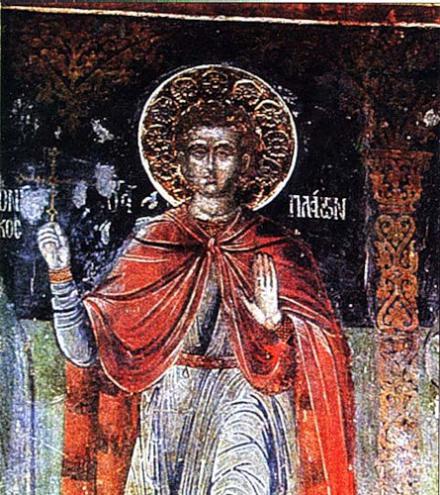
Saint Plato, martyr at Ancyra (around 306); Saints Roman, deacon, and Barul, child, martyrs in Antioch (303); Saint Zacchaeus, deacon, and Alpheus, reader, martyrs at Gadara in Palestine (303); Saint Nazaire, abbot of Lérins (450); Saint Patroclus, hermit in Berry (around 576); Saint Chaffre, abbot and martyr in the diocese of Puy in Auvergne (c. 630); Saint Aude, virgin in Paris (6th century); Saint Romphaire, bishop of Coutances (6th century); Saint Amand, abbot of Lérins (708); Saint Maudez, hermit in Brittany (6th century); Saint Helena neo-martyr Anastasius of Epirus (1750); Saint Tikhon, Patriarch of Moscow (day of his patriarchal election in 1917); Saint Nicholas (Vinogradov), confessor, priest (1948).
Living in Ancyra, Galatia, during the reign of Emperor Diocletian (c. 304), Saint Plato was the brother of the holy martyr Antiochus [Jul 16]. As he publicly confessed Christ and encouraged Christians to remain firm in their faith despite persecution, he was arrested and brought before the governor Agripinus. Unshakeable in his convictions despite his young age, he was first beaten by twelve soldiers, then stretched out on a bed of burning bronze. His flesh was then torn by all kinds of torture. In the midst of torments, the holy martyr raised his prayer to God, to which the angelic Powers responded: “Amen! » Noticing that the Church of heaven thus assisted the holy athlete of Christ in his battles, a large number of pagans then embraced the faith. The magistrate made him new proposals, to which Plato replied: “My life is Christ, and to die for Him is gain for me” (Phil 1, 21). After further torture, he was beheaded and left to join the assembly of saints.