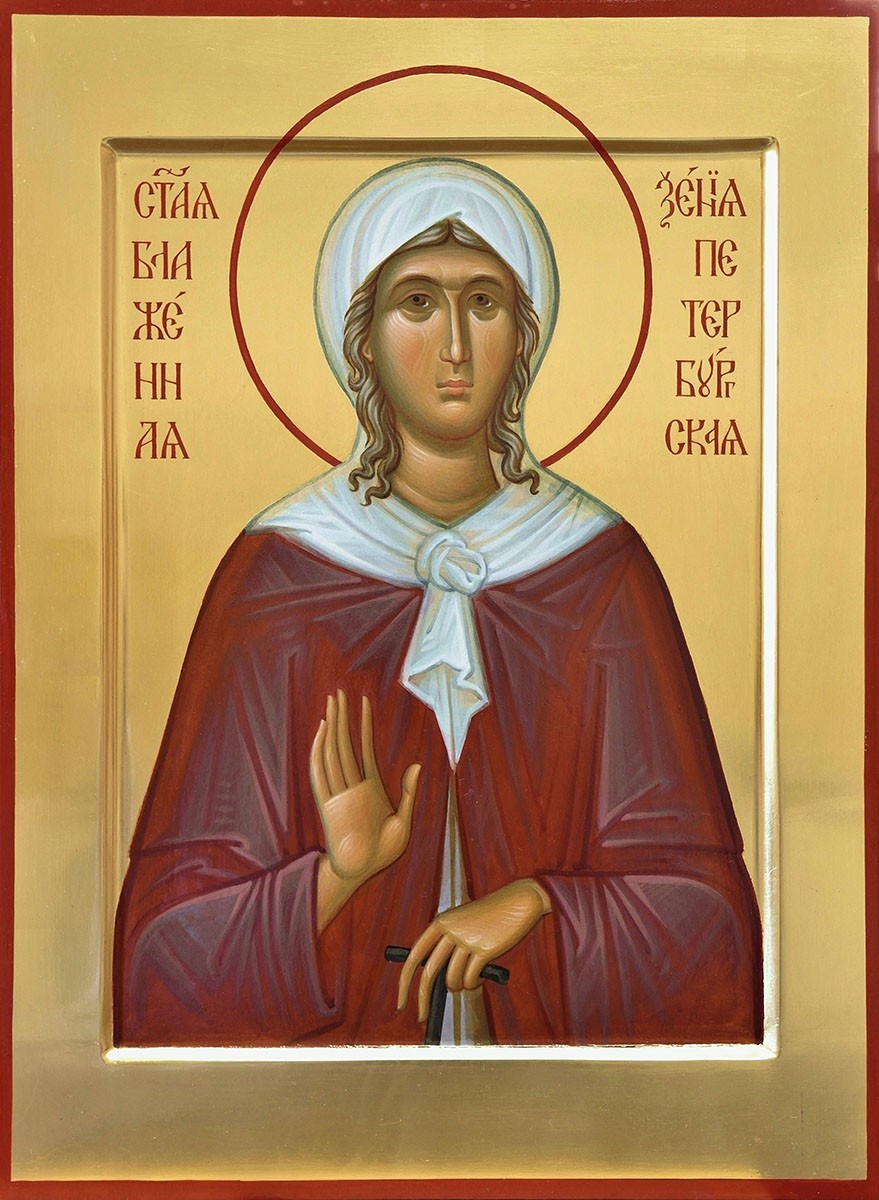
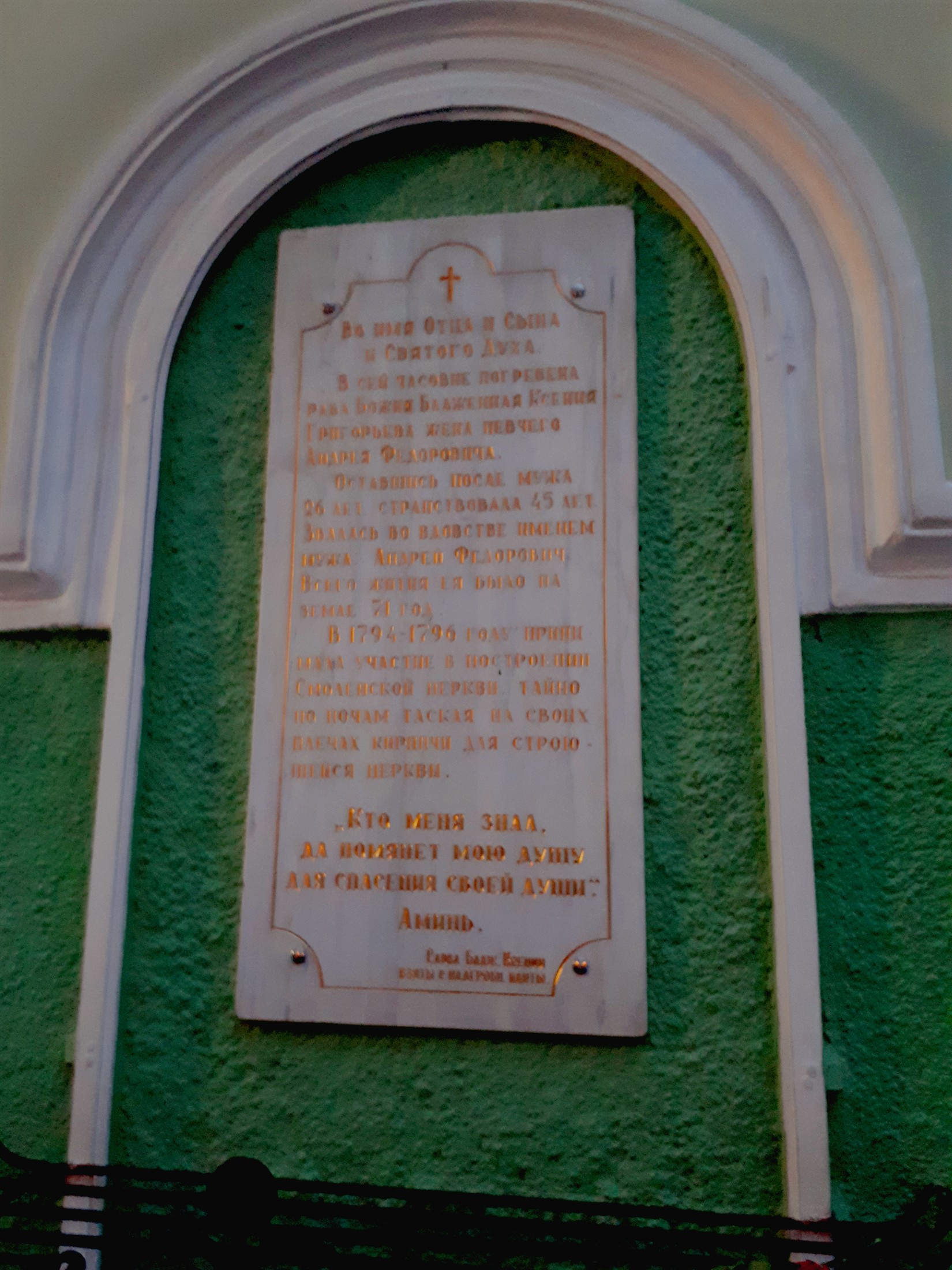
Of what rank I was born I cannot say — I do not know myself. I think my father, Gregory, was a man of no mean station, for when I, Xenia Grigorievna, came of age I was given in marriage to Colonel Andrew Feodorovich Petrov, who served as a singer in the court choir.
For but a short while were my husband and I permitted to enjoy marital happiness. Soon Andrew Feodorovich died, and I was left a widow when I was only twenty-six years of age. The blow was so heavy that I nearly lost my reason. But, casting my sorrow upon the Lord, I gave myself wholly to prayer and in it alone sought solace and comfort.
Having given away all my property to the poor, I began to practice folly for Christ’s sake. And from that time I say to everyone: there is no longer any Aksinia Grigorievna in the world — she has died, but I am Andrew Feodorovich; my husband has not died, but has only been transformed into me, yet in essence he has remained the same Andrew Feodorovich. I no longer answer to my former name and I become angry when I am called Aksinia: «Do not touch the departed one, what has she done to you, may the Lord forgive!»… But when I am called Andrew Feodorovich I answer: «Yes!»

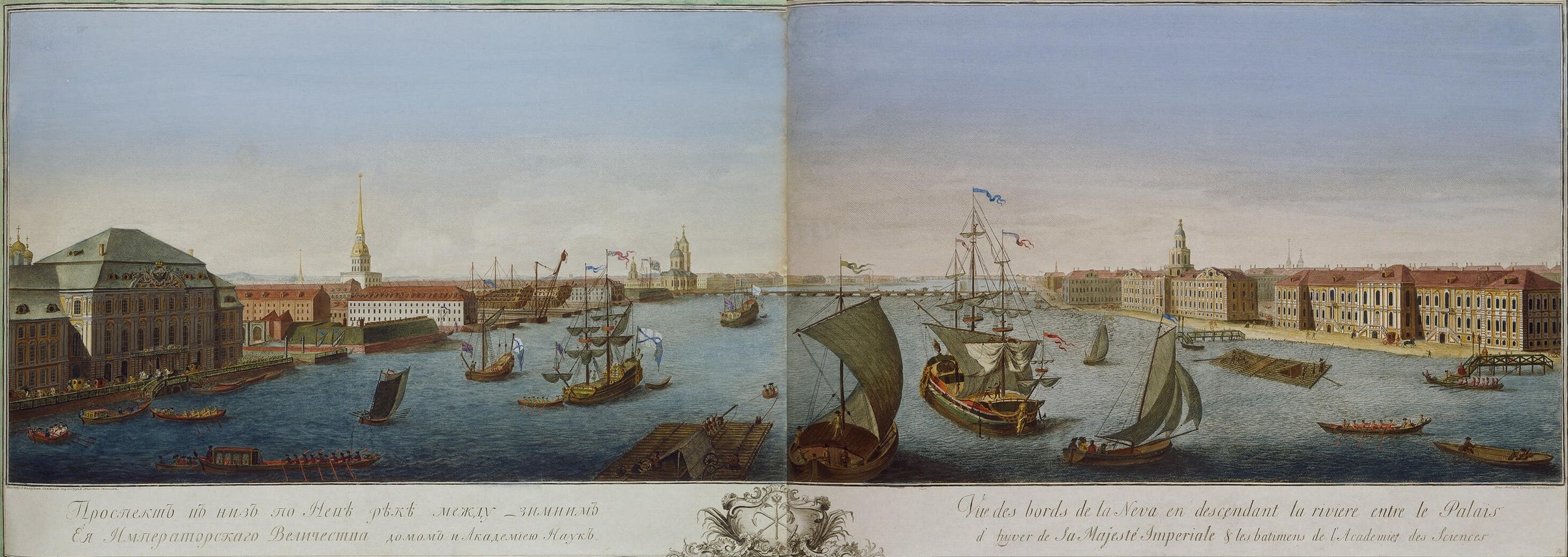
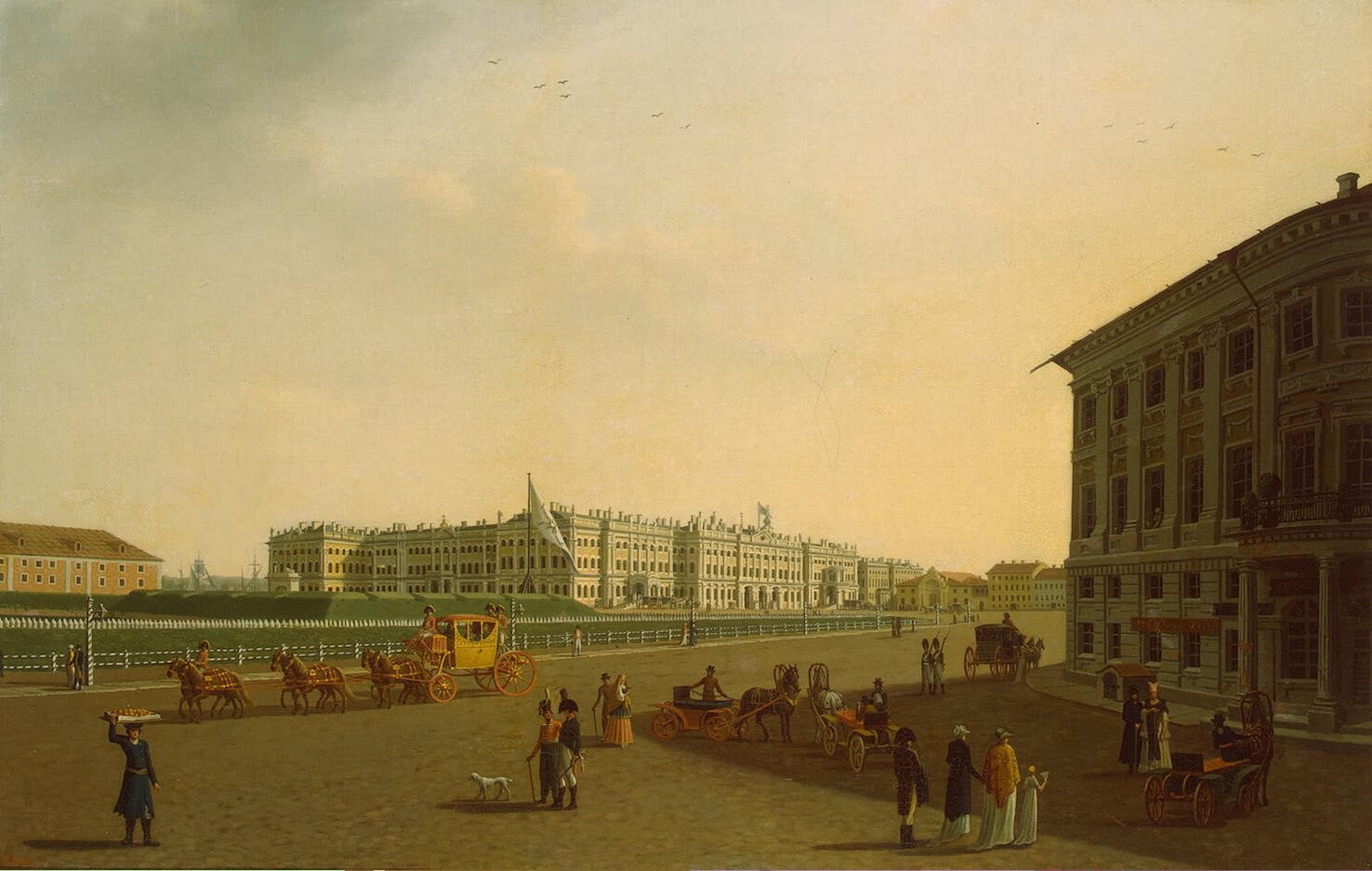
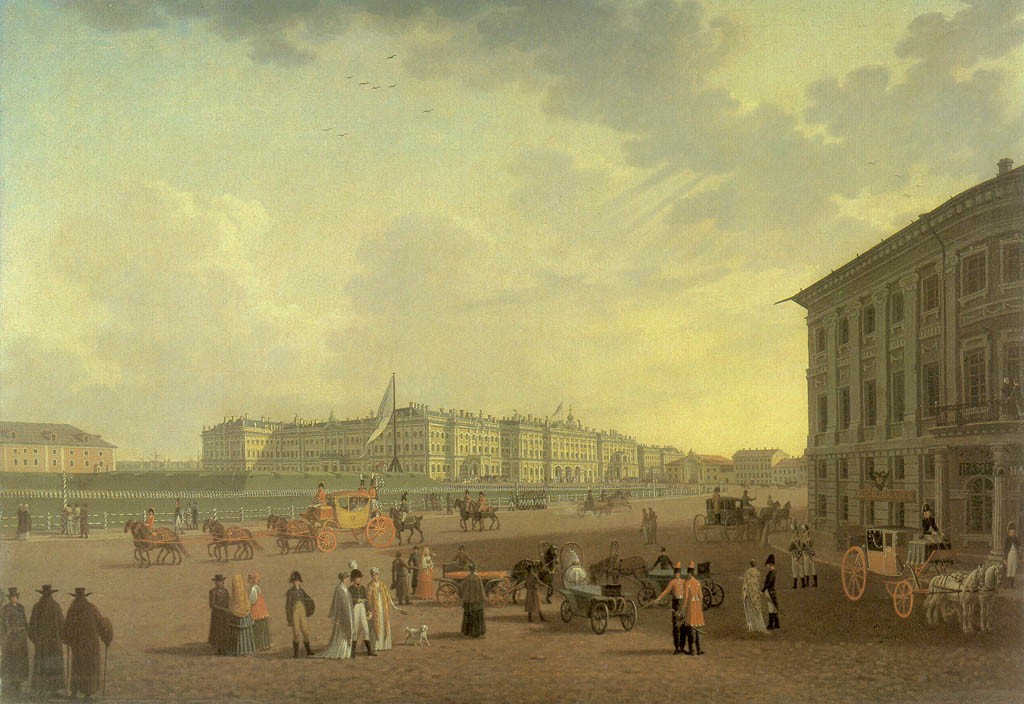
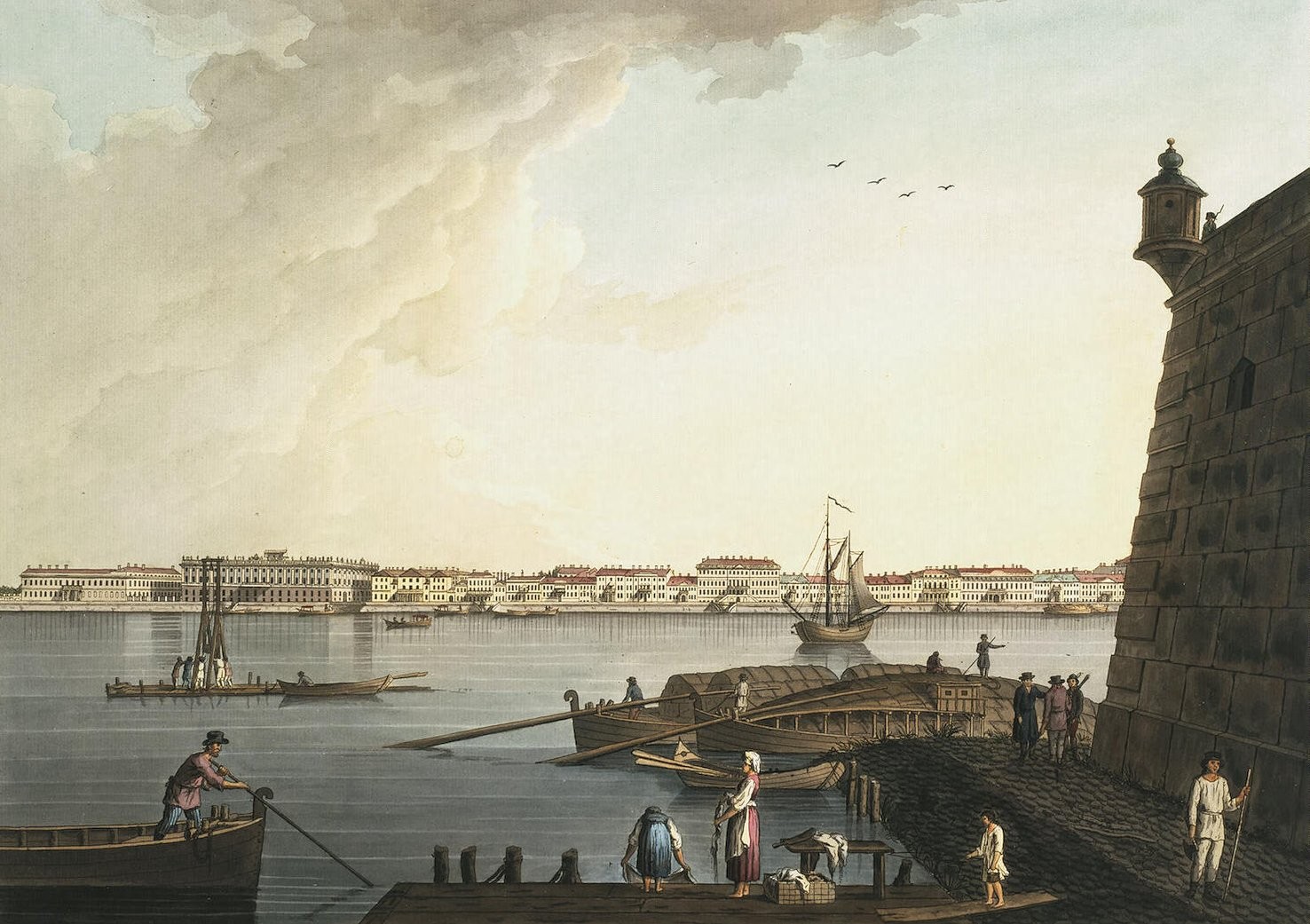
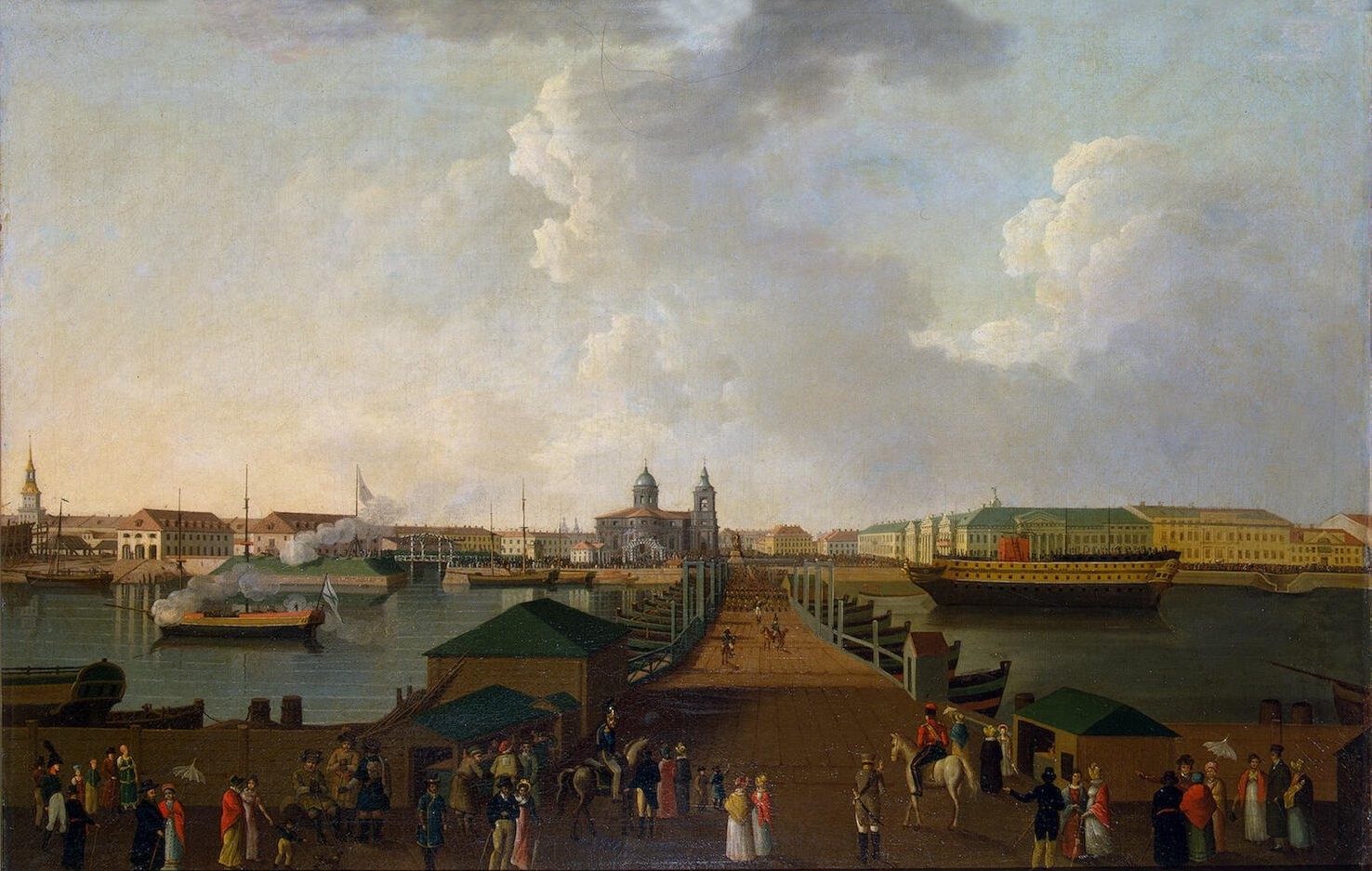
My favourite place became the Petersburg Side, and my favourite houses, which I visited most often, were the homes of Evdokia Denisovna Gaidukova and her own sister Pelagia Denisovna, who was married to the artist Nicholas Gavrilovich Cherepanov, a collegiate councillor.
Having many acquaintances, mostly from the merchant class, I often came to them begging alms and would take nothing more than a «tsar on horseback» — that is what I called the old kopecks on which was depicted a horseman on a horse. «Give me a tsar on horseback», I would always say in a touching voice, take the kopeck and depart.
Some called me mad, others a leper or a fool-for-Christ, and still others a prophetess, because I would foretell happiness or misfortune for the house I entered, although I very rarely and unwillingly uttered my prophetic words. At night I would go out into the field to pray to God and would pray for several hours, making full prostrations to the ground in all four directions. My nightly absences at first aroused suspicion among distrustful people, and even the police began to watch me, but they soon became convinced that I truly went into the field to pray to God.
My predictions did not always contain any hidden meaning, but sometimes served only as confirmation that I was truly endowed with the gift of foretelling. Thus, arriving somewhere, I would suddenly demand that they give me a fish pie, and when they deliberately answered that no such pie had been baked that day, I would say with confidence: «No, it was baked, but you do not want to give it to me». Then they would serve me such a pie, because it had indeed been baked.
And sometimes I would foretell something bad, but not directly, only indirectly, by hints, as if I did not wish to trouble the one with whom I spoke. Thus, having once visited the house of the merchant’s wife Krapivina and while leaving it, I looked at the windows of the house and said: «The nettle is green, but it will soon wither». Krapivina soon afterwards died.

After the death of my husband I put on his undergarments, camisole, kaftan and indeed all the clothing of the departed, and, abandoning my home, I wandered about the muddy streets of what was then the completely wretched Petersburg Side, assuring everyone and each person that I was Andrew Feodorovich. For a long time I wore this clothing until it rotted and fell apart on my body.
Being known throughout the neighbourhood as a fool-for-Christ, yet an honourable woman, I at first aroused pity towards myself, and then special respect. «He who does not belong to the world belongs to God», they said of me, and they fed and clothed their poor Andrew Feodorovich. I did not take warm clothing and, covering my breast with the remains of my husband’s camisole, I wore only the most necessary woman’s dress. In winter, in severe frosts, I walked about the streets and the Market Square in a kind of tattered overall and worn-out shoes put on my bare feet, which were swollen and reddened from the frost.

I had no corner of my own, but being kind, meek and exceedingly devout, in those houses where they knew me I always found shelter and a piece of bread; the poor inhabitants of the tiny houses with which the Petersburg Side was then studded received me affectionately and even with profound respect. Mothers of families rejoiced if I rocked a child in the cradle or kissed the child, in the conviction that the kiss of the unfortunate one would bring them happiness.
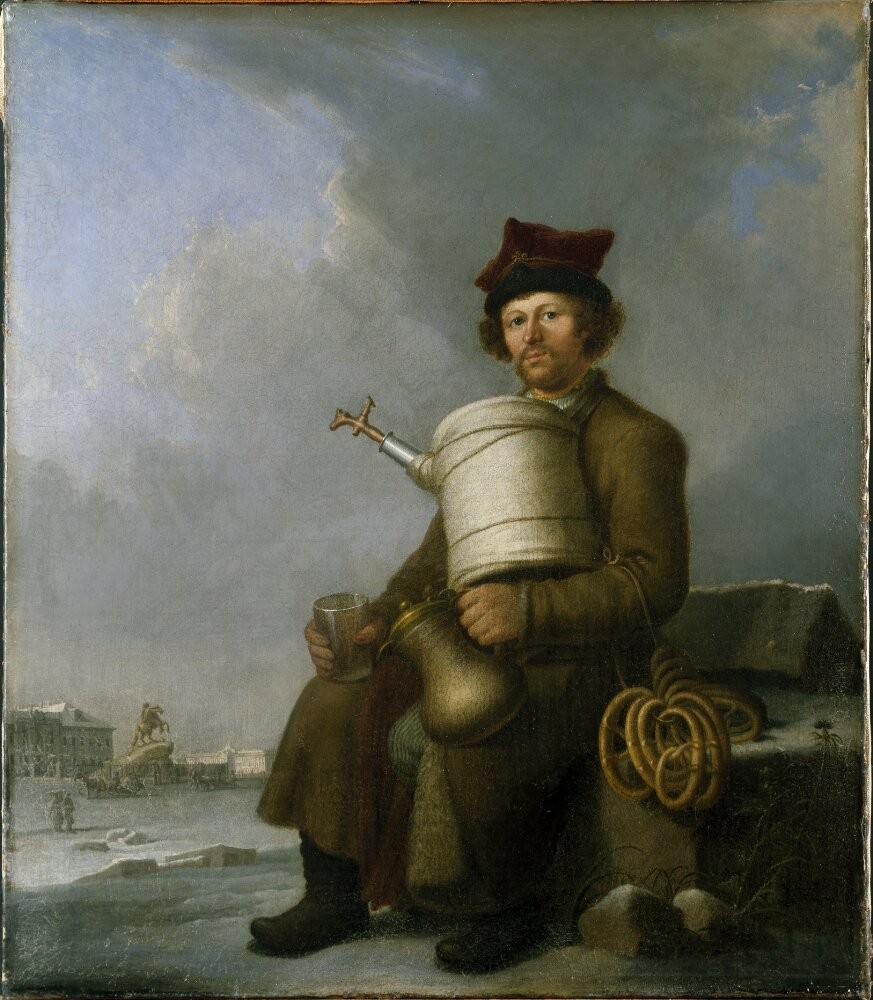
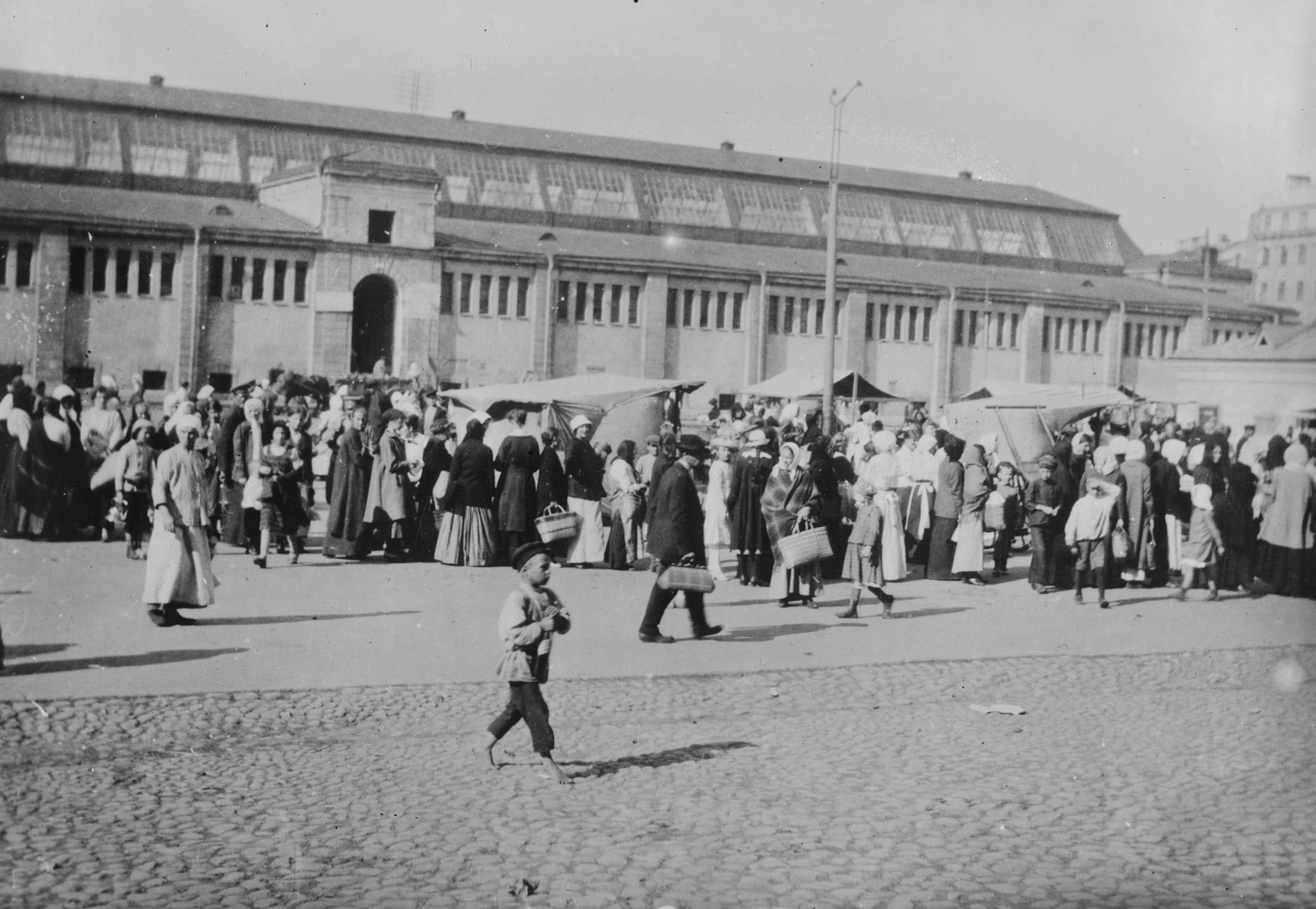
When I appeared in the square of Sytny Market, all the vendors of gingerbread, rolls, pies and the like would instantly open their trays and baskets, begging me to take something from them without payment, at least one little pie, at least to break off a piece of gingerbread. And the fortunate one whose wares I tasted could not keep up with supplying goods — so successfully did his trade go thereafter. The people flocked to his tray and with delight ate the pies that had attracted the attention, as some said of me, of the “voluntary sufferer”.

I was meek and affectionate, and only once, in the forty-fifth year of my wandering, did the inhabitants of the Petersburg Side see me in the full heat of anger: with a stick in my hand, with my grey hair streaming in the wind, with an angry cry I rushed faster than a whirlwind down the street after a crowd of boys who had provoked me with words and mud. The whole Petersburg Side shuddered then at such a crime of their children!
A search began; a dozen guilty ones, accused of persecuting Andrew Feodorovich with words and mud, were subjected before me to purifying rods. And from that time, tradition says, the children feared Andrew Feodorovich.

Where I stayed at night no one knew. Only once at night was I noticed. At that time at Smolensk Cemetery they were building, in place of the wooden church that had fallen into disrepair, a stone one; and so the workmen, coming in the morning to work, began to notice that someone had managed during the night to carry bricks up onto the walls of the church under construction. They began to watch — and saw me, the fool-for-Christ Xenia, or Andrew Feodorovich, who all night long, right up to the morning dawn, carried bricks up to the building church.
Thereafter I dressed usually, both in summer and in winter, in the same unchanging green jacket and red skirt, or green skirt and red jacket.

Whatever anyone gave me I immediately gave to the poor or to someone else, according to my own discretion. It was noticed that if I myself asked something of someone, things went badly for him thereafter; everything slipped through his hands; but if I myself gave something to someone — whether a copper coin or a piece of bread — profit came to him in everything. Cabmen, seeing me, vied with one another to give me a ride, in the conviction that whoever managed to serve me would have good fortune.
I sometimes went to the bathhouse as well. All my washing, however, consisted in this: without taking off my shift I would climb onto the shelf, wet my head and, in the same wet shift, dress and go out, regardless of the season — whether it was cold autumn or winter.

As I have already said, I greatly loved two sisters – Evdokia Denisovna Gaidukova and Pelageya Denisovna Cherepanova. One day, calling on the first of them, I asked for dinner. Evdokia Denisovna willingly fed me. Thanking her for the bread and salt, I said with a smile: “But you begrudged me the duckling; yes, you are afraid of your husband. Oh, that colt’s head of mine!” Evdokia Denisovna was greatly embarrassed, for indeed there was a roasted duck in her oven. I did not like her husband and always called him “colt’s head” – evidently because he had the bad habit of swearing with foul words.
One day, meeting Evdokia Denisovna in the street, I stopped her and, giving her a copper five-kopeck piece, said: “Take it, take the five-kopeck piece; here is the Tsar on horseback – the fire will be put out.” And what happened? No sooner had Evdokia Denisovna turned into her street than she saw that her house had caught fire, but before she could even reach the house the flames had been extinguished.

One day I visited an acquaintance of mine who lived on the Petersburg Side. She was drinking coffee with her daughter; the daughter was already of marriageable age. Turning to the girl, I said: “You are drinking coffee here, while your husband is burying his wife on the Okhta.” The mother and daughter could not understand these words, and I had already left. “Let us go to the Okhta and see if anything unusual has happened there,” the mother said to her daughter. They came to the Okhta and, to their utmost astonishment, saw that a certain deceased woman was indeed being taken to the cemetery. They joined the crowd accompanying the coffin. After a short time this widower truly became the husband of this girl, having married her.
One day I came to the house of the merchant Razhivin and, approaching the mirror, said: “This mirror is fine, but there is nothing to look into.” No sooner had I spoken these words than the mirror fell from the wall and shattered into pieces. All the household were horrified, seeing how my words had come true.

Three weeks before the death of Ivan Antonovich Ulrich, who was held in the Shlisselburg Fortress and later executed there, I wept for him every day. Those who met me asked: “Why are you weeping, Andrei Fyodorovich? Has someone offended you?” – “There the streams are filled with blood, there the canals are bloody, there is blood, blood, blood!” was all I answered.
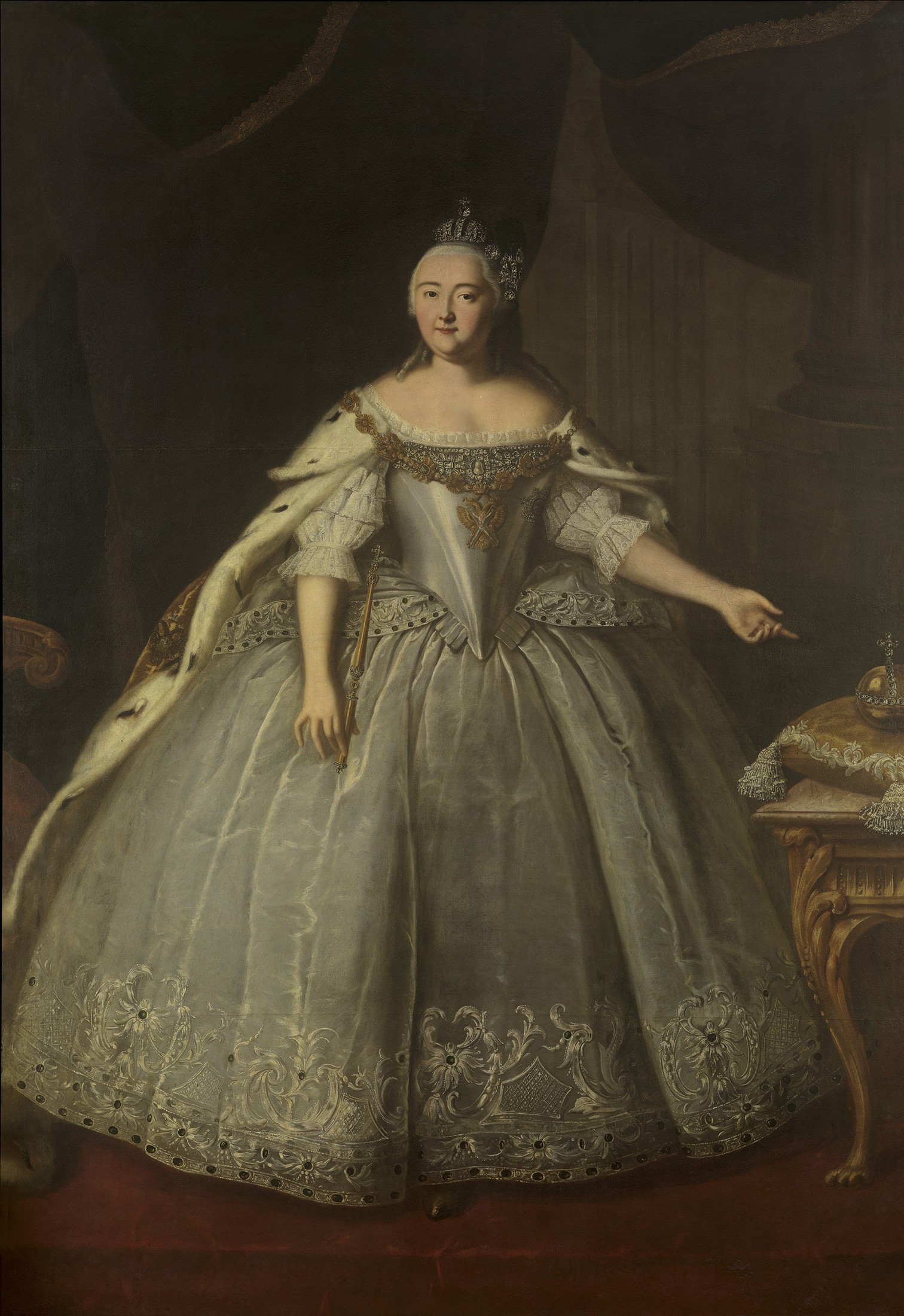
I also foretold the death of Empress Elizabeth Petrovna. On the eve of her death, going from street to street throughout the city, I cried at the top of my voice: “Bake pancakes, bake pancakes; all Russia will be baking pancakes.” The very next day the Empress suddenly reposed.

As the Life relates, in what year the handmaid of God Xenia ended her earthly pilgrimage is not known with certainty. She was buried at the Smolensk Cemetery in Petersburg; at her grave, as the Life says, many people praying were always to be found.
A tombstone lies on her grave. The inscription on the stone says that here lies the body of the handmaid of God Xenia Grigoryevna, wife of the court chorister of the rank of colonel Andrei Fyodorovich; that she was left a widow at the age of twenty-six, wandered for forty-five years, and lived in all seventy-one years; that she was called by the name Andrei Fyodorovich, and that whoever knew her should remember her soul for the salvation of his own soul.

As the Life relates, many miracles were wrought and continue to be wrought at the grave of the Blessed Xenia. One colonel's wife, whose sons could not be placed in the cadet corps, following someone's advice served a panikhida at her grave — and, returning home, immediately learned that the children had been accepted.
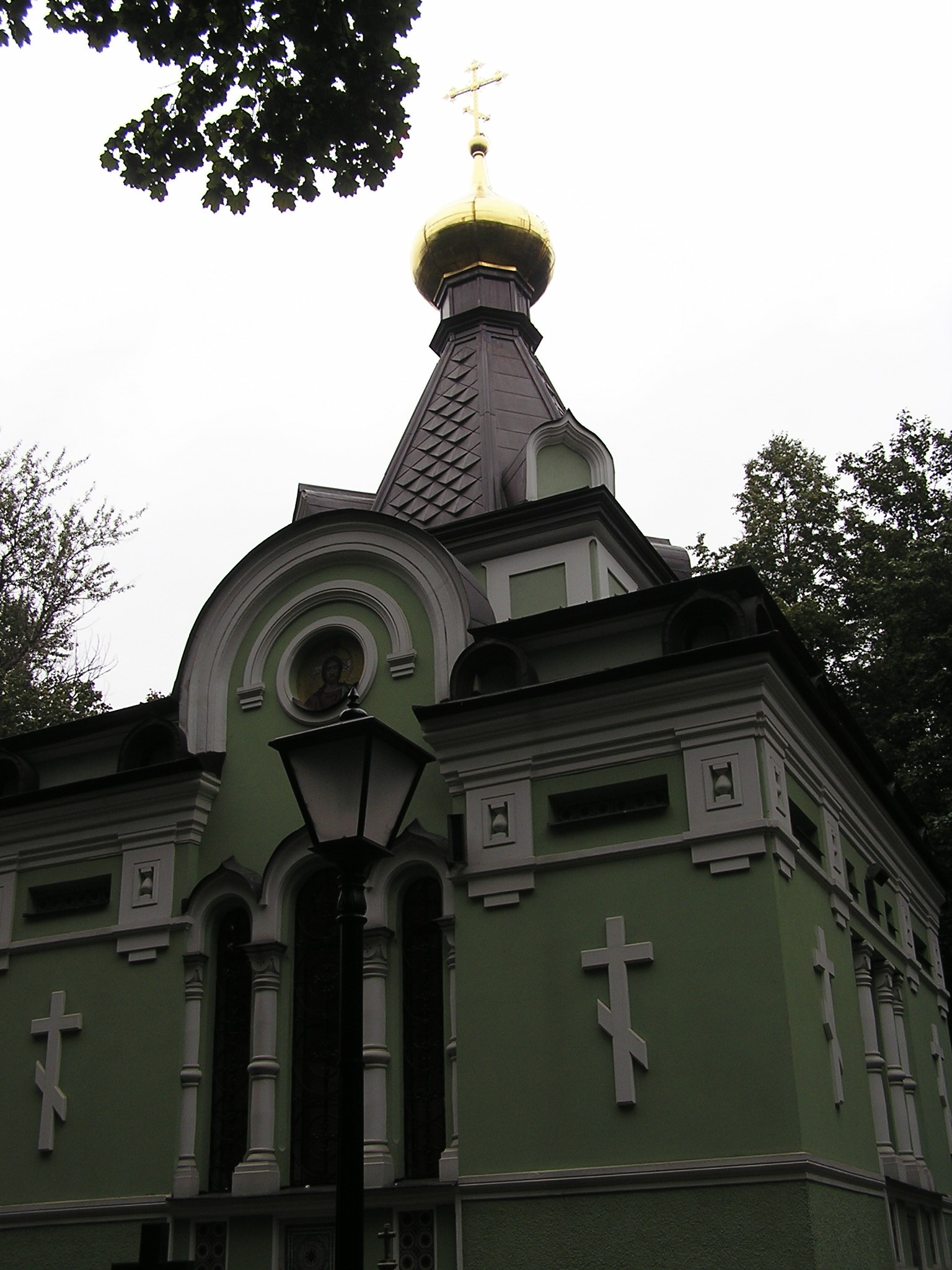
One widow of honourable rank erected a chapel over the grave of Xenia at her own expense. The daughter of this widow had a fiancé who was a colonel; on the eve of the wedding it was discovered that he was an escaped convict who had murdered the real colonel on the road, taken his clothing and documents, and the marriage did not take place. Many saw in this the intercession of the Blessed one, to whom the mother and bride had hastened in their sorrow.
The chapel over the grave of the Blessed Xenia stands to this day at the Smolensk Cemetery in Petersburg, entirely covered, by the zeal of the pilgrims who flock here, with various icons.
Having loved the poverty of Christ,/ now enjoying immortal meals,/ having exposed the madness of the world through imaginary madness,/ through humility on the cross you have received the power of God./ For this reason, you have acquired the gift of miraculous help, / Blessed Xenia, pray to Christ God // to deliver us from all evil through repentance.