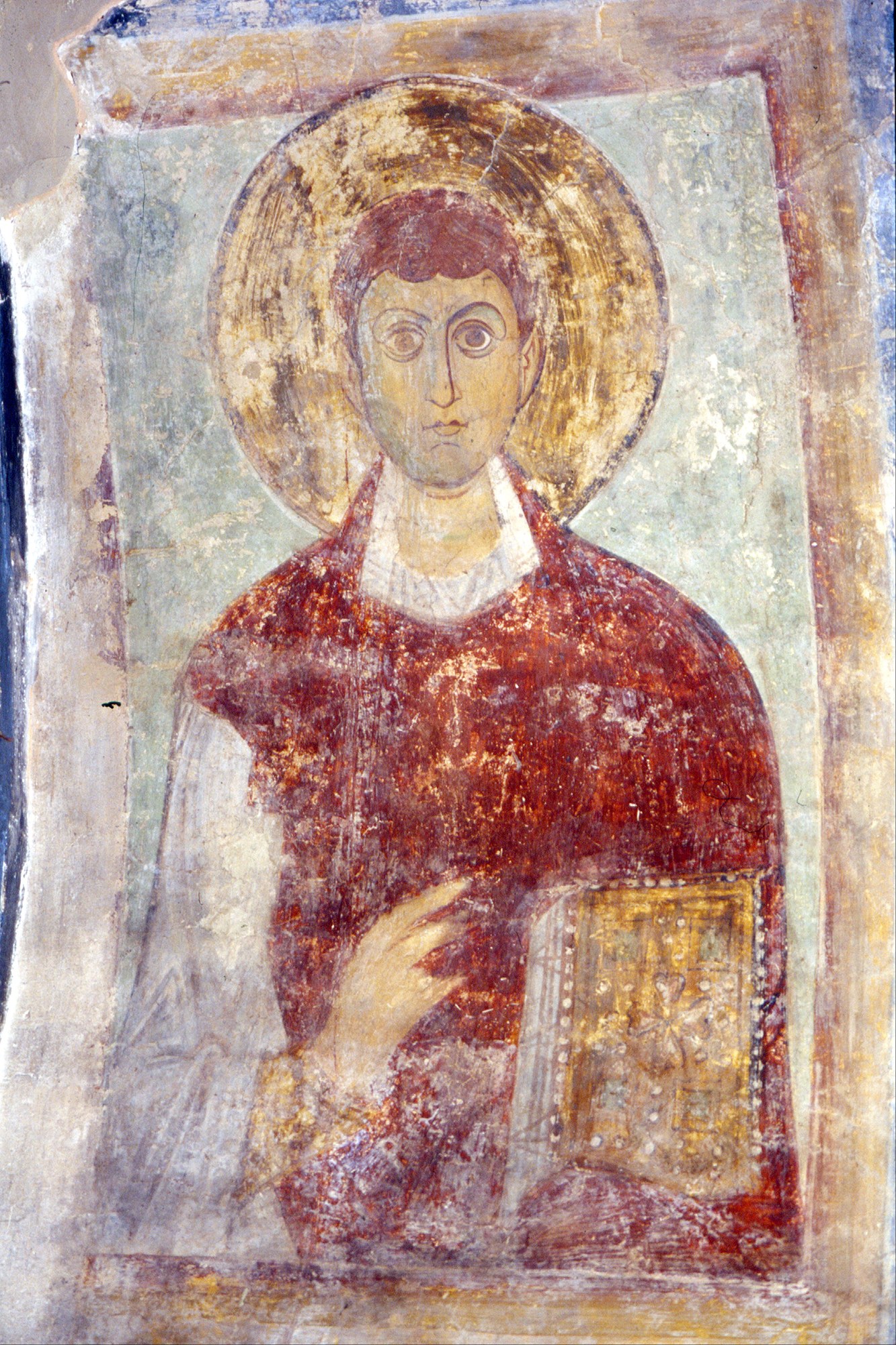
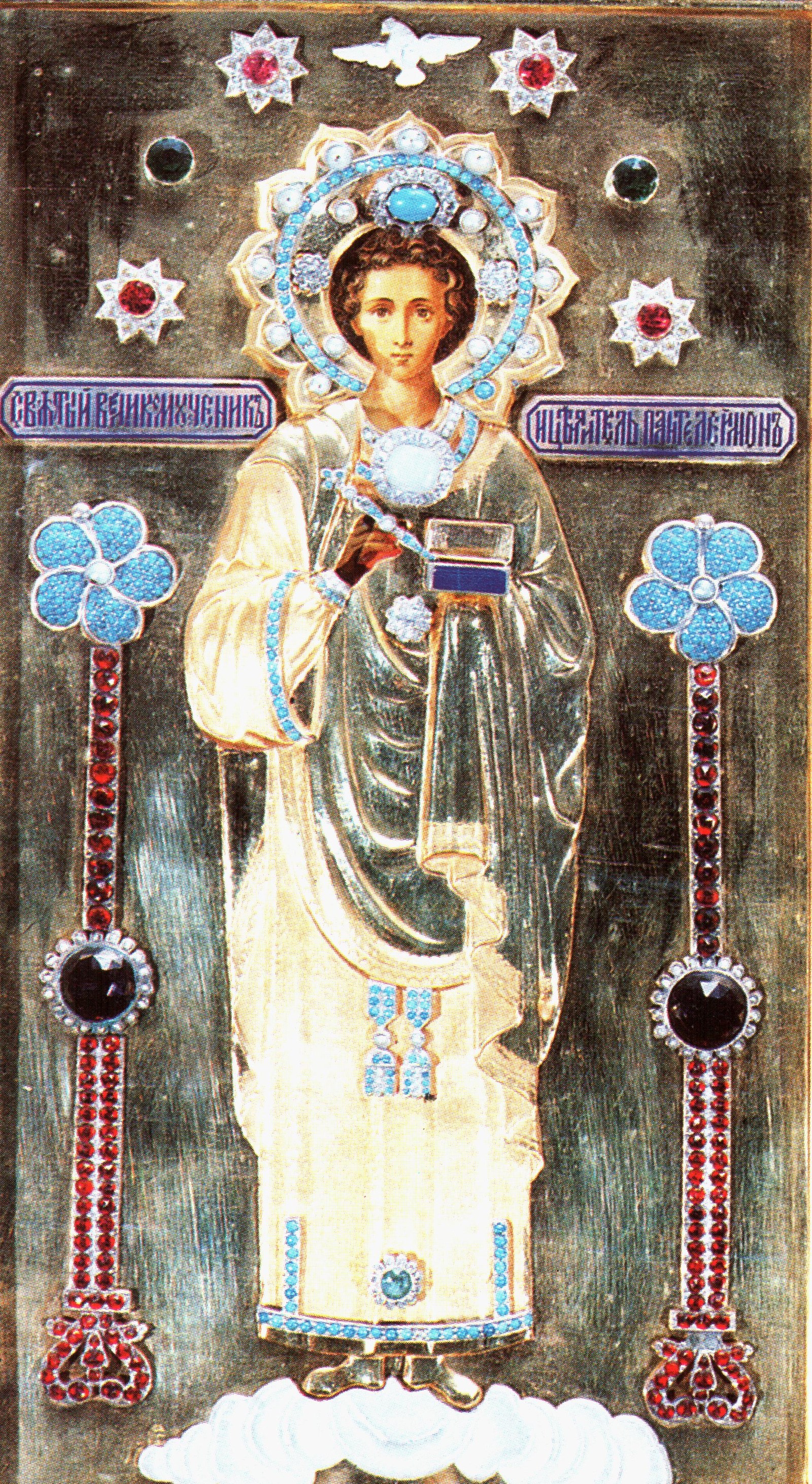
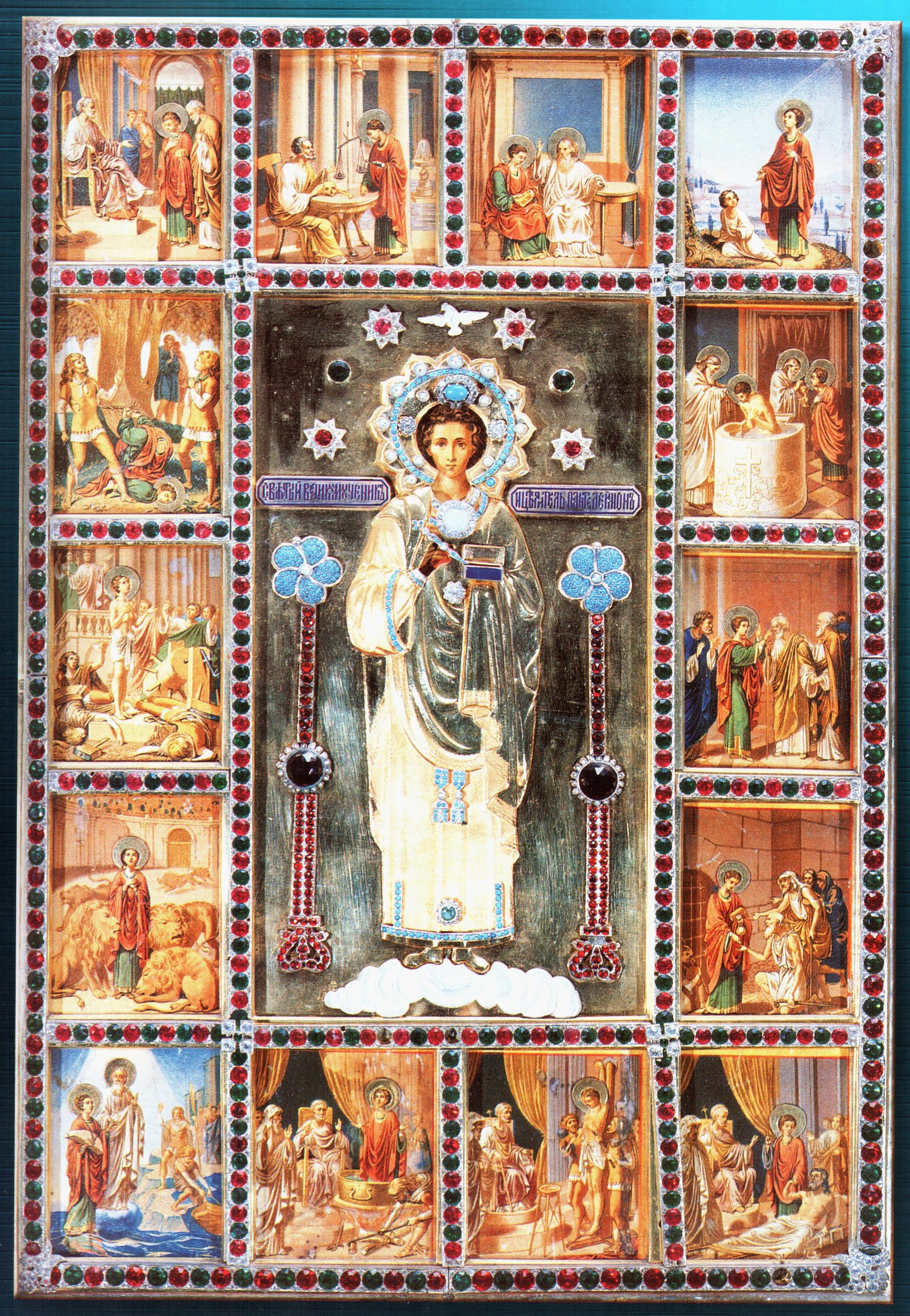
When the impious Maximian reigned, that cruel persecutor of Christians, and when almost the whole universe was covered with the darkness of idolatrous impiety, a great persecution was raised everywhere against those who believed in Christ, and many confessors of the most holy name of Jesus Christ died as martyrs. Then I also suffered for Christ in the land of Bithynia, in the city of Nicomedia.
I was born in that same city of Nicomedia to a noble and wealthy father named Eustorgius and to a mother named Eubula. My father was a pagan by faith, zealously devoted to idolatry; my mother was a Christian, taught the holy faith by her forefathers and fervently serving Christ. Thus, though united in the flesh, they were divided in spirit: he offered sacrifices to false gods, while she offered a sacrifice of praise to the true God.
The boy born to them was named Pantoleon, which means “a lion in all things”, for it was expected that I would be like a lion in courage. But later I was renamed Panteleimon, that is, “all-merciful”, because I showed mercy to all, healing the sick without payment or giving alms to the poor, generously distributing my father’s wealth to those in need.

From early childhood my mother brought me up in Christian piety, teaching me to know the one true God who dwells in the heavens, our Lord Jesus Christ, that I might believe in Him and please Him with good works, turning away from pagan polytheism. I listened to my mother’s instructions and absorbed them as far as was possible for my youthful years.
But what a loss and deprivation! My good mother and guide departed to the Lord in my young years, leaving me not yet come to full understanding and maturity. After her death I easily followed in the footsteps of my father’s error: my father often took me to worship the idols, confirming me in pagan impiety.
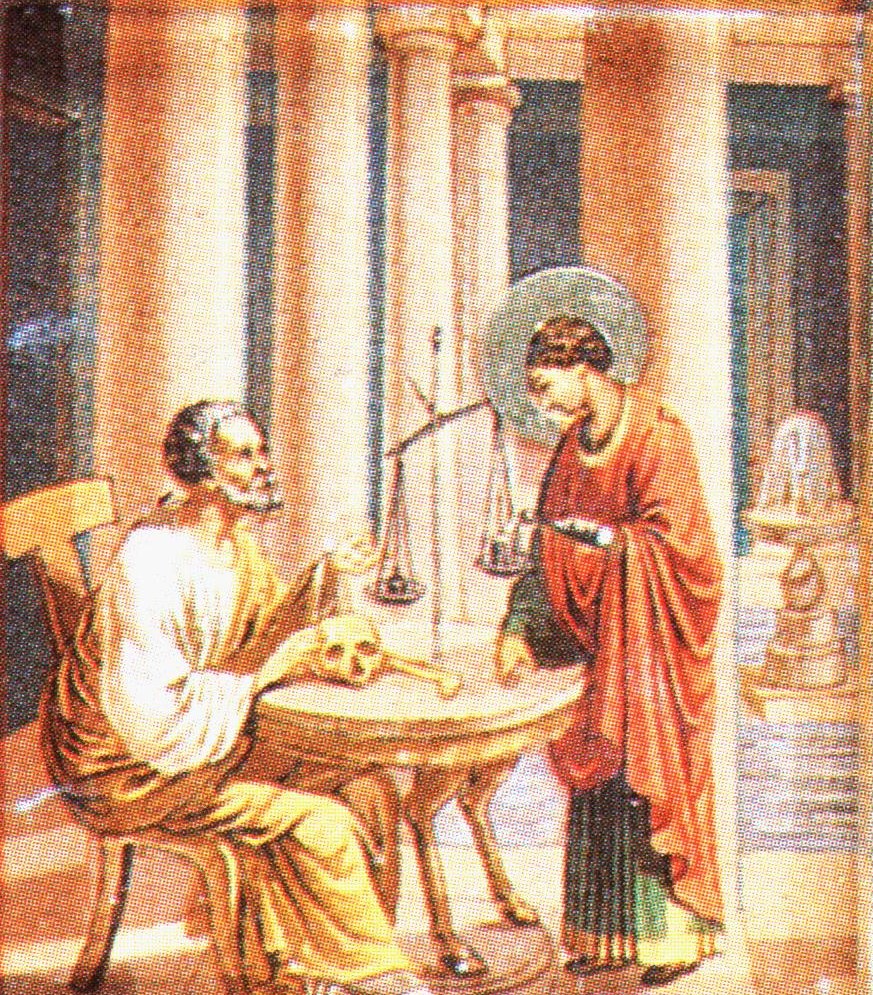
Then I was sent to grammar school, and when I had successfully completed the course of all outward pagan philosophy, my father gave me to a renowned physician named Euphrosynus in a medical school, that I might gain skill in the medical art. Being of a receptive mind, I easily absorbed what I was taught and soon surpassed my fellow students, falling little short of my teacher himself; moreover, I was distinguished by my conduct, eloquence, beauty and made a pleasant impression on everyone.

I was known even to the Emperor Maximian himself. For Maximian was living at that time in Nicomedia; subjecting Christians to torture, he burned twenty thousand of them in a church, on the day of the Nativity of Christ he put to death Bishop Anthimus, and after various tortures consigned many to deaths of various kinds.
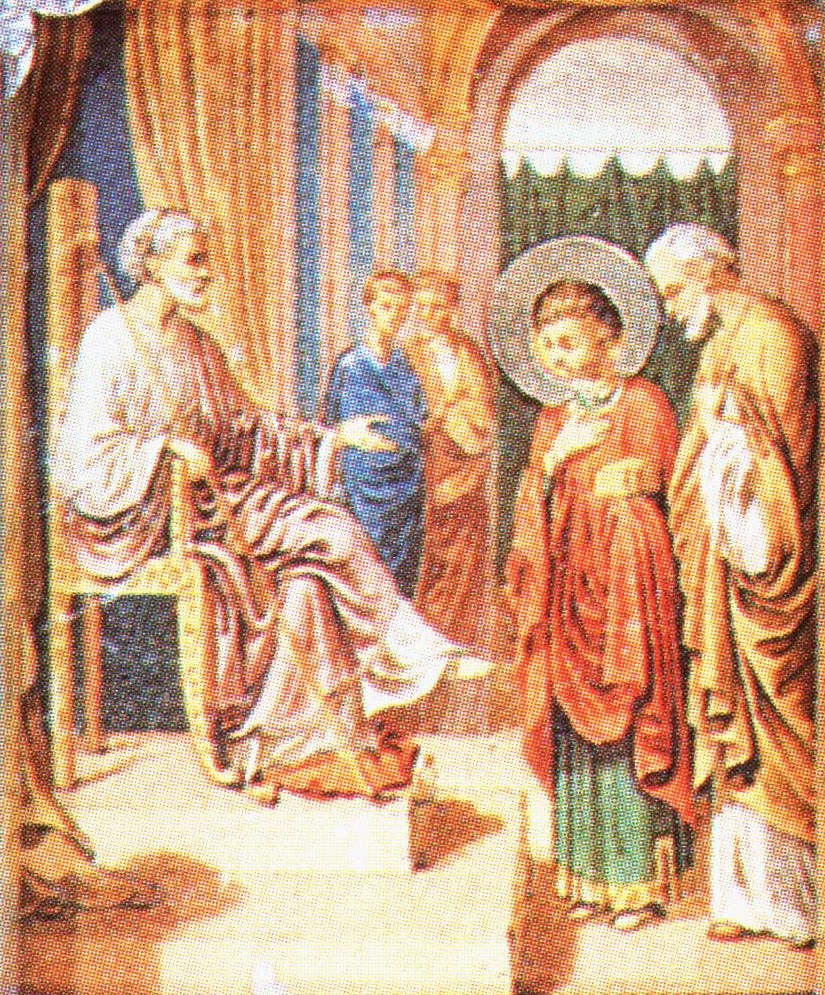
The physician Euphrosynus often came with medicines to the royal chambers of the tormentor — either to him himself or to his courtiers, because this physician provided remedies for diseases to the entire imperial court. When Euphrosynus came to the emperor’s palace, I would accompany him, following my teacher, and all marvelled at the beauty and good understanding of the youth. And the emperor, seeing me, asked whence I came and whose son I was.
Having received an answer, the emperor commanded my teacher to instruct me as quickly and as thoroughly as possible in all the medical art, expressing his desire to have me always with him, as one worthy to stand before the emperor and serve him. At that time I was already coming into perfect age.

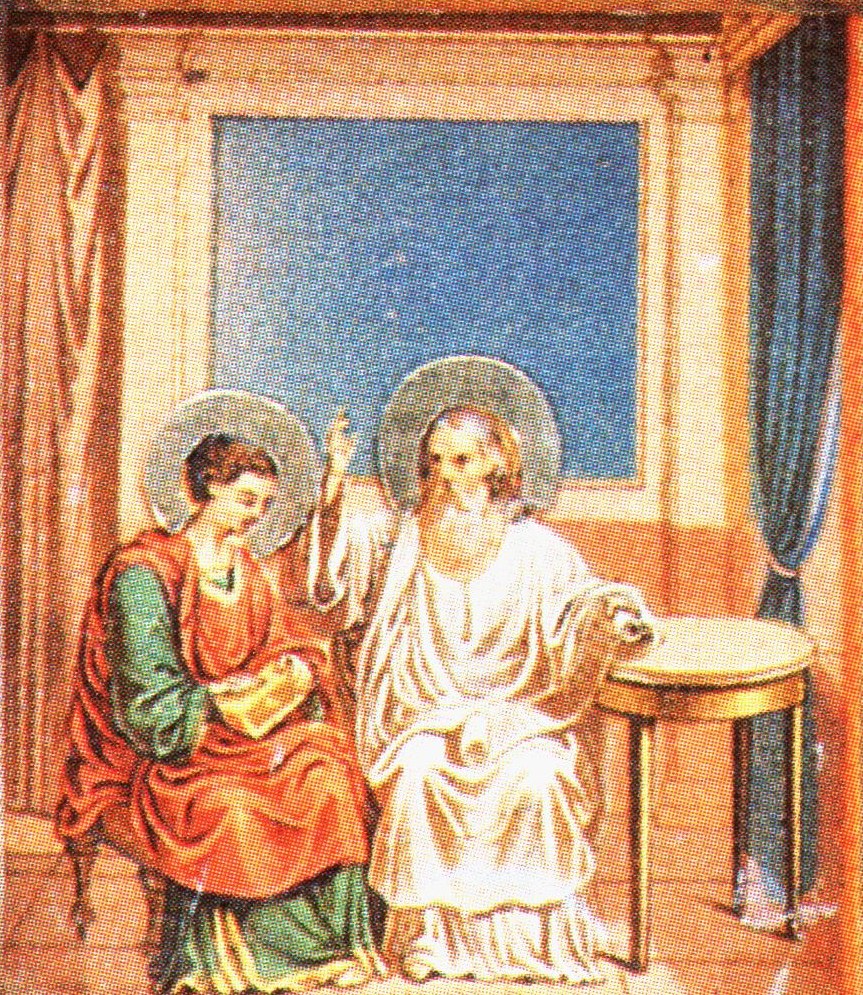
In those days there was in Nicomedia an elder, a presbyter by the name of Hermolaus, who, for fear of the impious, was hiding with a few Christians in a small and insignificant house. My way to the teacher and back lay past this dwelling. Seeing the youth often passing by through the little window, Hermolaus recognised from his face and gaze my good disposition; discerning in spirit that I would be a chosen vessel of God, he once came out to meet me and begged me to come into his house for the briefest time.
Seating me beside himself, the elder asked about my origin and parents, about the faith and the whole manner of my life. I related that my mother had been a Christian and had died, while my father was alive and honoured many demons; that my mother had taught me her faith, and I had loved her faith, but my father compelled me to observe pagan laws; that my teacher instructed me in the teaching of Asclepiades, Hippocrates and Galen.
In these last words Saint Hermolaus found occasion for a profitable conversation and began to sow in my heart, as on good soil, the good seed of the words of God. The teaching of Asclepiades, Hippocrates and Galen, he said, is worthless and can be of little help to those who resort to them, while the gods whom the emperor and my father honour are vain. The true and almighty God is one — Jesus Christ; if I believe in Him, I shall heal every disease by the mere invocation of His Most Pure Name: for He gave sight to the blind, cleansed lepers, raised the dead.
I believed these instructions as true and told the elder that I had often heard this from my mother and had often seen her pray and call upon that God. From that day I came every day to the elder and delighted in his divinely inspired conversations.

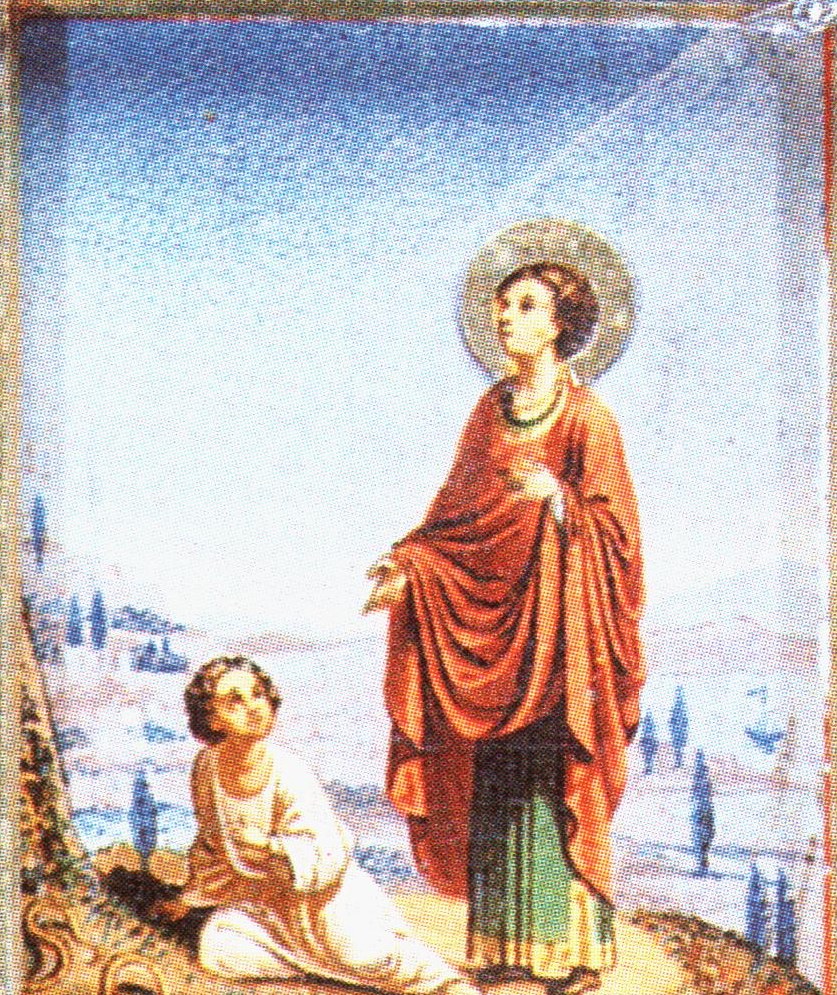
Once it happened that, on my way back from the teacher, I turned aside a little and found a dead child who had been bitten by a huge viper, and the viper itself lying there beside the one it had stung. Seeing this, at first I was frightened and drew back a little, but then I thought to myself: now the time has come for me to test and be convinced whether everything that the elder Hermolaus said is true.
Looking up to heaven, I called upon the Lord Jesus Christ: although I am unworthy to call upon Him, yet if He desires that I become His servant, let Him manifest His power and cause this child to come back to life in His name, and the viper to die. And immediately the child, as though awakening from sleep, rose up alive, while the viper split in two.
Then I, having come to complete faith in Christ, turned my bodily and spiritual eyes to heaven and blessed God with joy and tears because He had brought me out of darkness into the light of His knowledge. I quickly went to the holy presbyter Hermolaus, fell at his venerable feet, asking for baptism, and told him what had happened: how the dead child had come back to life by the power of the name of Jesus Christ and how the viper that had caused death had perished. Saint Hermolaus, leaving the house, went with me to look at the dead viper and, seeing it, thanked God for the miracle that had been wrought, through which He had led me to the knowledge of Himself.

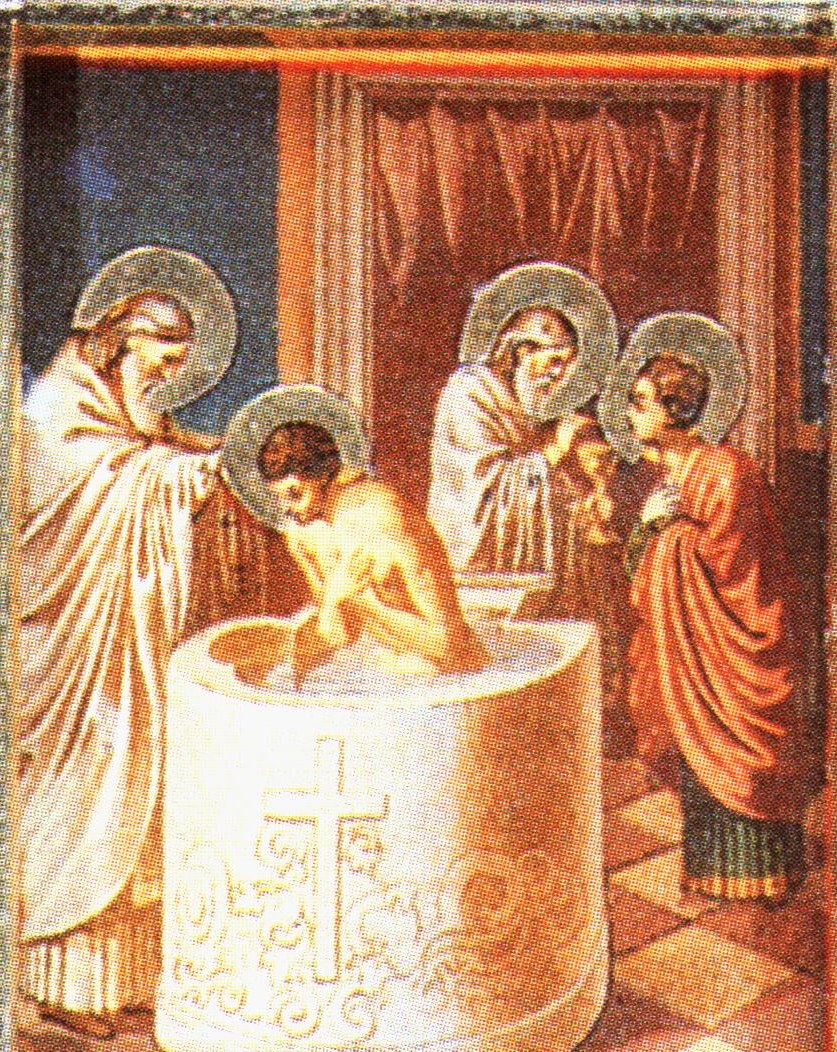
Returning home, the elder baptized me in the name of the Father and of the Son and of the Holy Spirit and, having celebrated the liturgy in his inner room, he communed me of the Divine Mysteries of the Body and Blood of Christ. After my baptism I remained with the elder Hermolaus for seven days, learning from the divine words spoken to me by the mouth of the elder and by the grace of Christ: as from a source of living water I was watering my soul unto the abundance of spiritual fruits.
On the eighth day I went to my own home, and my father asked where I had been for so many days. I answered that I had been with the teacher at the king’s palace: we were treating a sick man whom the king greatly loves, and we did not leave him for seven days until we restored him to health. Thus I spoke not a lie, but under the guise of a parable I declared the truth: by the teacher I meant the holy presbyter Hermolaus, by the royal palace I understood that inner chamber in which the divine mystery was performed, and by the sick man I called my soul, which was being healed for seven days by spiritual medicine.
I was greatly concerned for my father, how I might lead him out of the darkness of idolatry, and every day, conversing with him by parables and questions, I would ask: why are the gods made standing, as they were first set up, so they stand to this day and never sit down, while those made sitting never rise? My father answered that he himself did not know what to reply to this. By such questions I caused him to doubt his gods, and he began to despise the idols. More than once I wanted to smash my father’s idols, of which there were many in his house, but I refrained: partly so as not to anger my father, whom according to the commandments of God one must honor, and partly waiting until my father, having himself come to know the true God, would wish with his own hand to destroy them.

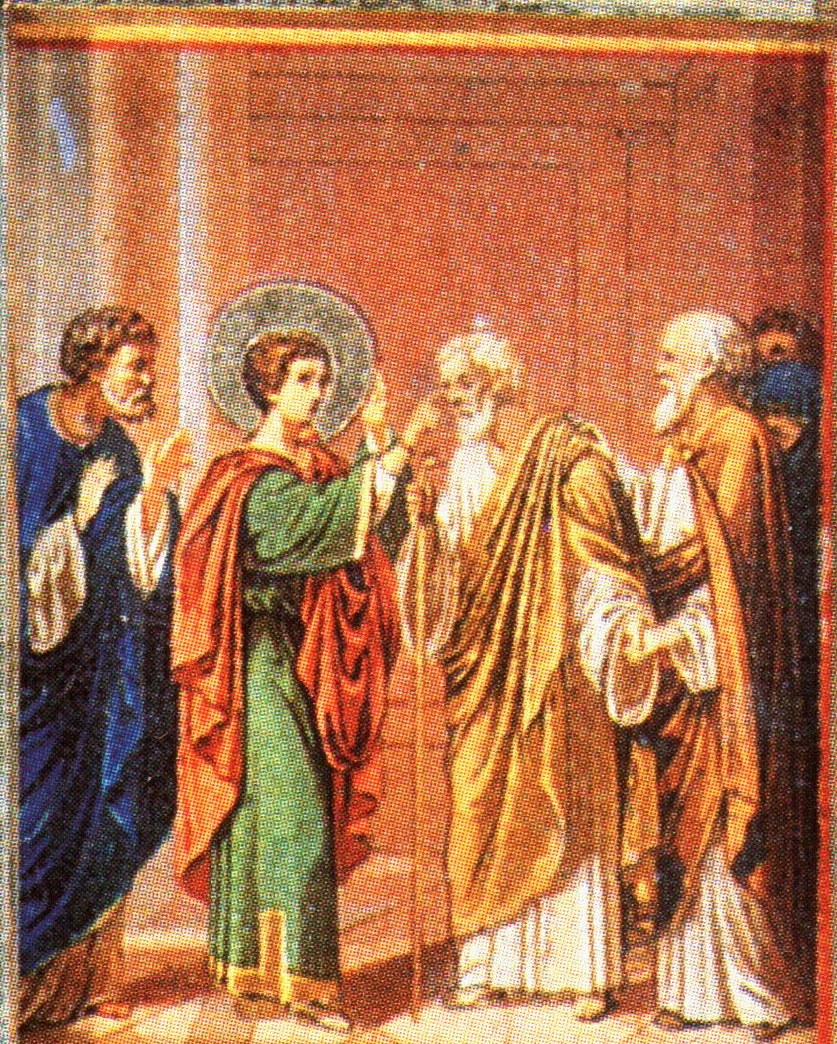
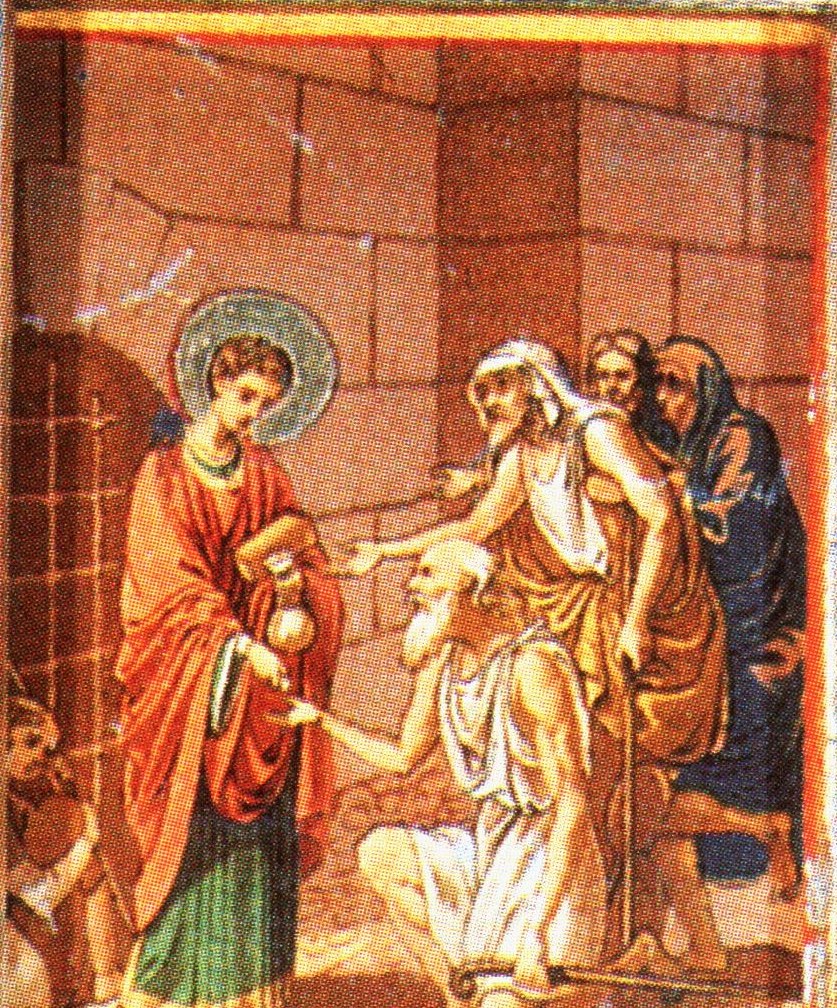
At that time a blind man was brought to me, asking for healing: all the physicians of this city had treated him, and he had received no benefit from them, but had lost even the last glimmer of light together with all his property. I told him that the gift of sight would be given him by the Father of lights, the true God, through me, His unworthy servant, and that what had been promised he should not give to me, but should distribute to the poor. My father Eustorgius urged me not to touch upon such a matter as I could not accomplish; but I asked him to wait a little and see the power of my healing. With these words I touched the eyes of the blind man with my fingers, calling upon the name of my Lord Jesus Christ, Who gives light to the blind — and immediately the eyes of the blind man were opened, and he began to see.
At that moment my father Eustorgius together with the man who had received his sight believed in Christ and were baptised by the holy presbyter Hermolaus. Then Eustorgius began to smash all the idols in his house, and I helped him in this; having broken the idols into pieces, we cast them into a deep pit and covered them with earth. Having lived a short time after this, Eustorgius departed to the Lord.
Having become the heir of my father’s very rich estate, I immediately granted freedom to the male and female slaves, generously rewarding them; and I began to distribute my property to those in need: the destitute, the poor, widows and orphans. I visited the prisons, comforting those suffering in chains with healing and alms. A gift of healing was given me from above, and I healed every kind of disease free of charge, not so much with pharmaceutical means as by calling upon the name of Jesus Christ. The whole city turned to me, abandoning all the other physicians, and the name of the all-merciful and unmercenary physician became known among all the people.

The other physicians were condemned and mocked, and no small envy and hostility arose against me on their part; it began from the time when the blind man received his sight. Seeing him walking about the city, the physicians asked who had healed him and by what means, and that man did not conceal that his physician had been I. Knowing that I had been a disciple of Euphrosynus, they said: “A great teacher’s great disciple”, — not realising that they had confessed the truth: the power of Christ was working through me.
Hypocritically praising me with their lips, in their hearts they devised evil and sought an accusation by which to destroy me. Noticing that I visited the prisons and there healed the wounds of those suffering for Christ, they informed the emperor Maximian that the youth whom he had ordered to be taught the medical art, despising his favour, visited the prisons, healing prisoners who blasphemed the gods, and ascribed the medical art not to Asclepius but to some Christ, and that all whom he treated believed in Him.
The emperor ordered the man who had received his sight to be found and asked how I had healed his eyes. He answered: “He called upon the name of Christ, touched my eyes, and I immediately received my sight”. The physicians, he told the emperor, had taken all his property and completely blinded him, whereas I by a single invocation of the name of Christ had made him seeing; let the emperor himself judge who is the better and true physician — Asclepius and the other gods or Christ. The emperor began to compel him to impiety, but the healed man replied that the emperor himself was mad, calling his blind gods givers of sight. Filled with anger, the emperor ordered him to be deprived of life by the sword at once, and the head of the good confessor of the name of Jesus Christ was cut off. I bought his body from the executioners and buried it near the body of my father.

After that the emperor ordered me to be summoned. While the soldiers were leading me to the emperor, I was singing the psalm of David: «O God of my praise! Be not silent, for wicked and deceitful mouths are opened against me» (Ps. 108:1–2). Thus in body I stood before the earthly king, but in spirit before the Heavenly King.
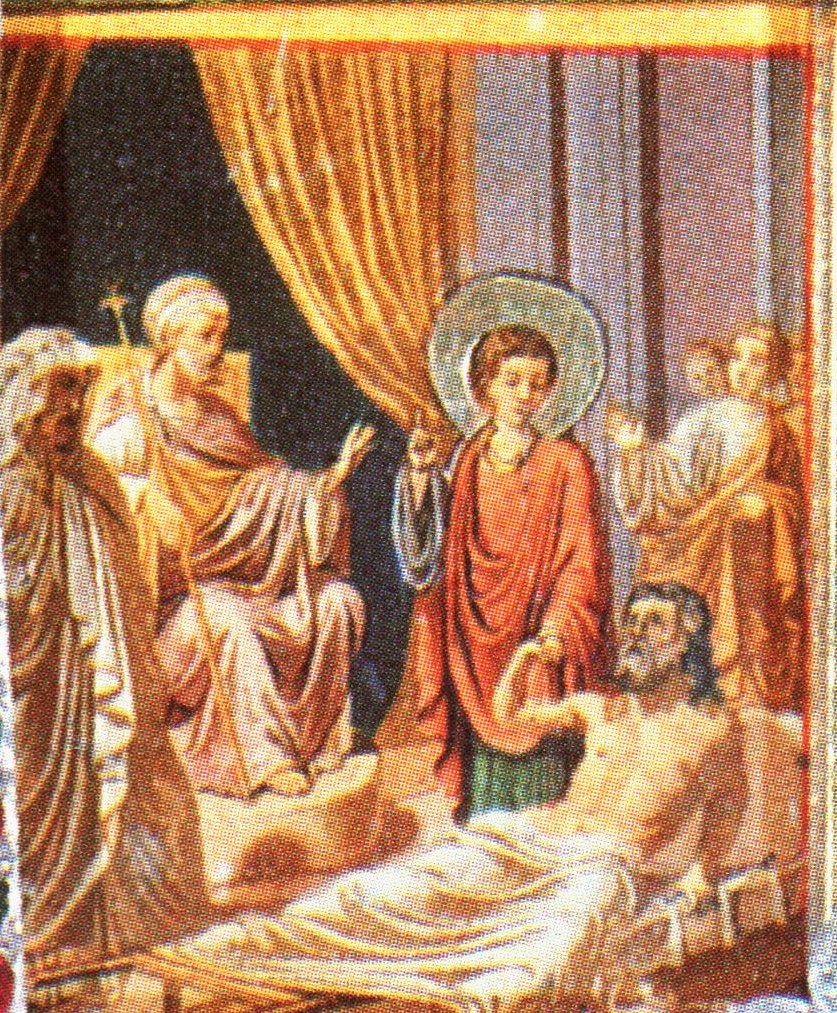
Maximian, looking upon me without any anger, gently urged me: it was said that I denounced Aesculapius and the other gods while glorifying Christ; let me myself refute the slander of the envious by offering sacrifice to the great gods. I replied that deeds should be believed more than words: I renounce Aesculapius and the other gods, and glorify Christ, for from His deeds I have known that He is the only true God. And I proposed: let a man lying on a bed of mortal illness be brought; let the priests call upon their gods, and I will call upon my God — and whichever of the gods heals the sick man, let him be acknowledged as the only true God.
The emperor liked this counsel. A man was brought on a bed who had been paralysed for many years and could not move any of his limbs. The priests began to call upon their gods: one upon Aesculapius, another upon Zeus, that one upon Diana — and there was neither voice nor any sign of attention. Then I, approaching the bed, lifted my eyes to heaven and prayed with the words of the psalm: «O Lord! Hear my prayer, and let my cry come unto Thee» (Ps. 101:2), — and taking the paralysed man by the hand, I said: «In the name of the Lord Jesus Christ, arise and be whole!» And immediately the paralysed man arose and, taking up his bed, carried it to his house. Seeing such a miracle, many of those present believed in Christ; but the priests gnashed their teeth and asked the emperor to destroy me quickly.

The emperor reminded me how cruelly the elder Anthimus had been tormented. I replied that all who had died for Christ had not perished, but had found for themselves eternal life; and if Anthimus, being old and infirm in body, could endure cruel torments for our Lord, all the more should I, being young and strong in body, fearlessly endure all tortures: I would consider life empty if I did not die for Christ, but if I died, I would count it gain.
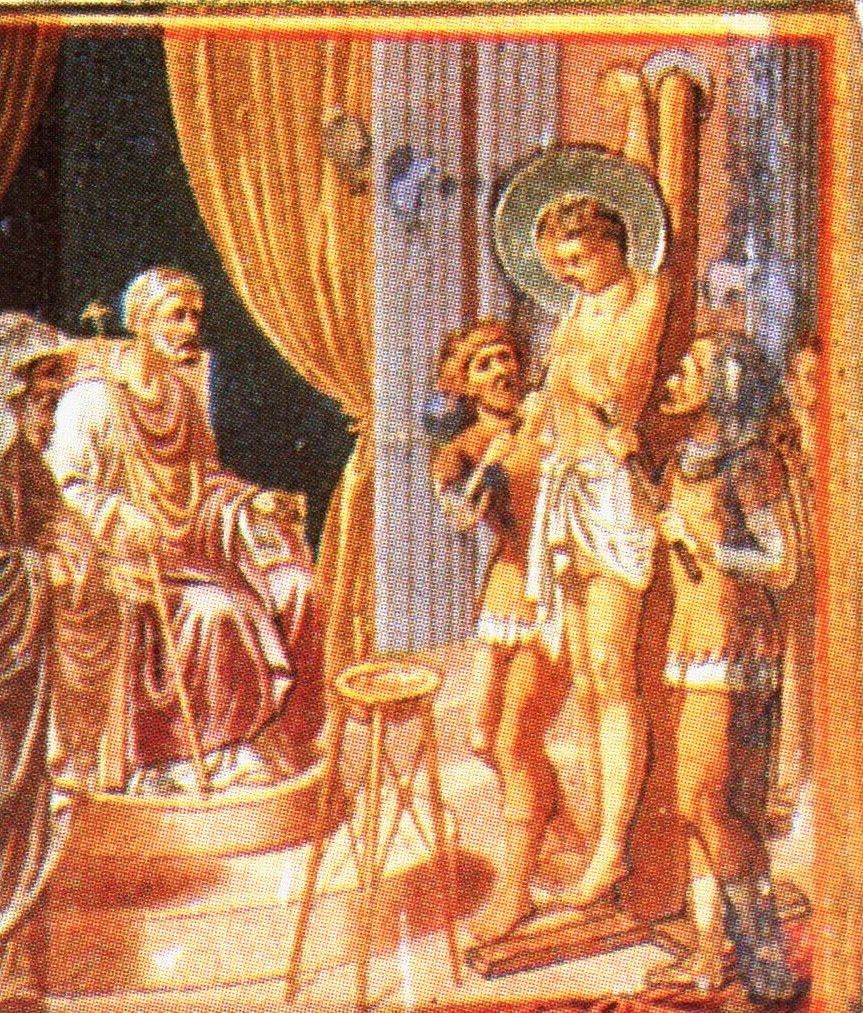
The emperor ordered me to be hung naked on the tree of torture and for my body to be scraped with iron claws, burning my ribs with lighted candles. Enduring these sufferings, I looked up to heaven and asked the Lord Jesus Christ to stand by me at that moment and grant me patience, that I might endure the torments to the end. And the Lord appeared to me in the form of the presbyter Hermolaus, saying: «Fear not, I am with thee». Immediately the hands of the torturers grew weak and as if deadened, so that the instruments of torture fell from them and the candles were extinguished. To the emperor’s question as to wherein lay the power of my sorcery, I answered: my sorcery is Christ, Whose almighty power accomplishes all things.
Then the torturer ordered tin to be melted in a large cauldron and for me to be thrown into it. When the tin was boiling, I was led to the cauldron; but I lifted my eyes to heaven and prayed with the words of the psalm: «Hear, O God, my voice in my prayer, preserve my life from fear of the enemy» (Ps. 63:2). Again the Lord appeared to me in the form of Hermolaus and, taking me by the hand, entered the cauldron with me — and immediately the fire was quenched and the tin grew cold, while I sang: «But I will call upon God, and the Lord will save me» (Ps. 54:17). Those present marvelled at the miracle, and the emperor was advised to cast me into the depths of the sea: for I could not enchant the whole sea.

The servants seized me, led me to the sea, placed me in a boat, tying a large stone about my neck; having sailed far from the shore, they cast me into the sea, and themselves returned to the shore.
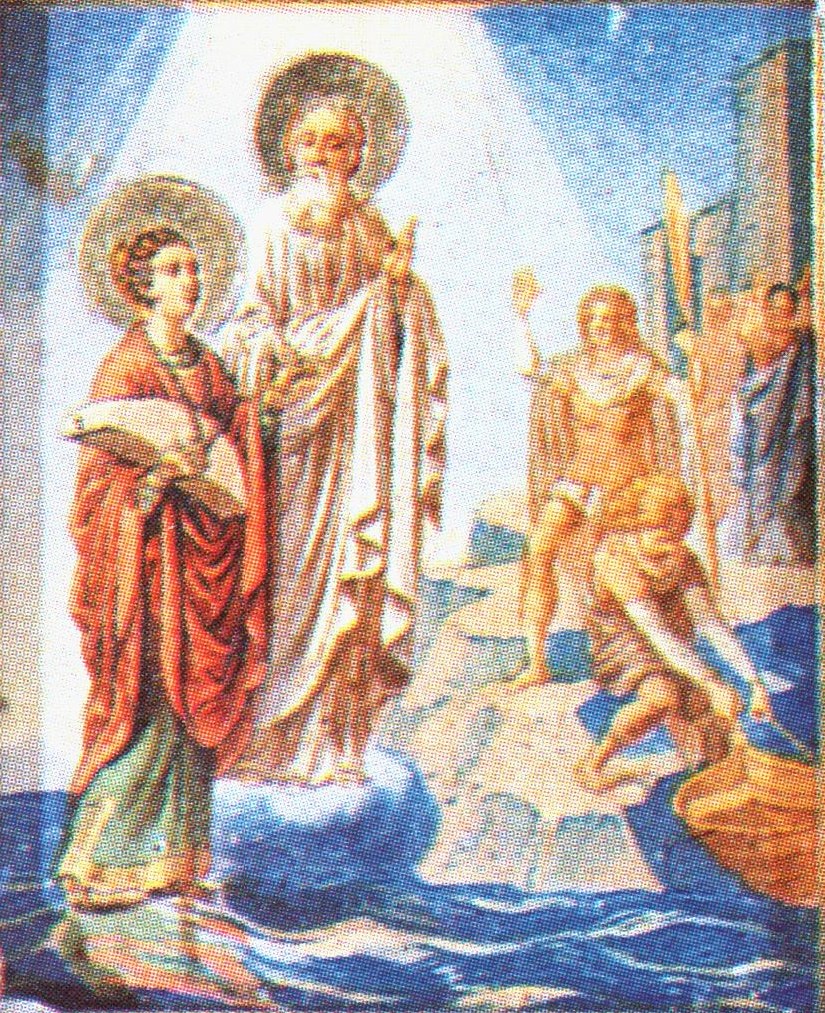
When I was cast into the sea, Christ again appeared to me, as at the first time, in the form of Hermolaus, — and the stone tied to my neck became light as a leaf, so that I remained with it on the surface of the sea, not sinking, but, as if on dry land, walked upon the waters, guided, as once was the Apostle Peter, by the right hand of Christ. I came out upon the shore, singing and glorifying God, and stood before the emperor.
The emperor was inexpressibly amazed at such a wonder and cried out: what then is the power of thy sorcery, Pantoleon, that thou hast subjected even the sea to it? I explained that the sea also obeys its Master and fulfils His will. «So thou rulest the sea as well?» — asked the emperor. Not I, I answered, but my Christ, the Creator and Master of all visible and invisible creation; He possesses both heaven and earth, and likewise the sea: «Thy way is in the sea, and Thy path in the great waters» (Ps. 76:20).

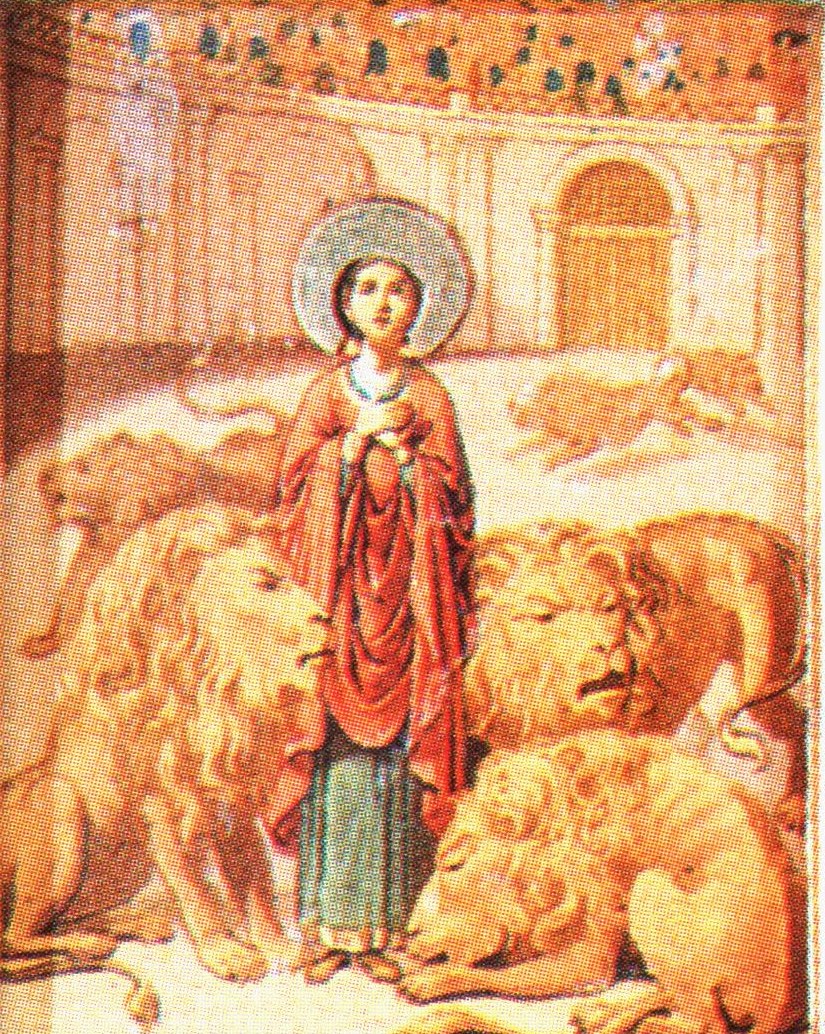
After this the tormentor ordered a beasts’ circus to be prepared outside the city, that I might be given to the beasts to be devoured. The whole city gathered for this spectacle; the emperor also came here. Pointing to the beasts with his finger, he said to me: they are prepared for thee; spare thy youth, have pity on the beauty of thy body, offer sacrifice to the gods, or else thou shalt die a cruel death, torn by the teeth of the beasts. I expressed my desire rather to be torn by the beasts than to obey such a crafty counsel and command, — and I was cast to the beasts.
The Lord here also, appearing to me in the form of the presbyter Hermolaus, stopped the mouths of the beasts and made them meek, like sheep, so that, crawling up to me, they licked my feet. I stroked them with my hand, and each of the beasts strove that my hand might touch it, pushing one another aside. The people, seeing this, were amazed and cried aloud: «Great is the God of the Christians! Let the innocent and righteous youth be released!»
Then the emperor, filled with wrath, sent forth soldiers with drawn swords against those who were glorifying Christ God, and many of the people who had come to believe in Christ were slain; the emperor also ordered all the beasts to be killed. Seeing this, I cried out: «Glory to Thee, O Christ God, that not only men, but even beasts die for Thee!» The emperor departed from the place of the spectacle, grieving and angry, and cast me into prison. The slain people were given burial, while the beasts were left to be devoured by dogs and birds of prey. But here also a great wonder occurred: these beasts lay for many days untouched not only by the dogs but even by the birds, and their carcasses gave forth no stench. Learning of this, the emperor ordered them to be cast into a deep pit and covered with earth.

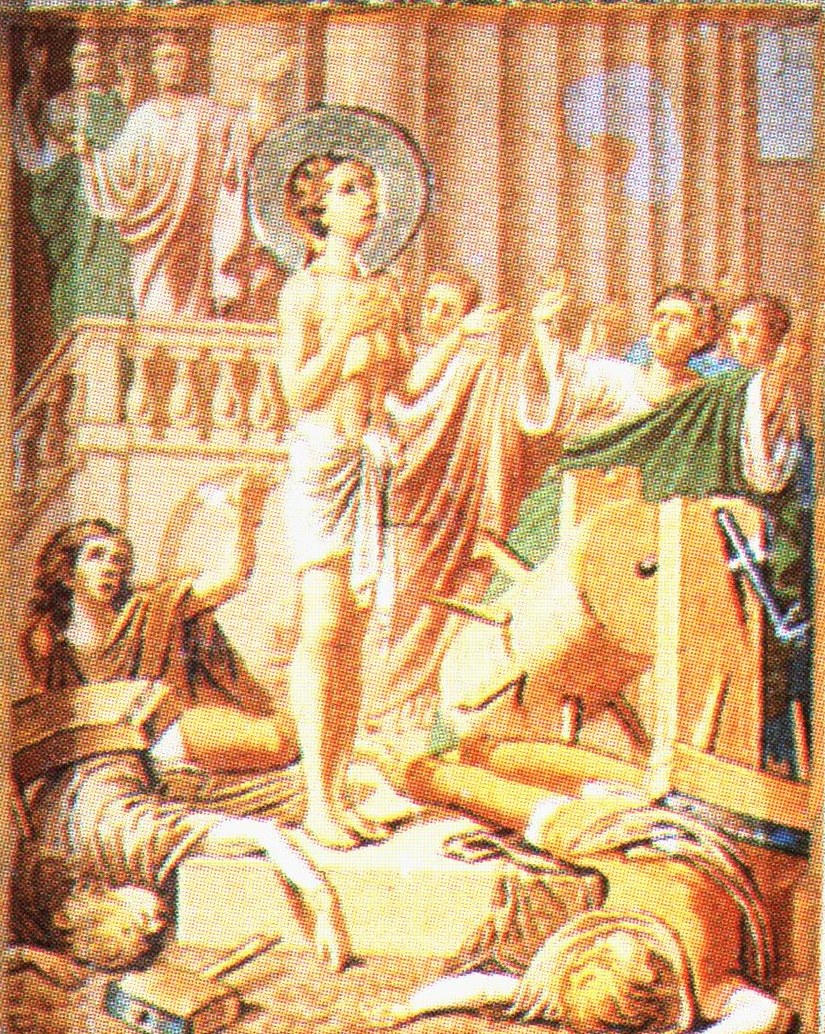
For me the emperor ordered a terrible wheel to be prepared, studded with sharp spikes. When I was tied to it and they began to turn the wheel, it flew apart into pieces by the action of an invisible power and mortally wounded many who stood nearby, while I came down from the wheel whole and unharmed. To the emperor’s question who had taught me such great magical acts, I answered: I was taught not magic but true Christian piety by the holy man, the presbyter Hermolaus. The emperor wished to see him, and I, understanding in spirit that the time of the martyr’s crown had drawn near for Hermolaus, was released to summon the presbyter.
The elder, seeing me, said that I had come in good time to call him: that night the Lord had appeared to him and announced that he must suffer much. The elder went with me joyfully, stood before the emperor, loudly calling himself a Christian, and named two of his fellow ministers, Hermippus and Hermocrates. The emperor ordered them also to be brought and proposed that they turn me back to the gods, promising honours; but they answered that they themselves were also prepared to die with me for Christ.
They began to pray, lifting their eyes to heaven; the Saviour appeared to them from above, and immediately an earthquake occurred. The emperor proclaimed: see how the gods have grown angry with you, they are shaking the earth! The saints answered that it was because of his gods that the earth had shaken, for they had fallen and been smashed, cast down by the power of our God; and a messenger ran from the temple with the news that all the idols had fallen and crumbled into dust. The ruler ordered me to be taken to prison, but the elder Hermolaus with his two friends, after subjecting them to many tortures, he condemned to beheading by the sword. Thus the three holy martyrs together stood before the Holy Trinity in the glory of heaven.

Then the king lied to me, saying that my teacher Hermolaus with both his friends had bowed to the gods; but I, knowing in spirit that the saints had departed this life, answered: he has sent them hence, having put them to death, and they have gone to the heavenly city of Christ. The king ordered me to be beaten and condemned me to death: to have my head severed by the sword, and my body to be given over to the fire.
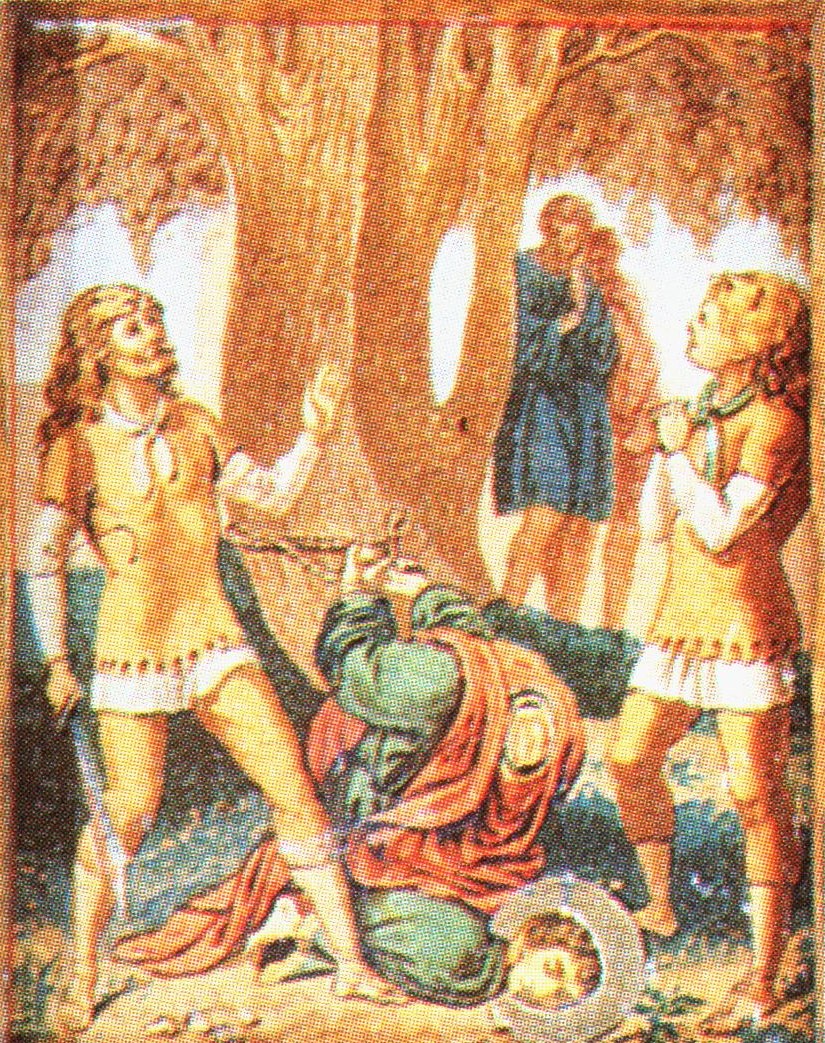
Going to my death, I sang the psalm of David: «Many a time have they afflicted me from my youth, yet they have not prevailed against me» (Ps. 128:2). Outside the city the soldiers bound me to an olive tree, and the executioner struck my neck with his sword, but the iron bent like wax, and my body received no blow, for I had not yet finished my prayer. The soldiers cried out in terror: «Great is the God of the Christians!» — and, falling at my feet, they begged me to pray for them, that their sins might be forgiven.
While I was praying, a voice came from heaven: the Lord called me Panteleimon instead of Pantoleon, granting me the grace to show mercy to all who have recourse to me in every trouble and sorrow, — and He called me to heaven. Filled with joy, I commanded the soldiers to cut off my head; they were unwilling, for they were afraid, and I said that otherwise they would not receive mercy from my Christ. The soldiers kissed my whole body; then one of them severed my head — and in place of blood milk flowed forth. From that moment the olive tree was covered with fruit from root to crown, and many of the people believed in Christ.
The king ordered the olive tree to be hewn into pieces and burned together with my body. When the fire had gone out, the faithful took my body from the ashes, undamaged by the fire, and buried it with honour on the land of the scholasticus Adamantius. Laurence, Bassus and Provian, who served in my household and had seen all my torments, wrote an account of my life and delivered it to the holy churches.
O holy passion-bearer and healer Panteleimon,/ pray to the Merciful God,/ may forgiveness of sins// be granted to our souls.